
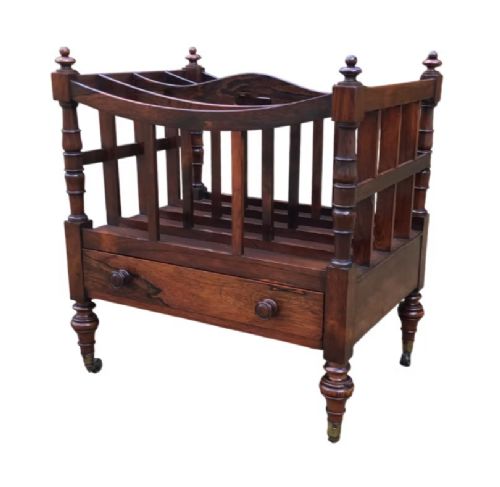


Rosewood Newspaper Rack
A rosewood newspaper rack holds daily journals and sheets with rich grain and brass details, bringing nineteenth-century order to a modern room.
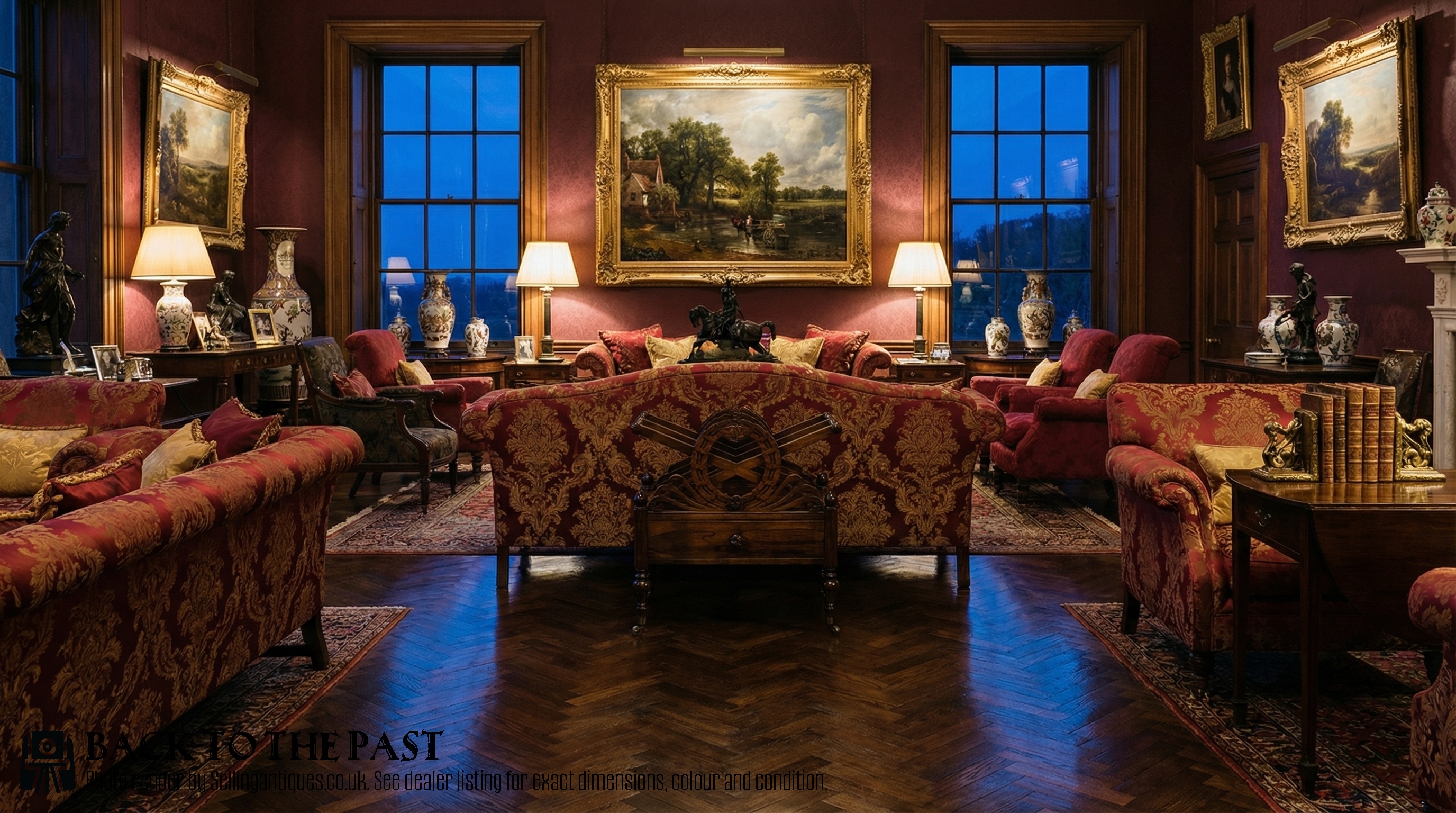
Rosewood Newspaper Rack
When searching for a rosewood newspaper rack, buyers encounter nineteenth-century pieces designed to hold periodicals, sheets of music, and journals. These items appear primarily as canterburys, magazine racks, and two-tier whats-not stands dating from the Georgian, Regency, William IV, and Victorian periods.
The most common form met on this page is the canterbury, a low stand featuring multiple vertical divisions and a carrying handle. Originating in English and French workshops, these pieces combine utility with decorative compartments tailored for domestic sitting rooms.
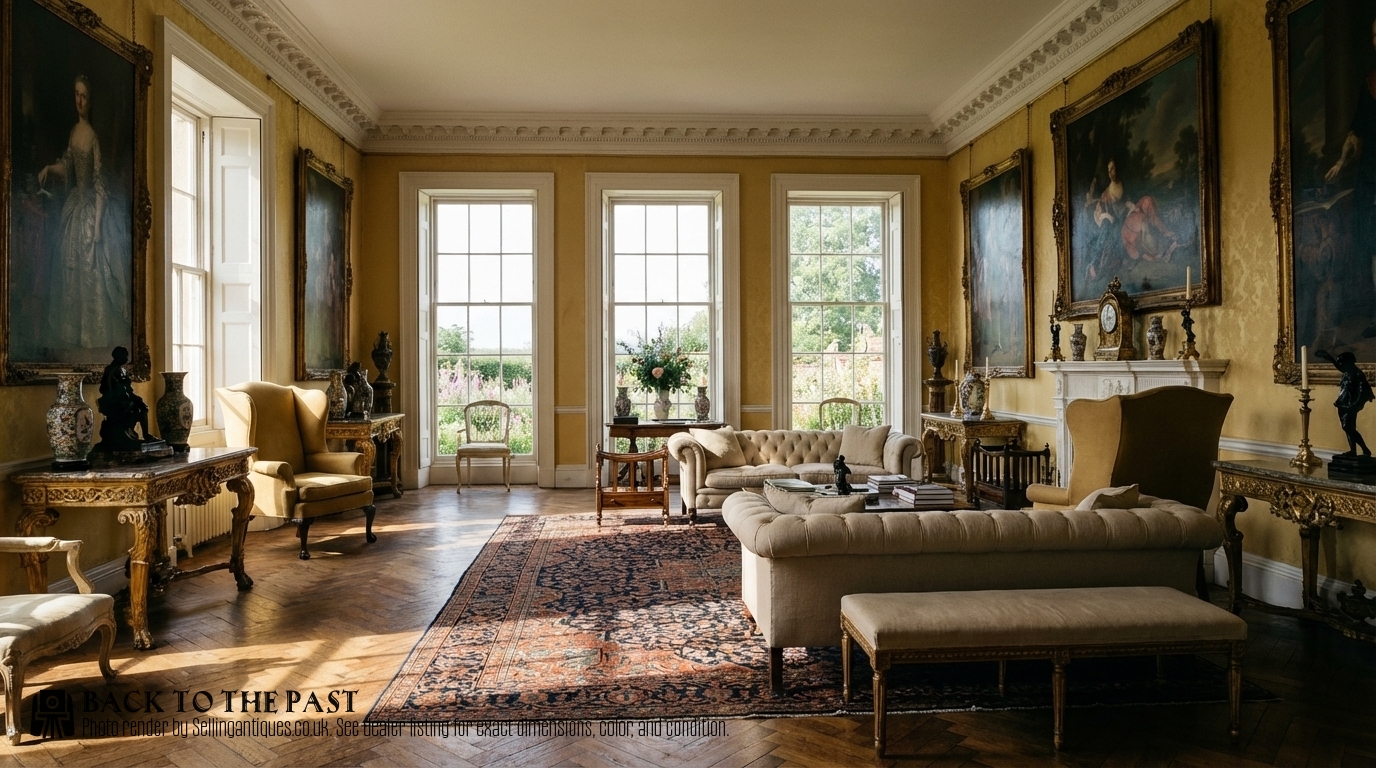
How they were made
Cabinet makers utilised dense rosewood timber for its deep colour and distinct grain patterns, shaping structural frames to support compartmentalised sections. Workshops incorporated brass details, such as casters, handles, and inlay, to accent the dark wood.
Construction methods range from three or four division frameworks with slatted sides to multi-tiered freestanding stands. Joinery relied on traditional techniques suited to portable furniture that needed to withstand regular handling.
Rosewood Newspaper Rack Retail Price Guide 2026
Typical asking prices for rosewood newspaper rack among the pieces listed under this phrase on Sellingantiques today, from the lower quarter to the upper quarter. They describe what is for sale here now, not the wider market.
Some nineteenth-century makers added wheels so the household could chase the evening news across the rug without standing up.
What varies in quality
The distinction between standard examples and top-tier pieces rests on the choice of timber and the crispness of carved or turned details. Finer items display superior figure in the rosewood veneer or solid sections alongside balanced proportions and integrated brass hardware.
Design complexity also separates the range, moving from simple multi-division racks to elaborate models featuring foliate designs, two tiers, or designated functions like music storage combined with newspaper sorting.

Gillows
The Rosewood Newspaper Rack Glossary
- Canterbury
- A low stand with divisions used for holding loose papers, music sheets, or newspapers. It typically includes a central carrying handle.
- Regency
- A style period spanning the early nineteenth century defined by classical restraint, elegant lines, and dark woods like rosewood.
- Whatnot
- A piece of open shelving furniture with multiple tiers used for displaying or holding small items, sometimes combined with a newspaper rack.
- Foliate
- A decorative design motif using leaf patterns and botanical forms carved into the wood or rendered in brass.
Rosewood Newspaper Rack: Frequently Asked Questions
What is a canterbury used for?
A canterbury serves as a compartmentalised stand for organising newspapers, magazines, and sheets of paper. Nineteenth-century households placed them beside seating areas for easy access to daily reading materials.
Over time, these pieces adapted to hold music folios as well as periodicals, functioning as movable tidies within the drawing room or study.
How do I date a rosewood rack?
Dating relies on stylistic markers and construction methods associated with periods like the Regency, William IV, and Victorian eras. Earlier pieces show classical proportions and restrained brass details, while later Victorian examples often incorporate heavier turned elements.
Examining the underlying timber and the form of the divisions helps place the piece within the nineteenth century.
Are these racks sturdy enough for daily use?
These nineteenth-century pieces were built for practical domestic use, featuring sturdy timber frames and carrying handles designed for relocation. They comfortably hold modern newspapers and magazines.
Care should be taken when moving loaded stands to protect the historical joinery and original brass casters.
Can I use it for modern magazines?
Modern magazines and broadsheet newspapers fit well within the standard vertical divisions of nineteenth-century canterburys. The slotted compartments keep publications upright and neatly separated.
Their original purpose as paper racks translates directly to organising contemporary print media in a living space.