
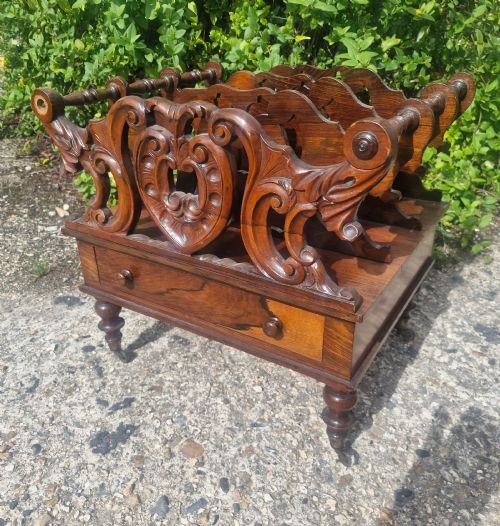
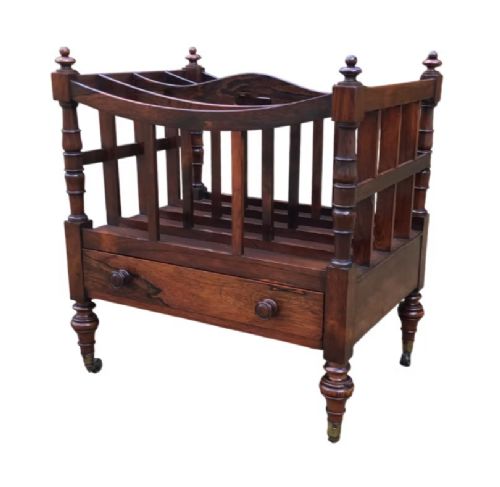
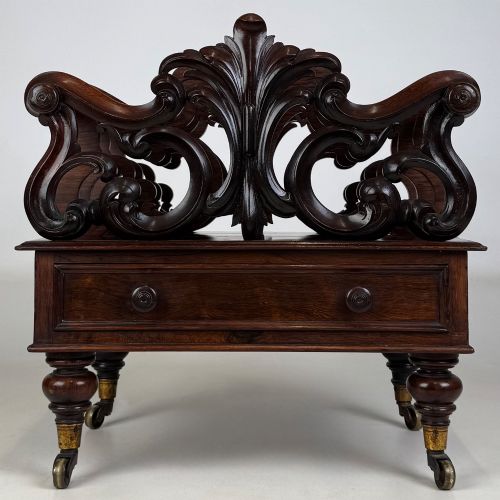


Rosewood Magazine Stand
A rosewood magazine stand brings rich grain and practical division to a room, functioning as a refined holder for periodicals and sheet music.
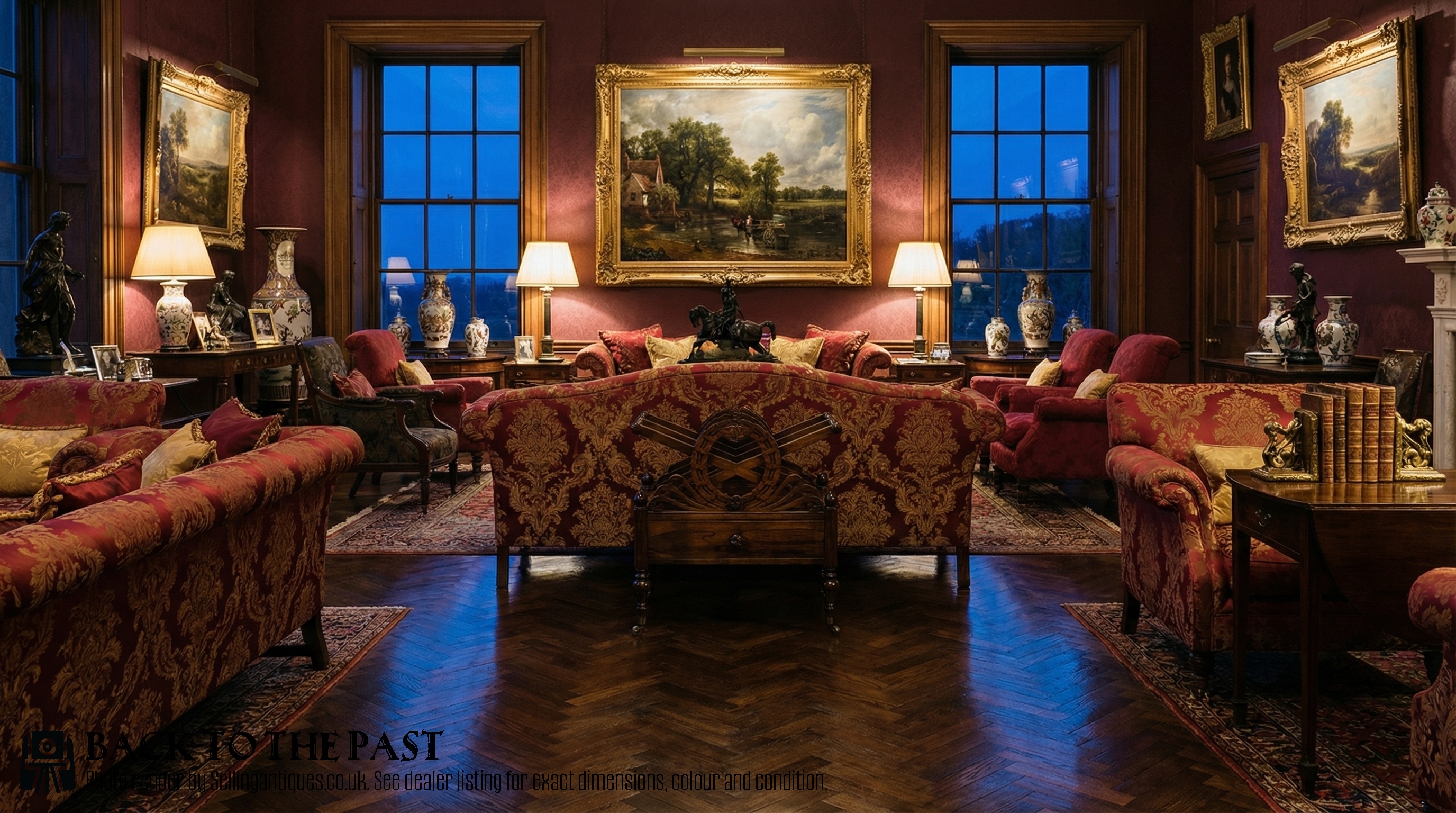
Rosewood Magazine Stand
Buyers seeking a rosewood magazine stand typically encounter forms historically designated as canterburys, magazine racks, or music stands. These pieces originate across the nineteenth century, spanning Georgian, Regency, William IV, and Victorian periods.
The most frequent form on this page is the canterbury, featuring upright slatted divisions designed to hold papers, magazines, and folios upright. Many examples include a low drawer beneath the divisions or combine the rack with a small whatnot table.
Origins vary from English country houses to French workshops, alongside American gothic revival examples. Pieces range from standard domestic sizes to oversized country house proportions.
Materials and construction
Makers utilised dense rosewood timber for its dark, richly figured grain, often pairing the primary wood with brass inlays, castors, or carrying handles. Some examples incorporate ceramic, metal, or glass elements.
Structural joinery supports partitioned slat divisions, turned or carved uprights, and occasionally integrated drawers or tiered shelves. Carved details such as foliate designs or Prince of Wales feathers appear across Regency and Victorian pieces.
Rosewood Magazine Stand Retail Price Guide 2026
Typical asking prices for rosewood magazine stand among the pieces listed under this phrase on Sellingantiques today, from the lower quarter to the upper quarter. They describe what is for sale here now, not the wider market.
Materials recorded across the archive include rosewood, brass, mahogany, ceramic, metal, glass, and castors.
Distinguishing quality
Quality rests in the crispness of the carving, the selection and matching of rosewood veneers, and the integrity of the slatted divisions. Finer examples display meticulous craftsmanship in turned supports, integrated drawer construction, and original brass hardware.
Proportion and scale also separate standard items from superior pieces, particularly in double-size folio stands or combined whatnot tables designed for country house interiors.
Gillows·J C Loudon
The Rosewood Magazine Stand Glossary
- Canterbury
- A low stand with partitioned vertical divisions used for holding newspapers, magazines, and music sheets. It typically includes carrying handles and often sits on castors.
- Whatnot
- An open set of multi-tiered shelves used for displaying or holding small objects. When combined with a canterbury, it provides both surface space and divided storage.
- Folio stand
- An oversized rack designed for large books, prints, or unbound papers. These larger proportions are frequently associated with country house libraries.
- Regency
- A British design style dating from the early nineteenth century. Pieces from this period often display clean classical lines and refined rosewood grain.
- Gothic Revival
- A nineteenth-century style drawing inspiration from medieval architecture. Objects in this manner incorporate pointed arches and characteristic carved motifs.
Rosewood Magazine Stand: Frequently Asked Questions
What is a canterbury?
A canterbury is a small divided stand originally designed for holding music sheets, newspapers, and books. These pieces usually feature feet on castors for easy movement around a room.
They gained popularity in the late eighteenth century and remained staples of domestic interiors through the Victorian era.
How do I use one today?
These stands serve well beside a sofa or armchair for holding current magazines, journals, and newspapers. Larger examples function effectively for storing art books and large periodicals.
The divided sections keep reading material upright and sorted rather than flat on a table surface.
How do I tell Regency from Victorian pieces?
Regency pieces usually display restraint, clean architectural lines, and classical proportions dating from the early nineteenth century. Victorian examples often incorporate heavier carving, foliate designs, or tiered whatnot tops dating from the mid to late nineteenth century.
Examining the turnings, feet, and any secondary woods helps confirm the period of manufacture.
Are all these stands made of solid rosewood?
Most pieces utilise rosewood veneers applied to secondary timbers for stability and structural integrity. Solid rosewood components appear on smaller turned supports, handles, and framing members.
The grain patterns and colour depth vary depending on whether the timber is East Indian or Brazilian rosewood.