
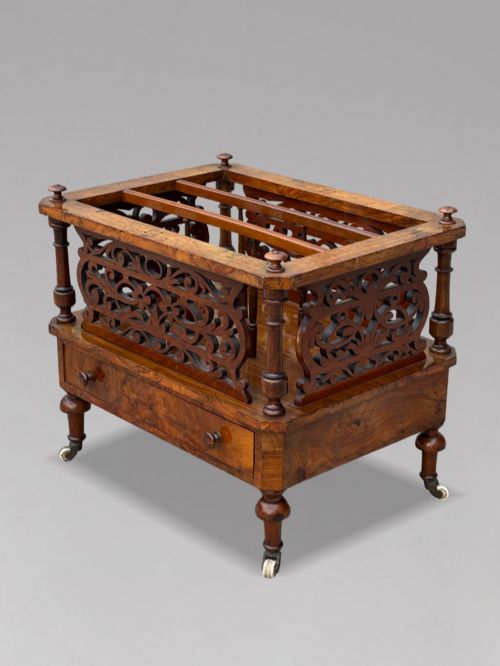
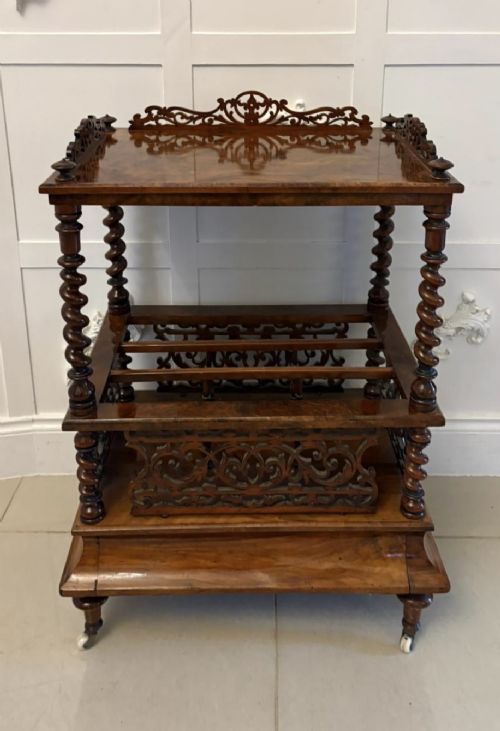
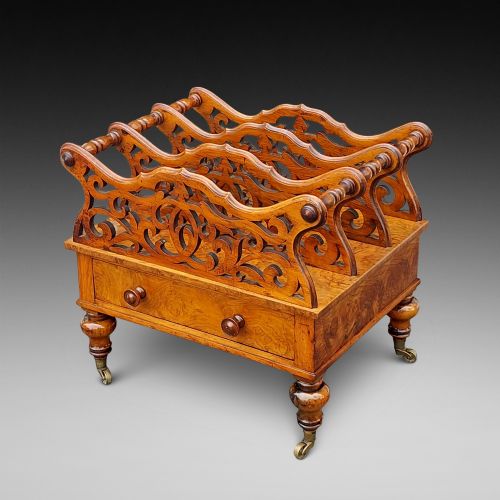
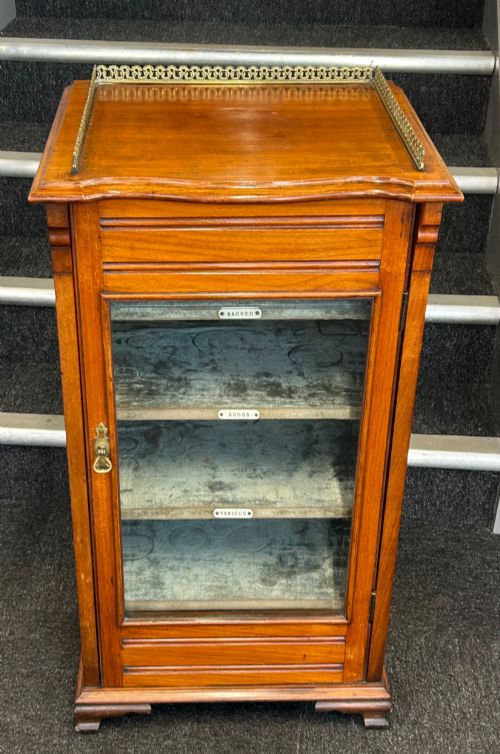


Walnut Canterbury Stand
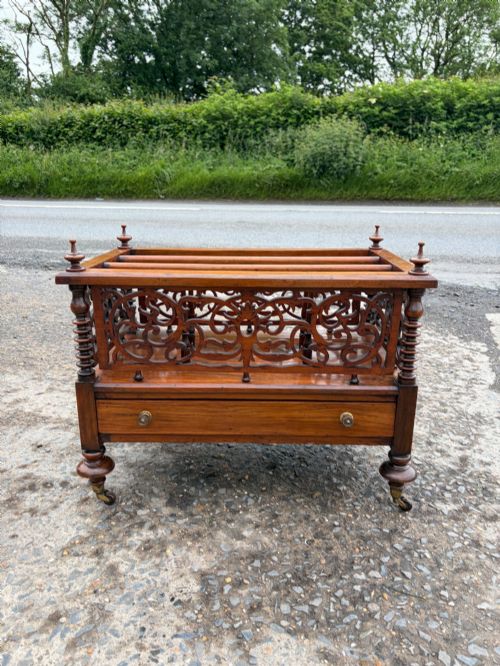
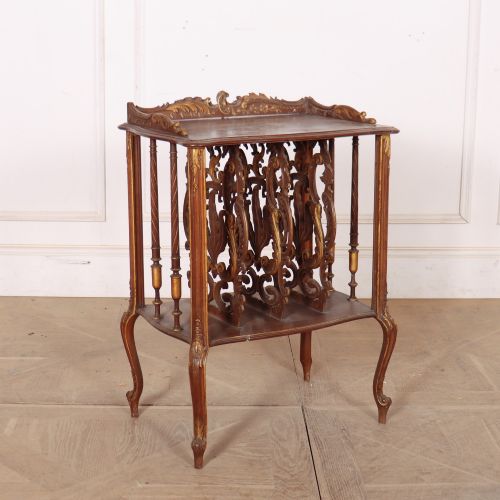
A walnut canterbury stand offers a practical way to keep sheets of music, newspapers, and magazines neatly ordered in a drawing room.
Walnut Canterbury Stand
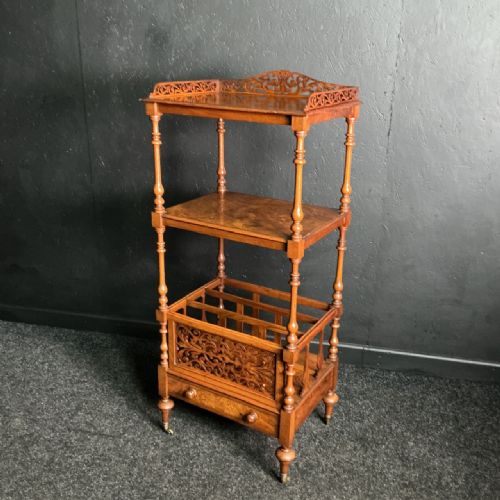
A walnut canterbury stand combines partitioned compartments for reading materials with low stands or drawer bases, frequently taking the form of a freestanding multi-tiered whatnot or a music cabinet. These pieces belong predominantly to the Victorian and Edwardian eras, with examples stretching from the nineteenth century into the Regency period.
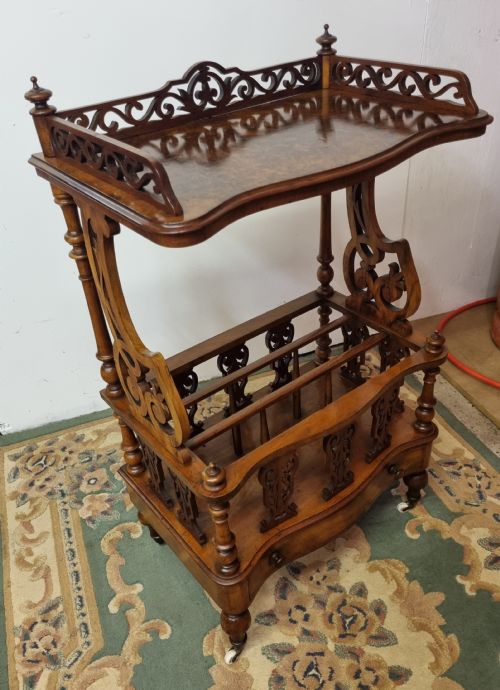
Buyers seeking a walnut canterbury stand will most commonly encounter Victorian and mid-nineteenth-century pieces characterised by figured timbers, serpentine shapes, and integrated display shelves or book rests. Some variations include music stands, lamp tables, and fitted drawers intended for paperwork or folios.
Materials and construction
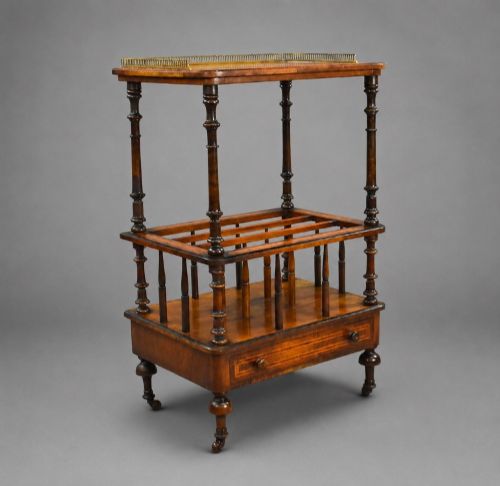
Cabinet makers utilised solid walnut, burr walnut veneers, and black walnut, often pairing the dark timber with contrasting boxwood and wood inlay or marquetry details. Brass hardware, ceramic castors, and occasionally glass or copper components appear across the listed examples.
Structural elements involve turned or carved supports dividing the compartment slats, while more elaborate pieces incorporate serpentine profiles, lower drawers, and tiered etagere tops.
Originating from an archbishop's request for a music tidy, these stands evolved to hold everything from newspapers to cocktail services.
Craftsmanship and distinction
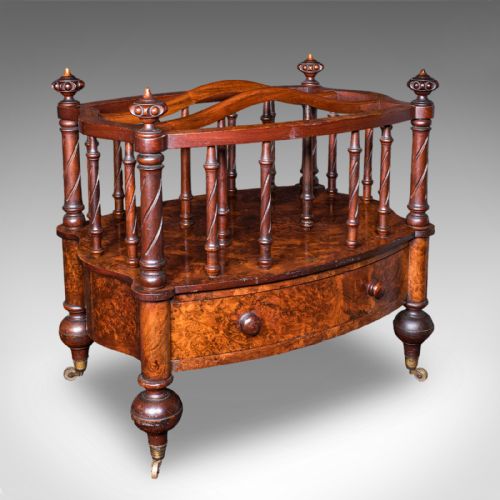
The distinction between standard items and finer examples rests upon the grain and figuring of the burr walnut veneer, the precision of the boxwood inlay, and the complexity of the architectural framework such as serpentine moulding. Pieces attributed to recorded makers or featuring integrated drawers, glass doors, and combined whatnot tiers demonstrate higher standards of workshop production.
Proportion and structural integrity separate robust freestanding pieces from simpler racks, with refined turning on the uprights and well-executed marquetry elevating the overall design.
Edwards & Roberts·Shoolbred
The Walnut Canterbury Stand Glossary
- Canterbury
- A low stand with partitions designed for holding sheet music, books, or newspapers. The name derives from the Archbishop of Canterbury, who supposedly commissioned the first such piece.
- Whatnot
- An open set of freestanding shelves used for displaying ornaments or holding books and papers. These structures frequently combine with canterburys to form multi-tiered library furniture.
- Burr Walnut
- A decorative timber veneer taken from the wart-like growths on walnut trees. It yields intricate, swirling grain patterns highly prized in nineteenth-century cabinet making.
- Marquetry
- Decorative veneer work formed by fitting together small pieces of different coloured wood to create pictorial or geometric designs. This technique embellishes the tops and panels of finer Victorian stands.
- Etagere
- A piece of furniture consisting of a set of open shelves for displaying small objects. They appear integrated into the upper sections of combination stands.
- Serpentine
- A shape involving a gently curved line that undulates outwards and inwards. This profile adds fluidity to the edges of tabletops and base drawers.
Walnut Canterbury Stand: Frequently Asked Questions
What is a walnut canterbury stand?
A walnut canterbury stand is a nineteenth-century piece of furniture designed with vertical partitions to hold sheet music, newspapers, and periodicals.
Many examples include lower drawers, integrated tables, or multiple display shelves known as whatnots.
How were they used historically?
These stands kept reading materials and musical scores organised and within reach beside chairs or pianofortes in Victorian and Edwardian reception rooms.
The upper tiers and surfaces also served to display decorative objects, lamps, or writing accessories.
How do I date a walnut canterbury?
Dating relies on stylistic markers such as the heavy proportions and serpentine shapes of mid-nineteenth-century Victorian pieces versus the lighter profiles of Edwardian music cabinets.
Material details like burr walnut veneers, boxwood inlay, and brass castors help establish the manufacturing period.
Where should I place one at home?
A walnut canterbury stand fits well beside a sofa or armchair as an occasional lamp table that simultaneously holds magazines and books.
Freestanding etagere variants work effectively in hallways or studies to display small collections while managing paperwork.