




Antique Wooden Liquor Chest
An antique wooden liquor chest stores and protects fine bottles, bringing formal dining traditions of past centuries directly into the modern home.
Antique Wooden Liquor Chest
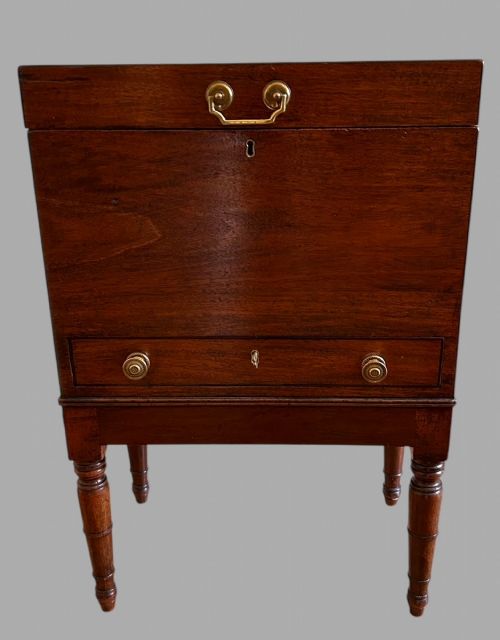
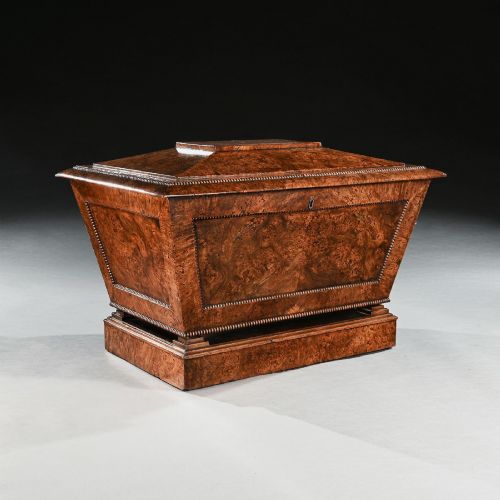
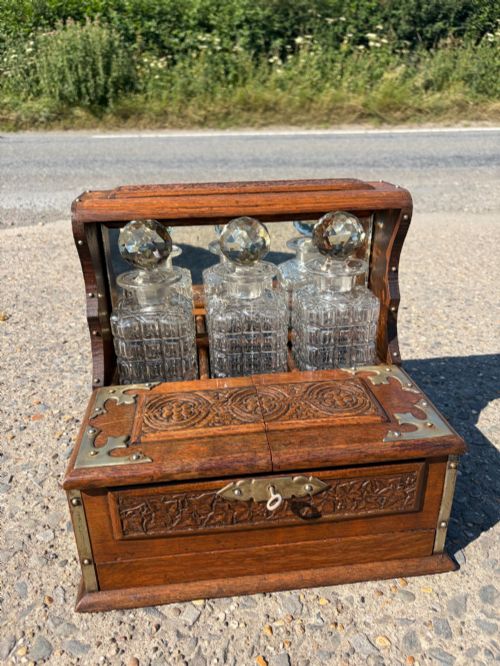
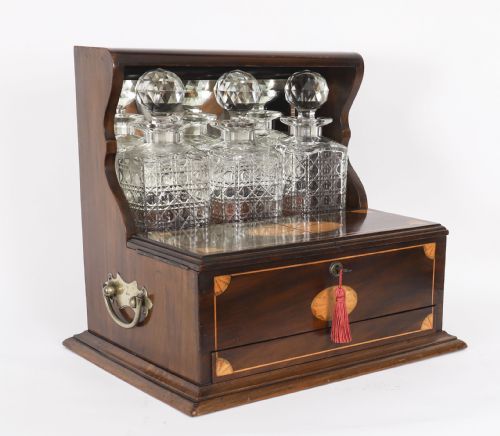
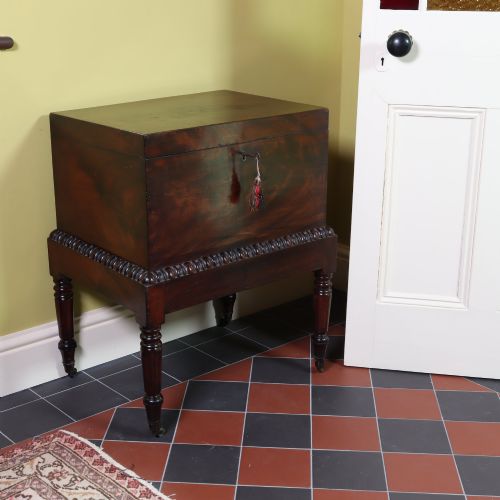
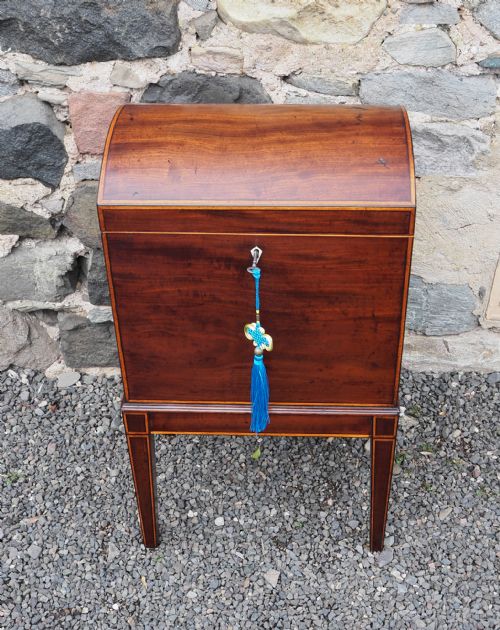
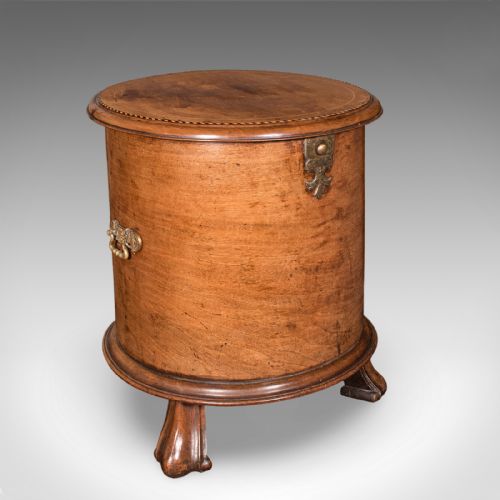
The antique wooden liquor chest appears in several distinct forms across this selection, primarily comprising cellarettes, wine coolers, decanter boxes, and tantalus sets designed to secure alcoholic beverages. These items trace their origins through the Georgian, Regency, and Victorian periods, reflecting the shifting social habits of dining rooms over generations.
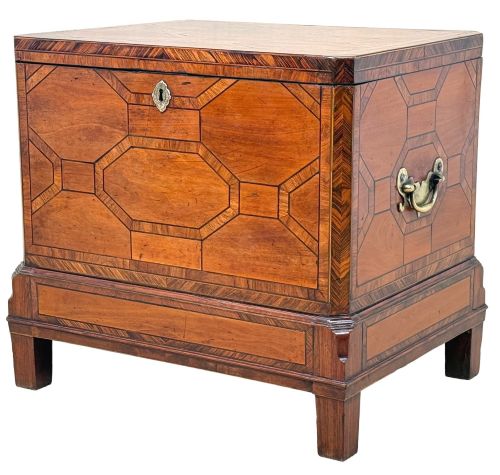
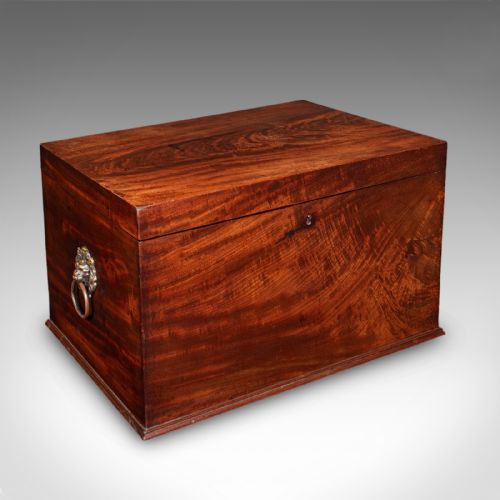
Mahogany forms the dominant timber for an antique wooden liquor chest, frequently enhanced with boxwood inlay, satinwood, or pollard oak. Buyers encounter pieces ranging from large sarcophagus wine coolers on stands to compact tabletop decanter boxes fitted with internal compartments for glass bottles.
Materials and Construction
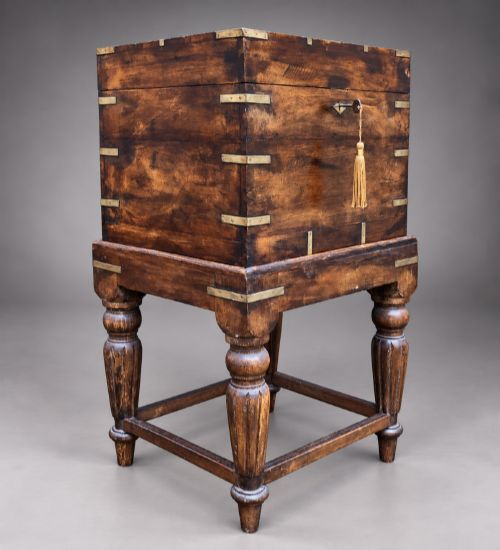
Cabinetmakers constructed an antique wooden liquor chest using dense hardwoods such as mahogany, oak, and walnut, often employing flame veneers to create striking lid panels. Brass banding, corner mounts, and carrying handles provided structural reinforcement while adding metallic contrast to the dark timber surfaces.
Internal layouts required precision joinery to secure glass decanters and prevent breakage during transit or service. Makers utilised fitted wooden partitions, velvet or fabric linings, and locking mechanisms with brass escutcheons to safeguard the contents.
Objects range from compact tabletop decanter boxes to large freestanding wine coolers fitted with brass banding and internal glass storage.
Standards of Execution
Quality in an antique wooden liquor chest rests upon the selection of timber figures, such as matching flame mahogany or figured pollard oak, alongside the crispness of brass mounts and inlay work. Superior examples exhibit tighter joinery, intact original locks with working keys, and well-preserved internal dividers designed for specific decanter sets.
The presence of secondary woods, refined carving details, and provenance associated with noted cabinetmakers elevate certain pieces above standard production items. Condition of the timber polish and the survival of matching cut crystal decanters further distinguish top-tier specimens from simpler utilitarian boxes.
Gillows of Lancaster and London·Freemans of Norwich·Gillingtons·Robert Strahan and Co of Dublin
The Antique Wooden Liquor Chest Glossary
- Cellarette
- A freestanding or tabletop cabinet designed to hold wine bottles and spirits near the dining table. They frequently feature lead-lined interiors or fitted wooden dividers.
- Tantalus
- A locking drink cabinet holding decanters visible behind a wooden bar to prevent unauthorized access while leaving the contents on display. They became popular during the Victorian era.
- Sarcophagus
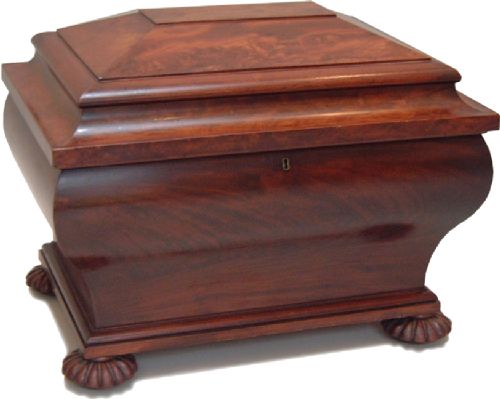
- A monumental cabinet shape with a domed lid and tapered sides, popular during the Regency period for large wine coolers and cellarettes.
- Ormolu
- Gilded bronze mounts applied to furniture for decorative enrichment, appearing on select high-end specimens from the Georgian period onward.
- Marquetry
- Decorative woodwork where pieces of veneer are fitted into a background panel to form geometric or floral patterns on box lids.
Antique Wooden Liquor Chest: Frequently Asked Questions
What is the difference between a cellarette and a tantalus?
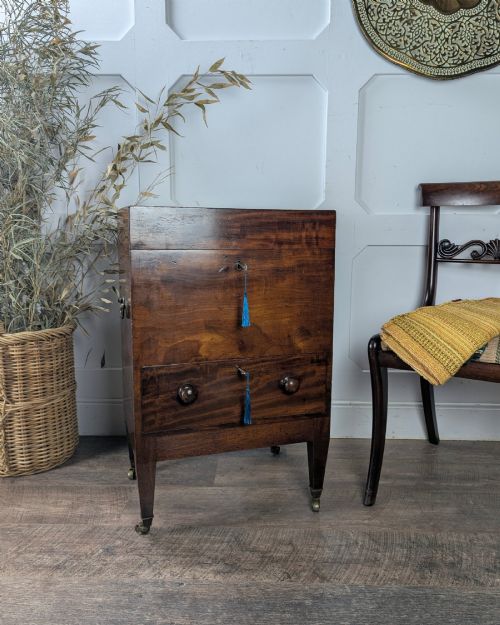
A cellarette is a fully enclosed chest or cooler designed to store wine and spirits securely within a lidded compartment. They often feature internal partitions or lead linings suited for bottles.
A tantalus exposes decanters behind a locking metal bar that prevents the removal of bottles without a key. This design allowed hosts to display fine spirits while restricting access.
How were these chests used in Georgian dining rooms?
Servants kept these chests near the dining table to hold bottles of wine and spirits before they were served to guests. Their sturdy construction and locks protected expensive imports.
Many examples incorporate brass carrying handles or stand on dedicated legs so they could be repositioned easily around the dining parlour during long evening meals.
How can I distinguish a Regency piece from a Victorian one?
Regency pieces often display classical architectural proportions, such as sarcophagus shapes, lion paw feet, and restrained brass inlay. The timber choice leans heavily towards rich figured mahogany.
Victorian items tend to feature darker oak or walnut, heavier marquetry, and complex mechanical locking bars as seen in tantalus sets. Their decorative motifs reflect a revival of historic styles.