




Dark Wood Sarcophagus Box
These dark wood sarcophagus boxes bridge domestic storage and classical architecture, offering heavy-timbered refinement for tea, wine or valuables.
Dark Wood Sarcophagus Box
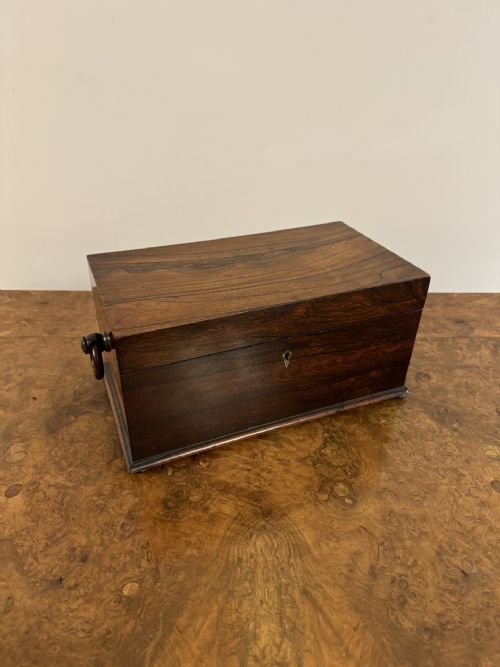
A dark wood sarcophagus box takes its architectural name from its tapering, tomb-like profile, typically featuring a hinged lid and a substantial footprint. When you search for a dark wood sarcophagus box, you encounter pieces spanning the Georgian, Regency, William IV and Victorian eras, originating mainly from English workshops.
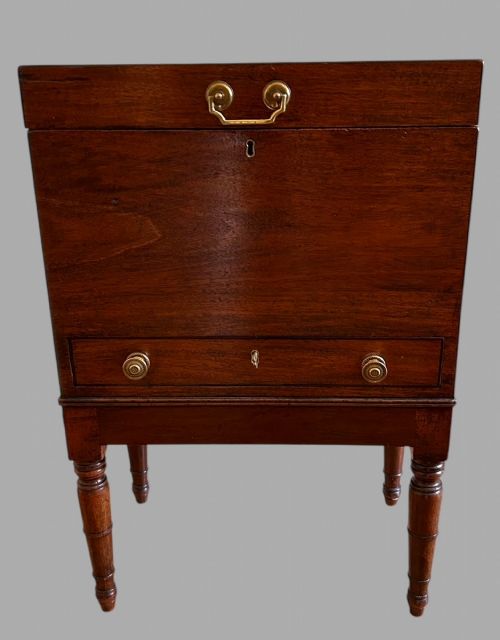
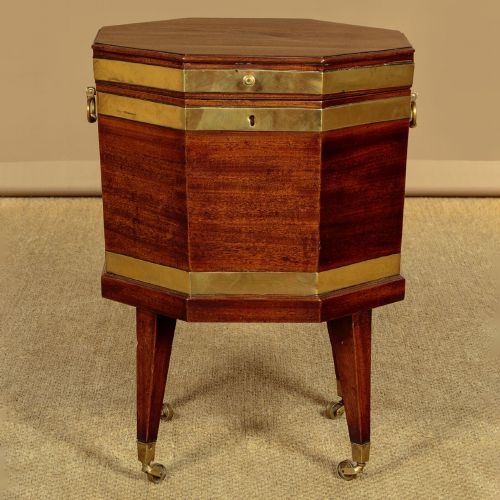
The practical function of these items varies widely according to their original domestic purpose. Tea caddies, cellarettes, wine coolers, jewellery chests and work boxes all adopt this heavy, sloping form to store valuable commodities securely.
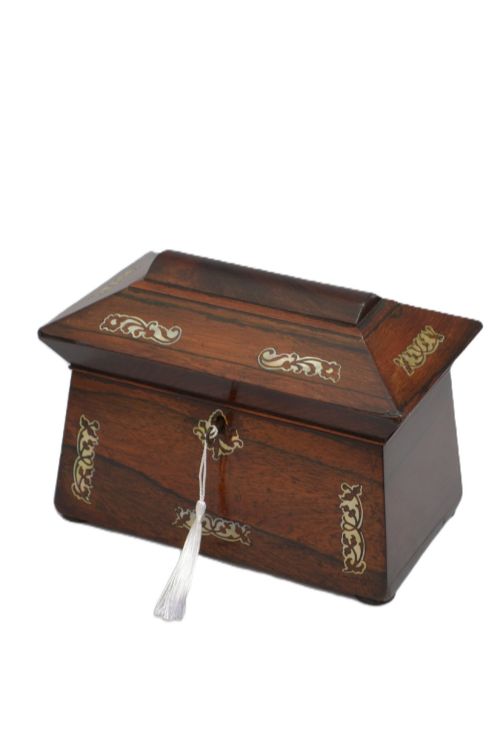
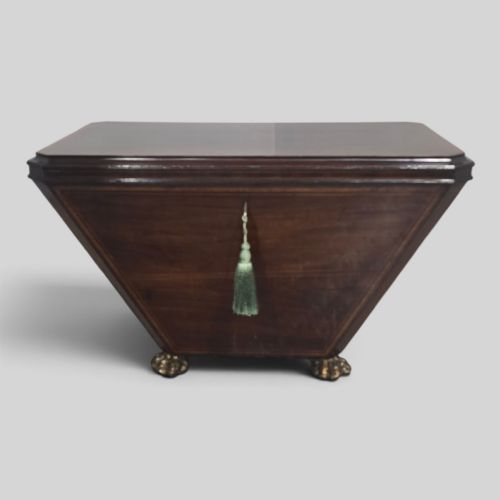
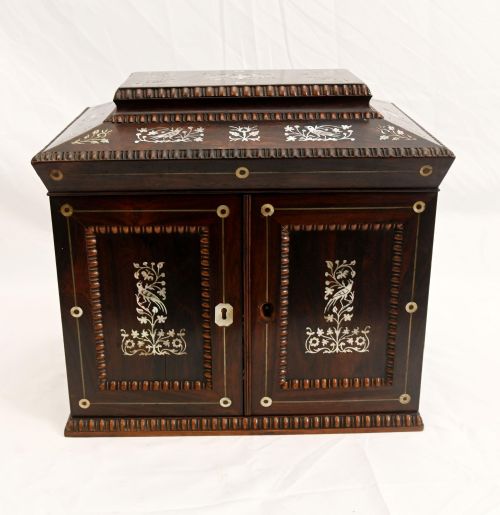
Rosewood and mahogany dominate the offerings, often complemented by satinwood inlay, brass binding or mother of pearl. Examples range from compact tabletop tea caddies to freestanding wine coolers set upon paw feet.
Materials and Construction
Cabinetmakers built these pieces using dense tropical hardwoods such as mahogany and rosewood, frequently selecting figured veneers to create rippled grain patterns across the wide expanses of the lid and sides. Some variations employ coromandel or padouk, providing deep, saturated brown and red tones.
Structural embellishment relies on contrasting stringing, brass inlay, satinwood parquetry and mother of pearl escutcheons. Metal mounts, lion mask handles and internal fitted compartments complete the construction, demanding precise joinery to house delicate canisters and mixing bowls.
Some tea caddies retain their original glass mixing bowls, once used for blending green and black teas before serving.
Quality and Distinction
The hierarchy of quality rests upon the selection of timber and the precision of the cabinetwork. Pieces displaying highly figured rosewood veneers or crisp brass inlay command attention, whereas plain, flat-grained surfaces represent a more utilitarian standard.
Interior fittings dictate desirability within specific categories. Tea caddies retaining their original mixing bowls, internal lids and foil linings, or cellarettes preserving their wooden dividers and lead-lined interiors, demonstrate superior survival and original intent.
Edwards and Roberts·Freemans of Norwich
The Dark Wood Sarcophagus Box Glossary
- Sarcophagus form
- A box design characterised by a domed or stepped hinged lid above a tapering body, echoing classical monumental stone tombs. This silhouette provides considerable internal depth while maintaining a balanced exterior proportion.
- Cellarette
- A large, lockable container designed to hold bottles of wine or spirits, often fitted with internal dividers and metal linings. They sit either on the floor with dedicated feet or upon low stands.
- Teapoy
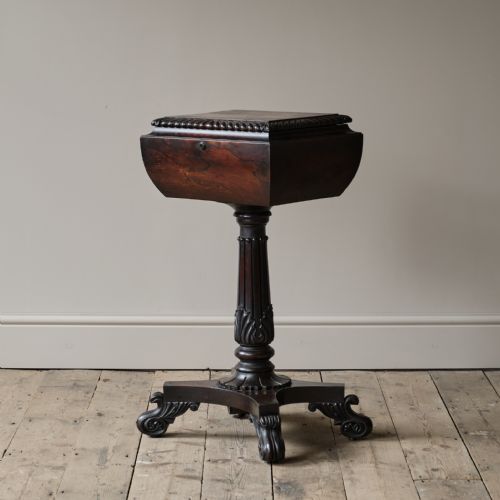
- A pedestal table featuring a lidded box compartment on top for storing and blending loose tea leaves. They often include internal mixing bowls and removable canisters.
- Escutcheon
- A protective plate surrounding a keyhole, frequently cast from brass or inlaid with mother of pearl. It reinforces the surrounding wood against wear from the key.
- Stringing
- A narrow inlay of contrasting light wood, such as satinwood, inserted into grooves cut into the dark primary timber to frame panels and borders.
Dark Wood Sarcophagus Box: Frequently Asked Questions
What were dark wood sarcophagus boxes used for?
These boxes served primarily to secure high-value household commodities like imported tea, wine, spirits and jewellery under lock and key. Their heavy timber construction and lidded compartments protected vulnerable contents from light, moisture and theft in domestic settings.
Larger versions functioned as cellarettes and wine coolers to keep bottles at hand in dining rooms, while smaller tabletop examples preserved precious leaf tea or housed personal trinkets and sewing implements.
How do I tell Regency from Victorian examples?
Regency pieces often exhibit crisp architectural lines, geometric brass inlay and richly figured rosewood or mahogany dating from the early nineteenth century. They favor classical proportions and restraint in ornament.
Victorian iterations tend to introduce heavier ornamentation, such as extensive mother of pearl inlay, contrasting light wood parquetry, or more exuberant surface carving. The timber choice frequently shifts towards darker, densely grained rosewood or coromandel.
Are these boxes suitable for modern storage?
Their sturdy timber frames and divided interiors lend themselves well to organising modern items like jewellery, stationery or small keepsakes. The fitted compartments inside tea caddies and work boxes adapt easily to contemporary desktop use.
Placing them away from direct sunlight and heat sources protects the antique veneers and prevents timber movement, ensuring the original hinges and locks remain functional.
What is an Anglo-Indian sarcophagus box?
Anglo-Indian pieces reflect nineteenth-century design exchange, utilising exotic dense timbers like padouk alongside traditional British box forms. They combine standard domestic storage requirements with distinctive regional carving styles.
These items demonstrate the global trade networks of the period, bringing foreign hardwoods and artisan techniques into standard European furniture repertoires.