




Inlaid Wooden Wine Box
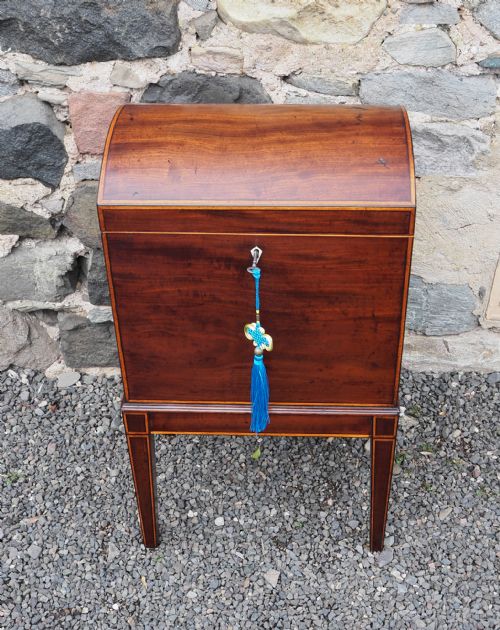
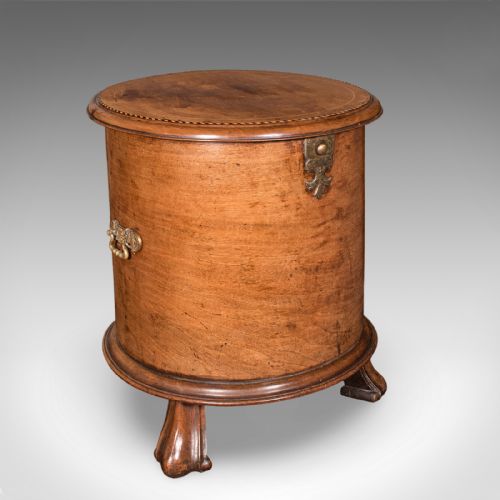
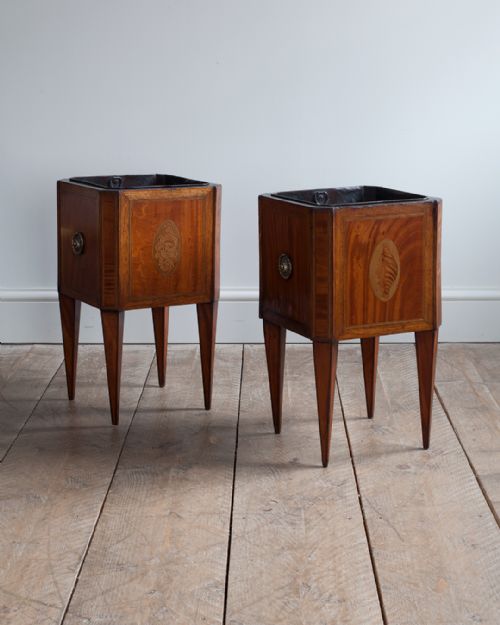
These inlaid wooden wine box items are sturdy timber cellarettes and coolers designed to hold bottles securely through the centuries.
Inlaid Wooden Wine Box
When you search for an inlaid wooden wine box, you encounter timber cellarettes, wine coolers, and jardinières spanning the Georgian, Regency, Victorian, and Edwardian eras. These pieces functioned as portable or stationary storage for bottles during dining, often constructed to keep wine cool or secure.
You are most likely to meet mahogany or satinwood versions on this page, frequently decorated with boxwood inlay or marquetry. The forms range from low stands to substantial floor-standing cellarettes featuring brass mounts and handles.
Materials and construction
Cabinetmakers utilised dense timbers such as mahogany, walnut, and ebonised wood as the primary structural bases for these vessels. Wood veneer and boxwood inlay provided the contrasting geometric or floral patterns characteristic of Georgian Sheraton and later Edwardian designs.
Metal components played a structural and decorative role, with brass handles and fittings secured to the heavy timber bodies to allow movement and protect the corners during daily use.
Listings feature pieces spanning the 18th, 19th, and early 20th centuries, predominantly utilising mahogany, satinwood, and walnut.
Assessing the workmanship
The distinction between standard utility items and exhibition quality pieces lies in the precision of the marquetry and the choice of timber figure. Finer examples display meticulous boxwood inlay and balanced proportions across satinwood or mahogany surfaces.
Original brass hardware and intact internal framing indicate higher workshop standards. Pieces bearing attribution to established makers display superior joinery compared to unmarked workshop output.
Freemans of Norwich·Whytock & Reid
The Inlaid Wooden Wine Box Glossary
- Cellarette
- A lockable container or cabinet used for holding bottles of wine near the dining table. They frequently include internal divisions for individual bottles.
- Marquetry
- Decorative patterns formed by fitting together small pieces of wood veneer onto a structural surface. This technique creates pictorial or geometric ornamentation.
- Satinwood
- A durable, lustrous timber native to India and Sri Lanka, prized for its pale yellow colour and smooth finish. Cabinetmakers utilised it extensively for fine inlay and veneering.
- Boxwood inlay
- Contrasting light-coloured wood inserted into recesses within a darker timber background. It outlines panels and drawers on Georgian and Edwardian furniture.
Inlaid Wooden Wine Box: Frequently Asked Questions
What is an inlaid wooden wine box?
An inlaid wooden wine box is a period container, commonly called a cellarette or wine cooler, designed to store bottles in a dining room.
Cabinetmakers built these vessels from dense timbers like mahogany and walnut, decorating the exterior with boxwood inlay and contrasting veneers.
How were these wine coolers used?
Wealthy households utilised these boxes to keep wine bottles close to the dining table during extended meals.
Servants would retrieve bottles from the fitted interior as needed throughout the course of dinner.
How do I date a cellarette?
You determine the age by examining the timber species, the style of the inlay, and the overall structural form. Georgian pieces often show Sheraton influence, whilst Edwardian examples favour satinwood.
Hardware styles and construction methods inside the compartment provide further clues to the manufacturing decade.
Can I use them for modern storage?
These sturdy timber boxes adapt well to contemporary interiors as side tables, general storage chests, or plant holders.
Their historical compartments and solid construction make them practical additions to living spaces.