
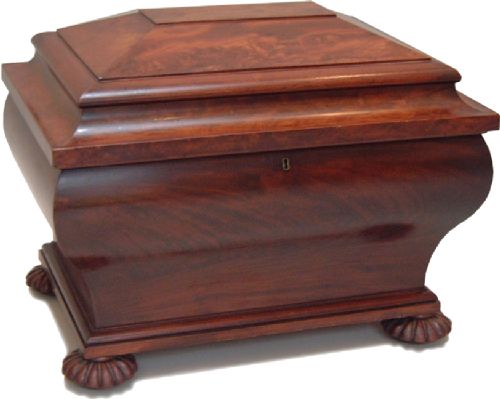


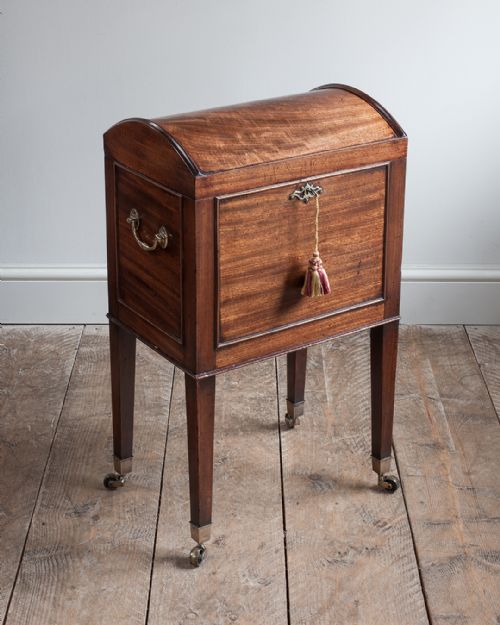


Vintage Wine Sarcophagus Box
A vintage wine sarcophagus box is a substantial timber chest designed to hold bottles, and collectors prize them for their grand proportions and classical lines.
Vintage Wine Sarcophagus Box
When you search for a vintage wine sarcophagus box, you encounter stately cellar furniture originating from the eighteenth, nineteenth, and early twentieth centuries. These pieces take the form of cellarettes and wine coolers shaped like ancient burial chests, built to stand beside a dining table and keep bottles secure. The items appearing on this page belong predominantly to the mahogany family, spanning periods from the Georgian era through to the Edwardian years and Regency Revival.
The primary variants you meet here include straightforward rectangular boxes and heavily moulded sarcophagus profiles resting on robust feet or castors. Some examples feature simpler timber construction, while others display classical influences associated with George III, George IV, and Regency designs. Most pieces on offer serve the dual purpose of historic storage and decorative focal points within a traditional dining room or study.
How they were made
Cabinet makers constructed these vessels primarily from solid mahogany or wood veneer laid over a sturdy timber carcase, occasionally turning to figured elm for a distinctive grain. The distinctive tomb-like curves and tapered sides required expert carpentry to join heavy timber without warping. Workshops enhanced the dark wood surfaces using fine boxwood inlay and satinwood banding to create delicate geometric borders.
Functional hardware played an essential structural role, incorporating cast metal and brass carrying handles mounted to the sides to bear the heavy weight of glass bottles. Interior lead-lined compartments or divided wooden inserts were fitted to hold wine securely and manage melting ice. Lock plates and hinges made from durable brass ensured the precious contents remained under the host's control.
Mahogany remains the absolute dominant timber across these examples, paired with brass fittings and occasional boxwood or satinwood inlay.
What varies in quality
The distinction between ordinary storage cases and masterworks rests heavily on timber selection and grain figure, such as richly patterned mahogany or figured elm. Superior examples exhibit crisply carved classical motifs, intricate satinwood or boxwood stringing, and well-proportioned sarcophagus curves rather than plain, boxy construction. The calibre of the original brass handles and the preservation of internal partitions also separate standard utilitarian boxes from finer dining room appointments.
Attribution to documented workshops elevates a piece significantly, as seen in specialised creations by makers like Freemans of Norwich. The integrity of the original wood finish, combined with minimal timber shrinkage and robust structural joinery, determines the overall standing of an antique specimen. Pieces that retain their fitted interiors and original metalwork demonstrate higher manufacturing ambition.
Freemans of Norwich
The Vintage Wine Sarcophagus Box Glossary
- Cellarette
- A lockable container or chest designed specifically to hold bottles of wine and spirits beneath the dining room sideboard. These vessels emerged during the eighteenth century when decanting took place away from the main cellar.
- Inlay
- A decorative technique where contrasting materials such as boxwood or satinwood are inserted into recesses carved into the primary mahogany surface. This method creates geometric lines and decorative motifs across the lid and panels.
Vintage Wine Sarcophagus Box: Frequently Asked Questions
What was a wine sarcophagus used for?
These large chests sat in the dining room during dinner parties to hold bottled wine and spirits close to the table. Servants retrieved bottles from the locked container as the meal progressed.
Inside, lead linings or fitted wooden dividers kept the bottles upright and sometimes accommodated ice to chill the wine before serving.
How do I date a cellarette?
Dating relies on observing the prevailing style, timber choices, and construction methods characteristic of different design periods. Georgian and Regency pieces display classical architectural lines and brass mountings, whereas Edwardian items often show later revival traits.
Examining the secondary woods inside and the style of the brass handles helps narrow down the decade of manufacture.
Where should I place one at home?
A wine sarcophagus works well as a statement piece in a dining room, hallway, or spacious living area. Its flat top surface allows it to function as a display table for books, lamps, or decorative objects.
Because of their substantial proportions and heavy timber construction, these boxes require adequate floor space to command the room properly.
Are all of them made of mahogany?
While mahogany is the dominant timber found across these listings, makers also utilised other materials such as figured elm and various wood veneers. Accents of boxwood and satinwood frequently appear on inlaid surfaces.
Internal components often incorporate secondary timbers alongside brass hardware, cast metal, and lead linings.