
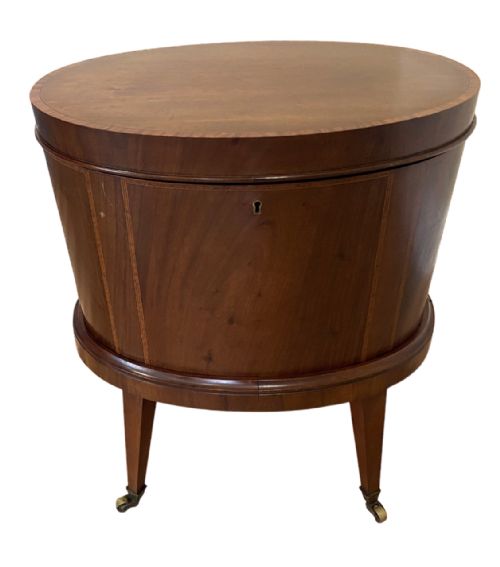


Inlaid Mahogany Wine Chest
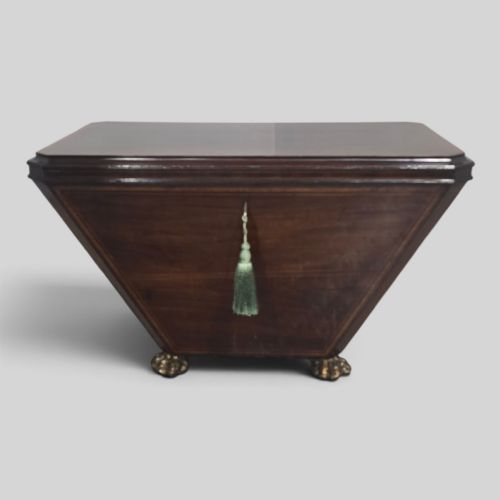
An inlaid mahogany wine chest is a robust Georgian or nineteenth-century container for bottles, designed to hold ice and keep wine cool at the dining table.
Inlaid Mahogany Wine Chest
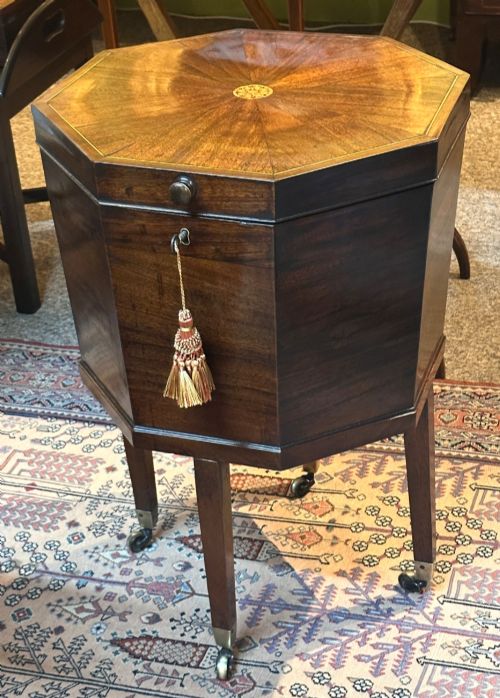
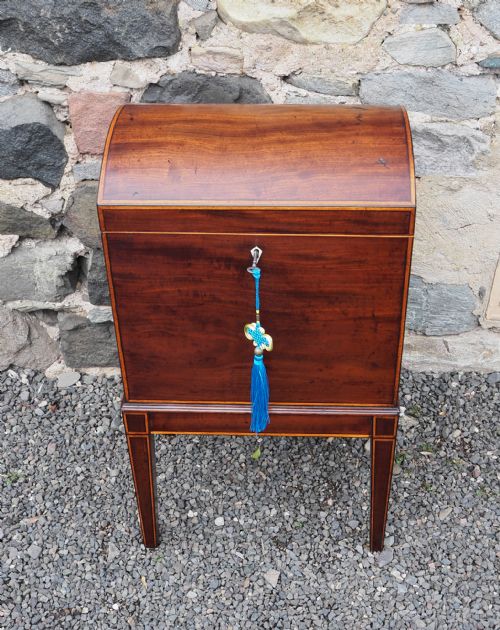
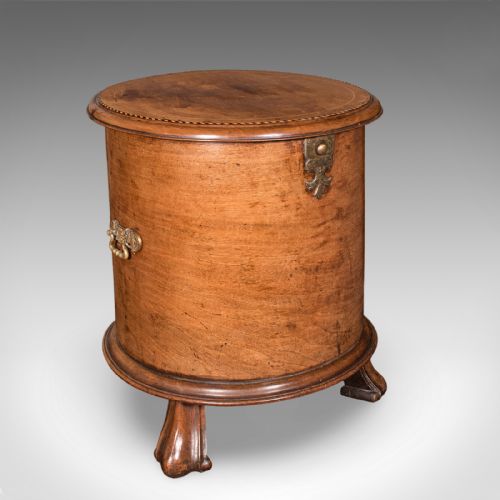
An inlaid mahogany wine chest serves as a functional receptacle for storing and cooling bottles during formal dining. These pieces appear in forms such as cellarettes, wine coolers, and oval or octagonal boxes dating from the Georgian, Regency, and Victorian eras.
The version most commonly encountered on this page is the Georgian or nineteenth-century mahogany model featuring boxwood or satinwood inlay and stringing. Examples range from George III serpentine fronts to Edwardian revivals and later nineteenth-century workshop pieces.
How they were made
Cabinet makers constructed these pieces using solid mahogany and wood veneer over sturdy timber carcases, often incorporating contrasting boxwood and satinwood for decorative inlay and banding. Brass mounts, handles, and fitted interior linings provided the necessary durability and containment for heavy glass bottles and ice.
Joinery techniques included tight dovetailing for box construction and precise wood veneering to create curved serpentine or octagonal shapes. Inlay work required meticulous hand-cutting of light-coloured woods to set them flush into darker mahogany surfaces.
Many a Victorian dinner guest unknowingly rested their feet against a heavily iced cellar box keeping the claret chilled.
What varies in quality
The standard of timber selection and complexity of cabinet making define the upper tier of these pieces. Finely figured mahogany grain, intricate satinwood banding, and sophisticated serpentine or octagonal forms distinguish superior workshop output from simpler vernacular boxes.
The crispness of the hand-cut inlay and the retention of original brass fittings and interior divisions further separate standard examples from finer productions by noted makers.
Edwards and Roberts·Gillows·Freemans of Norwich
The Inlaid Mahogany Wine Chest Glossary
- Cellarette
- A lockable container or box used for holding bottles of wine near the dining table. They frequently include lead-lined interiors intended for ice.
- Stringing
- A narrow strip of contrasting wood inlaid into the surface of furniture to create a fine border line. This technique highlights the geometric edges of the timber panels.
- Serpentine
- A furniture front curving inward at the centre and outward at the ends in a continuous wave line. This shape demands high skill in cabinet making.
- Banding
- A flat border of veneer around the edges of a panel, selected to contrast with the primary wood colour. It frames the central grain pattern.
Inlaid Mahogany Wine Chest: Frequently Asked Questions
How were wine chests used?
These chests sat beneath the dining table or beside the sideboard during meals. Servants filled the lead-lined interiors with ice to chill the bottles before serving.
Opening the lid allowed guests or hosts to access the wine without leaving the room. The lockable lids kept expensive vintages secure from household staff.
Where do I put a wine chest?
A wine chest functions well as a standalone decorative piece in a dining room or living space. Its flat top surface provides a convenient display area for lamps or small objects.
Interior space also suits storage for modern items while preserving the historic exterior appearance.
How do I spot a Georgian piece?
Georgian examples display specific proportions and timber characteristics typical of eighteenth and early nineteenth-century cabinet making. Look for hand-cut dovetails and period-appropriate brass hardware.
Construction methods and timber age offer reliable clues to dating before consulting maker marks.
What is satinwood banding?
Satinwood banding is a decorative border made from pale, yellowish-blonde exotic timber applied around the edges of mahogany panels. It creates a sharp visual contrast against the dark background.
Craftsmen used this detail to define geometric shapes on the lids and fronts of finer chests.