
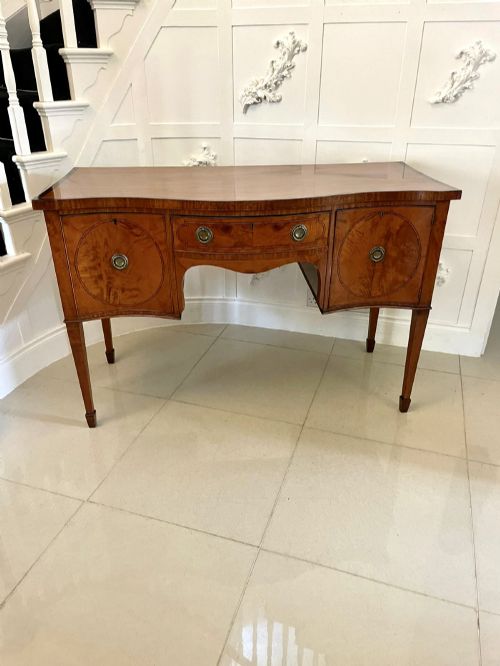
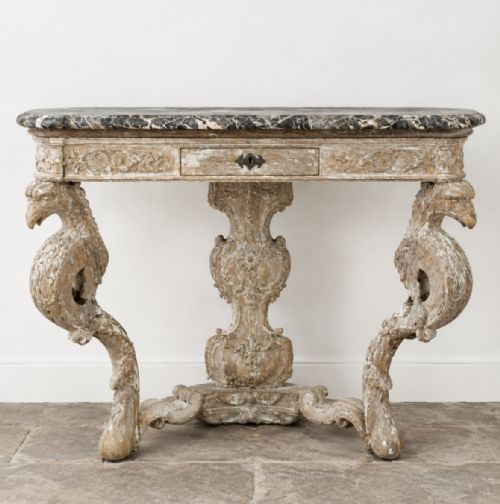
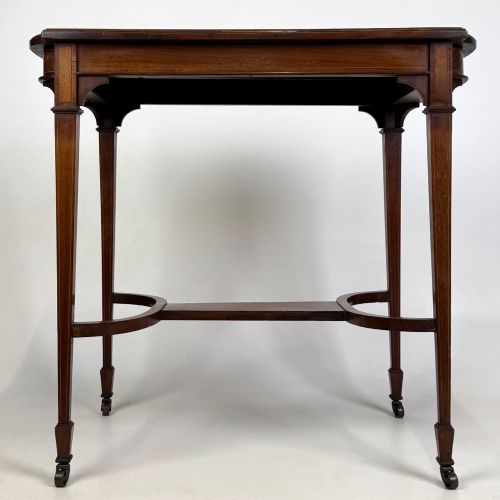
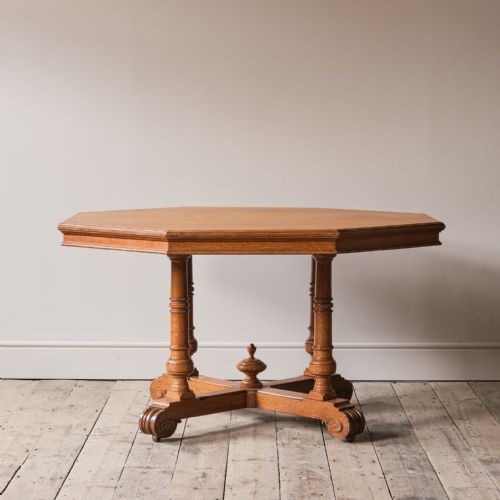
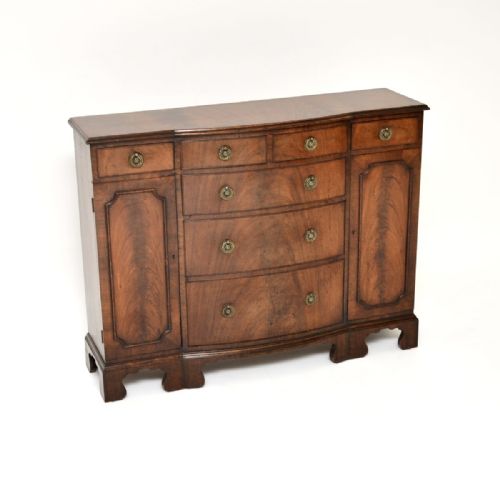
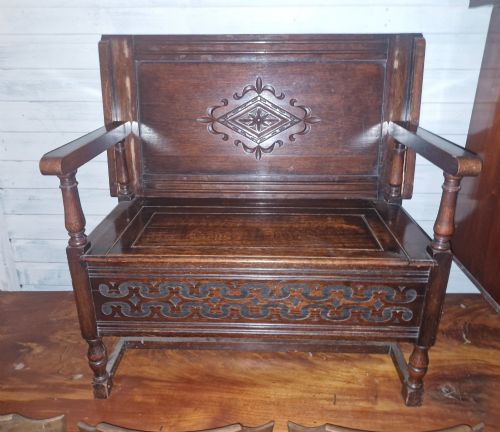
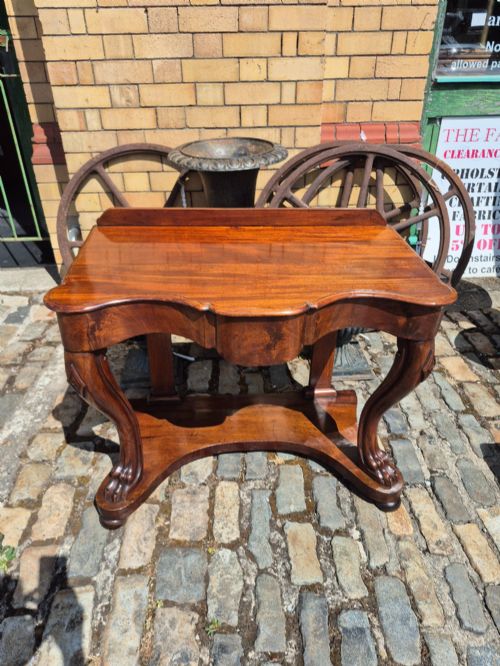
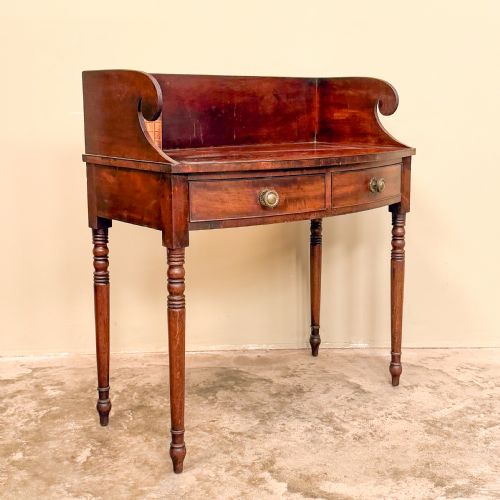
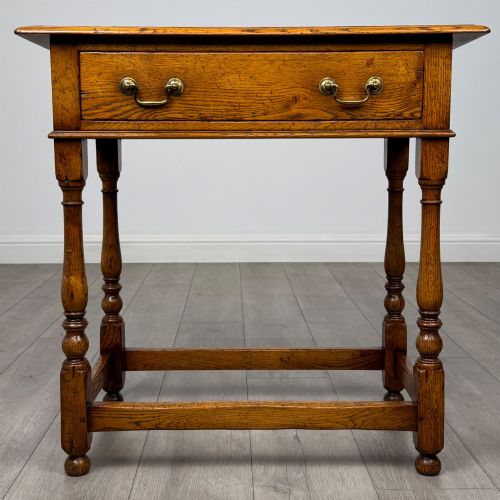
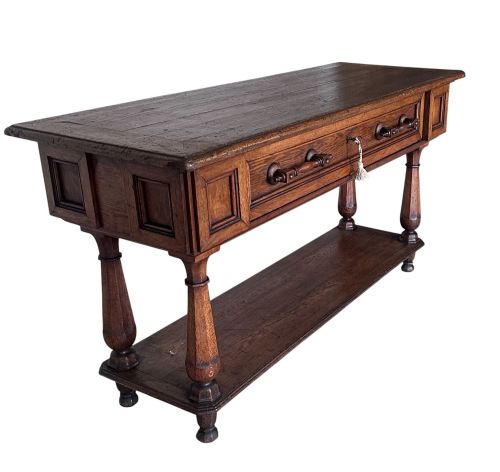
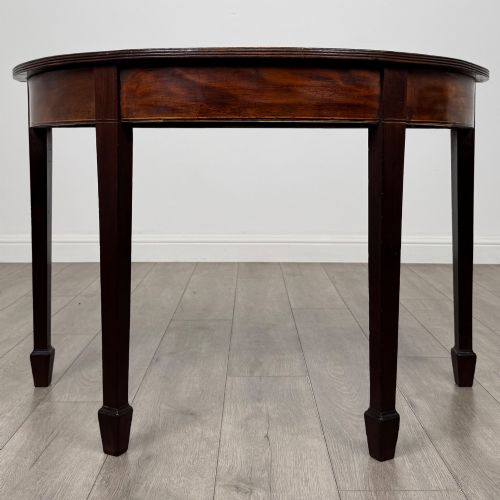
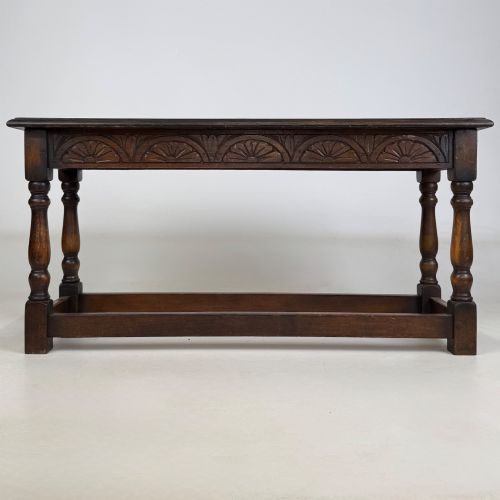
Antique Wooden Hallway Table
These antique wooden hallway table pieces combine utility and craftsmanship, offering practical surfaces that anchor an entrance hall with traditional character.
What these tables are
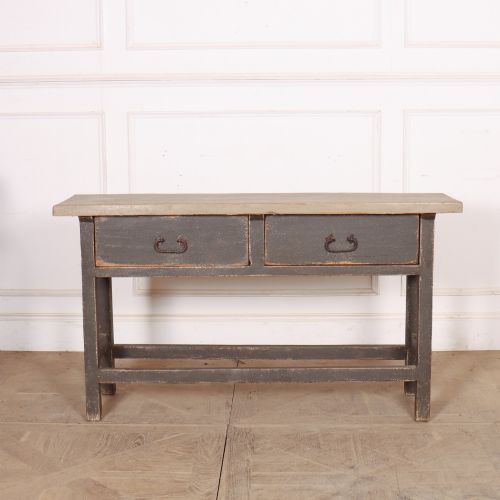
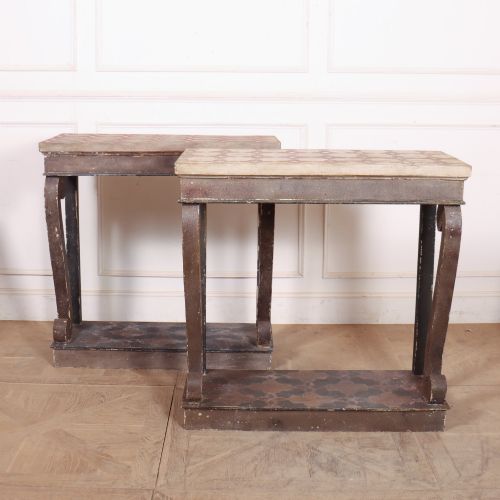
An antique wooden hallway table serves as a functional surface for an entrance, usually taking the form of a side table or console table. These pieces provide a dedicated spot near the door whilst introducing period character to a hallway.
The selection centres heavily on nineteenth-century examples spanning the Victorian era and the broader nineteenth-century period. Buyers encountering this range will see forms originating from English and continental traditions.
Makers and designers of the period produced variations such as serving tables, bow-fronted side tables, and console tables. These serve different spatial requirements depending on the depth and length of the hallway.
Materials and construction
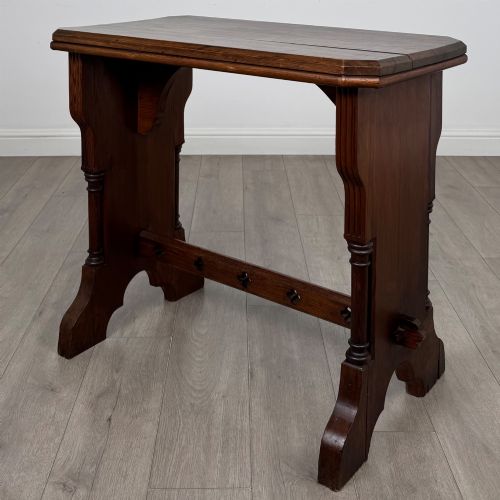
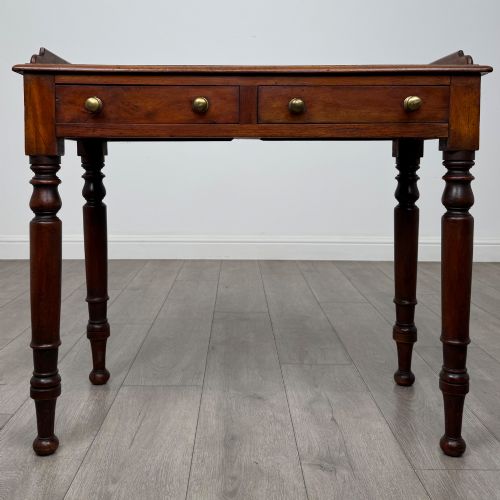
Construction relies upon traditional timber varieties including pitch pine, oak, cherrywood, and mahogany. These hardwoods and softwoods were chosen for their durability and grain patterns, sometimes enhanced with brass hardware or wood inlay.
Joinery techniques from the nineteenth century dictate the assembly of these tables, utilising solid timber frames and structural joints designed to withstand daily use. Surfaces often display the natural characteristics of the chosen wood rather than heavy modern finishes.
Retail Price Guide 2026
Typical UK retail prices for wooden hallway table, calculated from the Sellingantiques database of over a million retail prices indexed since 2003. This retail price guide relies exclusively on Sellingantiques data; no external sources or auction records are used, so the figures do not describe the wider market.
Judging quality
Quality in these tables reveals itself through the selection of timber and the precision of the joinery. Superior examples utilise well-figured mahogany, quarter-sawn oak, or clean pitch pine with stable, well-fitted structural elements.
Design ambition separates basic utility pieces from more distinguished items. Pieces displaying regional styling such as Victorian Gothic details or French provincial proportions demonstrate greater design thought than plain utilitarian equivalents.
The Antique Wooden Hallway Table Glossary
- Console table
- A table designed to be fixed against a wall or supported by front legs, commonly placed in hallways and entryways. They often feature narrow proportions to suit circulation spaces.
- Bow front
- A convex, curved front section of a piece of furniture that softens the rectilinear appearance of a room. This shaping requires skilled carpentry to bend or carve timber accurately.
- Pitch pine
- A durable softwood with a prominent grain pattern widely utilised in nineteenth-century furniture. It offers significant strength and a warm natural tone.
- Side table
- A small table placed against a wall, useful for holding lamps or decorative objects. In a hallway, it provides a convenient drop-off surface for daily items.
Frequently Asked Questions
What is an antique wooden hallway table used for?
These tables provide a practical surface in entrance spaces for placing keys, post, and decorative items. Their slim profiles allow them to fit into narrow corridors without obstructing movement.
They also establish a focal point upon entering a home, setting a traditional tone through exposed timber grains and period styles.
How do I date a 19th-century hallway table?
Dating relies upon examining the timber species, construction methods, and stylistic indicators such as Victorian Gothic or Regency design motifs. Hand-cut joinery and timber preparation marks provide clues to the manufacturing era.
Comparing the hardware, such as brass pulls or handles, alongside secondary timbers helps confirm nineteenth-century origins.
Are console tables and side tables different?
Console tables are traditionally designed to stand against a wall, sometimes relying on the wall for partial support, whereas side tables are freestanding pieces with four legs. Both forms function similarly within a hallway setting.
Proportions usually dictate the choice, with console tables offering shallower depths for tighter corridors.
How do I care for antique wood furniture?
Maintain antique wooden surfaces by keeping them away from direct heat sources and sudden humidity changes to prevent timber splitting. Regular dusting with a soft cloth preserves the finish without requiring harsh chemical polishes.
Applying occasional appropriate wax feeds the timber and protects the historic surface patina.