



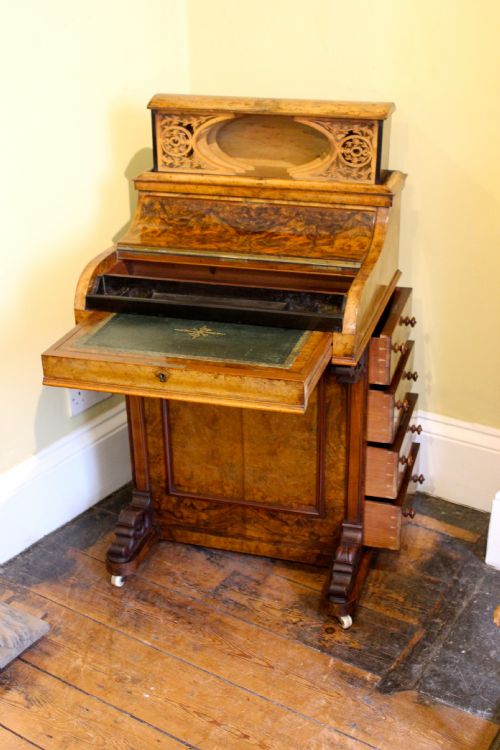


Antique Wooden Davenport
An antique wooden davenport is a compact, sloping writing desk with a set of drawers, designed to offer practical workspace in small domestic rooms.
Antique Wooden Davenport
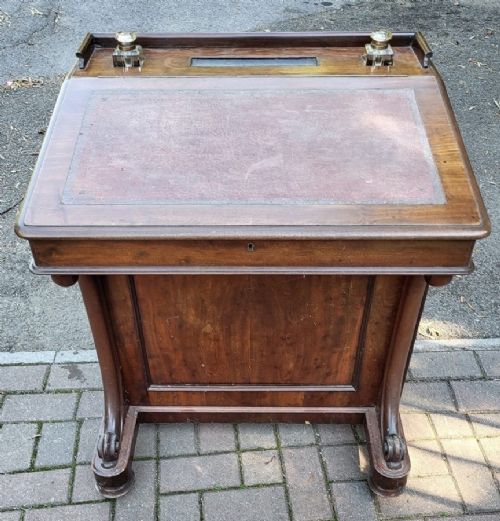
An antique wooden davenport is a distinctive form of compact writing desk developed in the nineteenth century, most commonly encountered from the Victorian and Regency periods. These pieces combine a slanted writing surface with a set of side drawers, often housing a fitted interior with small compartments and pigeonholes. Buyers looking for an antique wooden davenport will find examples ranging from simple clerks desks to elaborate piano top mechanisms.
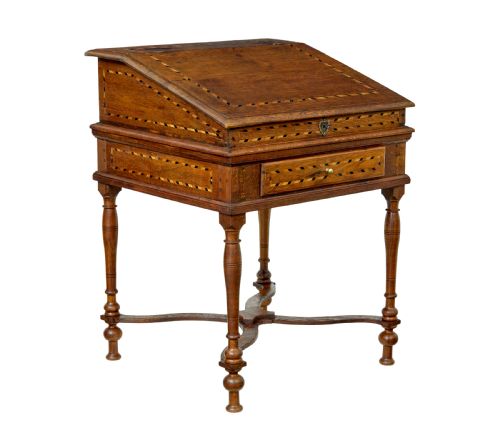
The selections span various regional interpretations and stylistic influences, including Dutch inlaid oak, carved Anglo-Indian pieces, and refined rosewood or mahogany specimens. Most pieces adhere to a traditional compact footprint, making them suitable for studies or drawing rooms where space is at a premium. The overarching design provides a dedicated writing station without dominating the room.
How they were made
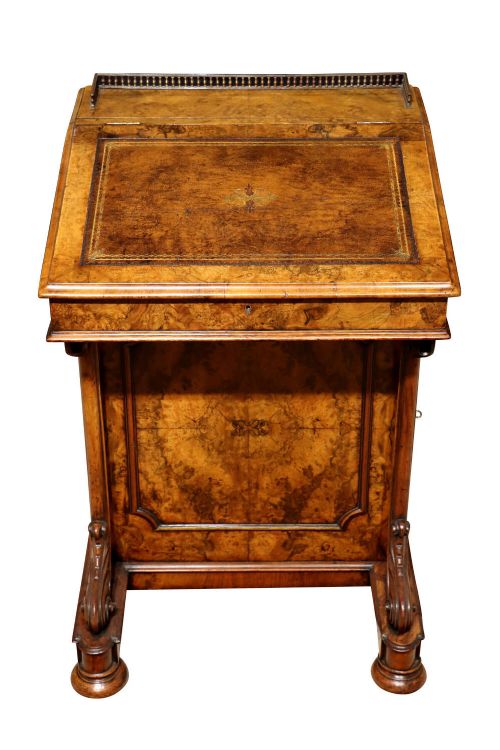
Cabinet makers utilised dense hardwoods such as mahogany, walnut, and rosewood, frequently selecting burr walnut veneers for rich surface figuring. Structural stability relied on traditional joinery, while secondary timbers accommodated interior partitions and drawer linings.
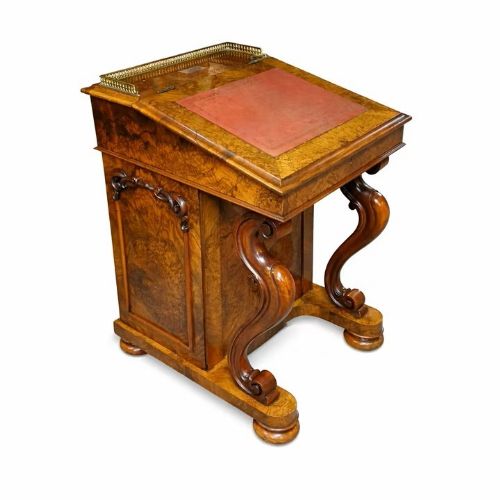
Writing surfaces were typically inset with contrasting leather panels, often finished with gilt tooling. Cast brass hardware, handles, and gallery rails provided functional decoration, while specialised internal mechanisms allowed for sliding sections or pop-up compartments in later models.
Davenport listings span multiple periods, featuring Regency, Victorian, and early twentieth-century examples.
What varies in quality
Quality in these desks is determined by the selection of timber veneers, the precision of cabinet joinery, and the sophistication of any internal mechanisms. Superior examples exhibit matched burr walnut figures and tightly executed inlay work.
The refinement of the interior secondary woods and the presence of original brass fittings further distinguish finer productions from standard workshop pieces. Proportion and overall balance also define the upper tier of the range.
Gillows
The Antique Wooden Davenport Glossary
- Davenport
- A compact pedestal desk featuring a sloping writing surface hinged above a set of side drawers. The form gained popularity in the nineteenth century for domestic correspondence.
- Burr Walnut
- Timber taken from the warted growths on walnut trees, yielding highly figured, swirling veneer patterns. It was favoured by nineteenth-century cabinet makers for decorative surfaces.
- Writing Slope
- A portable or integrated sloping desk surface designed to hold paper at a comfortable angle for writing. Many incorporate internal compartments for inkwells and stationery.
- Piano Top
- A desk design where the upper writing section slides forward or lifts via a spring-loaded mechanism reminiscent of a piano lid. This variation often reveals a tiered interior workspace.
- Inlay
- A technique of embedding pieces of contrasting wood, metal, or shell into a solid wooden surface to form decorative patterns. Dutch examples frequently employ floral motifs in this manner.
Antique Wooden Davenport: Frequently Asked Questions
What is an antique wooden davenport?
An antique wooden davenport is a small nineteenth-century writing desk featuring a slanted writing top and a pedestal of drawers to one side.
These pieces were originally designed for domestic letter writing and administrative tasks in compact rooms.
How were davenport desks used?
Owners sat at the sloping top to write correspondence, utilising the internal pigeonholes and drawers for stationery and ink.
The side drawers provided secure storage for personal papers while keeping the writing materials contained within a small footprint.
How do I identify a Victorian davenport?
Victorian examples often feature burr walnut veneers, rosewood or mahogany constructions, and elaborate internal fittings with satinwood drawers.
They frequently display nineteenth-century manufacturing traits such as hand-cut dovetails and inset leather writing surfaces.
What is a piano top davenport?
A piano top davenport incorporates a sliding or lifting top mechanism that exposes an organised interior workspace upon opening.
This sophisticated variant emerged during the nineteenth century to conceal stationery compartments when the desk was not in use.