


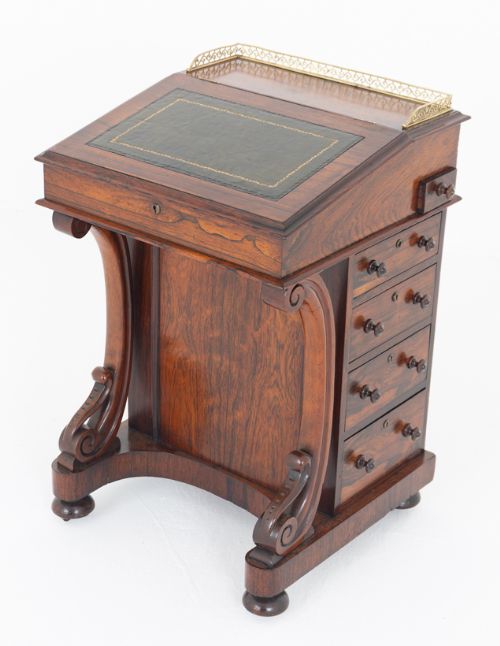


Side Drawer Davenport Desk
A side drawer davenport desk is a compact writing cabinet with practical side drawers that offers clever storage and a sloping top for correspondence.
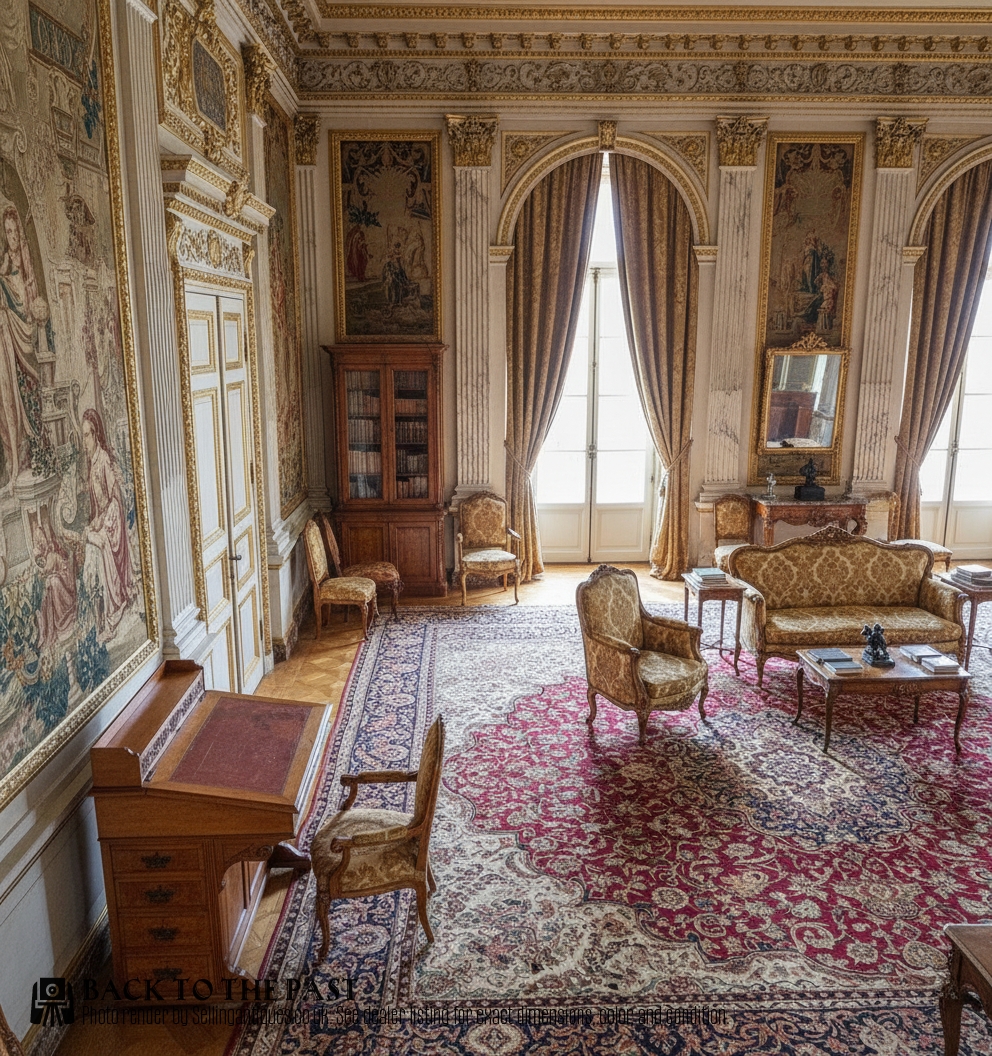
Side Drawer Davenport Desk
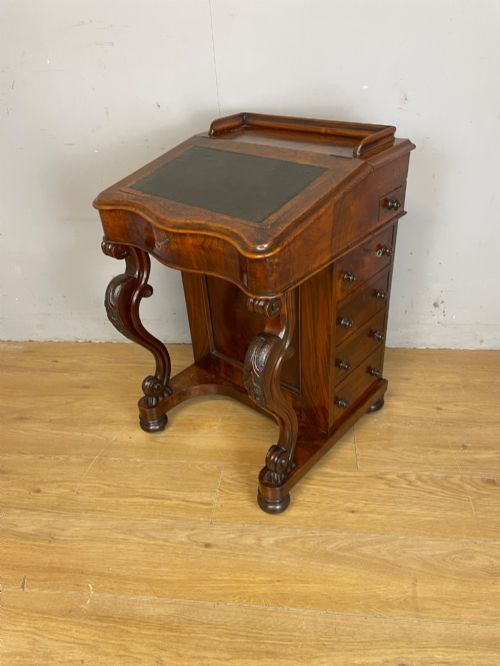
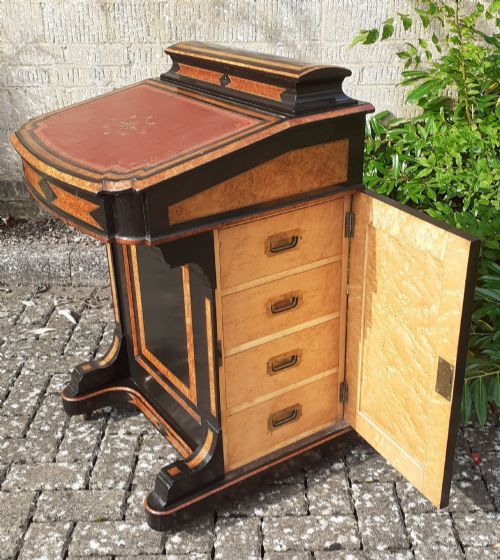
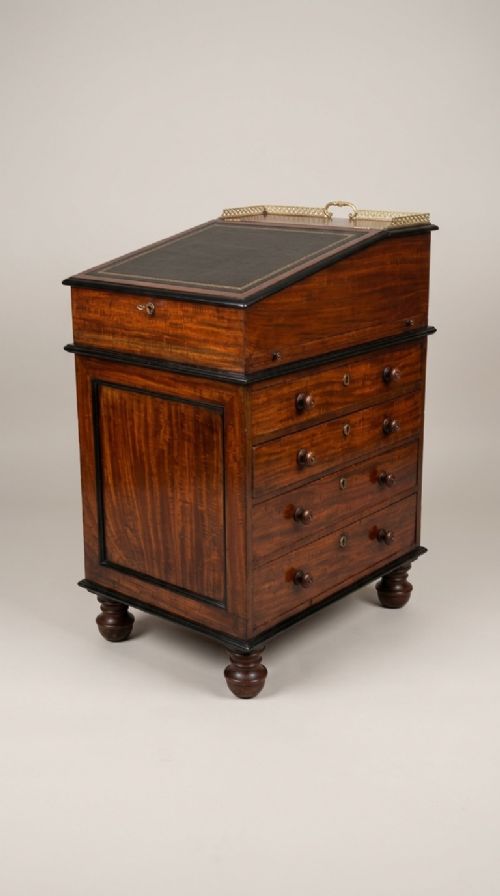
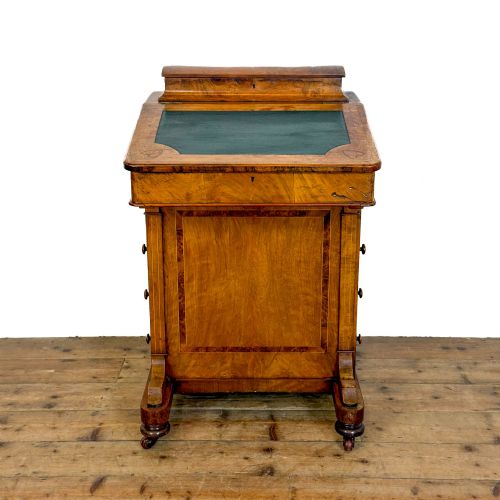
A side drawer davenport desk provides a writing surface above a bank of small drawers accessed from the flank rather than the front. When you examine the options on this page, the Victorian walnut and mahogany versions appear most frequently, spanning the nineteenth century.
Makers designed these compact writing desks for domestic parlours and boudoirs where space was limited. The form combines a sloping desk lid, often inset with leather, with functional drawers and stationary compartments housed within the superstructure.
Materials and construction
Cabinet makers utilised dense hardwoods such as mahogany, rosewood and walnut, frequently selecting figured veneers like burr walnut or pollard oak for the primary surfaces. These timbers were chosen for their rich grain patterns and durability.
Brass mounts, ebony stringing and fitted leather writing surfaces complete the construction of these pieces. Joinery techniques ensured the small side drawers moved smoothly within the compact wooden carcasses.
Listings feature woods including mahogany, rosewood, walnut, burr walnut, pollard oak and amboyna across the nineteenth century.
Distinctions in quality
The choice of timber veneer sets the baseline for refinement, with heavily figured burr walnut, amboyna and pollard oak marking out more ambitious commissions. Plain mahogany examples rely entirely on crisp proportions and precise cabinet work for their appeal.
Interior fittings, such as secret compartments, original brass hardware and well-executed marquetry inlay, distinguish standard workshop production from exceptional pieces. The handling of secondary woods and the precision of the drawer dovetails further indicate the standard of manufacture.
Gillows
The Side Drawer Davenport Desk Glossary
- Davenport
- A compact writing desk featuring a sloped writing lid and drawers set into the side. The form became popular during the nineteenth century for domestic study and letter writing.
- Burr walnut
- A prized timber harvested from the irregular growth knots of the walnut tree. It produces intricate, swirling grain patterns highly valued by Victorian cabinet makers.
- Pollard oak
- Oak timber obtained by pollarding the tree, which yields a dense, heavily knotted grain. It was utilised for distinctively textured decorative furniture.
- Marquetry
- The art of applying decorative veneer pieces to a structure to form geometric or pictorial designs. It often ornaments the lids and panels of finer desks.
- Amboyna
- An exotic, highly figured timber with a rich brown speckled grain. Makers used it sparingly for luxury veneer work on nineteenth-century pieces.
Side Drawer Davenport Desk: Frequently Asked Questions
What is a side drawer davenport desk?
A side drawer davenport desk is a small writing cabinet featuring a sloping lid and a bank of drawers opening on the side. They emerged in the nineteenth century as convenient writing furniture for domestic interiors.
These pieces combine a compact footprint with surprisingly clever internal storage for stationery and correspondence. The design allowed users to sit close while keeping writing materials organised.
How were davenport desks used historically?
Owners utilised these desks for daily correspondence, managing household accounts and writing letters in private rooms. The sloping lid provided a comfortable angle for handwriting.
Drawers positioned on the side allowed access to papers even while seated at the desk. The upper stationery box kept ink and pens close at hand.
How do I date a davenport desk?
Dating relies on observing the timber choices, construction methods and stylistic details present in the piece. Regency examples often feature rosewood and classical proportions, while Victorian versions frequently employ burr walnut and heavier ornamentation.
Examining the secondary woods inside the drawers and the type of brass hardware helps narrow down the decade of production. Edwardian pieces from the early twentieth century often show lighter inlay work.
How do I live with a antique davenport?
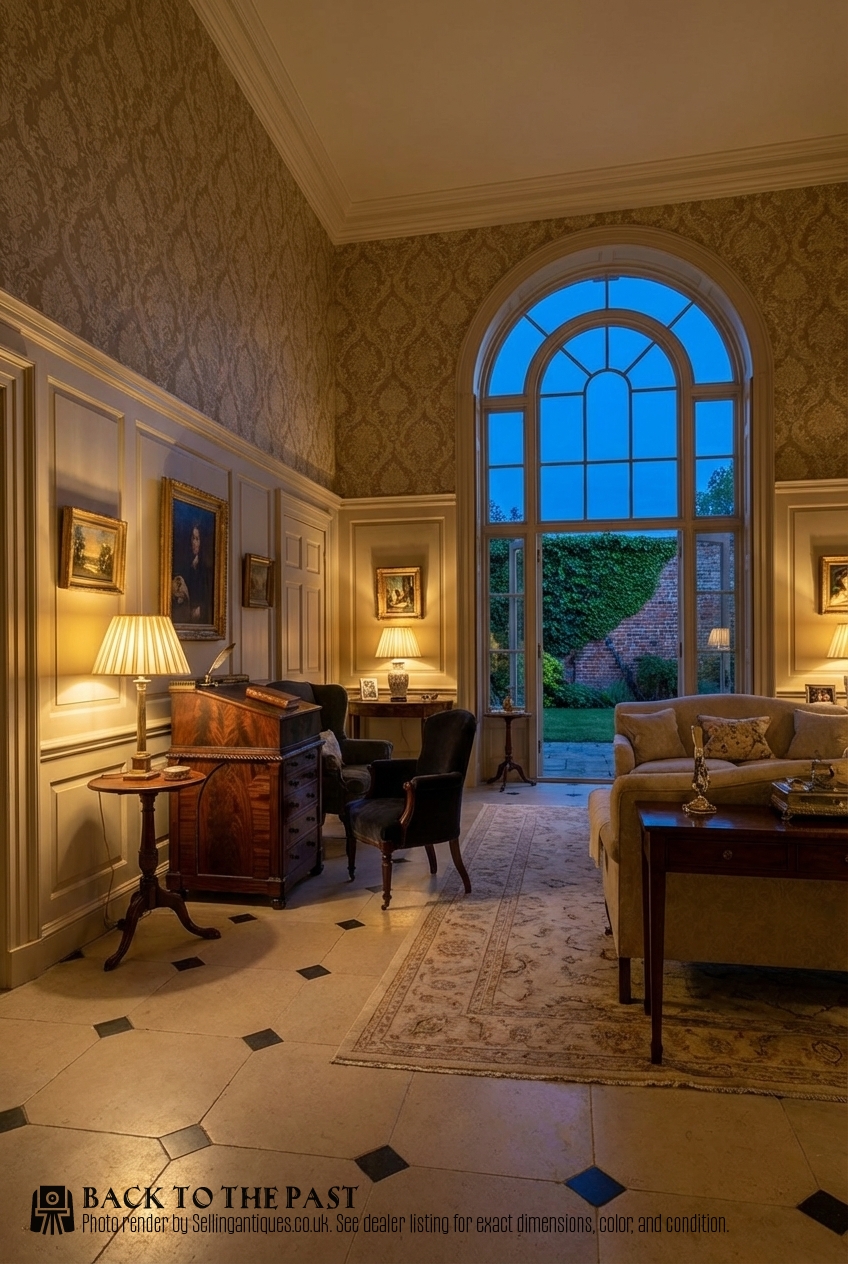
Placing a davenport in a study, living room or bedroom allows it to function as a practical writing surface or display table. Its compact size makes it adaptable to smaller spaces where a full-sized partner desk would overwhelm the room.
Maintenance involves keeping the timber nourished with suitable wax and protecting the leather writing surface from direct moisture. Regular dusting preserves the polished finish of the veneers.