


Traditional Writing Slope Cabinet
A traditional writing slope cabinet offers a disciplined desk space with clever compartments, built from mahogany, oak and walnut across the centuries.
Traditional Writing Slope Cabinet
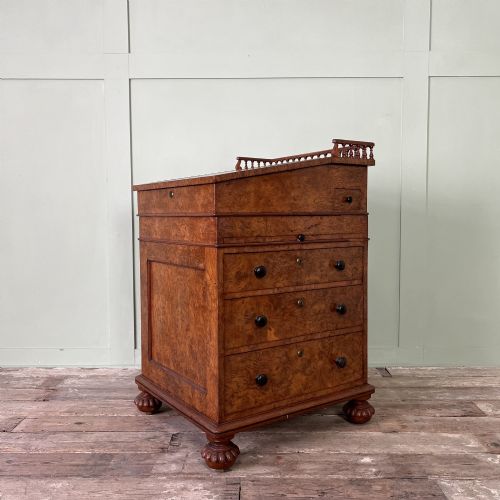
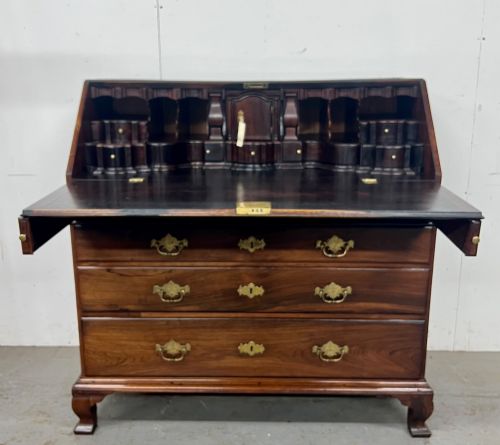
A traditional writing slope cabinet combines a slant-top writing surface with internal stationery drawers and concealed compartments, often taking the form of a bureau or a compact Davenport. These pieces serve as self-contained writing stations that shut away correspondence when not in use, keeping papers tidy in a domestic room. Buyers seek them out for their ingenious internal arrangement and the handsome timber grain displayed across their fall fronts.
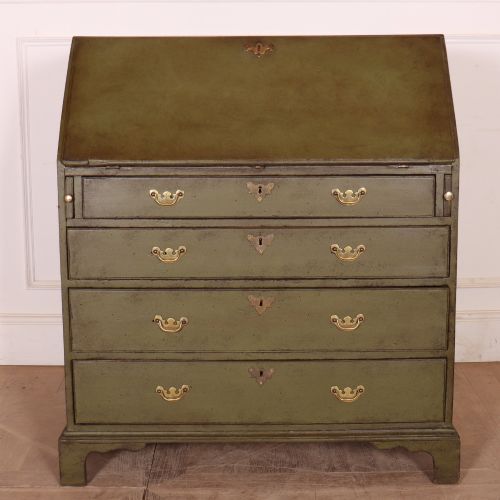
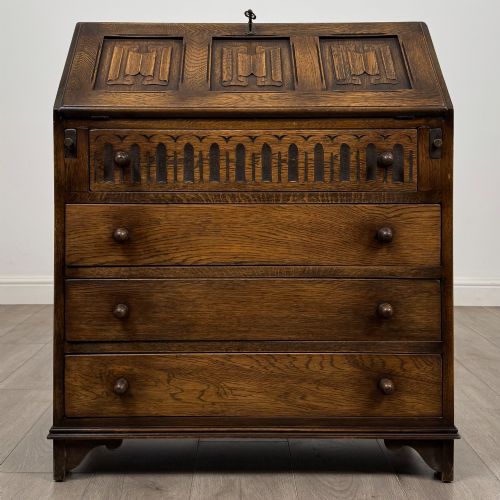
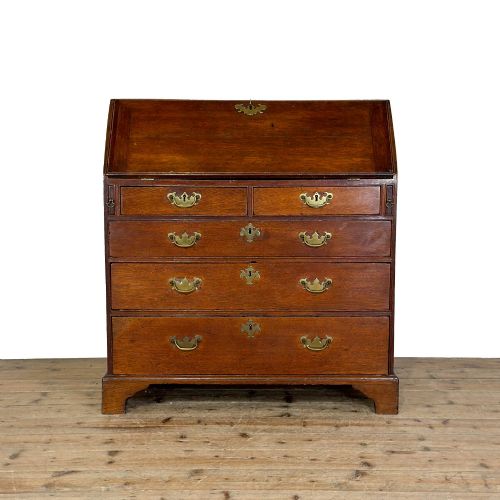
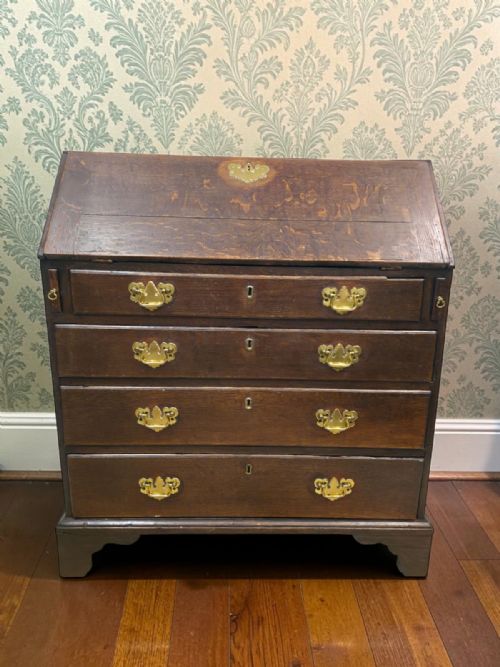
The examples found on this page span the eighteenth, nineteenth and twentieth centuries, taking in Georgian, Victorian and Edwardian periods alongside later revivals. Oak and mahogany dominate the selection, supplemented by walnut, burr elm and painted wood finishes. Forms range from fall-front writing bureaux and bureau bookcases to upright Davenport desks fitted with side drawers.
Most pieces date from the Georgian and Victorian eras, though early seventeenth-century vernacular oak items and twentieth-century reproductions also appear. A buyer is most likely to encounter a mahogany or oak bureau with a sloping lid that opens to reveal pigeonholes and small drawers. These versatile desks fit easily into modern studies and living spaces while retaining period character.
What varies in quality
The standard of timber selection largely dictates quality, separating pieces faced in richly figured burr walnut or dense old-growth mahogany from simpler domestic items. Superior examples display meticulous attention to internal arrangement, featuring neatly dovetailed pigeonhole drawers and sophisticated hidden compartments rather than plain dividers. Cabinet-making pedigree also elevates a piece, as seen in signed or attributed work from known makers like Gillow.
Structural integrity and the preservation of original brasses, secondary timbers and leather writing surfaces influence the standing of any given cabinet. Well-executed carving, balanced proportions and harmonious wood selection across the fall front and carcass distinguish finer workshop production from standard commercial output. The complexity of the interior configuration often signals the ambition of the original commission.
Listings span the eighteenth to the twentieth centuries, featuring oak, mahogany, walnut and painted wood across bureau and Davenport formats.
Gillow and Co
The Traditional Writing Slope Cabinet Glossary
- Bureau
- A desk featuring a sloping hinged lid that opens to form a writing surface above a chest of drawers. These cabinets conceal pigeonholes and small drawers inside.
- Davenport
- A compact desk type comprising an upright body with a sloping writing top and a pedestal of drawers to one side. The form became popular during the nineteenth century for use in smaller rooms.
- Fall front
- The hinged sloping panel of a bureau or cabinet that lowers to create a horizontal desk surface. It exposes the internal stationery compartments when open.
- Linenfold
- A style of carved wooden panelling that resembles folded vertical folds of fabric. This decorative motif appears on Tudor revival and early oak pieces.
- Secretaire
- A piece of furniture containing a fitted writing drawer or compartment concealed behind a drop-front panel. It combines storage with a pull-out desk facility.
Traditional Writing Slope Cabinet: Frequently Asked Questions
What is a traditional writing slope cabinet?
A traditional writing slope cabinet is a compact desk featuring a hinged sloping lid that drops down to provide a writing surface. Inside, the piece contains a series of small drawers and pigeonholes designed to hold paper and correspondence.
These cabinets take various forms, including upright Davenport desks and traditional fall-front bureaux. They allow owners to conceal their writing materials and papers when the desk is not in use.
Where were Davenport desks used?
Davenport desks were primarily used in Victorian parlours, studies and bedrooms as space-saving writing stations. Their compact footprint made them suitable for rooms where a full-sized partner desk would prove too large.
The side drawers provided storage for stationery while keeping the top surface clear for letter writing. Many included a small compartment on top for inkwells and pens.
What woods were used for these cabinets?
Mahogany and oak are the most frequent timbers found in these writing cabinets across the eighteenth and nineteenth centuries. Walnut, burr walnut and burr elm also appear on decorative pieces, offering striking grain patterns across the fall fronts.
Regional examples often utilise local woods like pine or fruitwood, sometimes finished with painted surfaces. Secondary woods inside the drawers provide further clues to the origin and age of the piece.