

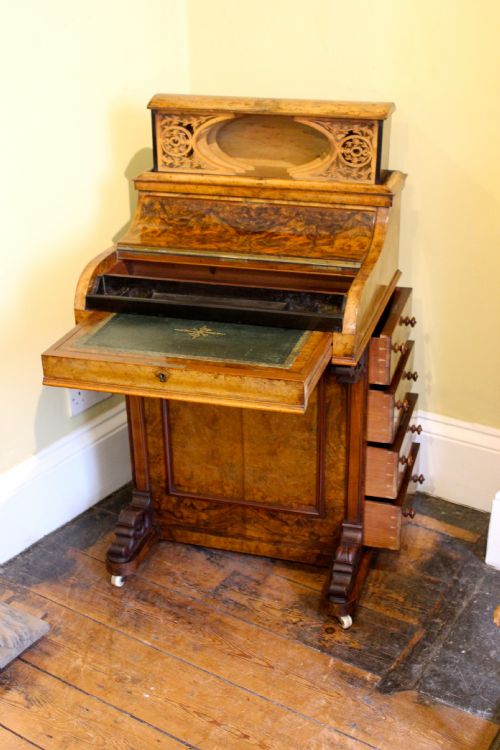


Small Wooden Writing Slope
A small wooden writing slope offers a portable and practical surface for correspondence, crafted in timber from the eighteenth and nineteenth centuries.
Small Wooden Writing Slope
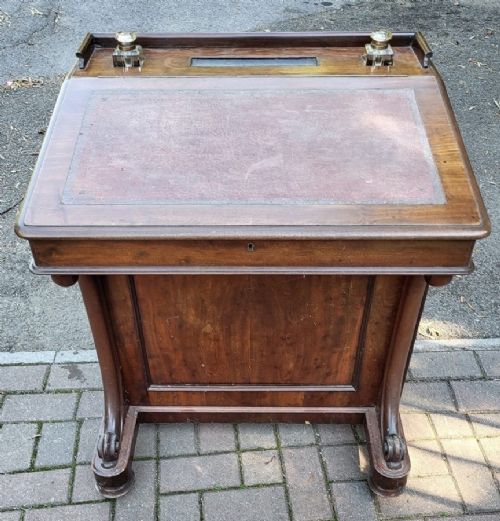
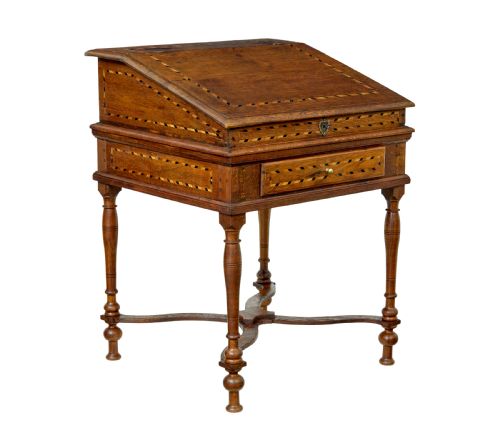
A small wooden writing slope encompasses portable boxes, compact bureaux, and Davenport desks designed for private correspondence and the storage of writing materials. These pieces range from Georgian oak and elm boxes to elaborate Victorian walnut and mahogany models.
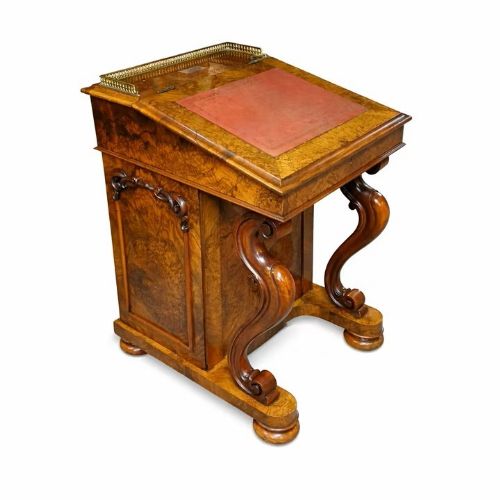
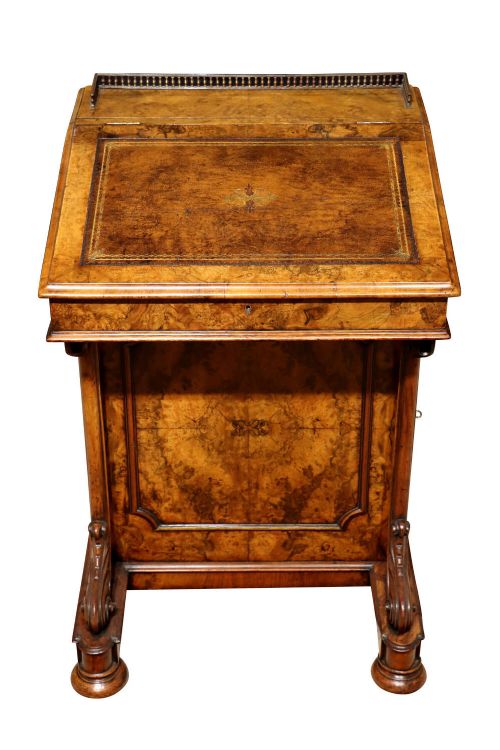
The version most commonly encountered on this page is the Victorian Davenport desk, frequently constructed in burr walnut with fitted interiors and multiple drawers. Alongside these stand eighteenth-century boxes and compact bureaux from the Regency and Edwardian periods.
What varies in quality
The choice of timber and veneer dictates much of the initial distinction, with figured burr walnut, amboyna, and detailed marquetry representing more ambitious workshop production than plain oak or mahogany. Finer examples display meticulous matching of wood grains across the sloping lid and drawer fronts.
Internal arrangement and secondary materials further separate the standard items from superior pieces, such as fitted satinwood stationery compartments, original brass fittings, and intact leather inserts. The integration of complex mechanisms or specialised inlays like tunbridgeware indicates higher craftsmanship.
Materials recorded across the selection include mahogany, oak, walnut, burr walnut, elm, fruitwood, amboyna, brass, and leather.
The Small Wooden Writing Slope Glossary
- Davenport
- A compact type of Victorian desk featuring a sloping writing surface above a pedestal of drawers. The top often incorporates a stationery compartment or pen well.
- Bureau
- A desk with a hinged sloping flap that opens to reveal pigeonholes and small drawers. Early versions sit on a chest base or frame.
- Burr walnut
- Timber taken from the warted growths on walnut trees, yielding highly figured and swirling grain patterns prized for decorative veneer. It is frequently seen on Victorian examples.
- Tunbridgeware
- A form of woodworking peculiar to Kent involving small mosaic tiles of various coloured woods to form pictorial or geometric designs. Such decoration appears on travel accessories.
- Satinwood
- A durable, yellow-toned hardwood utilised for internal drawer linings and stringing inlay work. It provides a bright contrast to darker exterior timbers.
Small Wooden Writing Slope: Frequently Asked Questions
What is a small wooden writing slope?
A small wooden writing slope is a portable or compact desk designed for personal correspondence, featuring an angled lid to rest paper upon. These items range from simple boxes placed on tables to standing Davenport desks with internal compartments.
Historically, they provided a secure place to store ink, quills, and letters while travelling or within domestic rooms. The sloping lid allowed for comfortable writing before the widespread use of flat-topped partner desks.
How were these desks used?
Owners used these pieces to write letters, maintain journals, and store important documents away from moisture and prying eyes. The internal compartments kept inkwells, sanders, and wax seals organised.
Many examples include secret drawers or locking mechanisms to secure private papers and valuables. Portable boxes allowed users to carry their writing desk between rooms or on journeys.
How do I identify a Victorian slope?
Victorian writing slopes and Davenports frequently utilise burr walnut, rosewood, or mahogany, often enhanced with Tunbridgeware, marquetry, or brass inlay. The interiors commonly feature satinwood drawers and fitted stationery sections.
Later nineteenth-century pieces may display machine-carved details or stamped brass hardware. Comparing the secondary woods and construction methods helps distinguish them from earlier Georgian boxes.
Where should I place one?
These compact pieces fit well on sturdy side tables, chest tops, or directly on the floor in the case of Davenport desks. Their small footprint makes them practical for studies, living rooms, or hallways.
Keep them away from direct sunlight and strong heat sources to protect timber veneers and leather surfaces from drying out. Using appropriate furniture wax maintains the finish of the wood.