

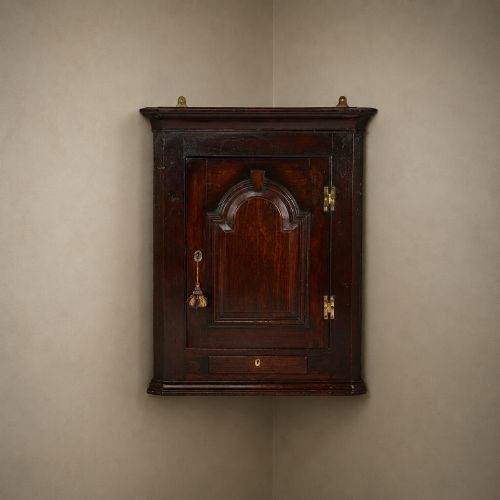

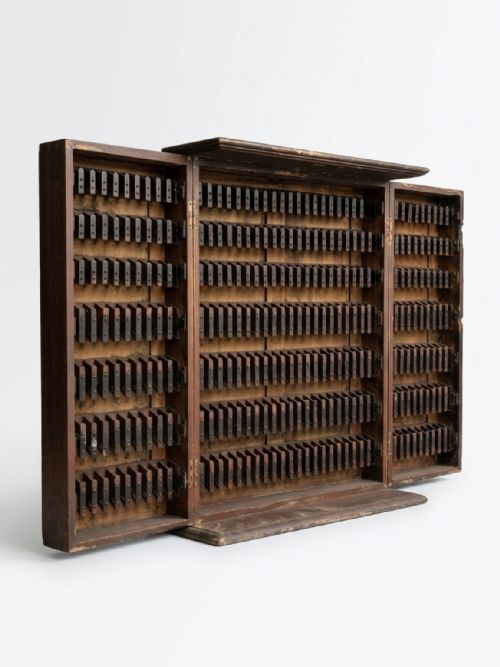
Antique Wood Wall Cabinet
An antique wood wall cabinet organises a room with compact storage, offering sturdy shelves or glazed doors to display cherished small possessions.
Antique Wood Wall Cabinet
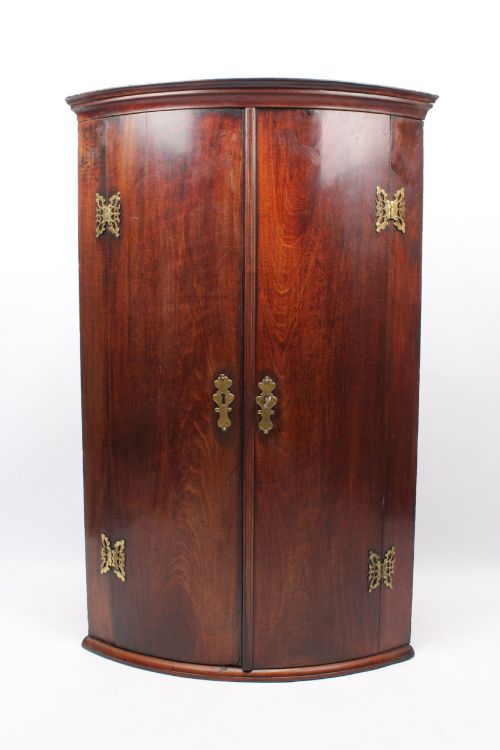
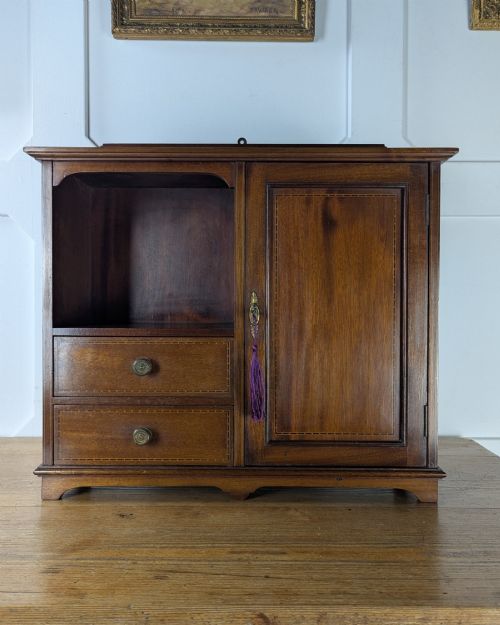
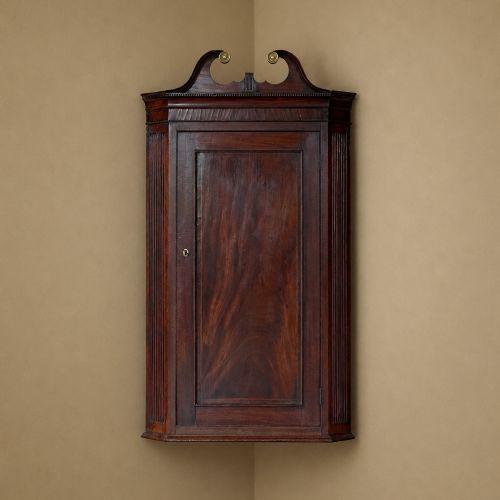
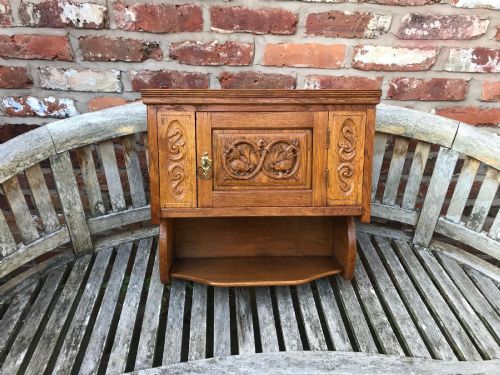
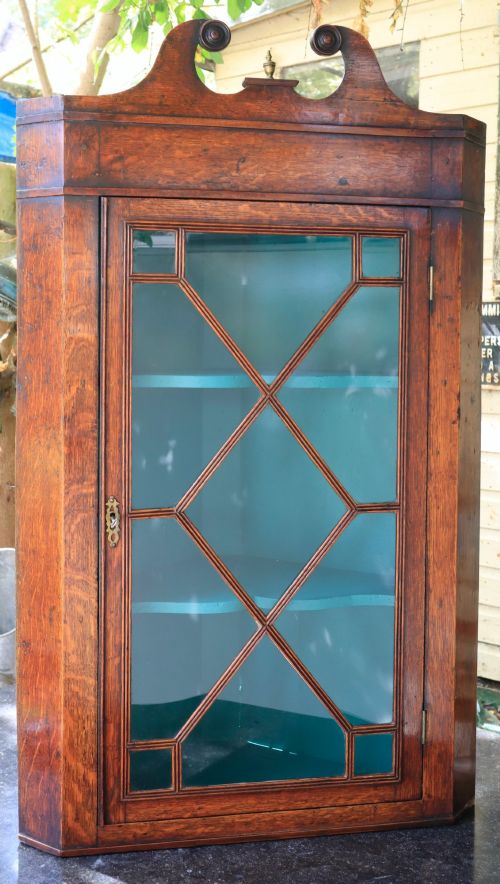
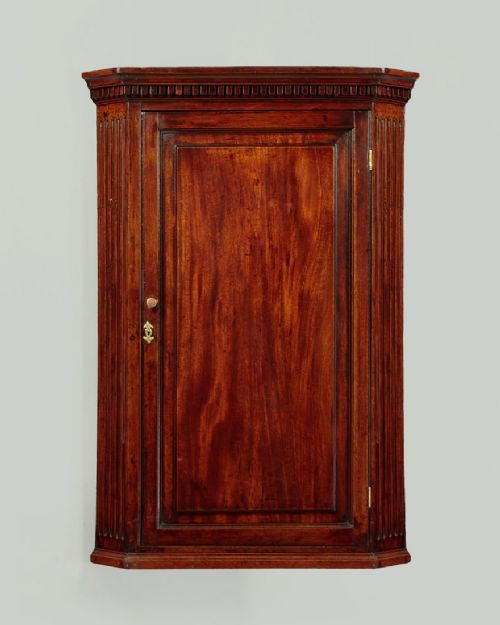
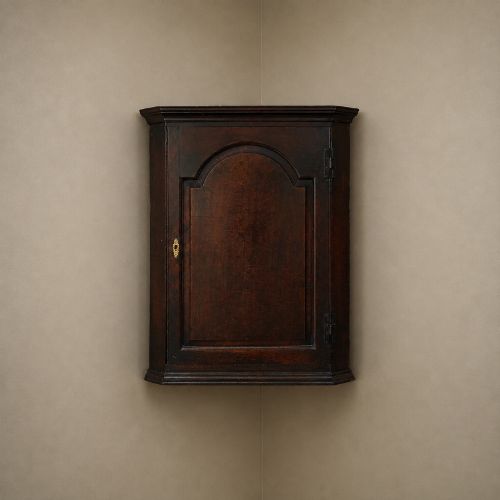
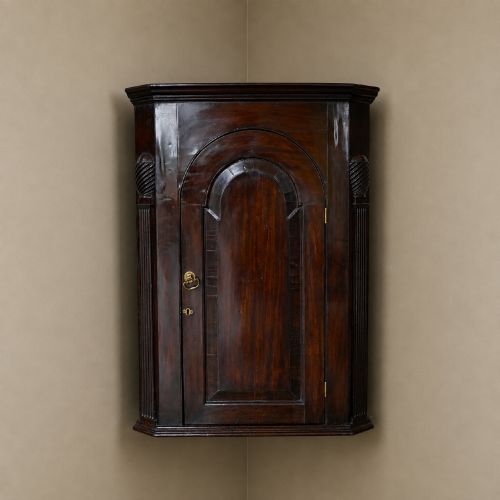
The selection ranges from Georgian mahogany and oak corner units to Victorian walnut cabinets and painted pine cupboards. Makers designed these pieces to mount securely on walls, often incorporating glazed doors or open shelving for functional storage in domestic interiors.
Materials and construction
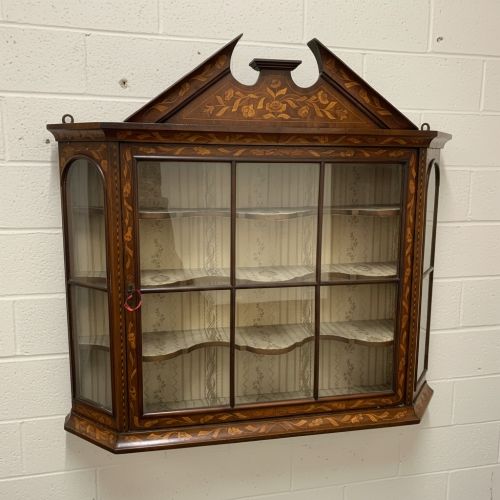
Cabinet makers utilised dense hardwoods such as mahogany, oak, walnut, and fruitwood, often selecting pine for secondary internal structures. Surface decoration frequently involved marquetry inlay, satinwood banding, or painted finishes applied directly to the timber.
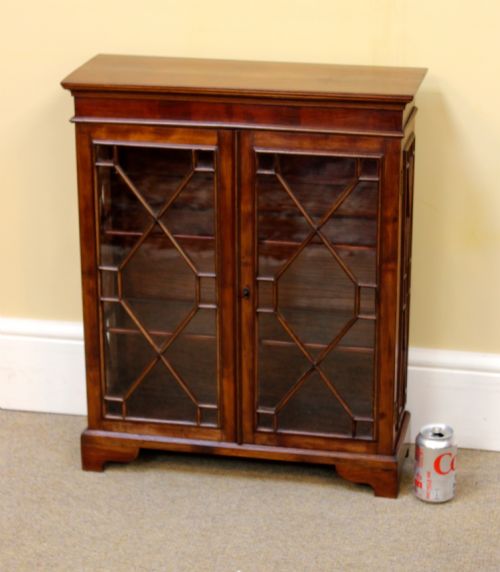
Hardware played an essential functional and decorative role, featuring brass hinges, escutcheons, and working locks with keys. Glazed doors utilised timber framing to secure individual glass panes, while heavier cornices and carved mouldings provided structural definition.
Listings feature oak, mahogany, walnut, and fruitwood timbers across Georgian, Victorian, and Edwardian periods.
Quality and craftsmanship
Quality rests upon the selection of timber figures, the precision of dovetail joinery in drawers, and the integrity of original surface finishes. Superior examples display restrained carving, harmonious proportions, and intact brass hardware rather than later replacement elements.
The sophistication of internal detailing, such as shaped wooden shelves, original painted interiors, and intact glass, distinguishes finer workshops from more utilitarian storage pieces.
The Antique Wood Wall Cabinet Glossary
- Bow front
- A convex curved cabinet front popular during the Georgian period. This design softens room angles, particularly in corner cupboards.
- Marquetry
- Decorative patterns created by fitting thin pieces of wood veneer onto a structural surface. Craftsmen utilised contrasting timbers like satinwood and walnut to achieve pictorial detail.
- Escutcheon
- A protective brass plate surrounding a keyhole. It secures the surrounding timber from wear caused by repeated use of the key.
- Cornice
- The ornamental mouldings crowning the top of a cabinet. This architectural feature balances the visual weight of the piece against the wall.
- Panetiere
- A traditional French food cabinet designed to store bread. These pieces frequently feature ventilated spindle turned galleries.
Antique Wood Wall Cabinet: Frequently Asked Questions
How do I hang a heavy wall cabinet safely?
Wall cabinets require secure fixing directly into timber studs or masonry using appropriate brackets and screws. Professional installation ensures the weight of the timber and its contents distributes evenly without pulling away from the wall.
Older cabinets often feature original hanging brackets or reinforced internal battens designed for secure wall mounting. Checking these structural points before installation prevents strain on antique joints.
Were corner cabinets made for specific rooms?
Corner cupboards served primarily in dining rooms, parlours, and hallways to store glassware, ceramics, and dry goods. Their triangular footprint maximised storage capacity in domestic spaces without obstructing floor traffic.
Many Georgian and Victorian examples matched the height of surrounding wainscoting or door frames, integrating the furniture cleanly into domestic interior architecture.
How do I distinguish Georgian timber types?
Georgian cabinet makers relied heavily on mahogany, oak, and walnut, each displaying distinct grain patterns and colour variations. Mahogany offers a dense reddish-brown tone, while oak presents a pronounced open grain suited to earlier eighteenth-century forms.
Examining the underside and interior surfaces reveals untouched timber colour, helping buyers identify primary woods beneath centuries of polish and wax.
Can I adjust the shelves in antique wall cabinets?
Most antique wall cabinets feature fixed wooden shelves supported by internal wooden fixed battens or nailed ledges. Cabinet makers of the eighteenth and nineteenth centuries built these structures for permanent stability rather than modular reconfiguration.
Altering shelf positions requires permanent intervention into original timber housings, so buyers generally plan around the fixed internal dimensions.