



Country Oak Corner Cabinet
A country oak corner cabinet brings warmth and practical storage to unused room angles, spanning Georgian to Victorian periods in wall-hanging and floor-standing forms.
Country Oak Corner Cabinet
When searching for a country oak corner cabinet, buyers encounter robust storage furniture designed to fit neatly into domestic room junctions. These pieces originate predominantly from the Georgian and Victorian eras, reflecting English, Welsh, Scottish, and French provincial traditions.
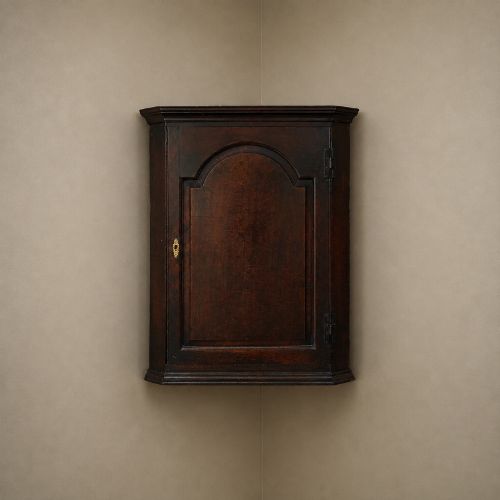
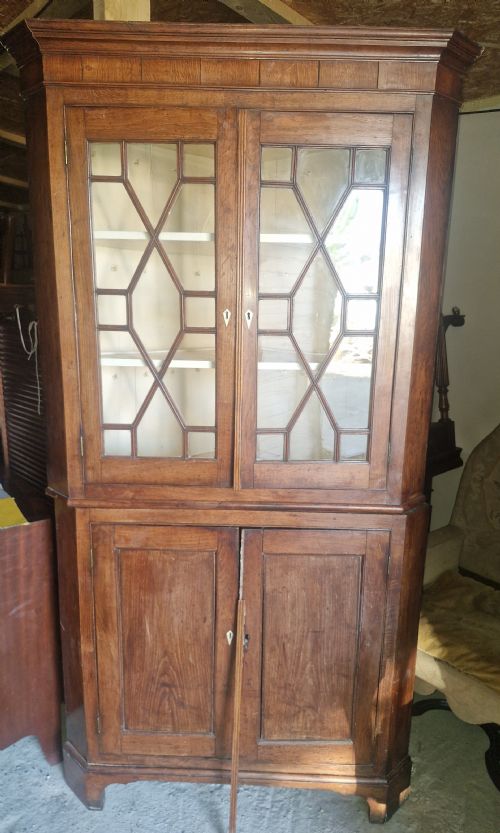
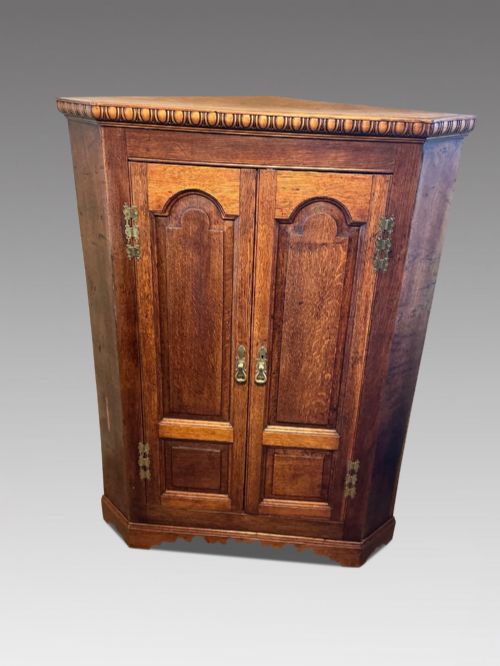
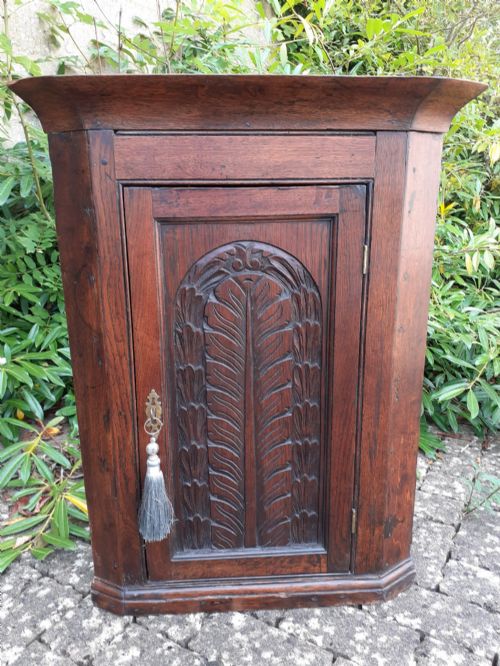
The selection ranges from compact wall-hanging cupboards to tall, two-part floor-standing cabinets and examples on stands. Wall-hanging versions dominate the selection, often displaying simple panelled doors suited to smaller interiors.
Regional variations appear frequently, particularly Welsh and English country vernacular styles. Makers utilised local timber to construct sturdy furniture intended for everyday domestic utility rather than grand formal salons.
Materials and Construction
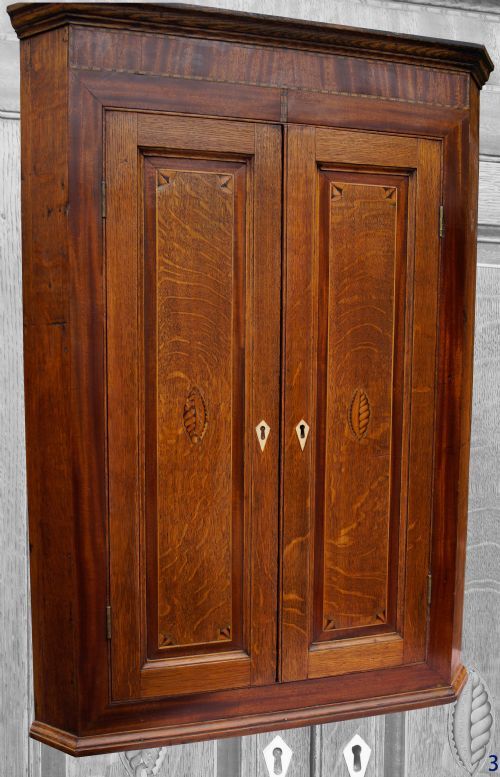
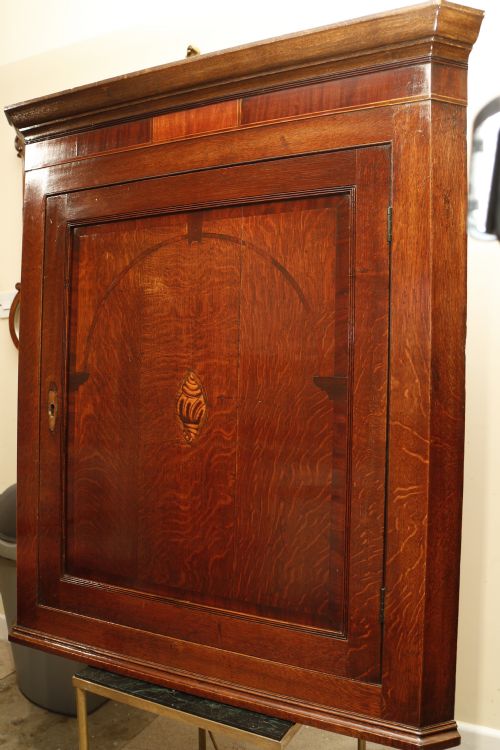
Solid oak forms the primary material, occasionally supplemented by fruitwood or mahogany crossbanding and marquetry inlay for decorative contrast. Cabinetmakers constructed doors using pegged frame and panel techniques to accommodate the natural movement of timber over time.
Listings feature oak as the primary timber, alongside mahogany, fruitwood, glass, iron, and marquetry inlay.
Assessing Quality and Character
Quality in these cabinets rests upon the depth of the timber's grain, the integrity of the original joints, and the restraint of any carved or inlaid details. Finer examples display well-figured oak panels and precise dovetailing on internal drawers.
Proportion and surface patination dictate the visual success of a piece, distinguishing provincial work built by local carpenters from standard commercial production. Original brassware and undisturbed timber surfaces elevate the standing of an individual cabinet.
The Country Oak Corner Cabinet Glossary
- Crossbanding
- A decorative border technique where thin strips of veneer, such as mahogany, are applied to the edges of the oak carcase so the grain runs perpendicular.
- Vernacular
- Furniture built by local tradesmen using regional traditions and materials rather than following metropolitan academic design books.
- Escutcheon
- A protective plate surrounding a keyhole, usually made of brass or iron to prevent the wood from splitting around the lock.
- Marquetry inlay
- The art of applying pieces of different woods into a fitted surface to create decorative patterns and pictures on the cabinet door.
- Floor standing
- A cabinet design that rests directly on the floor, frequently constructed in two separate stacked sections for easier transport.
Country Oak Corner Cabinet: Frequently Asked Questions
How do I hang a wall cabinet safely?
Wall-hanging versions require secure fixings anchored directly into structural wall studs or solid masonry to support the heavy oak weight safely.
Professional installation prevents strain on the historical hinges and frame joints during daily use.
Were these cupboards built for kitchens?
These cabinets served in various domestic rooms to store dining utensils, glassware, or dry goods out of the way.
Their angular footprint maximised floor space in smaller rooms across farmhouse and cottage interiors.
How do I date an oak cabinet?
Dating relies on examining construction methods, hinge types, handle styles, and the character of the oak boards.
Georgian examples often feature hand-cut dovetails and pegged joints that differ from later Victorian assembly methods.
Do two part cabinets come apart?
Floor-standing models built in two parts separate into an upper and lower section to facilitate movement and placement.
The upper cupboard simply rests upon the lower base cabinet without requiring complex mechanical disassembly.