
Antique Wood Animal Sculpture
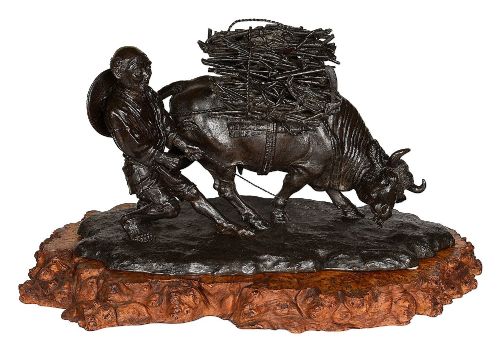
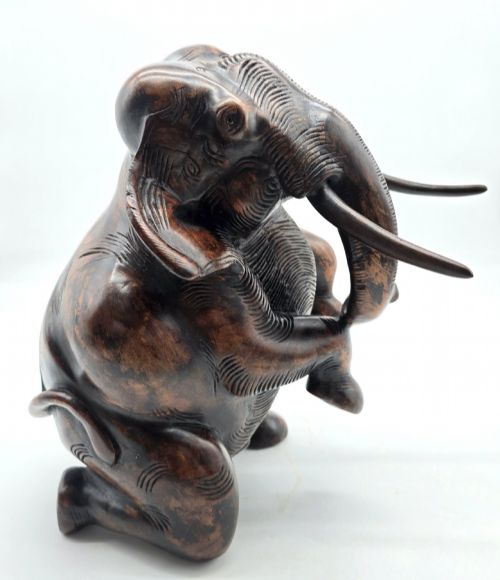
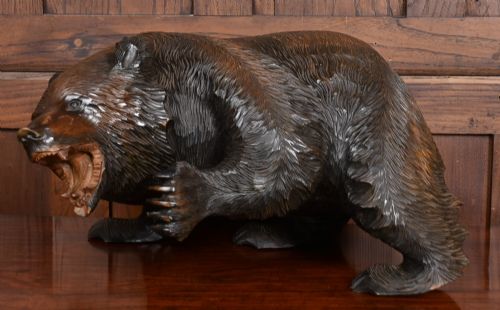
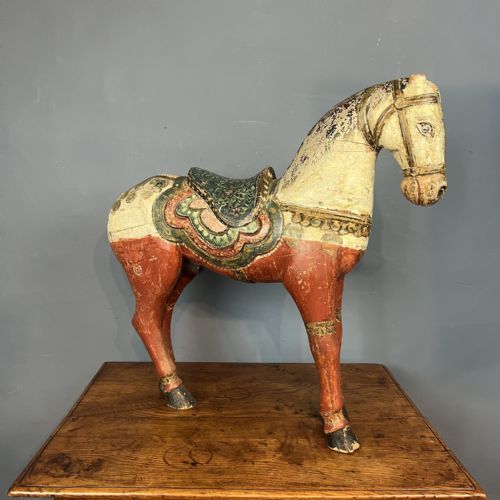
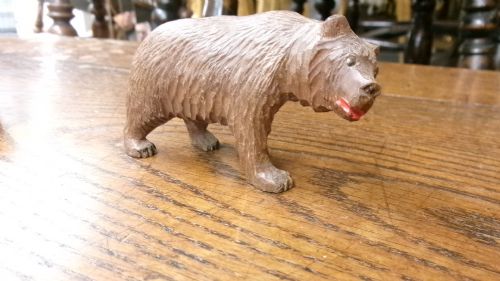
These antique wood animal sculpture pieces bring the character of bears, elephants and horses directly into a room through traditional hand carving.
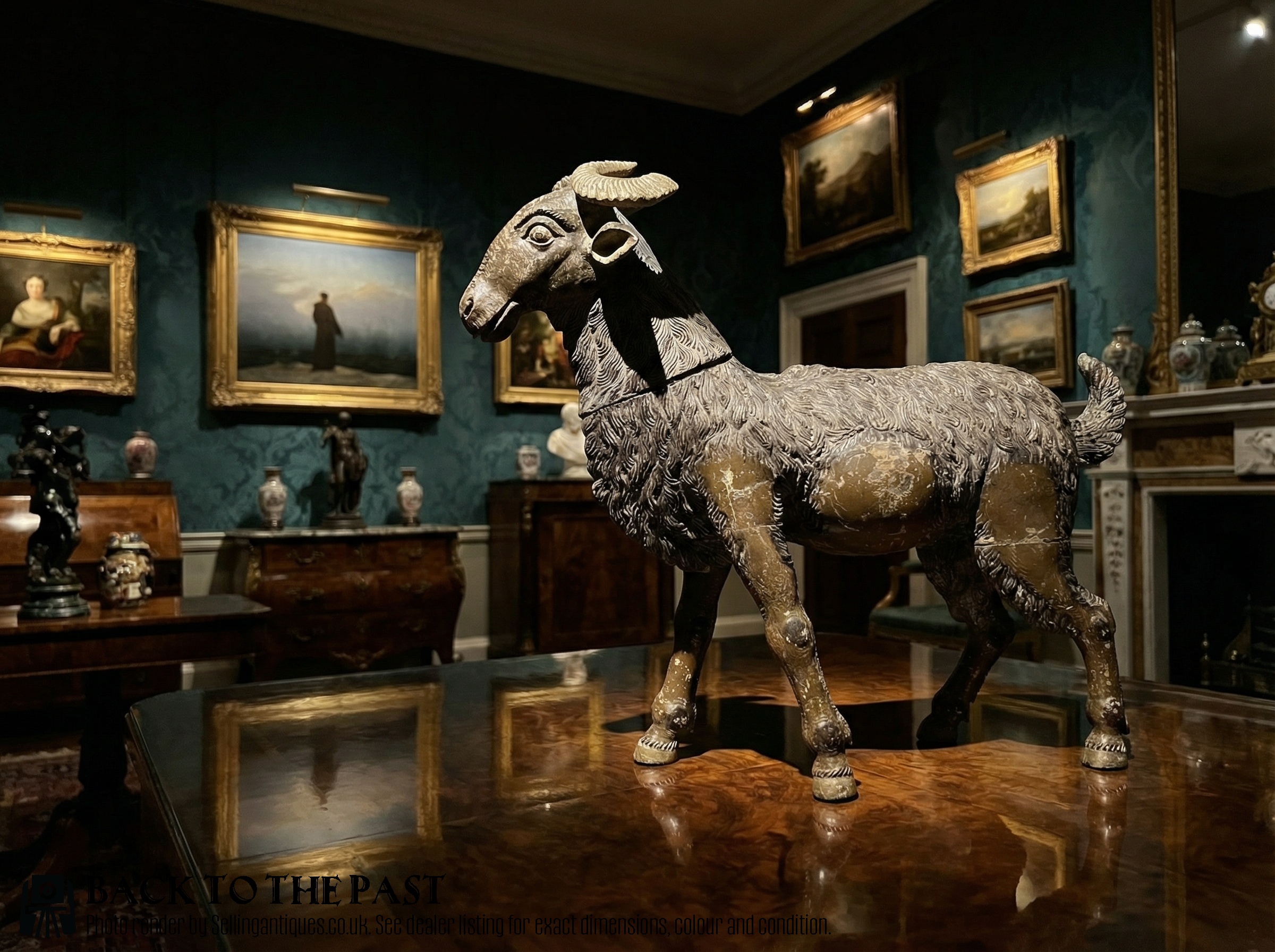
Antique Wood Animal Sculpture
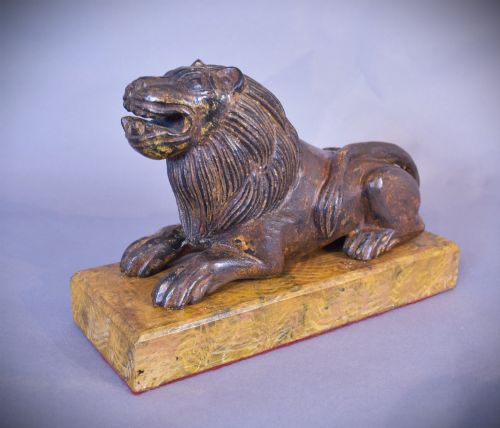
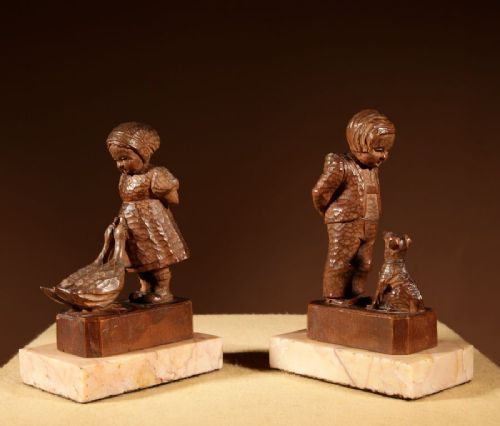
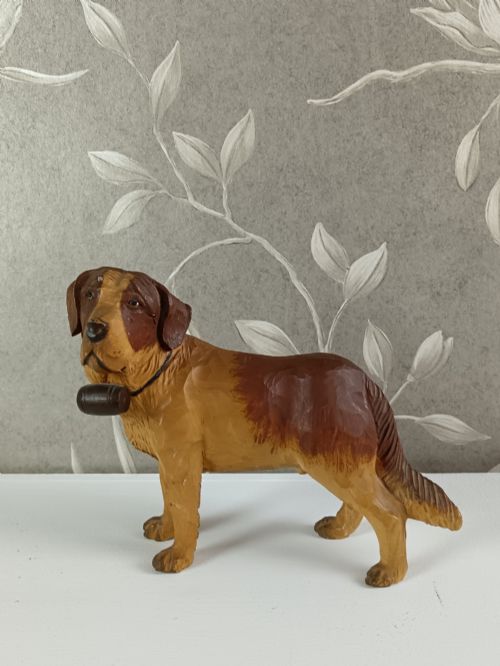
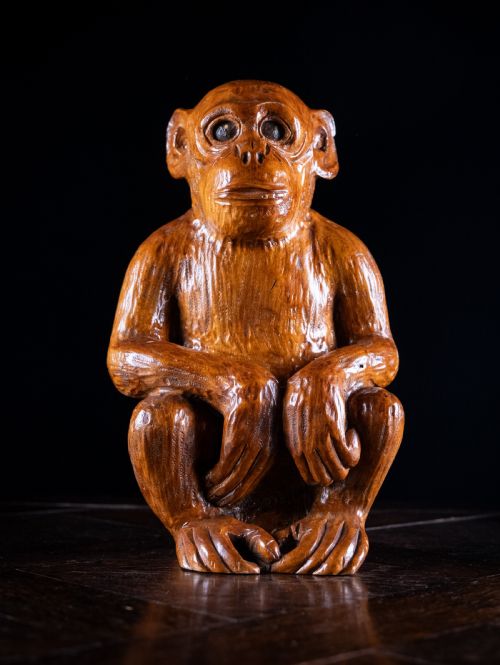
An antique wood animal sculpture captures creatures ranging from domestic livestock and woodland wildlife to exotic beasts. Collectors encounter these works across diverse historical contexts, from European mountain regions to Asian carving traditions.
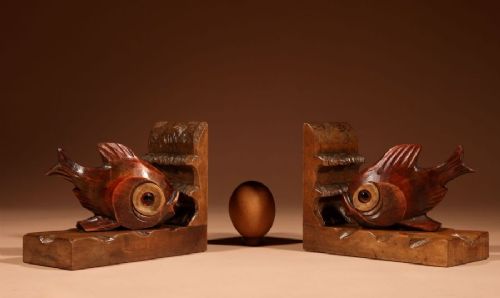
The selections on this page span several centuries, with particular strength in nineteenth-century and early twentieth-century examples. Forms include free-standing animal figures, functional bookends, wall masks and toy figures.
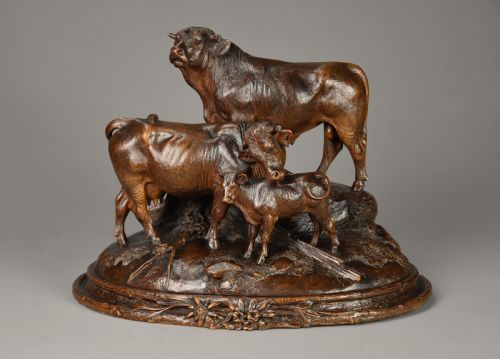
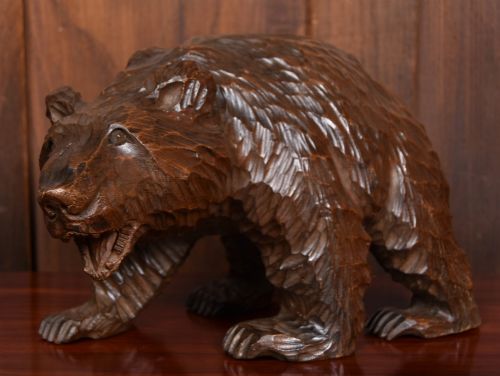
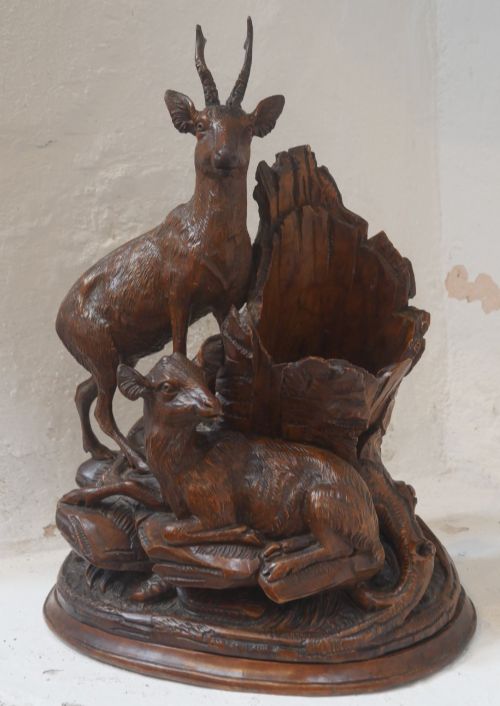
Regional styles dominate the offerings, notably Swiss Black Forest carvings, Japanese bear sculptures and Raj period Indian hardwood elephants. Each origin brings distinct cultural techniques and native timber choices to the carved animal form.
How they were made
Carvers utilised native timbers such as linden wood, walnut, limewood and teak, selecting woods suited to detailed knife work and deep relief. Artisans frequently employed hand chisels and gouges to render fur, muscle structure and hide texture with precision.
Certain pieces received surface treatments including paint, gilding or dark staining to enhance the natural grain of the hardwood. Workshops often finished these sculptures with protective waxes to preserve the timber over generations.
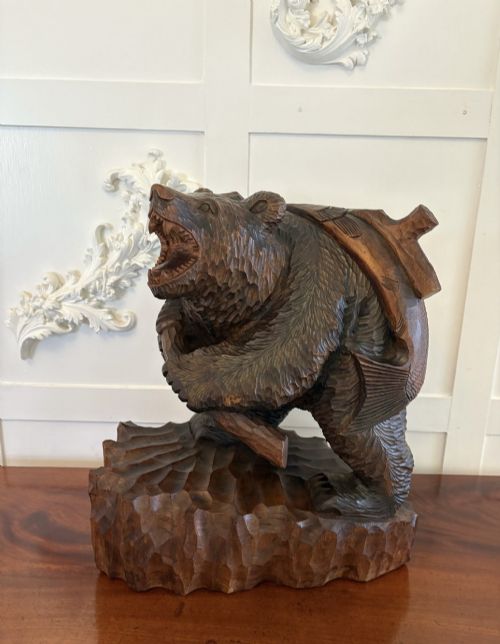
Bears carrying fish appear across multiple carving traditions, proving that wood carvers globally shared an enduring fondness for fishing predators.
What varies in quality
Signatures, maker stamps and documented origins elevate certain sculptures by connecting them directly to known workshops or master carvers. The selection of dense, high-grade timber without excessive splitting also influences the standard of the finished object.
J HUGGLER
The Antique Wood Animal Sculpture Glossary
- Black Forest
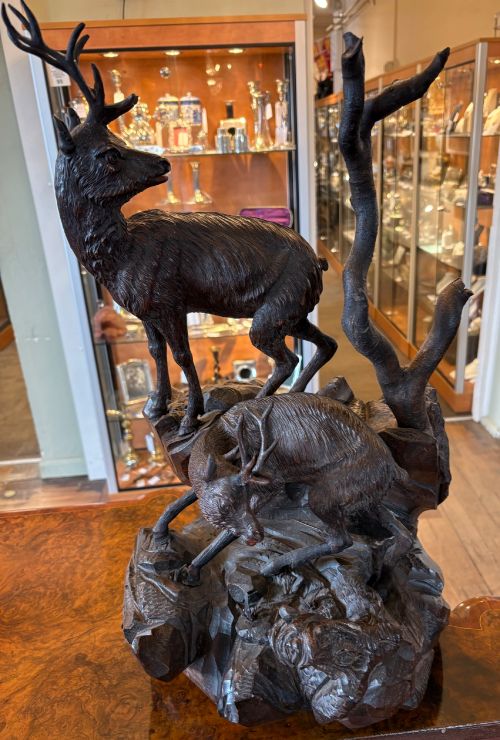
- A style of wood carving originating from the Swiss mountain region, known for realistic depictions of bears, deer and alpine animals. These pieces often utilise linden wood or limewood.
- Kibori Kuma
- A traditional Japanese style of hand-carved wooden bear originating from Hokkaido, typically holding a fish in its mouth. The technique developed during the Meiji period.
- Raj Period
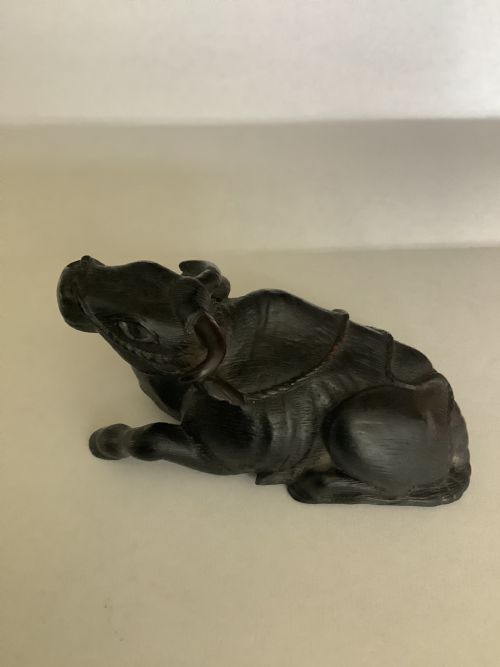
- An era of Indian history spanning the British administration, producing dense hardwood sculptures of elephants and local fauna. Carvers frequently utilised teak, ebony and other dark timbers.
Antique Wood Animal Sculpture: Frequently Asked Questions
Where were Black Forest carvings made?
These sculptures originated primarily in the mountainous regions of Switzerland and Germany during the nineteenth and early twentieth centuries. Local artisans utilised abundant native timber forests to produce wildlife studies for travellers and collectors.
The tradition centred around alpine fauna, capturing bears, deer and chamois in realistic poses. Workshops passed carving skills through generations, establishing distinct regional styles that remain recognisable today.
How do I clean wooden animal sculptures?
Dust the surface gently with a soft, dry brush to prevent dirt from settling into the carved crevices. Avoid using water, liquid cleaners or chemical polishes, as moisture damages aged timber and historic finishes.
Applying a microcrystalline wax occasionally helps protect the wood if the surface appears dry. Keep the sculpture away from direct sunlight and radiators to prevent the timber from cracking.
How do I date an antique wood carving?
Examine the tool marks, timber type and overall wear to establish a baseline period for the piece. Hand-carved items often display distinct chisel or knife signatures left by the maker.
Compare the style and subject matter with dated examples from similar regional traditions, such as Raj period Indian elephants or nineteenth-century European wildlife studies. Signatures or stamps on the base can also provide specific historical attribution.