

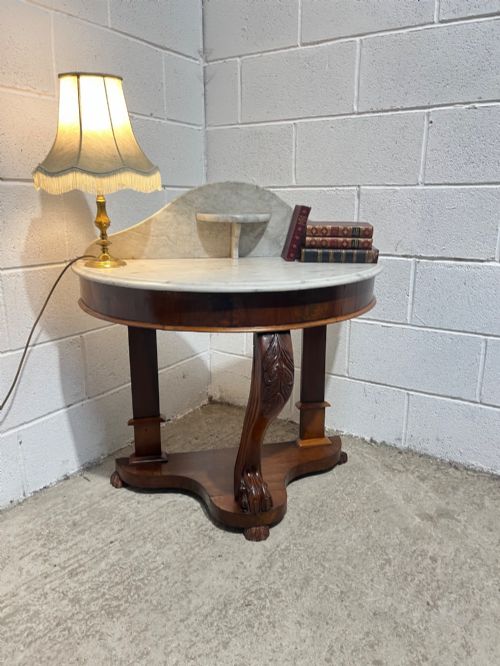
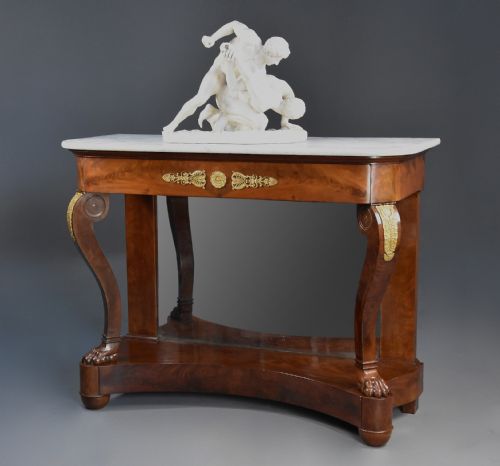
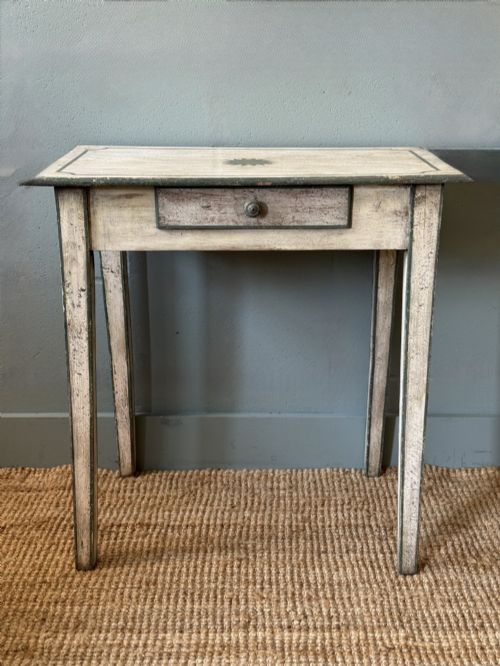
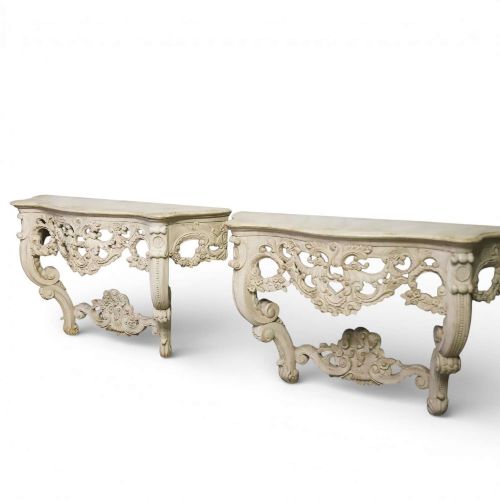

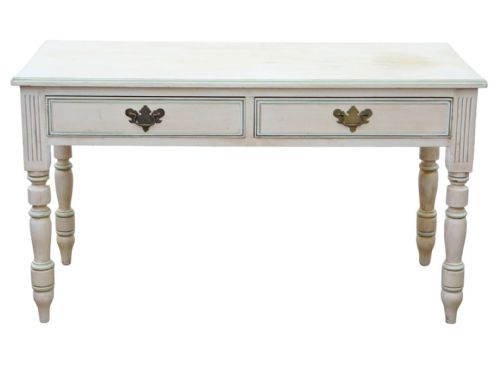

Antique White Hall Table
An antique white hall table brings sculptural marble and painted timber to an entrance, offering a classic surface for everyday belongings.
Antique White Hall Table
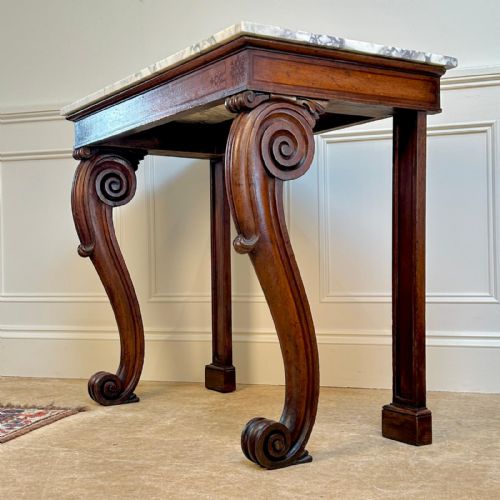
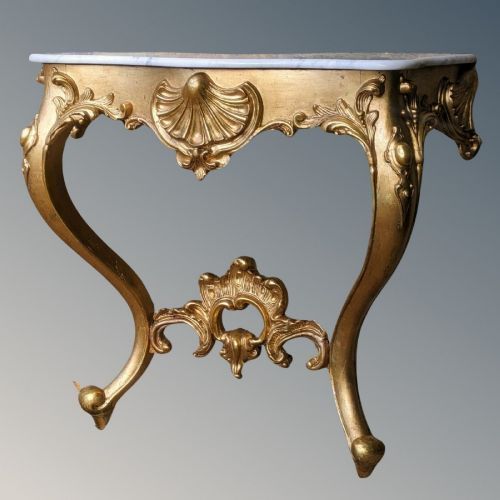
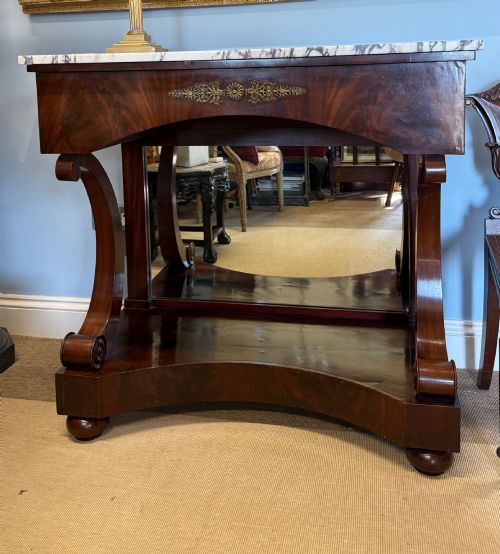
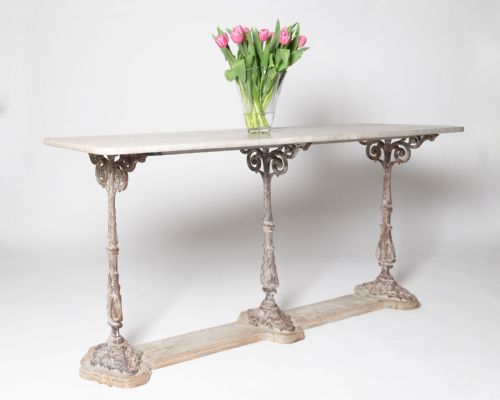
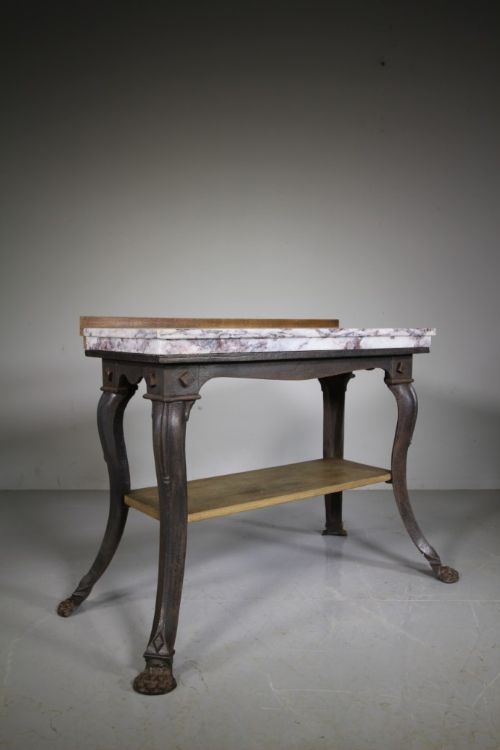
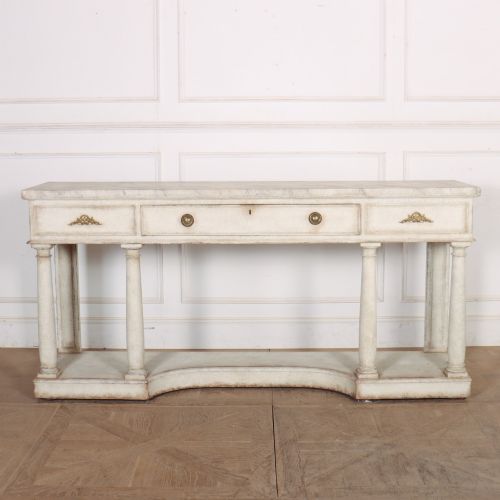
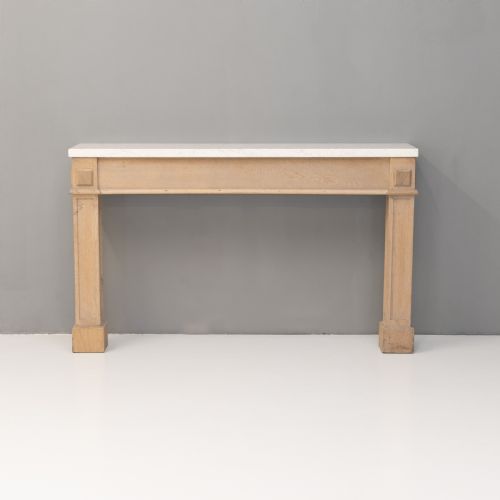
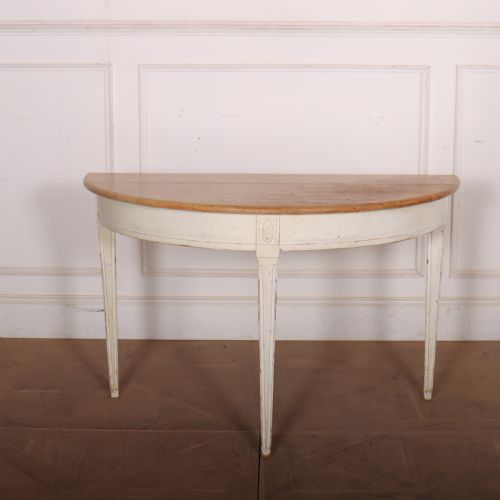
When searching for an antique white hall table, buyers encounter console tables, side tables, and serving tables originating from the eighteenth, nineteenth, and early twentieth centuries. These pieces appear frequently in painted wood, giltwood, and mahogany, often topped with contrasting marble surfaces.
French, Swedish, and English variants dominate the selection, spanning styles such as Victorian, French Rococo, Gustavian, and Regency. Many examples serve narrow circulation spaces as console tables, while others function as side tables or larger serving pieces.
How they were made
Construction relies heavily on traditional timber framing, utilising pine, oak, fruitwood, and mahogany beneath layers of historic paint finishes, gesso, and gilding. Heavy marble slabs, including white Carrara, are fitted directly to the upper frame to provide durable, cool surfaces.
Decorative detailing incorporates hand-carving in wood and cast iron elements, alongside brass mounts and ormolu decoration on select formal console frames.
Listings feature pieces spanning the 18th, 19th, and early 20th centuries, utilising materials like marble, mahogany, pine, and giltwood.
What varies in quality
Quality rests in the harmony of the proportions, the crispness of hand-carved ornamentation on the wooden or gilt frames, and the integration of the marble top. Superior examples show refined detailing such as serpentine fronts, Ormolu mounts, or original painted surfaces that have aged with integrity.
The distinction between standard utility items and high-status pieces lies in the choice of materials, from basic pine and simple paint to dense hardwoods, elaborate Rococo carvings, and substantial marble slabs.
The Antique White Hall Table Glossary
- Console table
- A table designed to stand against a wall, frequently supported by two front legs and secured to the wall at the rear. These pieces often feature decorative aprons and marble tops.
- Demi-lune
- A half-moon shape used for table tops and furniture frames that fit snugly against flat walls. This curved form appears frequently in painted side and console tables.
- Giltwood
- Timber that has been coated with a thin layer of gold leaf or gilt gesso. It provides a bright, reflective surface popular in formal nineteenth-century interior schemes.
- Gueridon
- A small French table supported by one or more columns, often featuring a circular marble top and a brass-mounted base. Originating in the seventeenth century, these tables serve various occasional functions.
- Ormolu
- Gilded bronze used for decorative mounts on furniture during the eighteenth and nineteenth centuries. It adds metallic detail to the corners and aprons of fine console tables.
Antique White Hall Table: Frequently Asked Questions
Where should I place a console table?
These narrow tables suit entrance halls, corridors, and reception rooms where floor space is limited. Their shallow depth allows them to sit against walls without obstructing movement.
They also function effectively beneath mirrors or art pieces, providing a surface for lamps, bowls, and everyday items.
How do I care for a marble top?
Marble surfaces require simple wiping with a damp cloth and mild soap to remove dust and daily grime. Avoid acidic cleaners and abrasive pads that can etch or dull the polished stone.
Using coasters and mats helps prevent staining from liquids and oils, preserving the cool, smooth finish of the original marble.
What is the difference between a console and a side table?
Console tables are specifically built to stand flat against a wall, sometimes relying on wall brackets or two front legs for complete stability. They frequently feature decorative fronts designed to be viewed from the front only.
Side tables generally feature four independent legs and can stand freestanding within a room or beside seating furniture.
How do I identify the period of a painted table?
Dating relies on examining the construction methods, timber types, and the composition of the paint layers. Hand-cut joints, original hardware, and signs of wear beneath multiple paint skins indicate older craftsmanship.
Stylistic cues such as Rococo curves, Neoclassical symmetry, or Gustavian restraint further anchor pieces to specific nineteenth or eighteenth-century aesthetics.