



Neoclassical Painted Console Table
These neoclassical painted console table pieces bring architectural symmetry and hand-painted grace to a room, drawing on eighteenth- and nineteenth-century design.
Neoclassical Painted Console Table
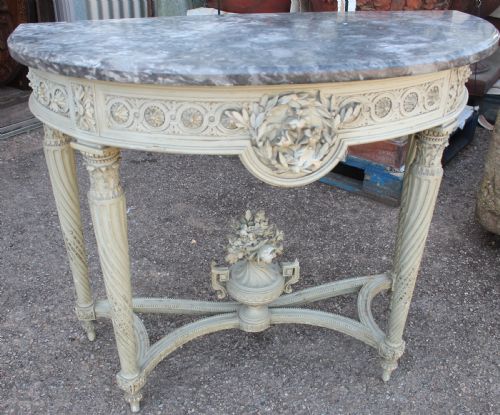
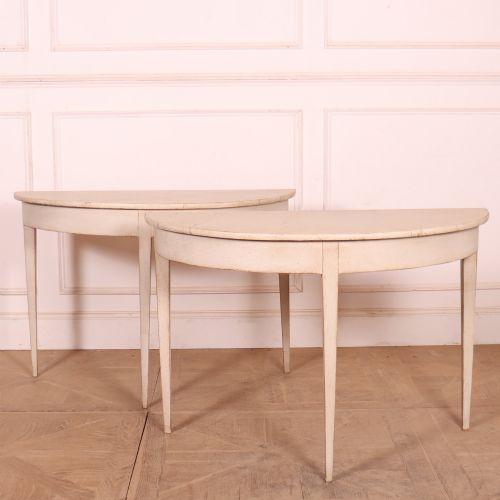
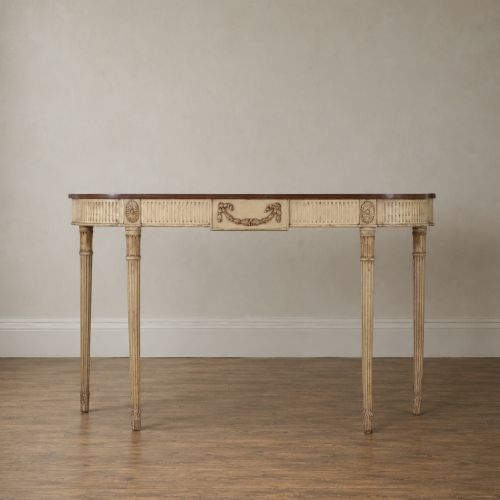
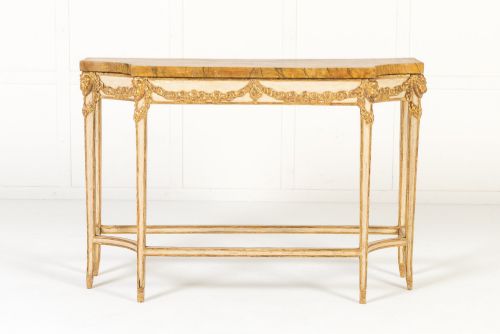
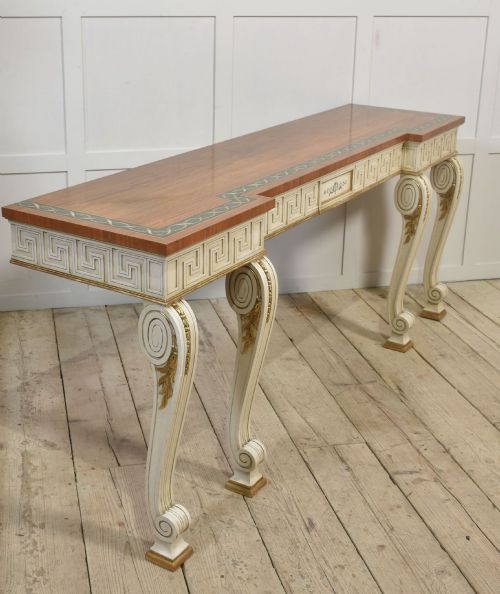
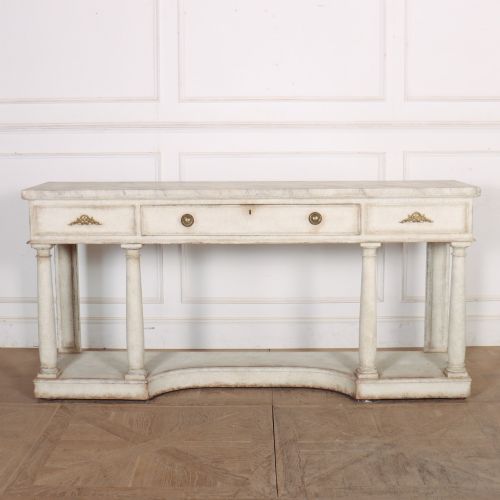
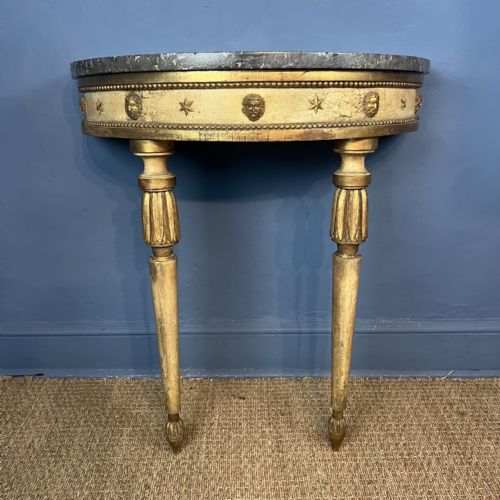
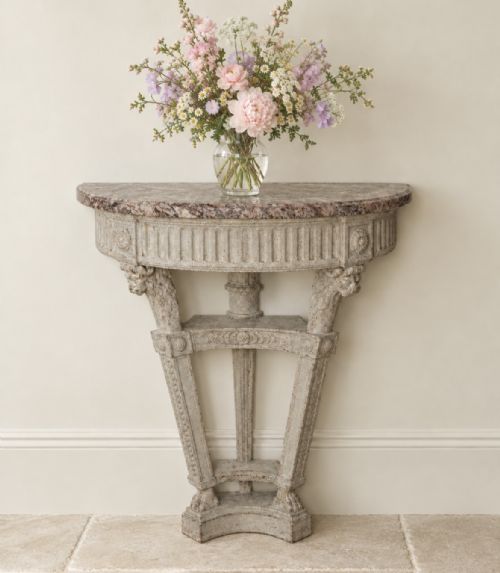
A neoclassical painted console table represents a specific intersection of classical proportion and decorative surface treatment, appearing frequently in formats such as the demi-lune, serpentine front, or rectangular serving table. These forms derive from eighteenth- and nineteenth-century workshops across England, Italy, France, and Sweden, reflecting regional interpretations of classical revival styles like Louis XVI, Gustavian, and George III.
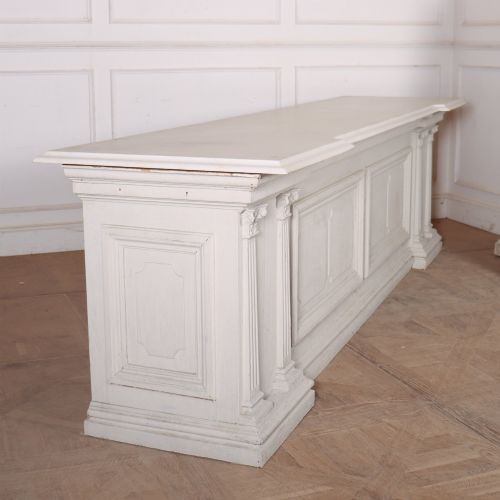
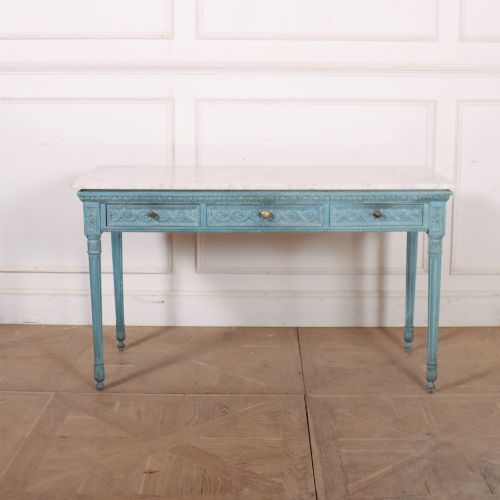
Buyers searching for a neoclassical painted console table encounter pieces ranging from compact bedside tables and side tables to large serving surfaces and writing desks. The construction frequently incorporates traditional half-moon or D-end shapes designed to sit flush against a wall, often paired with matching pairs or individual statement pieces.
Originating in periods spanning the late eighteenth century through the early twentieth century, these tables showcase the enduring appeal of painted wood finishes combined with classical motifs. The selection includes specific regional variants, such as Genoese cream-painted examples and Swedish original painted surfaces.
How they were made
The construction of these tables relies on timber frameworks shaped from woods such as beech, satinwood, and general painted wood, often enhanced by carved gesso or giltwood accents. Artisans applied layers of paint to create cream, monochrome, or polychrome surfaces, sometimes incorporating inlaid details or hand-painted decoration directly onto the wood.
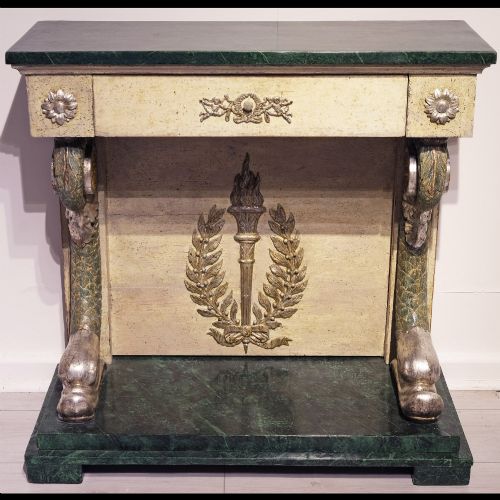
Many examples incorporate heavy stone elements, pairing wooden bases with marble, specimen marble, or faux porphyry tops that provide a stable, decorative surface. Additional decorative elements include applied Wedgwood plaques, parcel gilt highlights, and intricate carved crests or tapered legs supporting the superstructure.
Neoclassical Painted Console Table Retail Price Guide 2026
Typical asking prices for neoclassical painted console table among the pieces listed under this phrase on Sellingantiques today, from the lower quarter to the upper quarter. They describe what is for sale here now, not the wider market.
Listings feature 18th century and 19th century periods alongside early 20th century interpretations in regional styles.
What varies in quality
Quality in these pieces rests upon the integrity of the original painted surface and the crispness of any carved or parcel gilt detailing. Tables featuring untouched original paint layers or sophisticated faux finishes stand apart from later repainted surfaces, retaining a truer connection to their period of origin.
The selection of materials dictates the upper tier of the range, particularly where dense hardwoods like satinwood meet genuine marble or specimen marble tops. Structural finesse, such as balanced proportions in demi-lune formats and refined tapering on the legs, distinguishes superior craftsmanship from simpler regional production.
The Neoclassical Painted Console Table Glossary
- Demi-lune
- Half-moon shape. This configuration allows a table to stand flat against a wall while projecting a curved front into the room.
- Giltwood
- Wood carved and covered with a thin layer of gold leaf or gilt. This finish highlights structural details and carved motifs.
- Satinwood
- A hard, durable wood with a natural golden sheen and satin-like texture. It serves as a favored canvas for painted neoclassical decoration.
- Porphyry
- An igneous rock with large crystals, replicated in furniture as faux porphyry to imitate royal Roman stone.
Neoclassical Painted Console Table: Frequently Asked Questions
Where should I place a console table?
These tables fit naturally in entrance halls, living rooms, or dining spaces where a shallow surface is required against a wall. Their flat backs allow them to anchor a room without obstructing pathways.
Because many examples feature finished backs or symmetrical designs, they also function effectively behind sofas or as serving surfaces during gatherings.
How do I identify a neoclassical design?
Neoclassical pieces display straight lines, symmetry, and motifs drawn from ancient Greek and Roman architecture. Look for tapered legs, urns, swags, and classical proportions.
Unlike the more exuberant curves of earlier rococo styles, neoclassical furniture emphasises restraint and geometric order.
Are marble tops original to these tables?
Marble and specimen marble tops frequently appear on Italian and French examples from the eighteenth and nineteenth centuries. They provided a durable, cool surface suited to serving and display.
When evaluating a piece, check that the weight and edge profile of the stone match the era of the wooden base.
What is Gustavian style?
Gustavian style represents the Swedish adaptation of French neoclassical design, popularised during the reign of King Gustav III. It is characterised by lighter colour palettes, often cream or pale grey paint, and simpler, elegant carvings.
These pieces bring a distinct Nordic brightness to classical furniture forms.