
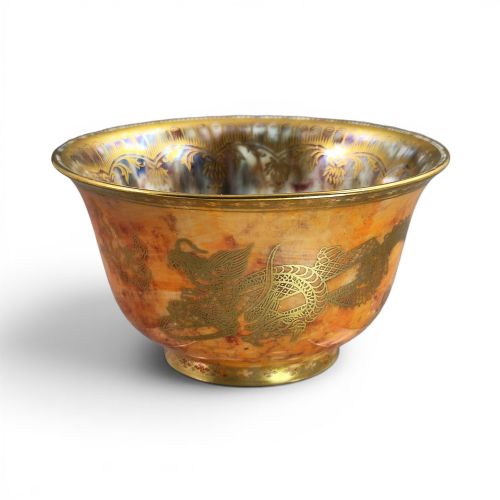


Antique Wedgwood Lustreware
These antique wedgwood lustreware pieces bring luminous metallic surfaces and rich colour to a room through bowls and mugs.
What antique wedgwood lustreware is
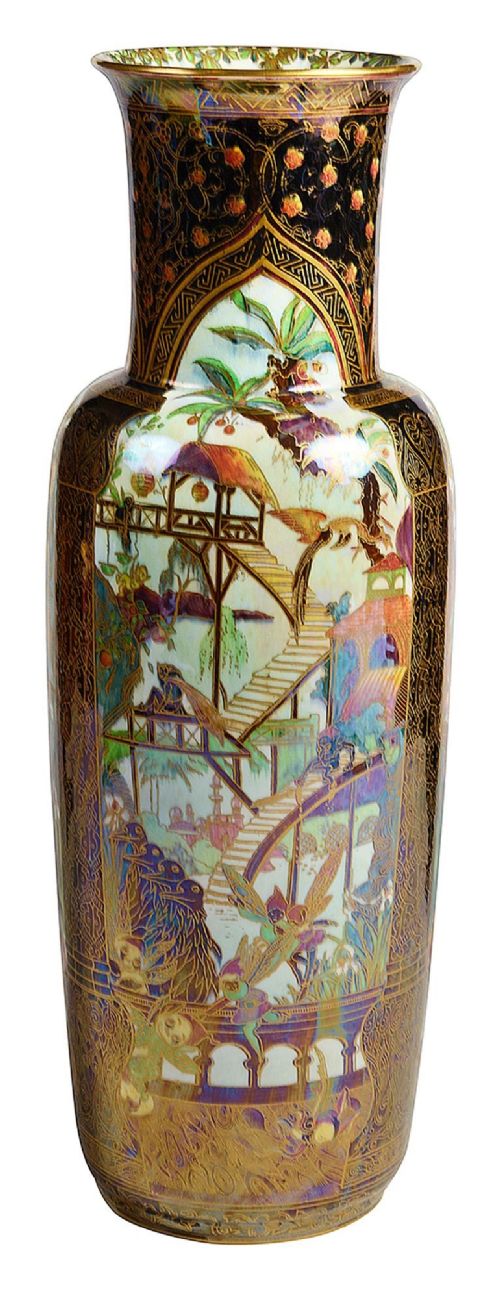
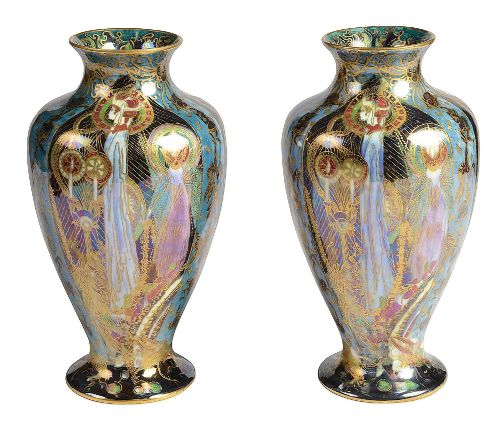
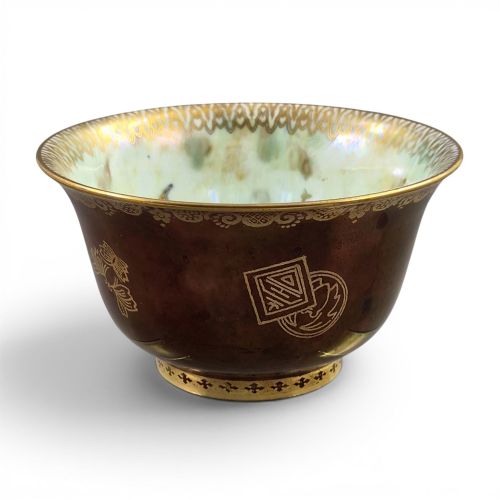
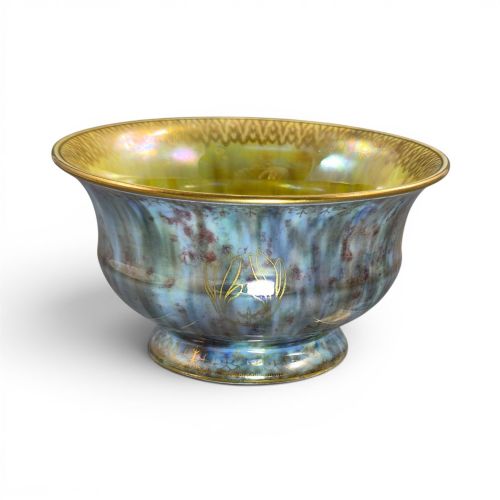
When you search for antique wedgwood lustreware, you encounter decorative bowls and decorative cups produced during the Edwardian period and the early twentieth century. The pieces on this page span the years 1910, 1914, 1915, and 1920, capturing the transition of design from Art Nouveau to Art Deco.
You are most likely to meet bowls and three-handled mugs designed by Daisy Makeig-Jones, whose imaginative patterns define this category. These forms serve purely decorative functions, relying on their intense visual impact rather than domestic utility.
How they were made
The manufacture of these objects relies on bone china and porcelain as the primary ceramic bodies, shaped into bowls and cups before glazing. Artisans applied lustre glaze and metallic glaze alongside standard glaze to achieve the characteristic shimmering surface.
Decoration was further enhanced through gold leaf, gold gilding, and traditional gilding applied over the fired glazes. This combination of metallic oxides and precious metal highlights creates the distinctive optical depth seen across the Edwardian and Art Deco examples.
Retail Price Guide 2026
Typical UK retail prices for wedgwood lustreware, calculated from the Sellingantiques database of over a million retail prices indexed since 2003. This retail price guide relies exclusively on Sellingantiques data; no external sources or auction records are used, so the figures do not describe the wider market.
The pieces span the Edwardian period alongside Art Nouveau and Art Deco design styles.
What varies in quality
Quality in these ceramics rests upon the precision of the transfer printing and the hand-painted enamels that populate complex motifs such as Fairyland, Coiling Dragon, and Hummingbird. The complexity of the pattern and the density of the gold gilding determine the visual richness of the object.
The depth and iridescence of the lustre glaze itself set the finer examples apart from simpler productions. A successful piece exhibits a uniform play of light across the metallic glaze without dull patches in the ruby or diaper fields.
Wedgwood·Daisy Makeig Jones
The Antique Wedgwood Lustreware Glossary
- Lustre glaze
- A metallic film fired onto the ceramic body to produce an iridescent, reflective surface. This technique creates the signature rainbow sheen characteristic of the ware.
- Bone china
- A type of soft-paste porcelain incorporating animal bone ash, offering strength and a bright white base for enamels. It allows for thinner walls in decorative bowls and cups.
- Gilding
- The application of gold leaf or powdered gold to the surface of the ceramic. This adds metallic contrast to the colourful patterns beneath.
- Fairyland
- A fantastical decorative theme featuring goblins, elves, and mystical landscapes. It represents the most intricate and sought-after output of the period.
- Diaper pattern
- A repeating geometric or lattice surface ornament used as a background fill. It frames the central pictorial subjects on the body of the vessel.
Frequently Asked Questions
What is antique wedgwood lustreware?
It refers to decorative ceramic bowls and mugs produced by Wedgwood using iridescent metallic glazes during the early twentieth century.
These pieces combine bone china bodies with complex enamels and gilding, spanning Art Nouveau and Art Deco styles.
How do I date these pieces?
Dating relies on recorded pattern numbers, backstamps, and stylistic markers associated with the 1910 to 1920 period.
Works from this era frequently align with the Edwardian years and the tenure of specific designers at the pottery.
Were these cups used for drinking?
The cups and three-handled mugs from this range served primarily decorative roles rather than daily tea service.
Their delicate bone china construction and heavy gilding made them display items for the drawing room.
What styles influence these designs?
The decoration draws heavily upon Art Nouveau fluidity and transitions into the structured geometry of Art Deco.
Fantasies, mythical creatures, and natural subjects like butterflies and hummingbirds dominate the aesthetic.