




Antique Watercolour Picture
An antique watercolour picture brings the direct hand of a nineteenth-century artist into a room through transparent washes of pigment on paper.
Antique Watercolour Picture
An antique watercolour picture is a work on paper executed with water-soluble pigments, capturing landscapes, marine scenes, portraits, and botanical studies. When exploring this selection, buyers encounter works originating from the Regency period through the Edwardian era and into the mid-twentieth century.
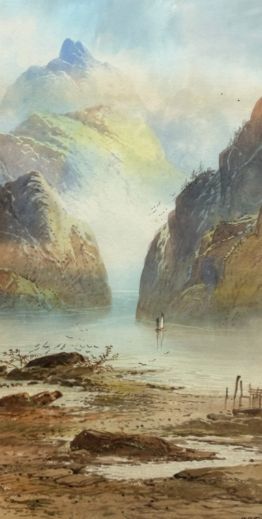
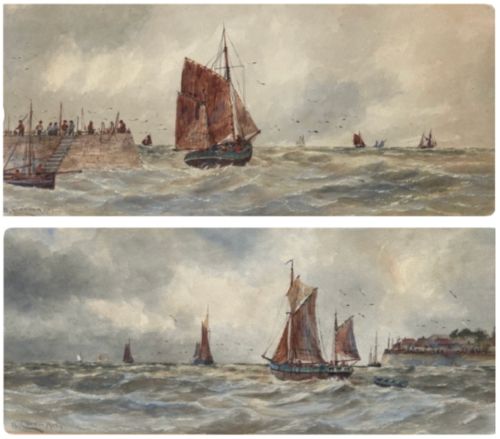
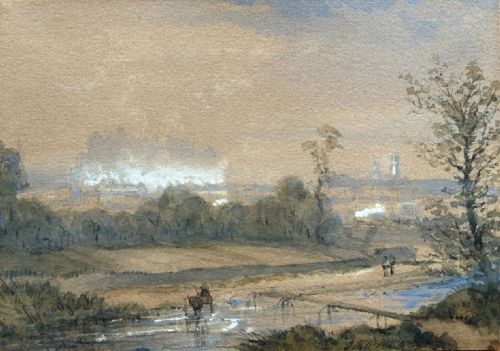
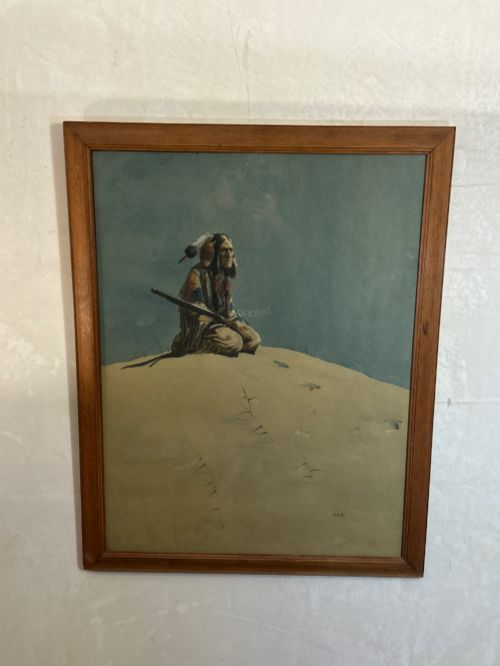
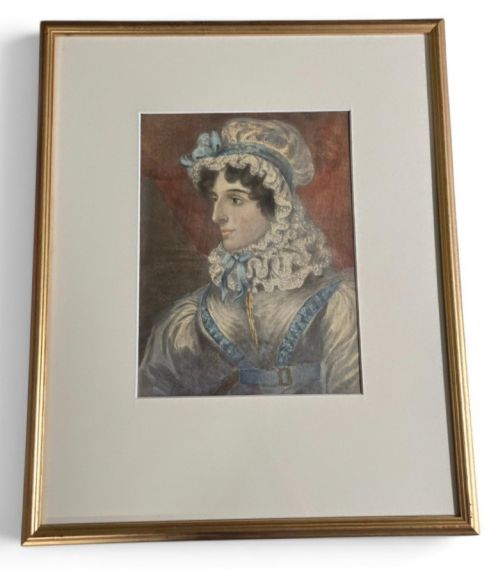
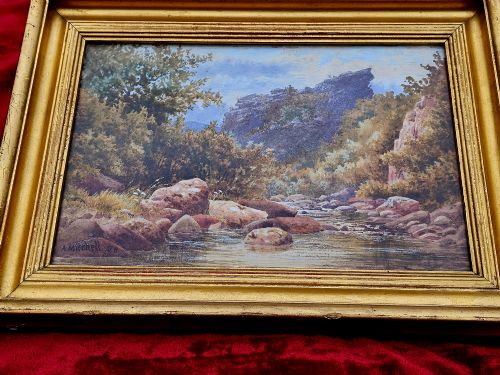
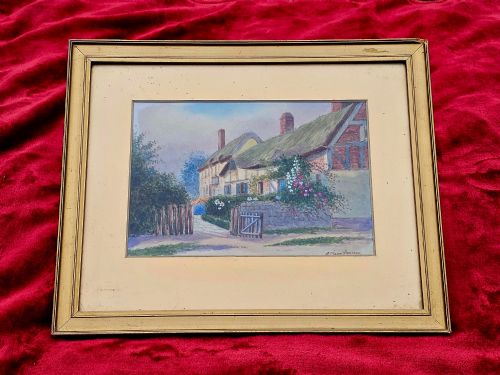
The most common examples on this page are nineteenth-century British landscape paintings depicting rivers, mountains, and coastal harbours. These pieces range from intimate botanical studies and portrait miniatures to exhibition-sized maritime scenes and architectural views.
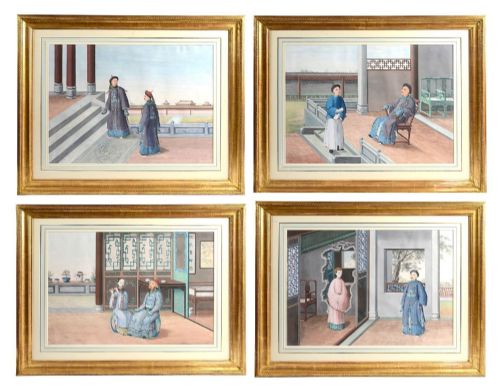
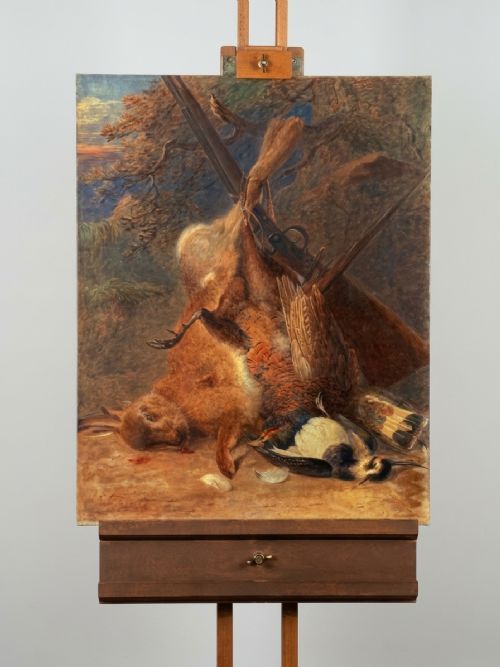
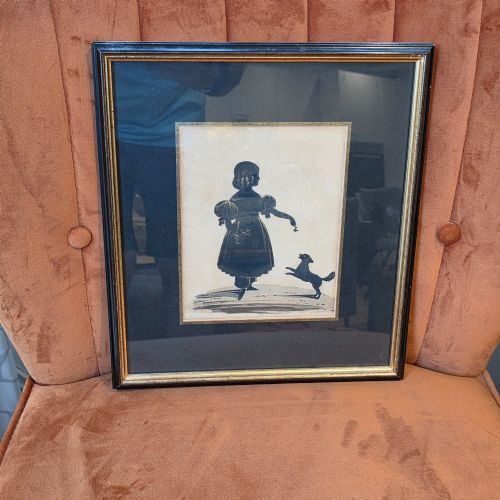
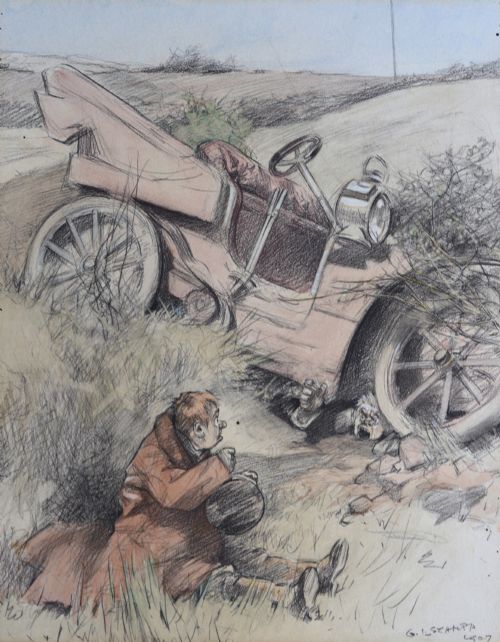
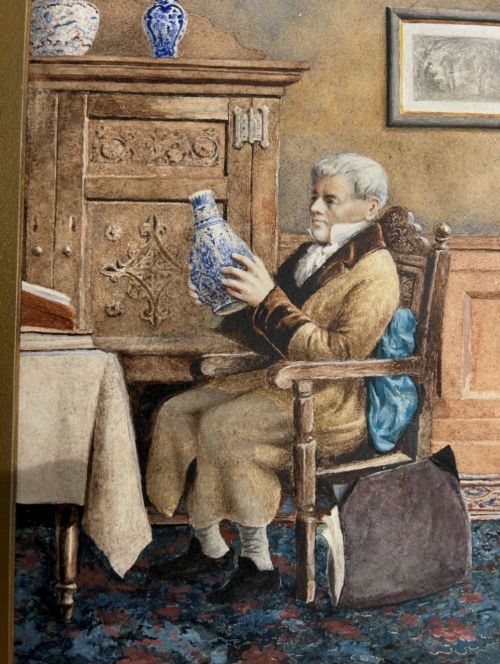
Framed works dominate the selection, preserving delicate paper sheets behind glass, often accompanied by period wooden frames such as giltwood or rosewood. Subjects extend from domestic genre scenes and animal studies to topographical records of Britain, Europe, and beyond.
How they were made
Artists applied watercolour pigments, mixed with water and gum arabic, onto handmade or machine-made paper sheets to build translucent layers of colour. Bodycolour, or gouache, was frequently introduced alongside transparent washes to add opaque highlights and dense areas of detail.
Protective framing was essential for survival, utilising wood such as gold leaf, giltwood, and rosewood to house the paper beneath a sheet of glass. Many sheets were also mounted on card or supported by wash-line mounts to separate the painted surface from the glazing.
Works span paintings, wall art, portrait miniatures, and fine art, capturing British and European landscapes and maritime scenes.
What varies in quality
Quality rests in the surety of the brushwork and the artist's ability to manipulate pigment and water to capture light and atmosphere. Strong compositions with confident handling command attention, whereas hesitant washes and muddy pigment mixtures diminish the visual impact of a scene.
Condition and preservation heavily influence standing, particularly the retention of original vibrant colour against the fading effects of decades of light exposure. The integrity of the original framing, whether a period rosewood moulding or a giltwood frame, further distinguishes finer examples.
William James Hubard·George Sydney Shepherd·George Lorain Stampa·George Fotherly Hargitt·William Henry Earp·William Cannon·John R Prentice·Alfred Young Nutt·Percy Lancaster·Henry Stacy Marks·John Hassall·A. Marie Parsons·William Joseph Boyes·Frank Watson Wood·Vincent Clare·Robert Thorne Waite·Richard Henry Wright·Joseph H Barnes·Henry Travis·Frederick Walker·Thomas Maidment·Frederick James Kerr·Catherine Thomas·George Rankin·William R Hoyles
The Antique Watercolour Picture Glossary
- Watercolour pigment
- Finely ground colour particles suspended in a water-soluble binder, usually gum arabic. This medium allows artists to apply translucent washes that let the white of the paper reflect light back through the layers.
- Bodycolour
- An opaque watercolour paint, often containing white pigment, used to create solid highlights and dense focal points. It contrasts with transparent washes to give depth to a painting.
- Giltwood
- Wood carved and coated with a thin layer of gold leaf or metallic powder. This material was widely used for framing fine pictures during the Regency and Victorian periods.
- Wash-line mount
- A card mount decorated with fine inked lines framing the picture. It provides a measured visual transition between the watercolour sheet and the outer frame.
- Provenance
- The documented history of a picture's ownership and exhibition record. Verified origins add historical context to signed nineteenth-century works.
Antique Watercolour Picture: Frequently Asked Questions
How do I care for antique watercolours?
Keep works away from direct sunlight to prevent the pigments from fading over time. Maintaining stable indoor humidity levels also protects the delicate paper substrate and prevents mould growth.
Ensure that the framing remains sealed at the back to keep out dust and atmospheric pollutants. Professional framing with acid-free materials safeguards the sheet for future generations.
Can I remove a picture from its frame?
Avoid opening historic frames unless conservation work is strictly necessary, as older papers become brittle with age. Removing the backing can disturb the original mounting and expose the fragile sheet to damage.
Many antique pieces retain their original backing papers and framing labels, which provide historical context. Leaving the assembly intact preserves both the physical structure and the heritage of the artwork.
How do I distinguish watercolours from prints?
Examine the surface under a magnifying glass to check for the distinct brush strokes and pooled pigment edges characteristic of hand-applied paint. Prints typically display a uniform dot pattern or smooth ink layers without dimensional buildup.
Watercolour pigments sit directly upon the paper fibres and catch the light differently than printed ink. The reverse of the sheet may also show subtle depressions from the pressure of the brush or the dampness of the wash.
What periods are most common?
Nineteenth-century works dominate the field, spanning from the Regency era through the extensive Victorian period. These pieces reflect the growth of landscape painting and botanical illustration across Britain.
Edwardian and early twentieth-century examples also appear frequently, capturing changing artistic styles leading toward the First World War. Each era brings distinct paper types, framing choices, and subject preferences.