



Mother and Child Artwork
These mother and child artwork pieces capture domestic bonds and maternal tenderness through centuries of paintings, sculptures, and prints.
Mother and Child Artwork
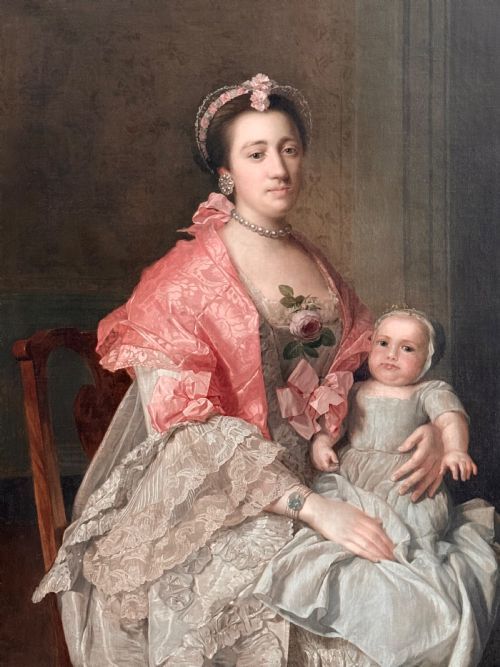
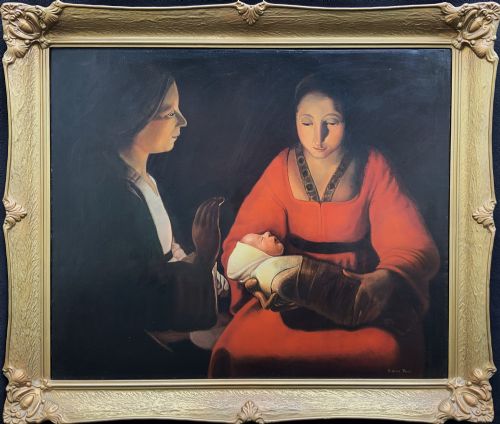
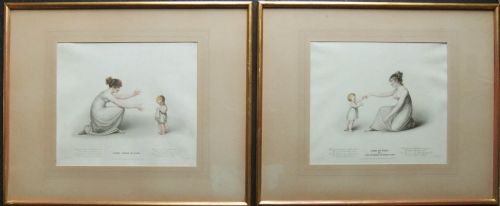
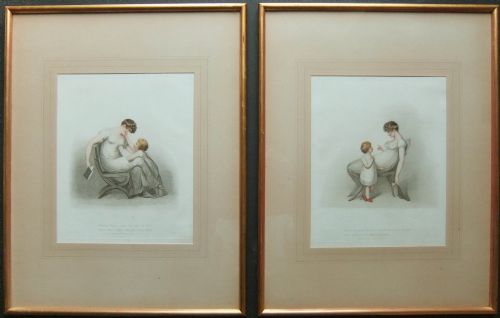
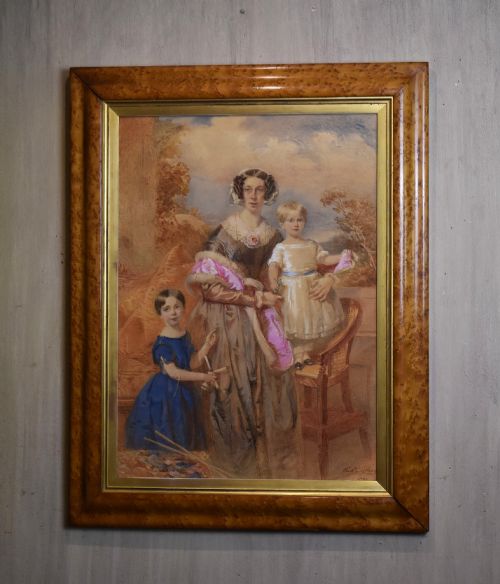
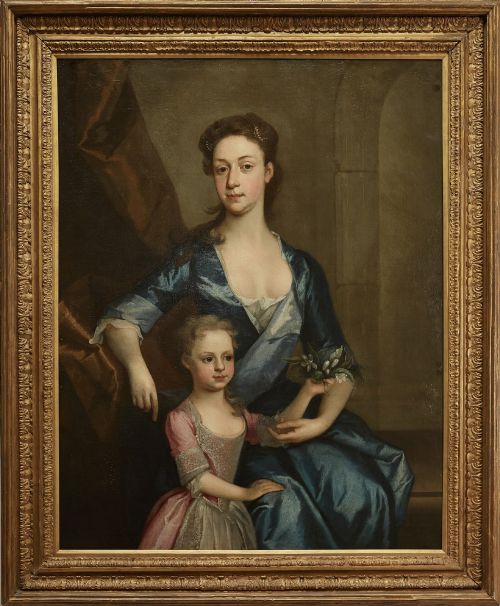
When you search for mother and child artwork, you encounter a diverse range of depictions spanning the eighteenth, nineteenth, and twentieth centuries. The selection encompasses oil paintings on canvas and board, delicate watercolours, bronze sculptures, and framed engravings.
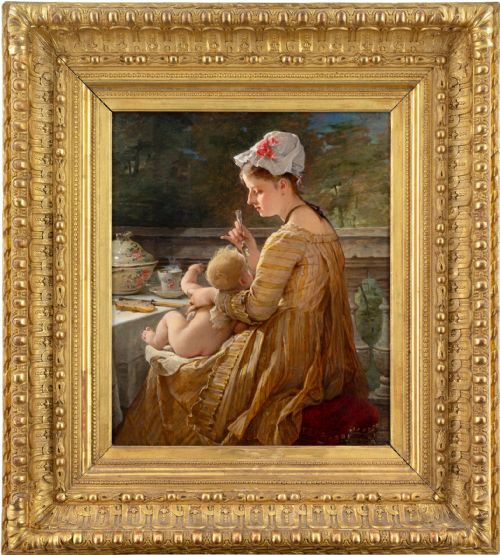
Portraiture forms a significant portion of the grouping, featuring historical family portraits alongside genre scenes of domestic life. You will also find sculptural interpretations in bronze and modernist drawings from the art deco period.
The pieces originate from British and European makers, capturing intimate moments between mothers and their offspring across various traditional and avant-garde movements.
Materials and Technique
The physical objects rely on traditional fine art mediums, combining oil pigments applied to canvas or wood panels with transparent watercolours on paper. Artists utilised these liquid mediums to build layered compositions of figures and interior or pastoral settings.
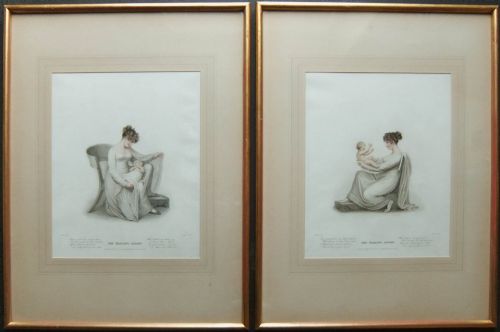
Sculptural works demonstrate metal casting techniques, utilising bronze to render three-dimensional forms with detailed surface patination. Engravings and prints employ inked plates pressed onto paper to reproduce detailed line work and tonal gradations.
Mother and Child Artwork Retail Price Guide 2026
Typical asking prices for mother and child artwork among the pieces listed under this phrase on Sellingantiques today, from the lower quarter to the upper quarter. They describe what is for sale here now, not the wider market.
Several mothers share secrets with children, hold kittens, or keep tethered ponies nearby.
Distinctions in Execution
Quality rests upon the artist's command of anatomy, expression, and spatial harmony within the composition. Masterful handling of light and shadow distinguishes accomplished portraiture and genre scenes from more rigid, formulaic output.
In sculptural pieces, the crispness of the casting and the sensitivity of the surface finish dictate the aesthetic success of the bronze form. Originality of design and the artist's ability to convey genuine emotional resonance elevate individual works.
Adelaïde Salles-Wagner·Adam Buck·Frederick Tatham·Michael Dahl·Joseph Highmore·Antonio Merente·Robert Eadie·George Smith·P. Sega·Helena Maguire·Auguste Moreau·Lucien Madrassi·Franz Xaver Winterhalter·Albert de Belleroche·Richard Buckner·Tschacbasov·Elisabeth Vigee Le Brun·Richard Cosway·Sir Thomas Lawrence·Henry Edridge·Charles Lewis·William Lee-Hankey
The Mother and Child Artwork Glossary
- Genre painting
- A depiction of aspects of everyday life by depicting ordinary people engaged in common activities. These works provide insight into historical domestic routines and social interactions.
- Oil on canvas
- Pigments bound in a drying oil applied to a woven fabric support stretched across a wooden frame. This medium allows for rich colour saturation and blended tonal transitions.
- Bronze sculpture
- A three-dimensional artwork cast from a copper and tin alloy using traditional methods such as lost-wax casting. The resulting metal form often receives chemical patination for colour and depth.
- Watercolour
- Pigments suspended in a water-based, staining solution applied to paper supports. The technique relies on translucent washes that allow the white of the paper to illuminate the pigment.
- Engraving
- A printmaking process where an artist cuts lines directly into a metal plate with a burin. The inked plate transfers the resulting image onto paper under pressure.
Mother and Child Artwork: Frequently Asked Questions
What periods do these pieces span?
The selections span from the eighteenth century through the nineteenth century and into the twentieth century. You will find examples representing Georgian, Regency, Victorian, and Art Deco movements.
Specific dates within the listings reach from the seventeen-hundreds up to nineteen-sixty, encompassing academic, impressionist, and modernist interpretations.
How were these artworks historically displayed?
Paintings and framed prints typically hung within domestic interiors, serving as personal family portraits or sentimental wall decor. Watercolours and drawings often filled private studies and drawing rooms.
Bronze sculptures functioned as mantelpiece ornaments or tabletop studies, placed in prominent rooms to be viewed closely from multiple angles.
How do I identify a genre painting?
Genre paintings portray subjects from everyday life rather than formal portraiture or historical narratives. Look for scenes depicting domestic activities, such as meals or quiet moments between family members.
These works focus on naturalistic interactions rather than posed likenesses of specific nobility, though historical portraits sometimes overlap with genre themes.
What distinguishes an engraving from a painting?
An engraving is a printed multiple produced by pressing inked lines from a metal plate onto paper. Paintings are unique, hand-painted works executed directly onto canvas, wood, or paper using oils or watercolour.
Under magnification, prints reveal distinct ink lines within channels, whereas paintings show brushstrokes and layered pigment texture.