



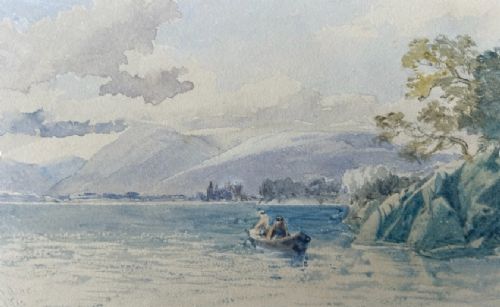
19th Century Framed Art
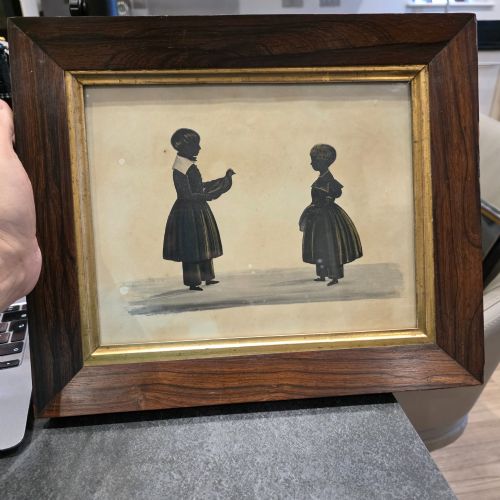
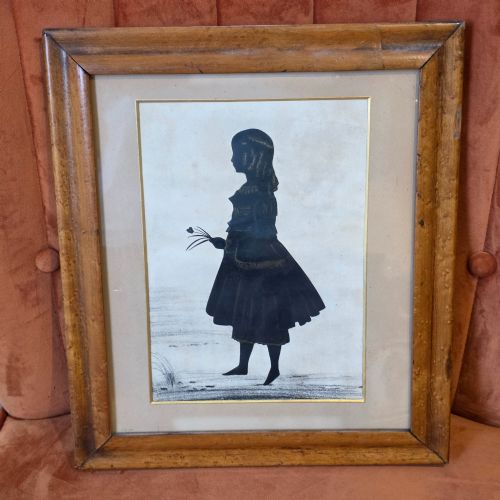
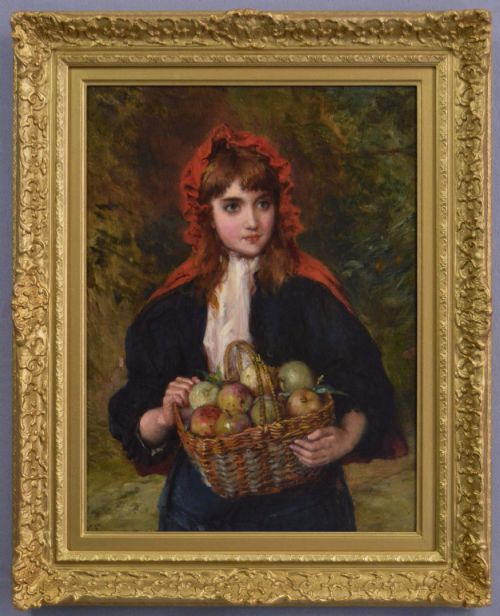
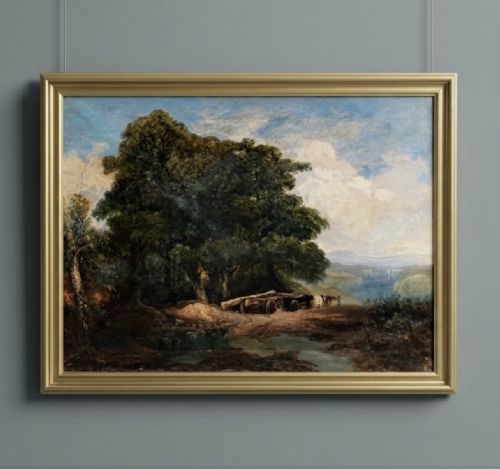
These pieces of 19th century framed art bring the rich textures of oil paintings, watercolours, and delicate silhouettes into any room.
19th Century Framed Art
When you search for 19th century framed art, you encounter a diverse array of visual works spanning oil paintings, watercolours, and portrait miniatures. The selection draws primarily from Victorian, Regency, and Georgian periods, showcasing both British and continental sensibilities.
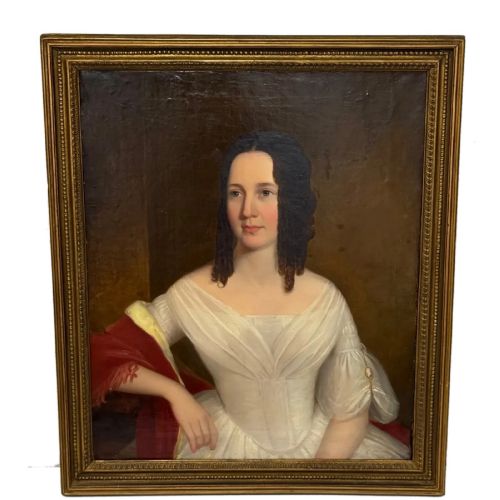
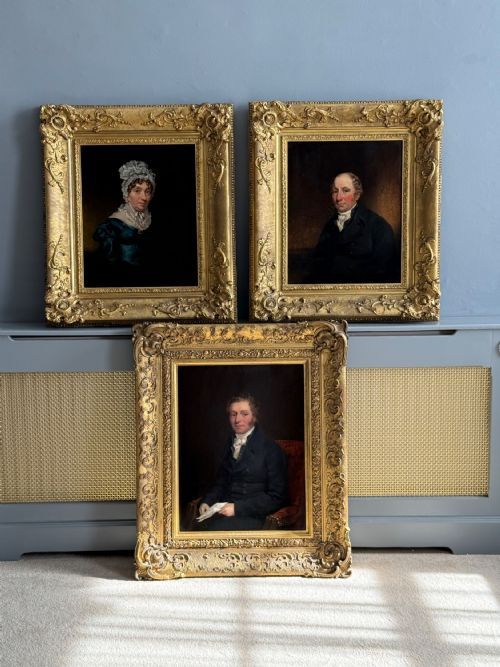
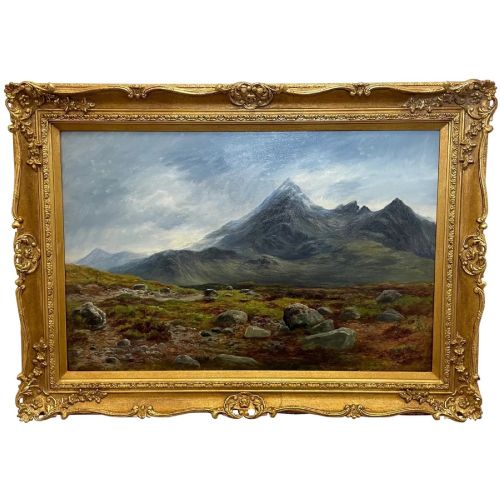
You are most likely to meet oil on canvas landscapes and portraits, alongside framed paper silhouettes and delicate watercolour paintings. These works capture the domestic and natural subjects favoured throughout the era, preserved in their original surrounds.
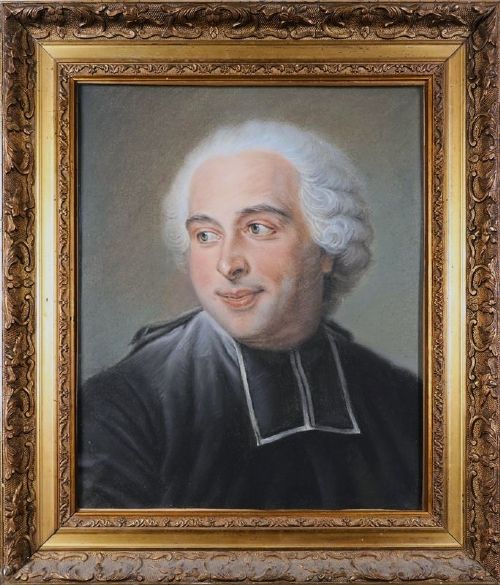
The assortment extends from intimate portrait miniatures to expansive landscape canvases, reflecting the varied output of studios and academies across the period. Each piece carries the distinct stylistic markers of its decade, from early century precision to later romantic freedom.
Materials and methods
Makers utilised oil paint on canvas or wood panels, alongside watercolour and cut paper for silhouettes. Gold leaf and giltwood feature prominently in the protective frames that enclose these works.
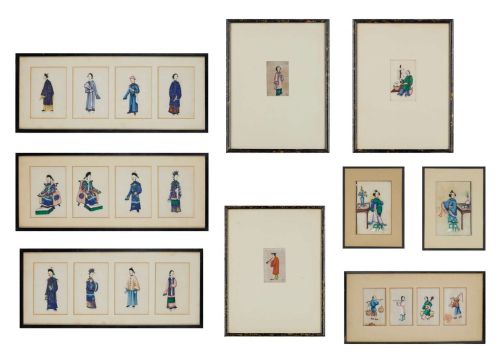
Paper and glass safeguard fragile watercolours and pith paintings, while heavy timber supports the larger oil canvases. Artisans applied pigments by hand, sometimes mounting intricate cameos or multi-part paper compositions within custom surrounds.
19th Century Framed Art Retail Price Guide 2026
Typical asking prices for 19th century framed art among the pieces listed under this phrase on Sellingantiques today, from the lower quarter to the upper quarter. They describe what is for sale here now, not the wider market.
One unexpected Regency listing records a Grand Tour collection of eighteen classical cameo intaglios, preserving miniature classical history in miniature stone.
Markers of quality
The integrity of the original giltwood frame and the preservation of the delicate paper or canvas surface influence the standing of any work. Superior pieces retain their unaltered pigments and crisp cut-paper edges without excessive restoration.
William James Hubard·William Oliver·Eugène Verboeckhoven·Richard Sebastian Bond·Joseph Clover·William Beattie Brown·George Fotherly Hargitt·Maurice Quentin de la Tour·Thomas Miles Richardson Jnr·James Orrock·Henri Fradelle·William Henry Earp·Felix Stone Moscheles·Sir James Dromgole Linton·Valentine T Garland·John Maler Collier·Dumini Leopoldo·George Atkinson·W Klombeck·Frederick Marriott·Henry Stacy Marks·James Smetham·Francois Boucher·John Horace Hooper·William McAlpine
The 19th Century Framed Art Glossary
- Silhouette
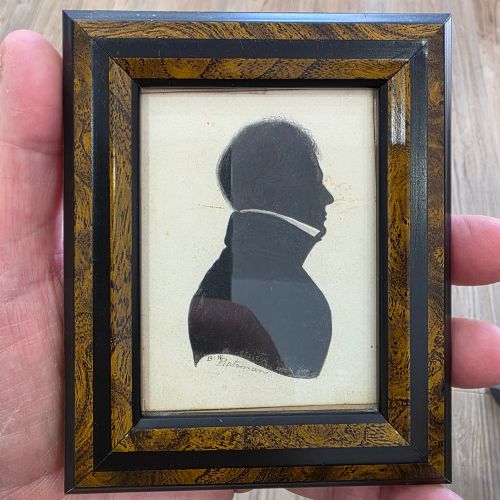
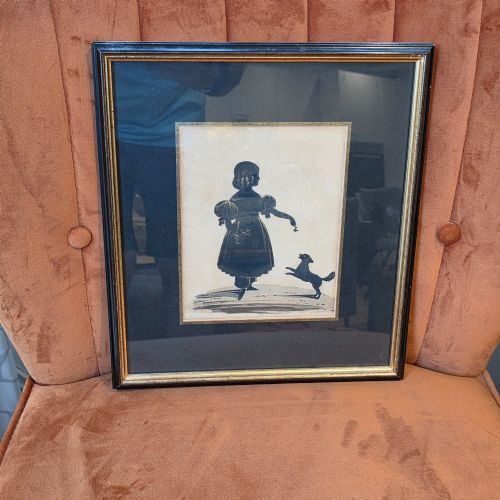
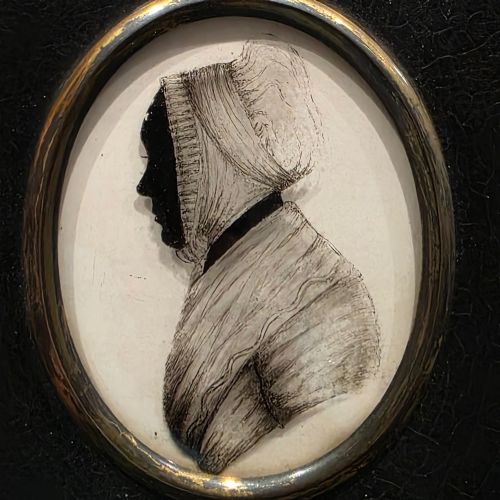
- A solid dark profile portrait, usually cut from paper or painted against a pale background. These demand immense dexterity from the artist to capture likeness solely through external contour.
- Giltwood
- Wood carved and coated with a thin layer of gold leaf. This material defined the ornate framing styles popular throughout the Victorian and Regency periods.
- Pith painting
- Artworks created on fragile plant cellular material, notably produced in China during the Qing dynasty for export. They yield a luminous, velvety surface texture.
- Intaglio
- A design engraved into the surface of a gemstone or glass cameo so that the image sits below the flat plane. Collectors prize these for their microscopic detail.
- Portrait miniature
- A small, highly detailed painting on ivory, vellum, or card, designed for personal keepsake. They require magnification and steady precision to execute successfully.
19th Century Framed Art: Frequently Asked Questions
What is a silhouette portrait?
A silhouette is a profile likeness cut from dark paper or painted directly onto card, wood, or glass. They gained immense popularity before the widespread adoption of photography.
Artists used specialised pantographs or worked entirely freehand with scissors to capture sitters instantly. The best examples display remarkable likeness through the contour of the nose and hairline alone.
Are these oil paintings on canvas?
Many works utilise oil on canvas, but artists also painted on prepared wood panels and board. The choice of substrate often depends on the scale of the piece and the period.
Smaller domestic scenes frequently appeared on wooden panels, while larger landscapes required sturdy woven canvas. Each material ages differently, with panels prone to splitting and canvases subject to slackening.
How do I date a framed artwork?
Examine the construction of the frame, the backing materials, and any handwritten inscriptions left on the reverse. Old timber joinery and hand-blown glass panes offer strong clues to the decade of manufacture.
Stylistic cues within the clothing and hair of portrait sitters also help narrow down the production period. Comparing the artist's recorded working dates provides the most reliable chronological anchor.