
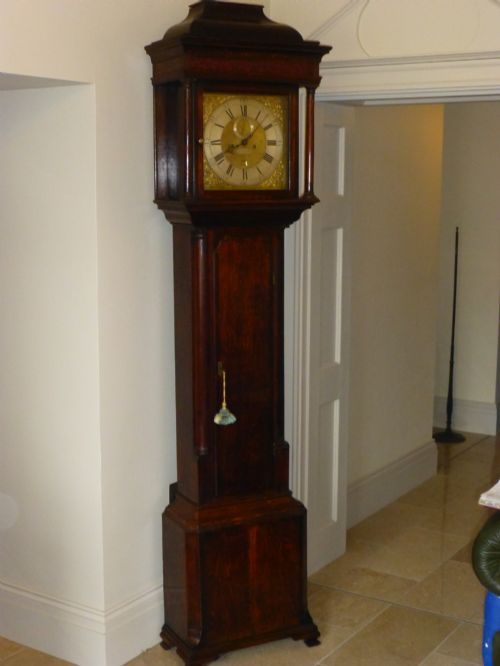
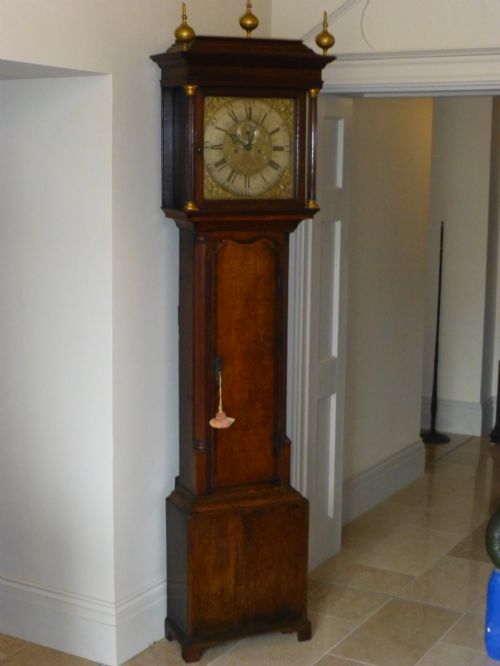
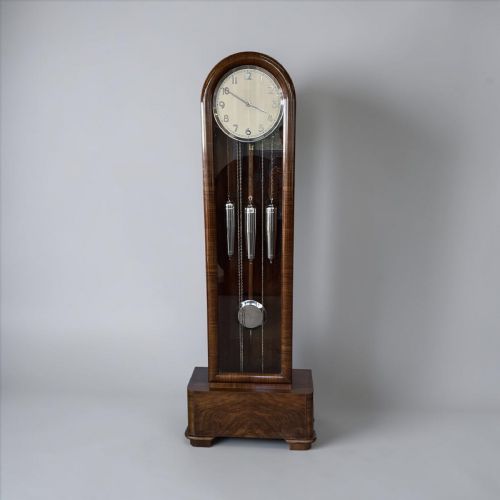
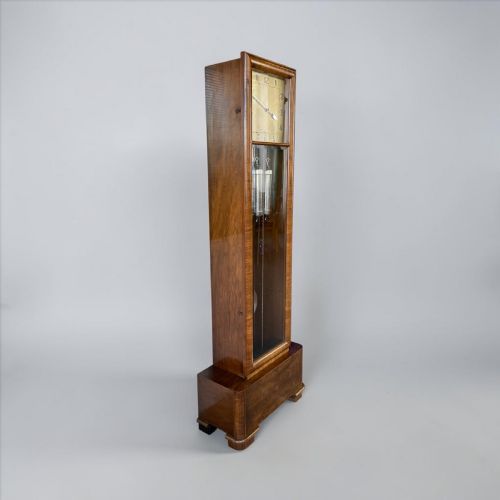
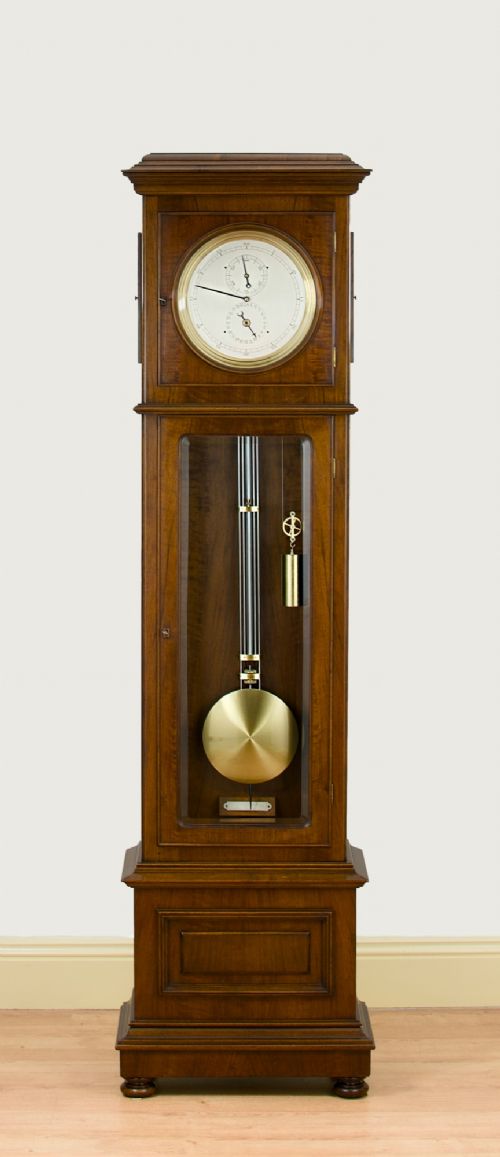
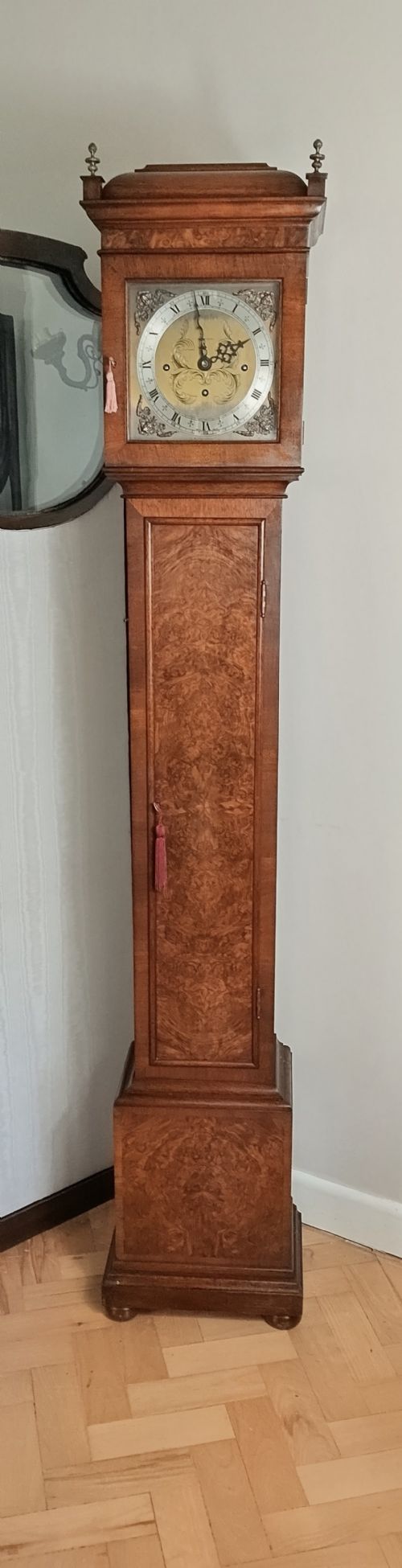
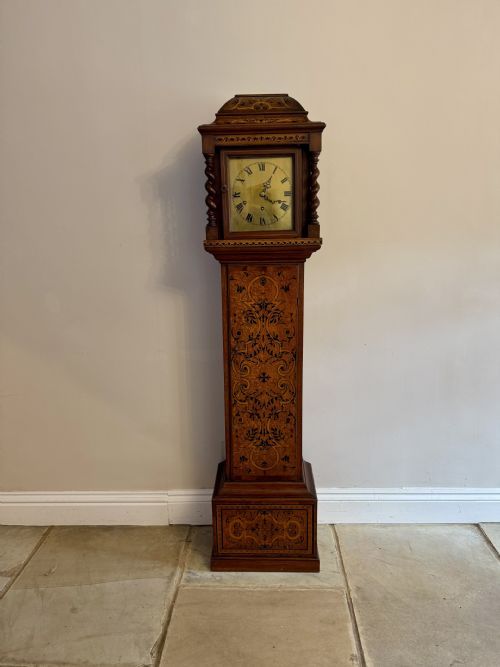
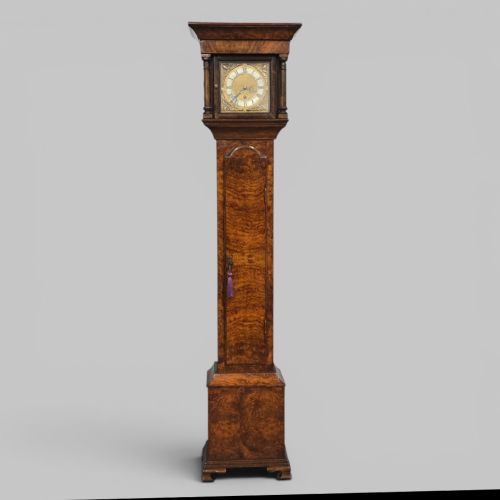


Antique Walnut Floor Clock
An antique walnut floor clock brings profound presence to a room through tall timber cases and precise brass dialwork.
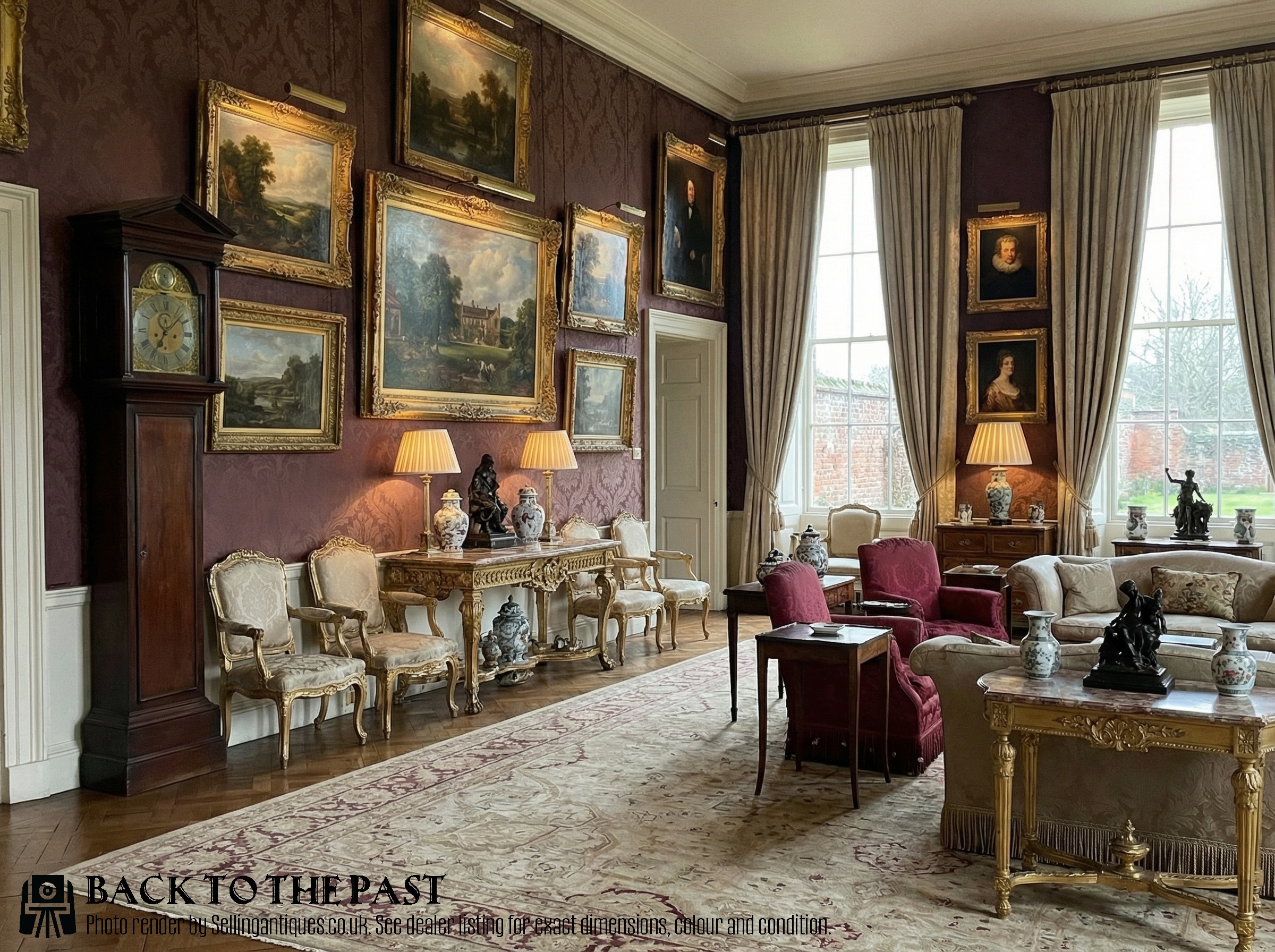
Antique Walnut Floor Clock
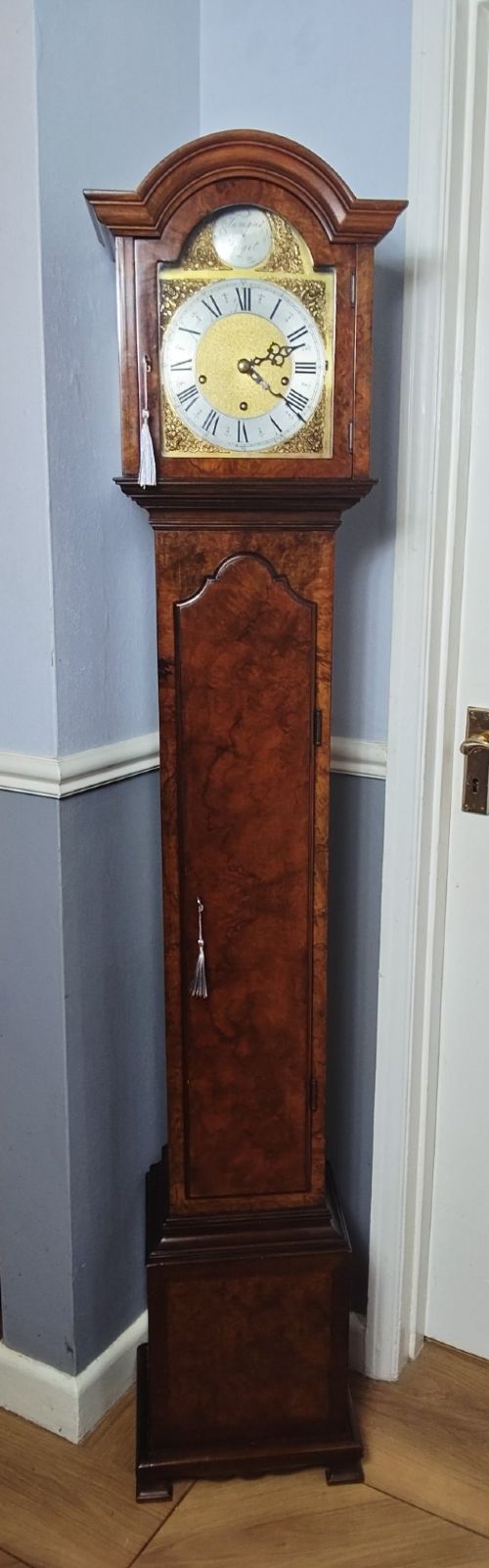
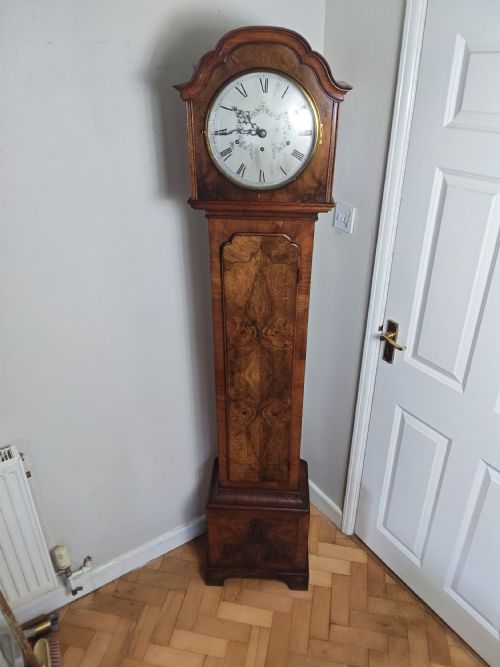
An antique walnut floor clock encompasses tall case timepieces housing pendulum movements, frequently described as longcase or grandfather clocks. These pieces combine utilitarian timekeeping with architectural cabinetry built to command height in a hall or living space.
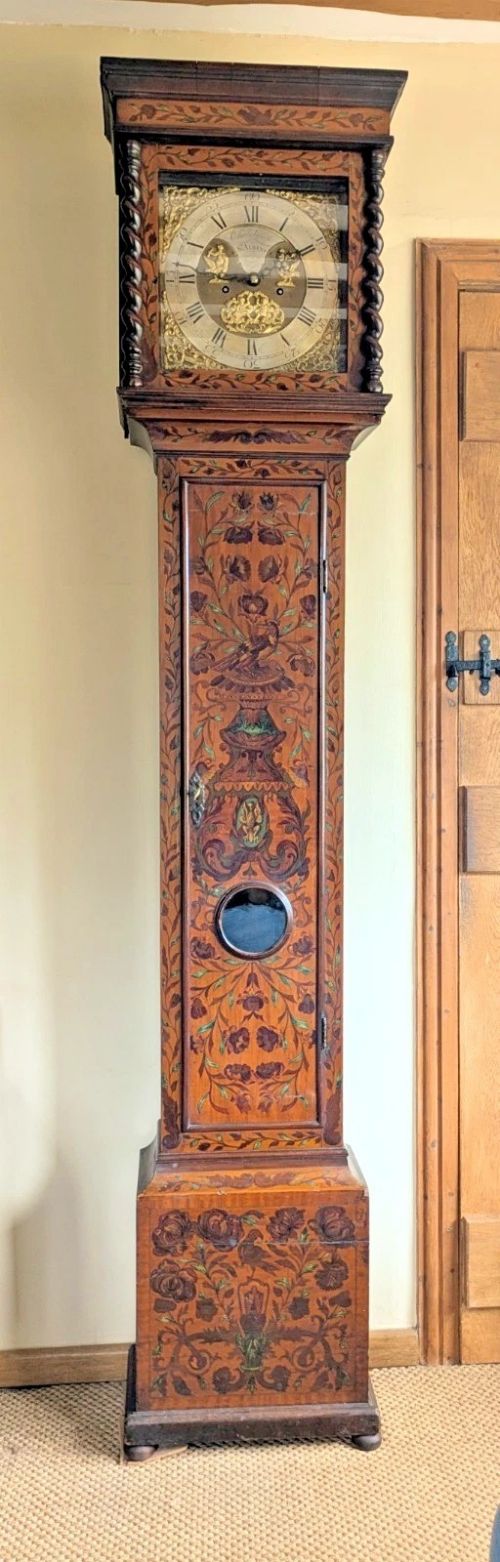
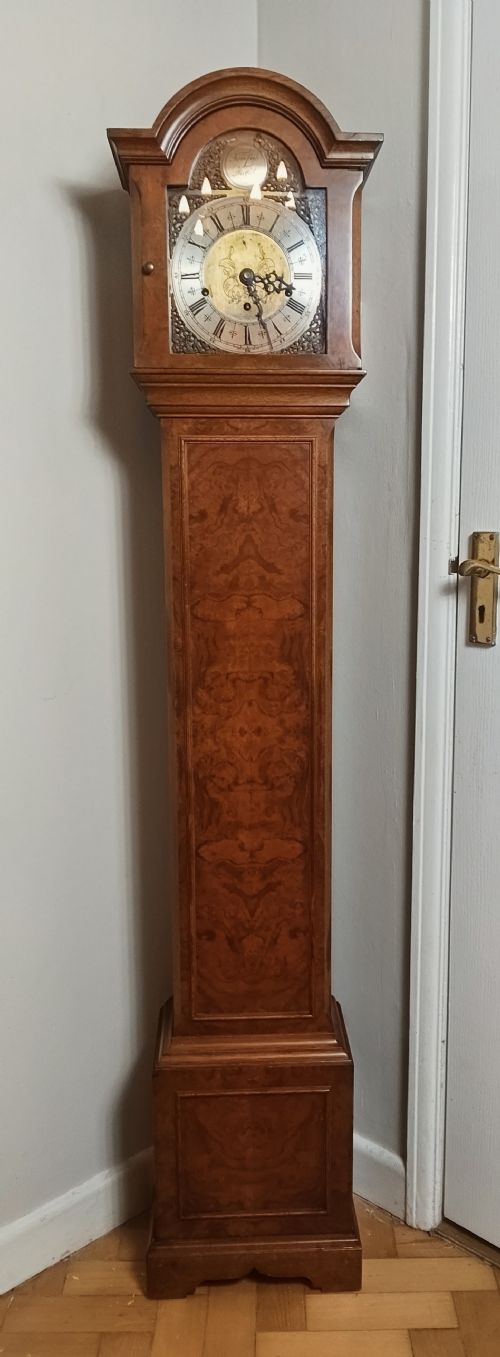
The selections available range from 17th-century London masterworks with marquetry decoration to 18th-century Georgian walnut and oak examples, alongside smaller 20th-century grandmother clocks. Buyers encounter full-sized tall clocks alongside smaller domestic scaled models.
Makers recorded in the evidence span regional provincial watchmakers and prominent London horologists working across the 17th and 18th centuries. The overarching category includes distinct forms such as musical quarter-chiming clocks and moonphase dials.
How They Were Made
Cabinetmakers utilised figured walnut, burr walnut, and oak veneers applied to underlying carcases, often incorporating intricate floral marquetry panels. Timber selection relied on figuring to create pattern and depth across the long trunk doors and hoods.
Movement assembly involved brass plates, steel pivots, and lead or iron weights suspended by cords or chains to drive the train. Dials combined engraved brass chapters with cast brass spandrels in the corners, sometimes silvered for legibility.
Antique Walnut Floor Clock Retail Price Guide 2026
Typical asking prices for walnut floor clock among the pieces listed under this phrase on Sellingantiques today, from the lower quarter to the upper quarter. They describe what is for sale here now, not the wider market.
The documented periods span 17th-century craftsmanship through Georgian eras into 1930s Art Deco interpretations.
What Varies in Quality
The refinement of the timber veneers and the intricacy of the marquetry inlay dictate visual distinction across cabinets. Early examples display dense burr figure and precise quarter-veneered panels that demand expert joinery.
Movement sophistication ranges from standard thirty-hour timepieces to complex eight-day musical gear trains with multiple weights and quarter-chiming mechanisms. Dial execution by named makers adds historical weight and mechanical precision.
Richard Corless of Stockport·Charles Louch St Albans·Henry Massy·Nathaniel Pyne·Edin Burgis of London·Langley Bradley·Edward Upjohn·Joseph Knibb·Samuel Young Nantwich·Edward Stanton·John Harrington London·Joseph Saer·Joseph Windmills·Jonathan Marsh·Peter Wise·Joseph Jackeman·Richard Baker
The Antique Walnut Floor Clock Glossary
- Longcase clock
- A tall pendulum clock enclosed in a wooden case designed to stand directly on the floor. These items are also frequently called grandfather clocks.
- Marquetry
- Decorative veneer work formed by fitted pieces of various woods or other materials to create pictorial patterns on the case surface. Floral designs are common on 17th-century examples.
- Moonphase
- A dial mechanism showing the lunar cycle through a rotating disc depicting the phases of the moon. This complication sits in the arch of the clock face.
- Grandmother clock
- A smaller version of the traditional longcase clock produced during the 20th century. They suit domestic spaces with lower ceiling heights.
- Spandrel
- The triangular ornamental corner pieces set in the angles between the circular dial chapter ring and the square clock face border. Early versions are cast in brass.
Antique Walnut Floor Clock: Frequently Asked Questions
How do eight-day movements work?
An eight-day movement requires winding approximately once a week using a key to pull the weights back up inside the trunk. This mechanism uses a larger drop than thirty-hour clocks to sustain the running time.
Most high-grade antique examples utilise this heavier eight-day setup alongside brass dial architecture.
What is burr walnut veneer?
Burr walnut veneer comes from the growth excrescences on walnut trees, yielding irregular swirls and knot clusters. Cabinetmakers sliced this figured wood thinly to surface the main trunk doors of luxury clocks.
This timber treatment creates highly decorative optical patterns across the front facade.
Where were these clocks made?
Production centred on major workshops in London alongside significant regional centres across England. Notable makers worked in provincial towns as well as the capital.
Regional variations often incorporated local timbers like oak alongside walnut veneers.