

Antique Walnut Desk Drawers
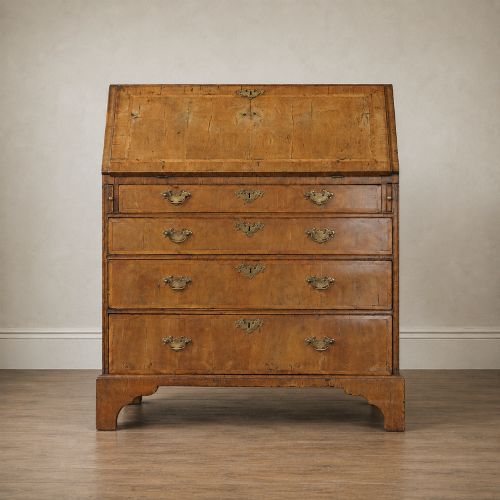
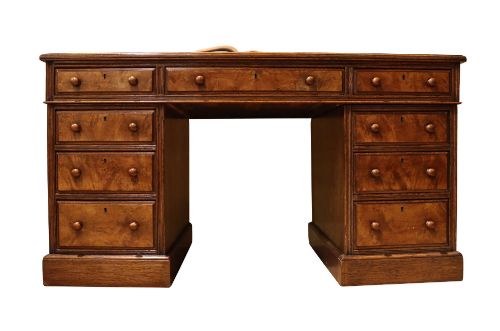
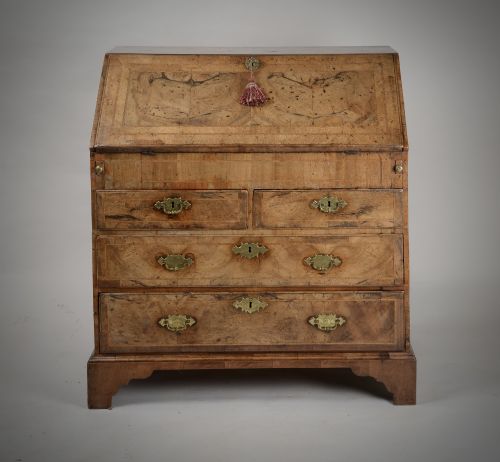
These antique walnut desk drawers bring together rich burr timbers, fitted writing surfaces, and practical storage in forms ranging from Georgian bureaux to Victorian pedestal desks.
Antique Walnut Desk Drawers
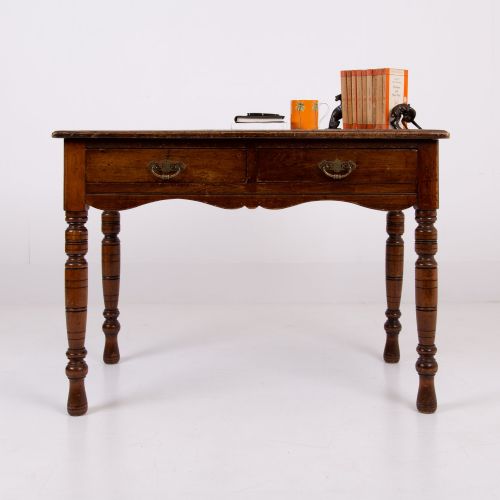
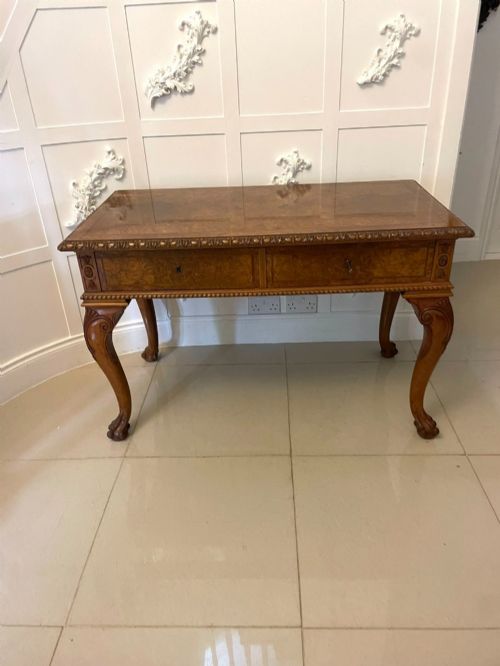
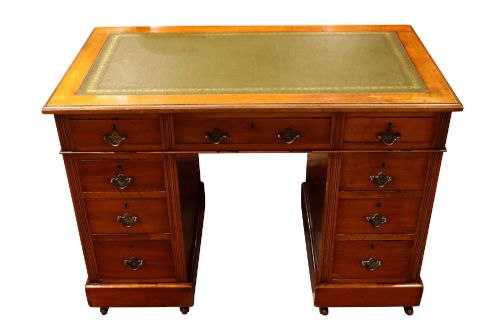
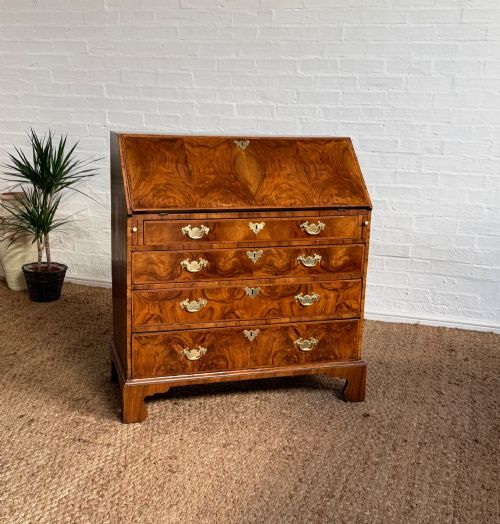
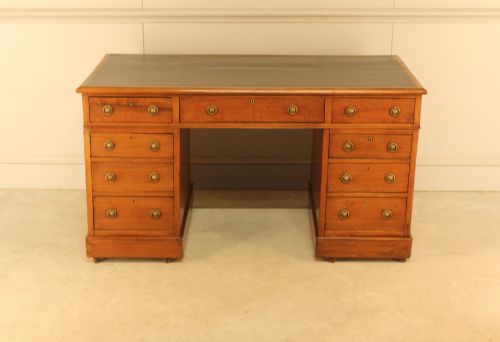
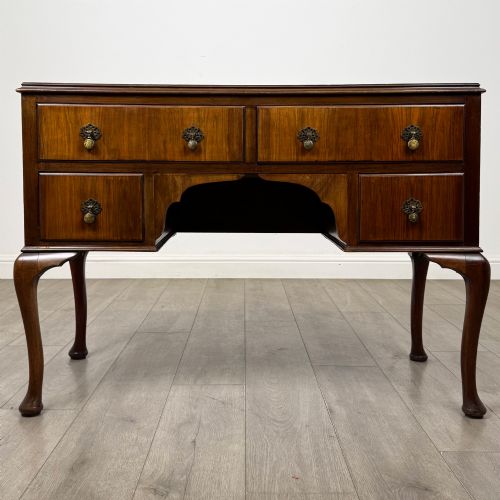
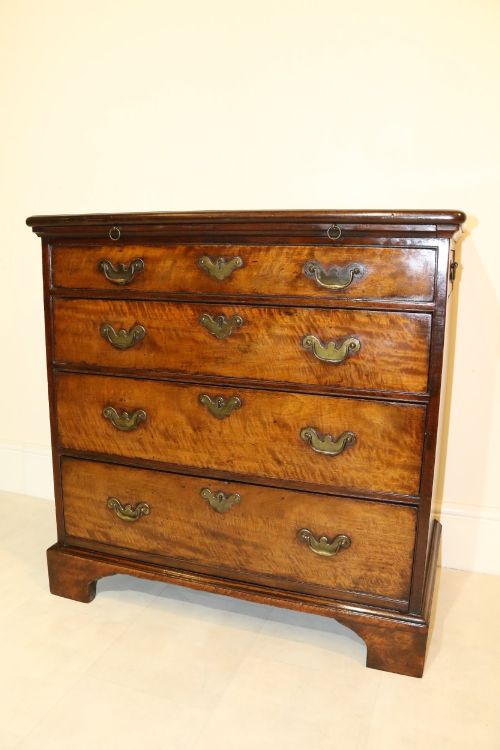
When you search for antique walnut desk drawers, you encounter pieces designed for correspondence, household accounts, and secretarial work. The selection spans compact lowboys, kneehole desks, pedestal desks with leather tops, and towering bureau bookcases.
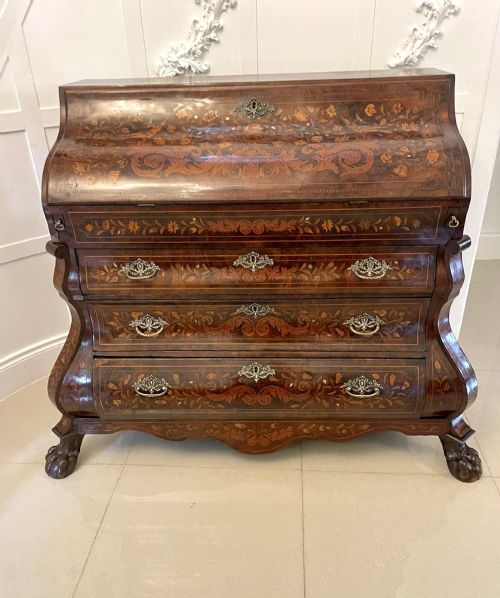
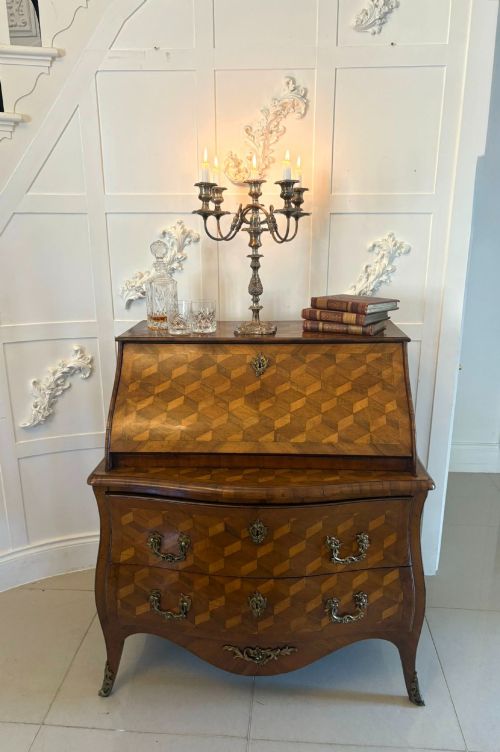
You are most likely to meet pieces from the 18th century, Georgian period, and Victorian era, alongside revival pieces from the Edwardian years and the early 20th century. These items range from simple side tables with drawers to elaborate bombe-shaped bureaux with fitted internal compartments.
How They Were Made
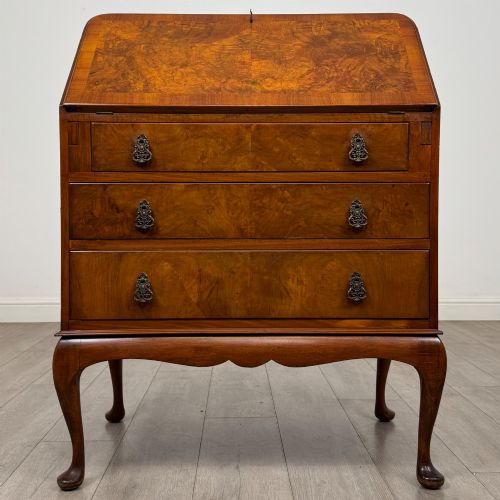
Cabinet makers utilised solid wood and figured veneers, particularly burr walnut, laid over supporting timbers like oak to create rich grain patterns across the front of the drawers and writing slopes. Decorative techniques such as floral marquetry and geometric parquetry ornament the surfaces of 18th-century pieces.
Drawer interiors and writing surfaces incorporate supplementary materials including leather inserts for writing, brass drop handles, and mirrored glass. Structural framing relies on traditional joinery methods suited to domestic furniture of the Georgian and Victorian periods.
Several pieces conceal secret compartments behind miniature drawers, designed to keep private correspondence safe from wandering eyes.
What Varies In Quality
The choice and cut of the walnut veneer establish the visual impact, with highly figured burr patterns and matched grain alignments elevating a bureau or pedestal desk above plain timber surfaces. The complexity of internal stationary compartments and the presence of secret drawers distinguish refined cabinet work from standard utility pieces.
Proportion and execution define the distinction between periods, from the crisp lines of early Georgian lowboys to later Edwardian adaptations. The integrity of the original brass hardware and the precision of inlaid parquetry contribute to the standing of individual tables and desks.
Edwards & Roberts
The Antique Walnut Desk Drawers Glossary
- Bureau
- A sloping desk that opens to reveal internal pigeonholes and small drawers, often set above a chest of drawers.
- Lowboy
- A small side table with one or more rows of drawers, commonly standing on four tall legs.
- Burr walnut
- Timber taken from a tree growth that produces swirling, highly decorative grain patterns used for decorative veneers.
- Kneehole desk
- A compact pedestal desk featuring a central recessed space for the user's knees, flanked by banks of drawers.
- Marquetry
- Inlay work using pieces of wood veneer to form decorative floral or pictorial patterns on furniture surfaces.
Antique Walnut Desk Drawers: Frequently Asked Questions
What is a bureau bookcase?
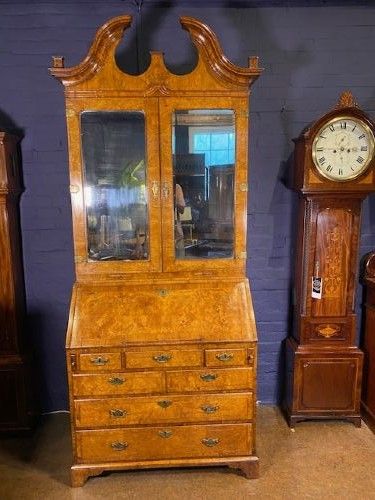
A bureau bookcase combines a sloping desk compartment with shelving enclosed by doors above.
These taller pieces provide both writing facilities and display space for books or collections.
How do I identify a lowboy?
A lowboy is a small table equipped with drawers, standing on slender legs designed for dressing or side storage.
They date primarily from the 18th century and offer a compact surface with integrated drawer space.
What is a Davenport desk?
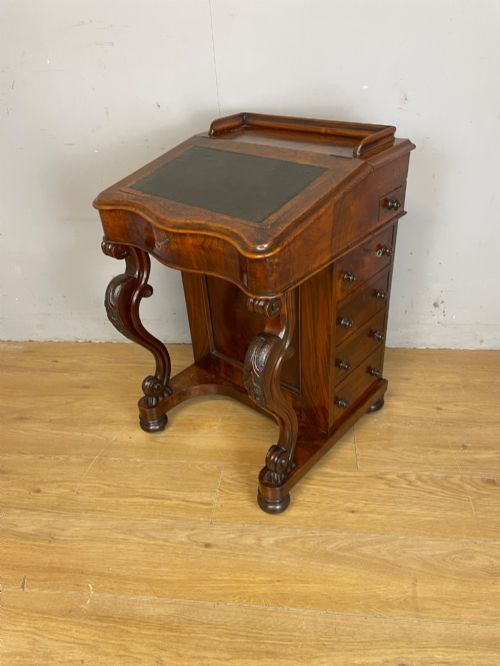
A Davenport is a compact Victorian desk featuring a sloped writing top above a pedestal of side drawers.
Originating in the 19th century, these pieces often include hidden compartments and stationary storage.
Are pedestal desks practical for daily use?
Pedestal desks provide substantial drawer capacity alongside a wide writing surface, often lined in leather.
Their robust construction makes them suitable for modern workspaces while retaining period character.