
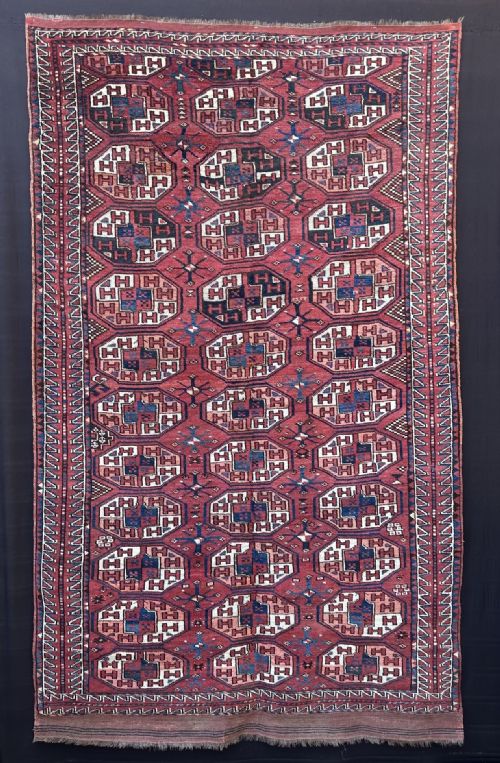


Antique Turkmen Runner
When you search for an antique turkmen runner, you enter a tradition of Central Asian tribal weaving defined by deep geometric motifs and rich natural dyes.
Antique Turkmen Runner
An antique turkmen runner encompasses elongated tribal textiles and narrow formats originating from Central Asian nomadic and village groups. The pieces span periods from the mid-nineteenth century through the early twentieth century, showing distinct regional tribal affiliations.
Buyers encounter formats that range from long corridor carpets and tent bands to specific tribal bag faces, prayer rugs, and flat-woven kilims. The designs reflect the heritage of various tribes, including the Tekke, Ersari, Yomut, and Kizyl Ayak.
Many examples utilise characteristic repeating primary motifs known as guls, laid across fields of deep madder reds, browns, and contrasting ivories. These textiles served functional roles within nomadic yurt dwellings, functioning as ground coverings, storage containers, and architectural bands.
How they were made
Weavers constructed these pieces predominantly using hand-spun wool for both the foundation warps and the dense, clipped pile. Natural dyes derived from local plants and minerals provided the foundational palette, yielding lasting depth in tones.
Alternative production methods included flat-weaving techniques such as soumak and cicim work, visible in Yomut and Tekke palas kilims. Artisans tied symmetrical or asymmetrical knots depending on tribal tradition, creating durable structures designed for daily nomadic life.
The inventory records structural formats including tent bands, torba bag faces, and flat-woven kilims alongside rugs.
What varies in quality
The fineness of the weave and the precision of the geometric drawing distinguish the execution of individual pieces. Knot density and the handling of secondary border ornaments demonstrate the skill of the weaver.
Colour saturation and the integrity of the natural dye palette contribute significantly to the visual impact. Well-preserved pile depth and intact original kilim ends also separate standard examples from finer tribal works.
Teke Tribes·Ersari Tribes·Yomut Turkmen·Kizyl Ayak Tribe
The Antique Turkmen Runner Glossary
- Gul
- A primary medallion motif used repeatedly across Central Asian carpets, often denoting specific tribal lineage. Each tribe adapted these octagonal or gabled forms into distinct variations.
- Torba
- A small tribal storage bag face, traditionally hung inside a yurt to hold household possessions. These pieces display concentrated versions of main carpet designs.
- Soumak
- A flat-weave technique where coloured weft threads wrap around the warp threads in a continuous brocading motion. This method creates a textured surface without a cut pile.
- Ensi
- A tribal rug featuring a cross-panel design, traditionally hung over the entrance doorway inside a yurt. The layout divides the field into four distinct quadrants.
- Palas
- A term for a flat-woven utility textile produced by nomadic groups without a raised pile. These lightweight pieces often served multiple domestic functions.
Antique Turkmen Runner: Frequently Asked Questions
How do I identify a Turkmen runner?
Look for repeating octagonal gul motifs set against a dense red ground, accompanied by geometric border patterns. These design elements point directly to Central Asian tribal traditions.
Examine the back of the textile to check for hand-spun wool and natural dye variations. Structural details like flat-woven ends often confirm the nomadic origin of the piece.
What is a tribal gul?
A gul is a recurring medallion design that historically identified the specific tribe or clan who wove the textile. These motifs were passed down through generations.
Different tribes utilised unique proportions and internal fillings within their guls. Recognising these shapes helps separate Tekke work from Ersari or Yomut examples.
How were these runners used?
Nomadic families placed these narrow textiles inside circular yurt dwellings to line floors and insulate living spaces. Their elongated format suited the interior dimensions of traditional tents.
Beyond floor coverings, similar formats functioned as animal trappings, doorway hangings, and storage bag faces. Every piece served a practical domestic purpose in daily nomadic life.
How do I care for an antique rug?
Vacuum the piece gently without using a rotating beather brush to protect the vintage wool pile. Keep the textile out of direct sunlight to prevent natural dye fading.
Rotate the rug periodically to ensure even wear across high-traffic areas. Consult a specialist familiar with antique tribal textiles for professional cleaning.