





Antique Turkmen Main Rug
An antique turkmen main rug is a large tribal weaving carrying centuries of Central Asian nomadic heritage, sought after for bold geometric motifs and rich natural dyes.
Antique Turkmen Main Rug
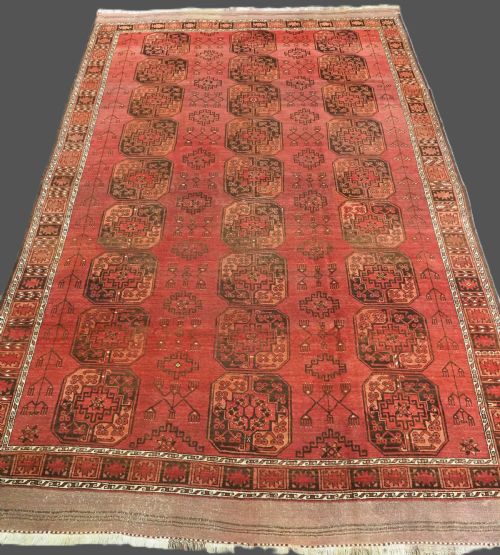
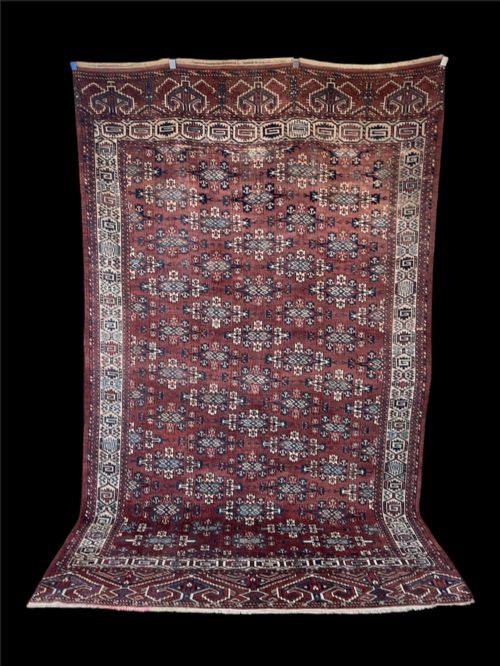
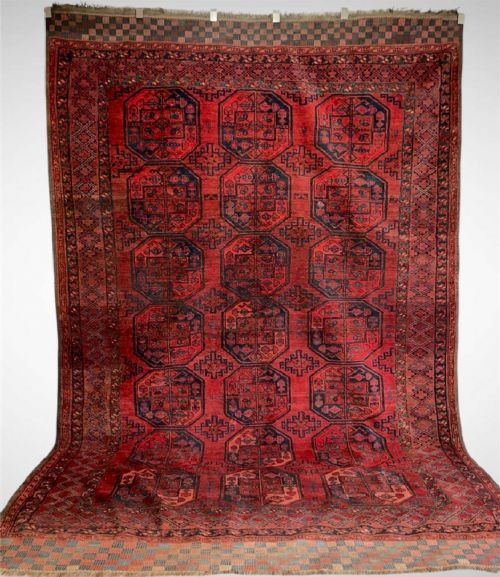
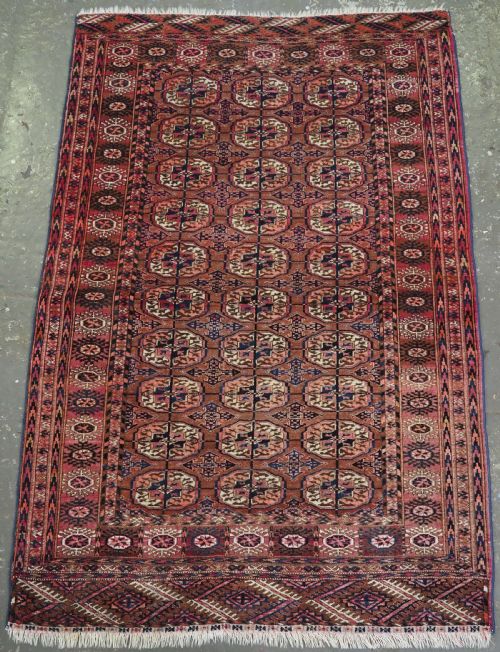
An antique turkmen main rug is a large tribal carpet produced across Central Asia by nomadic and semi-nomadic groups including the Ersari, Yomut, Tekke, and Kizil Ayak tribes. These floor coverings served practical and ceremonial purposes within tribal life, often functioning as central household carpets or dowry pieces. The most common examples met here originate from the nineteenth century, spanning from the eighteen-fifties through to nineteen-twenty.
The format of an antique turkmen main rug typically involves generous proportions designed to anchor a tribal tent or dwelling. Pieces are categorised by distinct tribal designs, ranging from classic Ersari patterns to Yomut formations and Tekke layouts. Tribal weavers structured these carpets with disciplined repetition, creating large formats that display regional identities through specific border arrangements and central fields.
How they were made
The construction of an antique turkmen main rug relies principally on wool, supplemented by goat hair and horsehair utilised in the foundation for added durability. Weavers employed natural dyes to achieve deep palettes, incorporating cochineal highlights alongside earthy tones derived from local plants and minerals. These organic colourants mature gracefully over decades, producing complex tonal variations across the pile.
Weavers knotted dense woolen piles onto sturdy warp and weft foundations, often integrating goat hair into the outer cord edges to withstand heavy nomadic use. The technical execution varies from very fine weaves seen in dowry pieces to heavy duty formats built for hard wearing domestic utility. Natural dye penetration throughout the wool fibres ensures the palette remains consistent even as the surface undergoes natural ageing.
Antique Turkmen Main Rug Retail Price Guide 2026
Typical asking prices for turkmen main rug among the pieces listed under this phrase on Sellingantiques today, from the lower quarter to the upper quarter. They describe what is for sale here now, not the wider market.
Listings feature wool construction, natural dyes, and goat hair foundations across nineteenth and early twentieth century periods.
What varies in quality
The quality of an antique turkmen main rug is determined by the density of the weave and the precision of the tribal motifs. Finer knots per square inch allow for crisper definition in geometric symbols like the gul, separating standard utility carpets from exceptional dowry examples.
Another factor is the complexity and depth of the natural dye palette. Pieces retaining vibrant yet harmonious tones, including cochineal highlights, demonstrate superior material selection and dye preparation by the weaver.
The Antique Turkmen Main Rug Glossary
- Gul
- The primary repeating octagonal medallion motif found across Central Asian tribal weaving. Different tribes utilised specific gul variations to signal lineage and geographic origin.
- Ersari
- A major Turkmen tribal group known for producing large main carpets with expansive fields and varied geometric drawing. Their work often incorporates diverse secondary motifs.
- Tekke
- One of the prominent Turkmen tribes associated with finely woven rugs and carpets featuring closely spaced guls and intricate minor borders. Their pieces frequently display soft wool and subtle colour variation.
- Yomut
- A Turkmen tribe recognised for distinctive tribal designs such as the kepse and dyrnak guls. Their weaving typically employs dynamic geometry and clear contrasting tones.
- Cochineal
- A natural red insect dye used to create bright pinkish-red highlights within the pile. Its presence adds visual depth and tonal complexity to the rug's surface.
Antique Turkmen Main Rug: Frequently Asked Questions
How do I identify a Turkmen main rug?
A Turkmen main rug is identified by its large format and repetitive tribal medallions known as guls across the field. These carpets typically display structured geometric layouts specific to Central Asian weaving traditions.
Tribal attributions are further supported by characteristic border systems and the presence of natural wool foundations incorporating goat hair or horsehair.
What is a gul motif?
The gul is an octagonal tribal medallion that forms the primary pattern across the field of Turkmen weaving. Each tribe utilised distinct gul variations to identify their specific group.
Examples seen on these carpets include the kepse, dyrnak, and tauk nuska guls, which repeat down the central expanse in structured rows.
How should I care for an antique wool rug?
Antique wool rugs require gentle regular vacuuming without beater bars to protect the vintage pile. Professional cleaning should be undertaken periodically by specialists familiar with natural dye textiles.
Keeping the carpet out of direct prolonged sunlight helps preserve the organic dyes and prevents uneven fading across the wool surface.
Where were these carpets originally made?
These carpets were woven by nomadic and village tribes across Central Asia, including regions of Turkmenistan and northern Afghanistan. Specific pieces originated from locations such as the Merv Oasis.
Weavers produced these textiles within tribal encampments for domestic use, ceremonial dowries, and regional trade.