


Antique Tray Top Stand
An antique tray top stand offers a practical surface with raised edges, combining mobility with sturdy construction for everyday use.
Antique Tray Top Stand
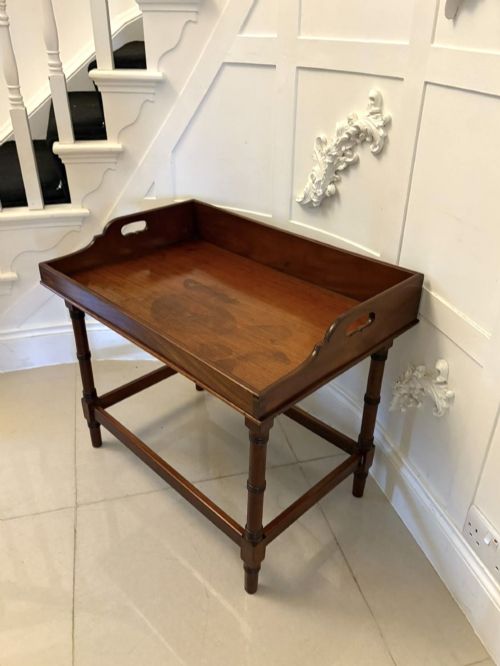
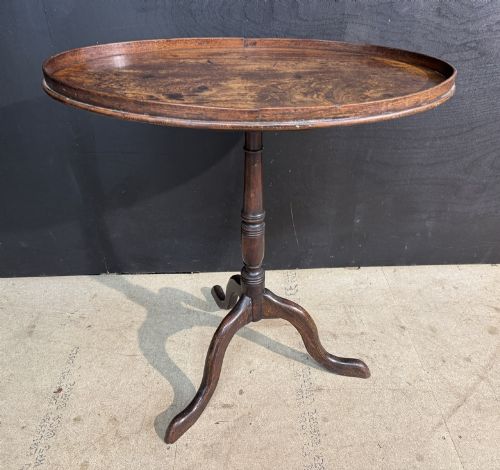
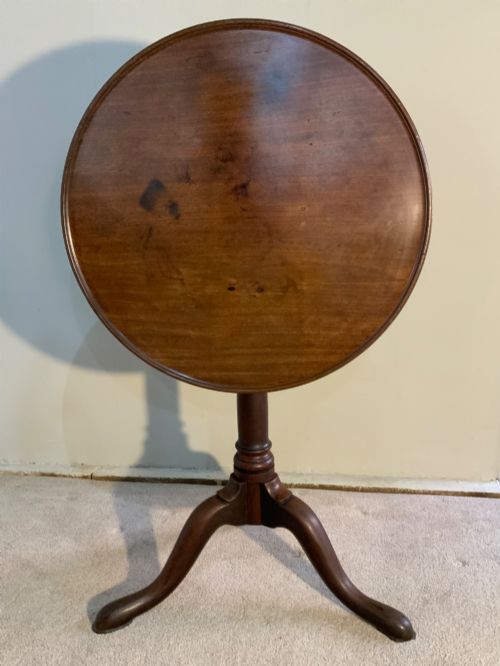
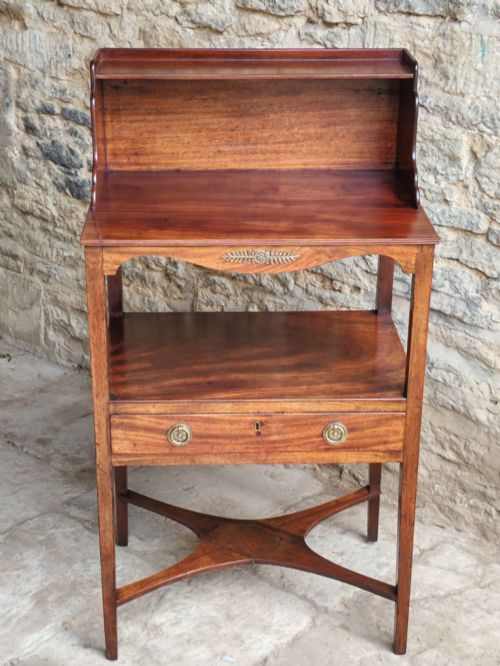
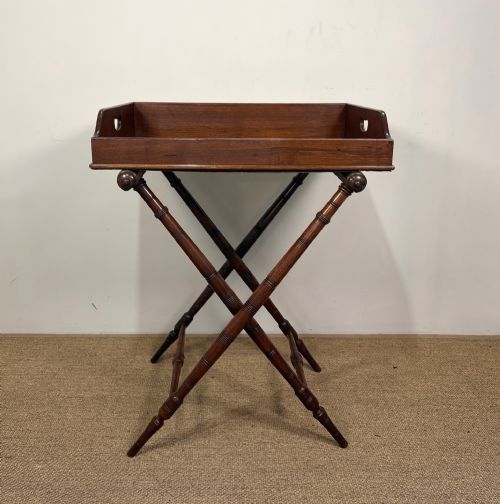
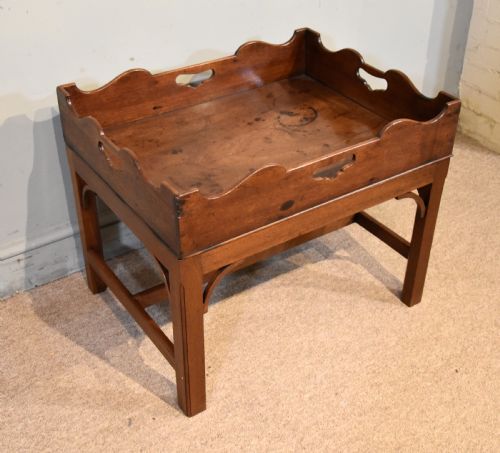
Mahogany dominates the material record for these stands, accompanied by oak, walnut, and occasional exotic woods like thuyawood alongside brass, copper, and papier-mâché. Buyers encounter rectangular butlers trays, circular tripod tables, and oval variants supported by pillar legs, folding frames, or enclosed cabinet bases. The stylistic range covers plain Georgian utility, Chippendale revival carving, Anglo-Indian brass and teak work, and Edwardian inlaid decoration.
Materials and construction methods
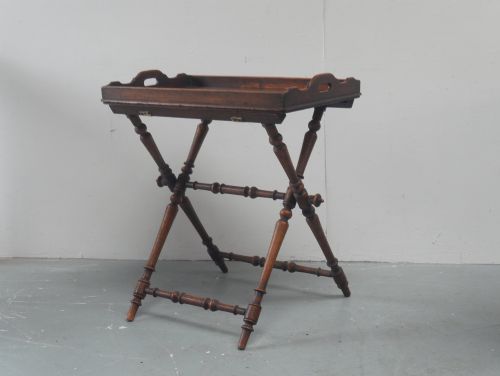
Cabinetmakers constructed these stands predominantly using solid mahogany and oak, often shaping raised tray edges from single timber lengths or joining moulded rims carefully to the table top. Tripod bases employ turned central pillars slotted into three splayed legs, while folding butlers trays rely on hinged or X-frame wooden stands designed for easy stowage. Brass hinges, corner brackets, and carrying handles appear where hardware supports the functional mobility of the tray component.
Surface decoration utilises contrasting timber veneers, subtle string inlay, and carved detailing such as piecrust edges or rope-twist turnings. Papier-mâché and metal versions incorporate painted or engraved copper and brass trays mounted upon matching wooden or metal supports. Joinery methods include dovetailing on drawer components and tenon joints on support frames to withstand frequent lifting and movement.
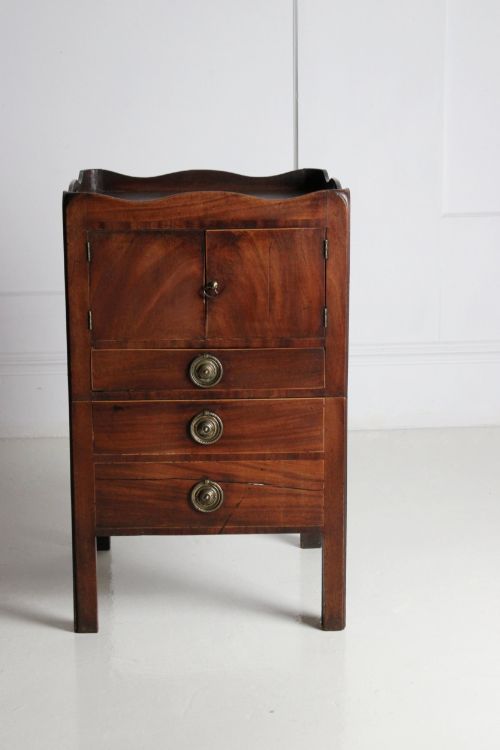
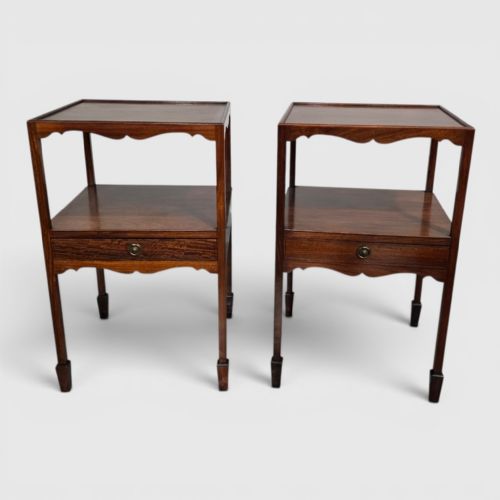
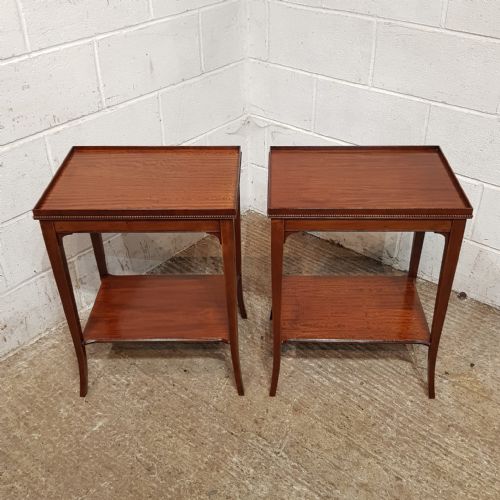
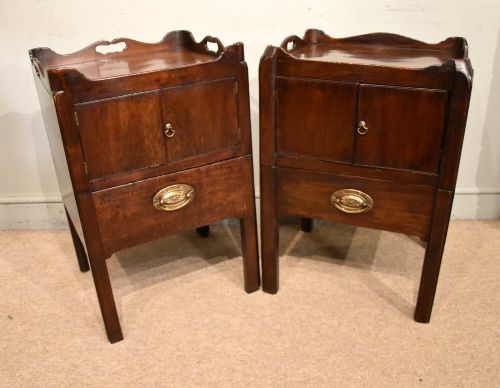
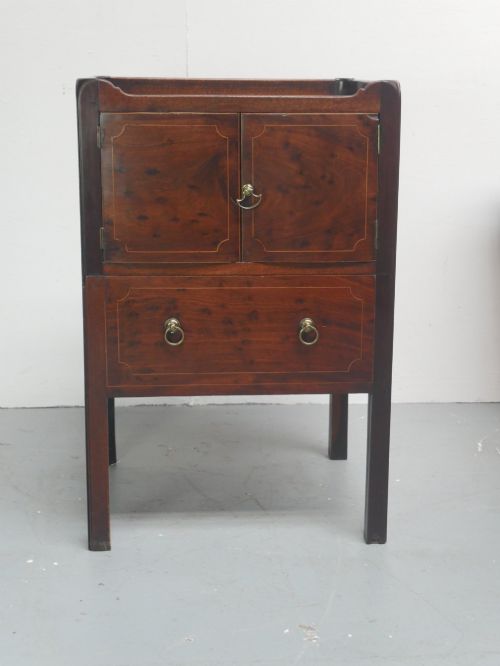
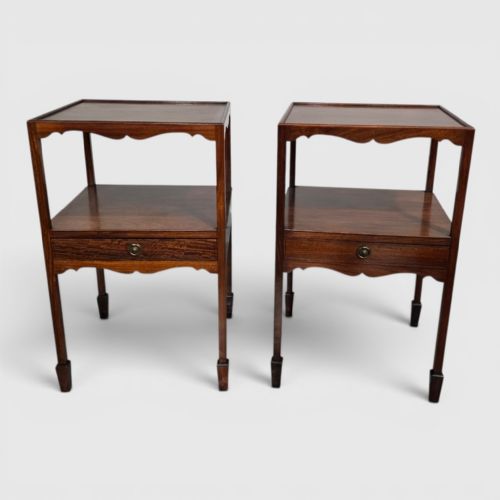
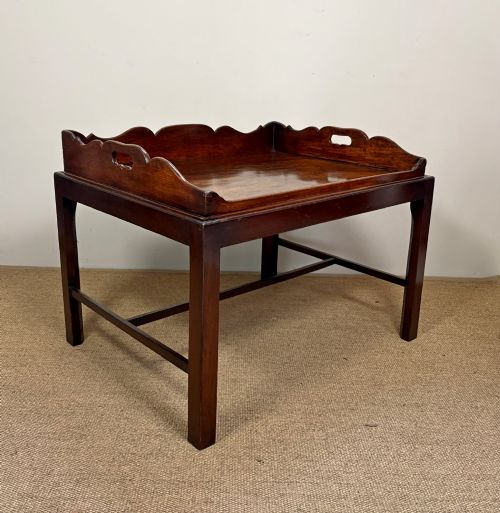
The archive records versatile forms including bedside cabinets, butlers trays, hall stands, and tripod lamp tables.
Distinguishing quality in construction and design
Quality reveals itself in the selection of timber grain, particularly where figured mahogany or quarter-sawn oak displays rich depth across the tray surface and support legs. Superior examples exhibit crisp joinery at the corners of the raised tray rim and precise turning on pillar and tripod elements without loose joints or visible structural shims. The integration between the detachable or folding tray and its base demonstrates the maker's precision.
Proportion and decorative restraint separate standard utility pieces from finer cabinet work, such as delicate inlay work or carved Chippendale revival motifs executed with sharp hand-cut definition. The retention of original hardware, including brass carrying handles and hinges on folding stands, contributes to the integrity of the piece. Consistency in the timber patina across both the tray and the stand indicates a matched and original pairing.
Gillows
The Antique Tray Top Stand Glossary
- Tray top
- A table top finished with a raised moulded edge or gallery designed to prevent items from rolling off. This feature defines the primary utility of the furniture form.
- Butlers tray
- A portable wooden tray, often featuring hinged sides or cut-out carrying handles, paired with a folding or fixed stand. These pieces originated for domestic service and hospitality.
- Tripod table
- A small occasional table supported by a single central pillar resting on three legs. This construction provides stability on uneven floorboards.
- Pot cupboard
- A small bedside cabinet or night stand enclosing a storage space behind a door. These items frequently incorporate a raised tray top to contain washing or bedroom accessories.
- Nightstand
- A compact bedside table utilised for holding lamps or nighttime requisites. They appear frequently in Georgian and Victorian styles with enclosed cupboards or open shelves.
Antique Tray Top Stand: Frequently Asked Questions
What is a tray top stand used for?
These versatile stands served originally for serving refreshments, holding bedside items, or supporting washing basins in bedrooms and parlours. The raised rim prevented glassware, ceramics, or lamps from sliding off during use or movement.
Today, they function easily as side tables, lamp stands, or coffee tables in contemporary rooms. Their compact footprint makes them suitable for smaller spaces needing accessible surface area.
Are butlers trays removable from their stands?
Many traditional butlers trays lift completely free from their folding or X-frame wooden supports. This design allowed servants to carry the tray loaded with china or silver between rooms before mounting it back on the frame.
Other variations feature fixed trays secured permanently to pillar or cabinet bases. Checking the underside of the piece clarifies whether the tray lifts away independently.
How do I date an antique stand?
Dating relies upon observing timber species, cabinetmaking techniques, and stylistic markers such as Georgian proportions or Edwardian inlay. Secondary woods inside drawers and the patination of the finish offer further clues to the period of manufacture.
Comparing construction details with dated examples helps narrow the decade. Hardware styles and joint types provide additional chronological reference points.
How do I care for antique wood surfaces?
Maintain wooden surfaces by dusting regularly with a soft, dry cloth and avoiding placement near direct heat sources or strong sunlight. These precautions prevent the timber from drying out, warping, or fading over time.
Occasional application of appropriate wax polish preserves the lustre of the historic finish. Moisture should be wiped away promptly to protect antique polish and veneer.