



Antique Trade Weights
These antique trade weights carry the solid heft of nineteenth-century commerce, offering collectors a tactile piece of practical history.
Antique Trade Weights
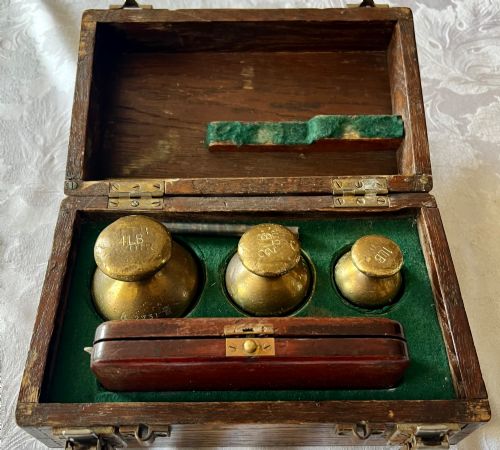
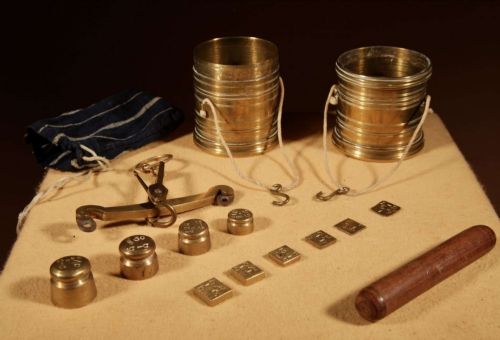
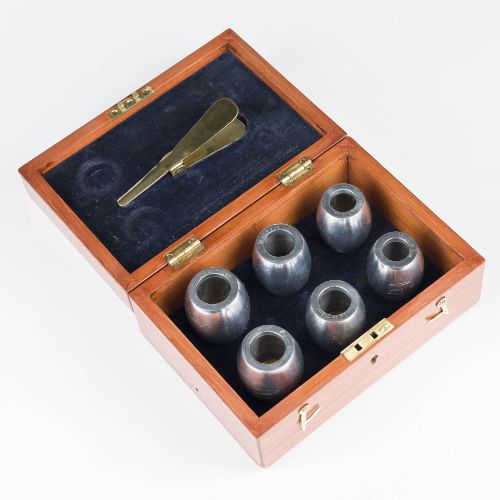
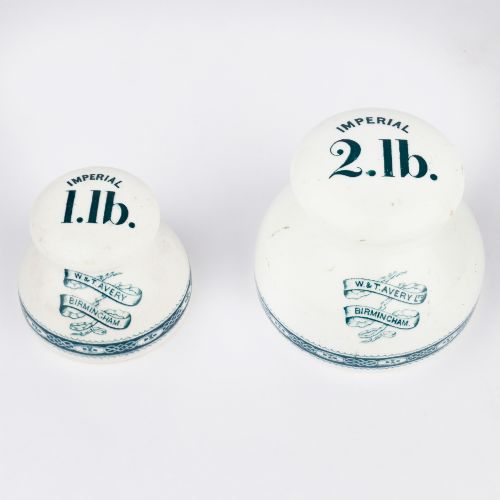
When you search for antique trade weights, you encounter a varied assortment of utilitarian objects designed for commerce, science, and the home. The items on this page span several decades, featuring complete sets in original blocks alongside individual ceramic and metal pieces.
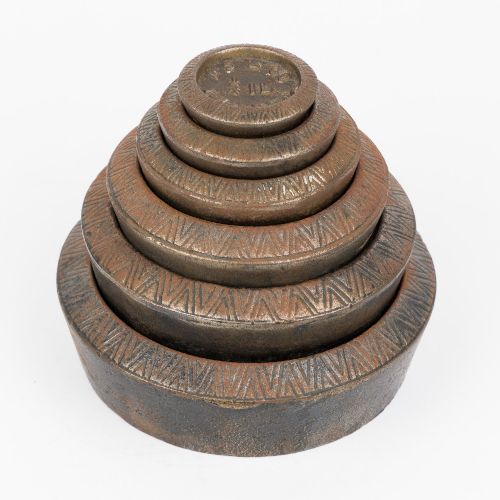
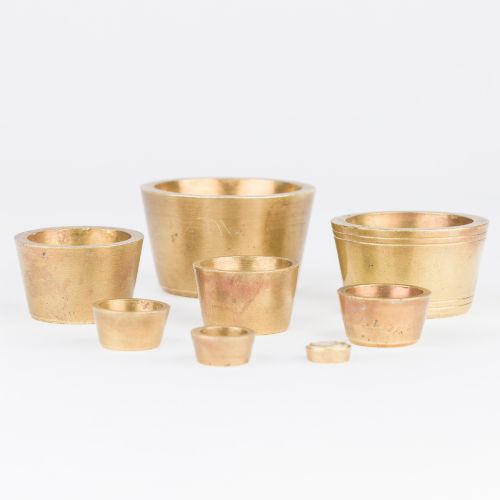
You meet nested imperial stacking weights, Troy ounce sets, and specialised standards produced for specific British cities and boroughs. Alongside these practical instruments, the selection includes related balance scales and whimsical novelty biscuit boxes shaped like heavy standards.
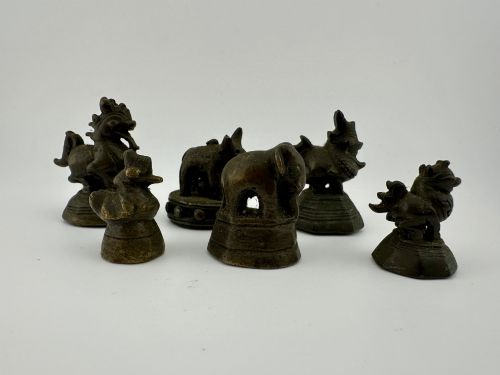
Originating largely from the Victorian and Edwardian periods, these objects reflect the strict regulatory standards of past markets. Alongside domestic British items, occasional Southeast Asian bronze animal forms appear, broadening the scope of what constitutes a functional measure.
Materials and construction
Brass and cast iron dominate the material record, chosen for durability and resistance to daily wear in busy shops and inspectorates. Many pieces combine wrought iron and hardwood elements, particularly in larger balances and stick balances originating from Dutch colonial contexts.
Makers utilised ceramic for specific utilitarian weights, while silver plate coated items intended for decorative novelty rather than trade. Precision tooling and clear stamping mark the production of makers who supplied official standards to local authorities.
Antique Trade Weights Retail Price Guide 2026
Typical asking prices for trade weights among the pieces listed under this phrase on Sellingantiques today, from the lower quarter to the upper quarter. They describe what is for sale here now, not the wider market.
Listings feature Victorian and Edwardian items made from brass, cast iron, mahogany, and ceramic.
Factors of quality
The distinction between ordinary utility items and superior pieces rests on the presence of crisp, legible verification stamps and complete original sets. Weights that retain their designated fitted wooden blocks or original velvet-lined housings command greater interest from collectors.
The reputation of the maker heavily influences standing, with names known for supplying official county standards representing precise manufacturing standards. Preservation of the original surface patina on brass and iron surfaces further separates standard workshop stock from finer specimens.
De Grave Short And Co·W And T Avery·Mappin And Webb
The Antique Trade Weights Glossary
- Avoirdupois
- The system of weights based on a pound of sixteen ounces, commonly used for everyday goods and general merchandise in trade. This system forms the basis for many standard sets produced during the Victorian era.
- Troy ounce
- A system of units of mass traditionally used for precious metals and pharmaceuticals rather than everyday groceries. Sets using this measure appear less frequently than standard commercial variants.
- Bushel balance
- A specific apparatus designed for measuring dry capacity and grain volume in agricultural and market settings. These balances often incorporate intricate brass components and hardwood framing.
- Verification balance
- A precision weighing instrument used by local authorities and inspectors to check the accuracy of commercial weights. These scales reflect high standards of mechanical engineering.
- Opium weight
- A small, stylised weight, often cast in the form of animals such as ducks or lions, originating from Southeast Asia. These functional objects double as miniature sculptural art.
Antique Trade Weights: Frequently Asked Questions
What are antique trade weights?
These are heavy objects made of brass, iron, or ceramic that were utilised in markets, shops, and laboratories to measure goods accurately.
They range from single ceramic pieces to complete nested imperial sets issued for official use by local authorities.
How were trade weights used?
Merchants placed them on balance scales to determine the precise mass of items sold to customers in grocery stores and trading posts.
Inspectors also utilised specialised standards to verify that commercial shop scales remained honest and accurate.
How do I date a trade weight?
Dates often rely on stamped verification marks, reigning monarchs' ciphers, and the specific geographic county named on the piece.
Makers' stamps and the presence of original fitted wooden block stands provide further clues regarding the era of manufacture.
Are novelty weights functional?
Some items, such as silver-plated biscuit boxes shaped like heavy standards, were created purely for decorative display in domestic settings.
These novelty pieces mimic the appearance of functional measures without serving any actual commercial purpose.