




Vintage Brass Weight Set
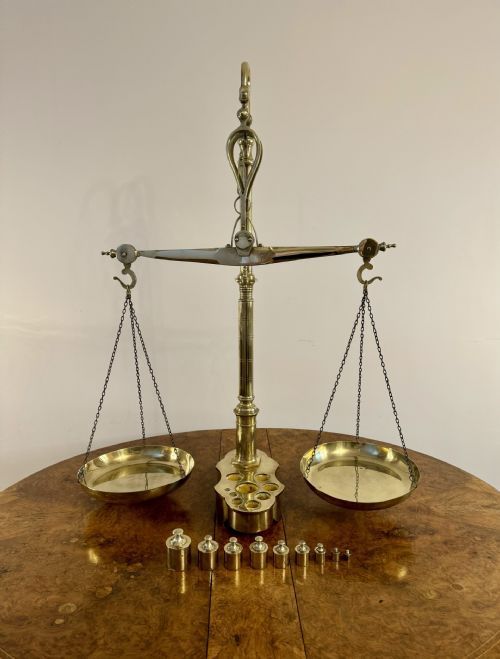
These heavy, polished tools of trade are a vintage brass weight set, prized for their industrial weight and gleaming domestic display.
Vintage Brass Weight Set
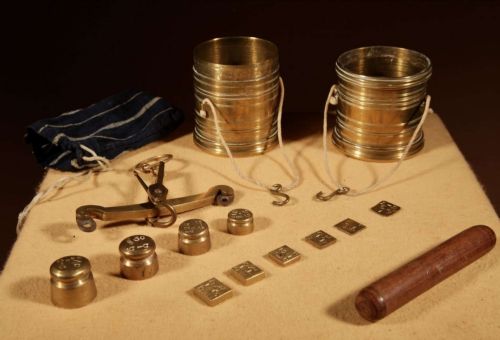
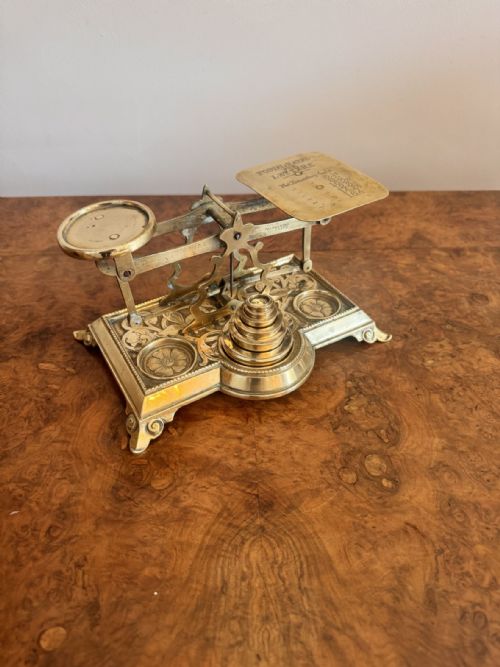
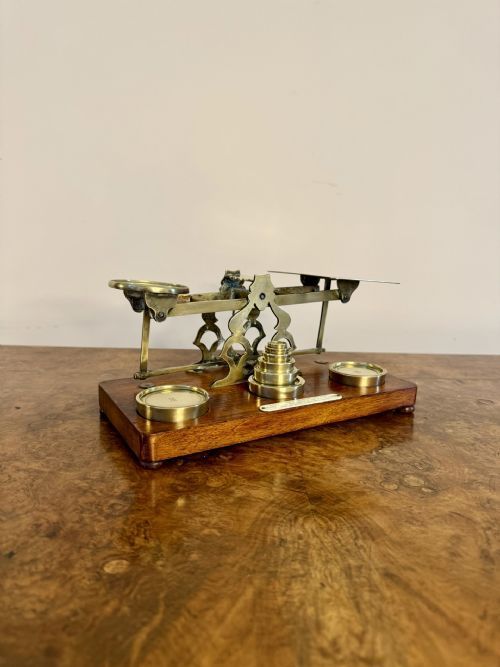
A vintage brass weight set comprises calibrated metal pieces designed for trade, postal sorting, and scientific measurement across the Victorian, Edwardian, and mid-twentieth-century eras. The listings here frequently pair individual weights with fitted mahogany or oak bases, or incorporate them directly into postal scales and balance mechanisms.
Buyers encounter everything from small sets of Troy ounce and apothecary weights housed in original block stands to massive institutional standard weights stamped for cities like Liverpool and Blackpool. Many examples survive alongside wooden letter scales by makers such as S. Mordan or De Grave, reflecting their original purpose in offices, shops, and government offices.
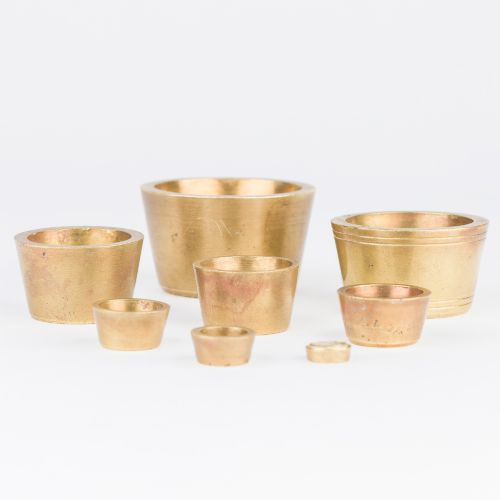
The objects span domestic letter writing and heavy grocers' transactions, drawing appeal from both utility and functional design. Whether structured as nested bell weights or stacks of flat discs, these sets bring tangible history to a desk or shelf.
How They Were Made
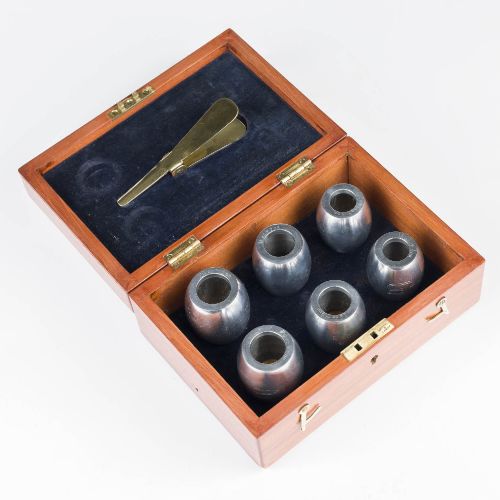
Makers formed these sets primarily from cast and turned brass, chosen for its density and durability under constant commercial use. Wooden elements such as mahogany, oak, walnut, and other hardwoods provide fitted bases and boxes, often lined with velvet or textile to protect the metal components.
Precision machining and hand stamping marked the production process, ensuring each weight bore the correct imperial standard or regulatory proof mark. Balances and scale beams combined brass components with wooden plinths, uniting heavy metalwork with fitted cabinetry.
Some nineteenth-century jockeys had their professional weights checked on specialised balance scales before heading out to the racecourse.
What Varies in Quality
Quality rests upon the crispness of government verification stamps, the completeness of a graduating series, and the integrity of any fitted wooden housing. Complete sets that retain every original piece within a dedicated block stand hold greater distinction than assembled or partial groups.
The refinement of the brass casting and the presence of maker signatures, such as De Grave or S. Mordan, elevate a set beyond standard utility ware. Finer examples display meticulous turning on the brass knobs and superior timber selection in the associated scale bases.
De Grave Short And Co·W And T Avery·S Mordan And Co·Young And Son
The Vintage Brass Weight Set Glossary
- Avoirdupois
- A system of weights based on a pound of sixteen ounces, commonly used for everyday goods and general commerce. This system governs the heavier standard weights found in municipal and grocers' sets.
- Troy ounce
- A system of units of mass traditionally used for precious metals and apothecary items. Weights calibrated to this scale appear in specialised professional sets.
- Beam scales
- A weighing device consisting of a horizontal lever with arms of equal length, suspended from a central pivot. These balances rely on brass weights placed on pans to determine mass.
- Bell weight
- A traditional shape of brass weight featuring a distinct handle at the top resembling a handbell. This form allows easy lifting and stacking in commercial settings.
- Standard weight
- An official mass used by inspectors to verify local trade measures and commercial scales. These pieces often carry regional stamps and city names.
Vintage Brass Weight Set: Frequently Asked Questions
How do I clean old brass weights?
Maintenance depends on whether you prefer a bright shine or a deep historic patina. Gentle dusting and mild soap preserve the surface without stripping character.
Avoid harsh chemical dips that remove age and reduce the collectible integrity of stamped verification marks.
Are these old weights still accurate?
Over decades of handling and use, wear can alter the precise mass of individual pieces. They function primarily as decorative and historic objects rather than exact laboratory tools.
Collectors value them for their craftsmanship and provenance rather than modern calibration.
What is an apothecary weight set?
Apothecary sets were used by chemists and physicians to measure small quantities of medical ingredients. They usually feature miniature brass weights fitted carefully into small wooden block stands.
These compact sets date largely from the nineteenth century and reflect precise medical practices of the period.
Why do some weights have city names?
Municipalities maintained strict control over local trade standards and required verified weights for markets. Boroughs and cities stamped their names onto the metal to prove official inspection.
This regional marking helps date and provenance surviving sets today.