



Victorian Brass Scale Weights
Victorian brass scale weights are heavy, honest counter and desk tools that bring solid nineteenth-century weight and shine to a modern room.
Victorian Brass Scale Weights
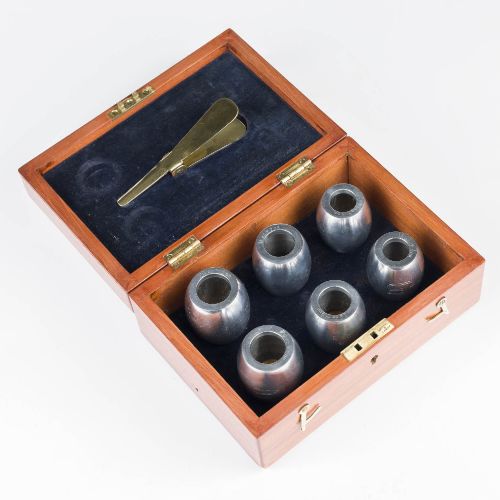
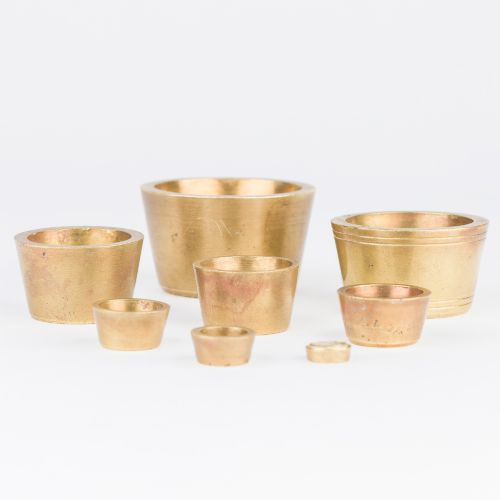
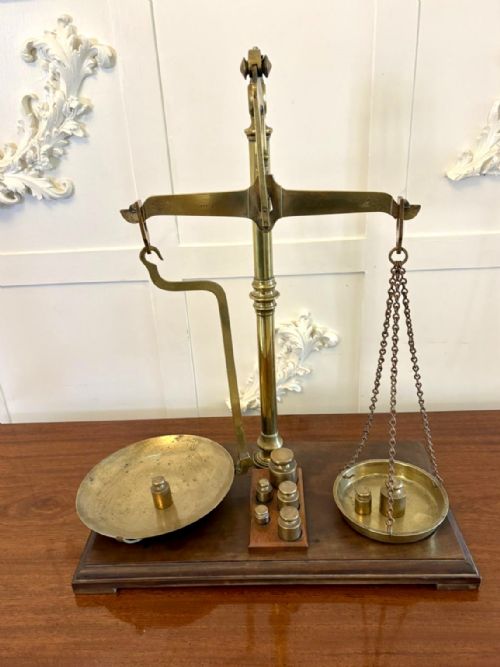
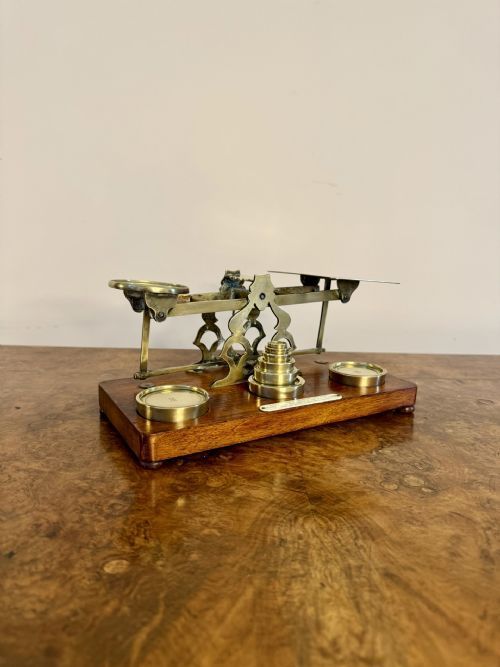
When you search for Victorian brass scale weights, you encounter the dense, enduring measuring equipment that equipped nineteenth-century shops, post rooms, and apothecaries. These pieces range from solitary Troy ounce sets and nested apothecary blocks to heavy bell-shaped standards used by trade inspectors.
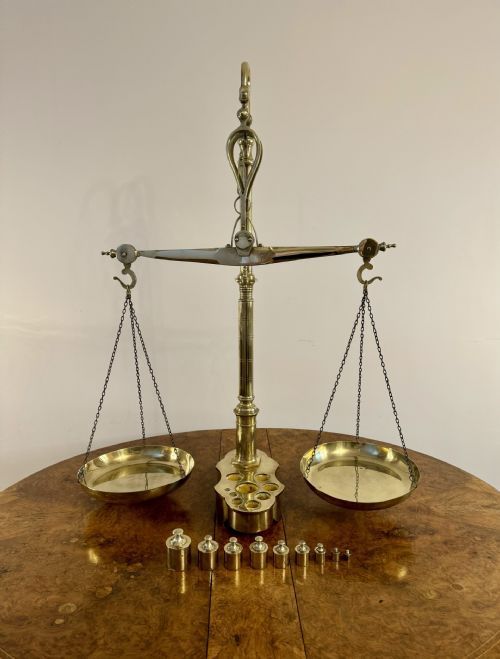
On this page, postal scales and matched weight sets appear most frequently, housed on shaped mahogany, walnut, or oak bases alongside brass beams and square or cylindrical weights. Buyers select these items for their functional presence and the precision of their manufacture, which reflects an era of strict mercantile standardisation.
The objects span from the mid-nineteenth century into the early twentieth century, incorporating later Edwardian and institutional examples alongside Victorian originals. Each surviving set demonstrates the practical utility required for weighing letters, dairy, meat, or medicines in daily commerce.
Assessing quality
Quality rests upon the completeness of the matched set and the crispness of the maker's stamp or municipal verification mark. Finer examples retain their original wooden bases without replacement timbers, alongside unpolished brass surfaces that show honest patination rather than over-abraded wear.
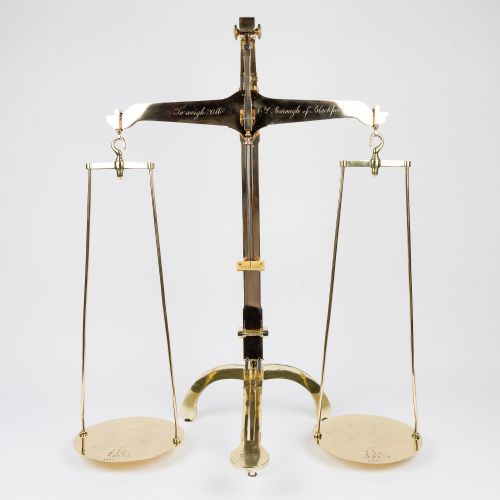
Superior pieces display refined balancing mechanisms, smooth beam movement, and intact original weight blocks or bell configurations. The presence of clear institutional inscriptions from borough inspectors or renowned makers elevates the standing of an individual set.
Several sets served the Borough of Blackpool, proving that even nineteenth-century seaside administrators needed reliable brass weights.
De Grave Short and Co·Day and Millward·S Mordan and Co·W and T Avery·Young and Son·Hunt and Co
The Victorian Brass Scale Weights Glossary
- Bell weight
- A heavy, cup-shaped brass weight with a looped handle at the top, commonly used in trade and shop scales. These were designed for easy lifting and often stamped with local government verification marks.
- Apothecary balance
- A sensitive scale used for weighing medical ingredients and drugs. They frequently survive in fitted wooden block stands with delicate proportional weights.
- Troy ounce
- A system of units of mass traditionally used for precious metals and apothecary items. Sets of these weights appear in dedicated containers designed to prevent loss or damage.
- Beam scale
- A weighing device consisting of a horizontal lever with arms of equal length, suspended from a central fulcrum. The pans hang from each end to compare an unknown load against standard masses.
- Verification mark
- An official stamp or engraving applied by local authorities, such as city boroughs or counties, to confirm the accuracy of weights and scales for commercial trade.
Victorian Brass Scale Weights: Frequently Asked Questions
What were brass scale weights used for?
These weights served commercial, postal, and domestic purposes, ensuring precise measurement for trade goods, letters, and medicines.
They worked alongside balance scales in shops, post offices, and consulting rooms to meet strict legal standards of weight.
How do I care for antique brass?
Keep the metal dry and dust it gently with a soft cloth to preserve the natural aged surface.
Avoid harsh chemical polishes that strip away historical patination and dull the character of the brass.
Are complete sets common?
Complete sets of weights matching their original bases or boxes survive, though individual pieces often became separated during decades of working life.
Finding a matched set with corresponding maker marks or verification stamps is typical for institutional or high-quality domestic pieces.
How can I tell the period?
Stylistic clues include the shape of the wooden base, the typography of maker stamps, and official municipal verification dates.
Victorian pieces often feature substantial mahogany mounts and deep engravings, while later Edwardian examples show subtle shifts in proportion and finish.