


Vintage Measuring Weights
These vintage measuring weights are precision instruments and standards used for trade, science, and county verification across the nineteenth and twentieth centuries.
Vintage Measuring Weights
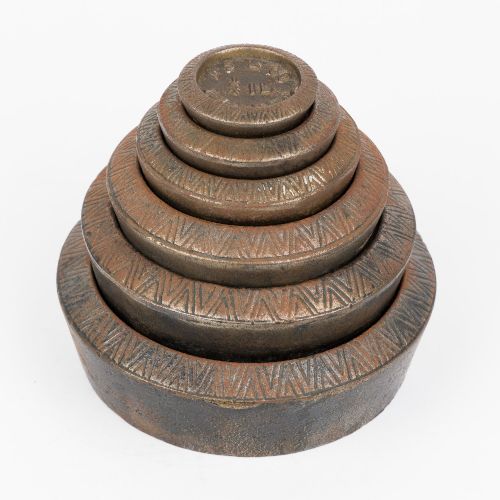
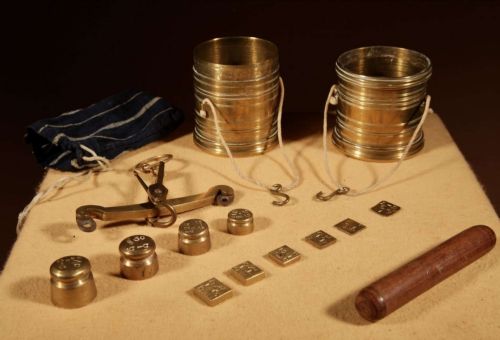
Vintage measuring weights encompass scale weights, scientific instruments, balance scales, measuring instruments, and imperial measures found across Victorian, Edwardian, and mid-twentieth-century periods. These objects include stacking sets, Troy ounce sets, avoirdupois standards, bushel balances, chondrometers, and verification beams made for counties, boroughs, and cities.
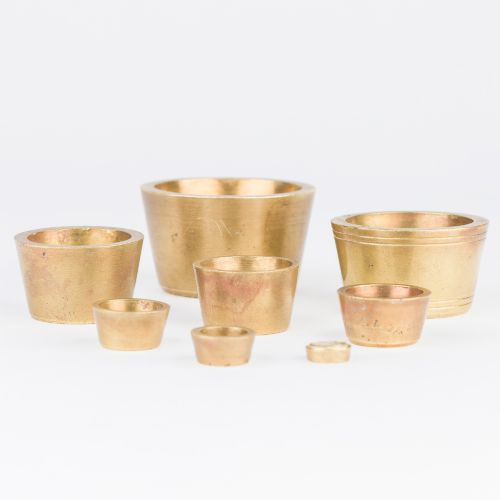
The versions most likely met on this page range from brass Imperial stacking weights and Troy ounce sets to large governmental verification sets and standard measures associated with makers such as W&T Avery and De Grave. They span styles from Victorian and Edwardian to nineteenth-century Dutch and Victorian Industrial forms.
How they were made
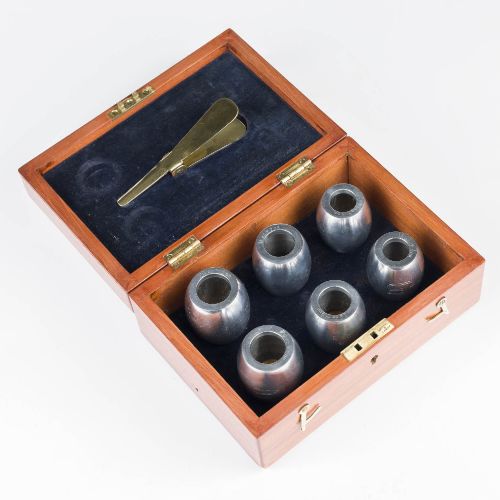
Makers utilised durable metals such as brass, copper, cast iron, and general metal alloys to cast and machine accurate measuring blocks and scale components. These metallic elements often paired with fitted mahogany cases, wooden boxes, and textile velvet linings to protect the instruments during transport and storage.
Production combined precise metalworking for calibration standards with fitted carpentry for containment boxes, incorporating engraved or stamped inscriptions denoting geographical jurisdictions, authorities, and verification dates.
Some sets recorded the exact county inspectorate for places like the Isle of Man and the City of Liverpool.
What varies in quality
Quality differentiates by the precision of the original calibration, the completeness of full sets, and the provenance linked to specific governmental jurisdictions like cities, counties, and boroughs. Complete sets retaining every original weight demonstrate greater historical integrity than assembled or partial groups.
The standard of manufacture shows in the crispness of stamped inscriptions, the retention of original velvet and mahogany housings, and the reputation of the maker inscribed upon the metal or wood.
De Grave Short And Co·W And T Avery·De Grave And Co
The Vintage Measuring Weights Glossary
- Avoirdupois
- A system of weights based on a pound of sixteen ounces. It forms the basis of standard commercial weights found in British trade.
- Troy ounce
- A unit of mass used primarily for precious metals and gemstones. Troy weights appear in specialist sets distinct from standard commercial measures.
- Bushel
- A measure of capacity for dry goods such as grain. Bushel balances verify these agricultural volumes.
- Chondrometer
- A scientific instrument used to determine the weight and quality of grain. It measures bushel weight through a small balance mechanism.
Vintage Measuring Weights: Frequently Asked Questions
What are vintage measuring weights?
Vintage measuring weights are calibrated metal blocks and standards used historically for trade, commerce, and scientific verification.
They include imperial stacking sets, Troy ounce collections, and county verification standards housed in fitted wooden cases.
How were these weights used?
Authorities and merchants used them alongside beam scales and balances to verify commercial goods, grain, and precious metals.
County inspectors employed large standard sets to check local market measures for accuracy.
How do I date these sets?
Dating relies on stamped verification marks, reigning monarchs, and inscribed geographical jurisdictions such as counties and boroughs.
Makers' names and specific style indicators like Victorian or Edwardian design also narrow the period.
How should I display them?
These pieces suit placement on sturdy surfaces where their brass surfaces and fitted wooden mahogany boxes remain visible.
Keeping sets together inside their original velvet-lined cases preserves their historical context.