








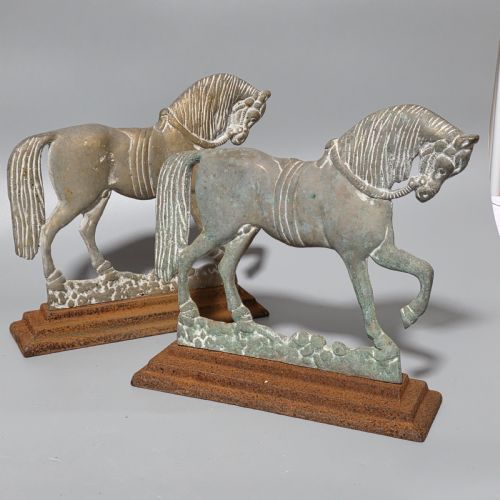


Heavy Brass Weights
Heavy brass weights keep doors propped open and measure quantities, arriving in sturdy Victorian and Georgian forms.
Heavy Brass Weights
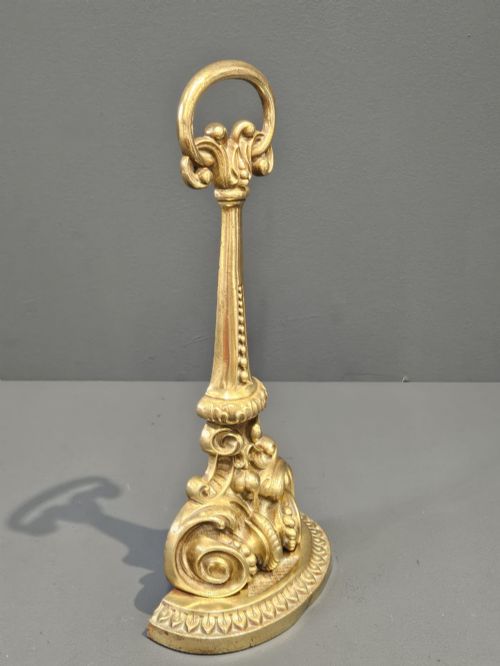
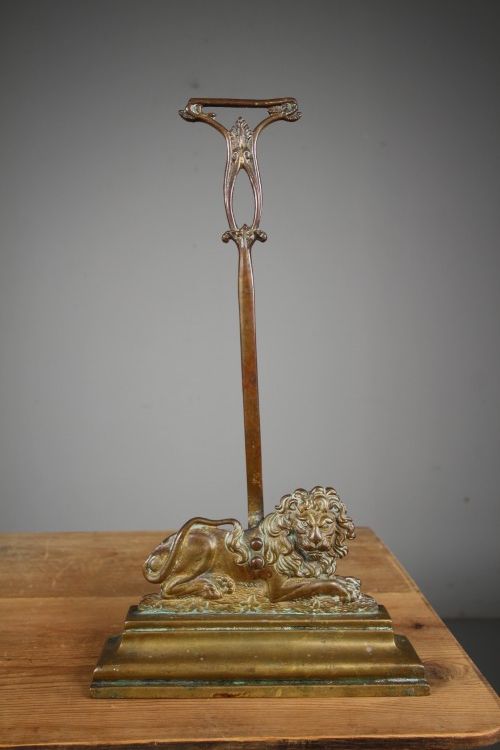
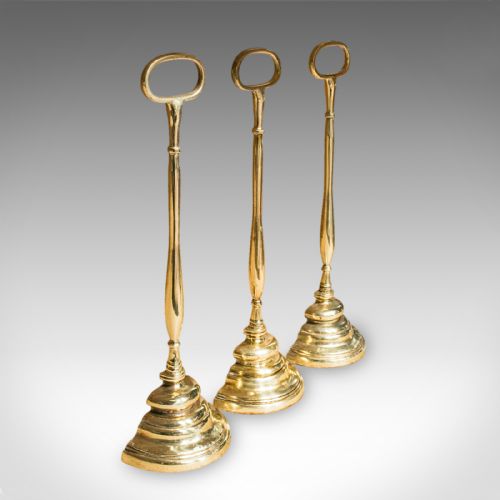
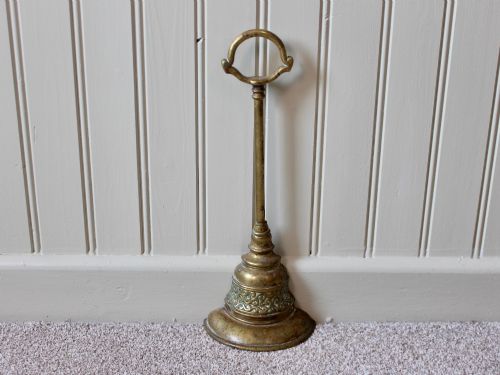
Heavy brass weights encompass utilitarian scale standards and ornamental doorstops, also known as door porters. These pieces serve domestic rooms and commercial spaces across the nineteenth century, including Georgian, Victorian, and Edwardian periods.
The selections on this page lean heavily toward figural doorstops and matched sets of imperial standards. Figures include animals, soldiers, heraldic motifs, and characters such as Mr Punch and Lord Nelson.
Form follows function in scale weights, while doorstops rely on substantial cast metal volumes to hold heavy interior doors. Examples appear singly or as pairs and trios, often paired with cast iron elements for extra mass.
Materials and construction
Foundries cast these pieces primarily in brass, sometimes combined with cast iron or lead weighting to achieve the necessary heft. Surviving examples show crisp sand-casting techniques typical of English and Dutch workshops.
Makers integrated handles, mounting loops, and weighted bases into the primary casting to withstand daily utilitarian use. Surface finishing ranges from polished golden metal to patinated patinas acquired through long service.
Object forms include doorstops, door porters, and imperial standard weights from English and Dutch origins.
Judging quality and character
Proportion and stance dictate the visual success of door porters, ensuring they hold large interior doors firmly while maintaining sculptural presence. Maker attribution also elevates certain pieces through documented foundry marks.
Tonks·William Tonks·W&T Avery
The Heavy Brass Weights Glossary
- Door porter
- A heavy movable weight designed specifically to keep an interior door open against drafts. These portable objects double as decorative figures in country house settings.
- Avoir standard
- A standard unit of mass used for commercial trade under the avoirdupois system. Sets of these items regulated weights and measures in municipal jurisdictions.
- Regency
- A British architectural and decorative style spanning the early nineteenth century. Pieces from this era display classical restraint and balanced proportions.
- Cast brass
- Molten alloy poured into a sand mould to create solid decorative objects. This technique allows for high-relief figural details on doorstops and weighted handles.
Heavy Brass Weights: Frequently Asked Questions
How do I clean heavy brass weights?
Maintain the surface with a soft dry cloth to remove dust without disturbing the aged patina. Avoid harsh chemical cleaners that strip the historic character from the metal.
Heavier pieces require careful handling during cleaning to protect surrounding furniture and floors. Proper support prevents accidental drops on delicate surfaces.
Were these used in homes or shops?
Doorstops served primarily in grand houses and domestic interiors to control heavy doors. Scale weights worked in commercial establishments and municipal offices to measure goods.
Both types reflect the heavy-duty utilitarian requirements of nineteenth-century daily life. Their dual roles combined practical utility with robust interior decoration.
How can I tell a Victorian weight from a Georgian one?
Georgian examples often display simpler lines or classical figural subjects like Lord Nelson. Victorian pieces expand into more varied animal and theatrical character forms.
Examining the casting style and standard markings helps establish the probable period of manufacture. Construction methods also evolved from late eighteenth-century traditions into industrial Victorian production.
Why do some weights include iron parts?
Foundries added cast iron bases or internal lead weights to increase mass affordably. This combination provided the necessary heft to hold heavy doors without increasing the cost of solid brass.
Iron components also added structural durability to high-impact areas like the base. The mixed metals are typical of nineteenth-century manufacturing efficiency.