




Brass Scale and Weights
When you handle brass scale and weights, you hold instruments that measured everything from letters to bullion with mechanical precision.
Brass Scale and Weights
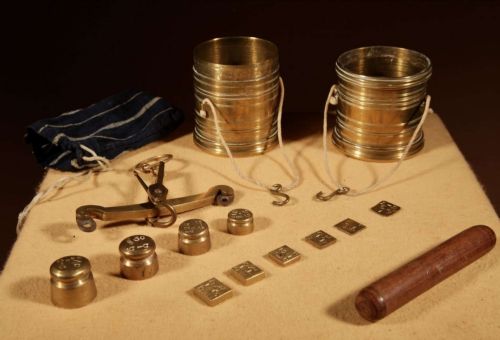
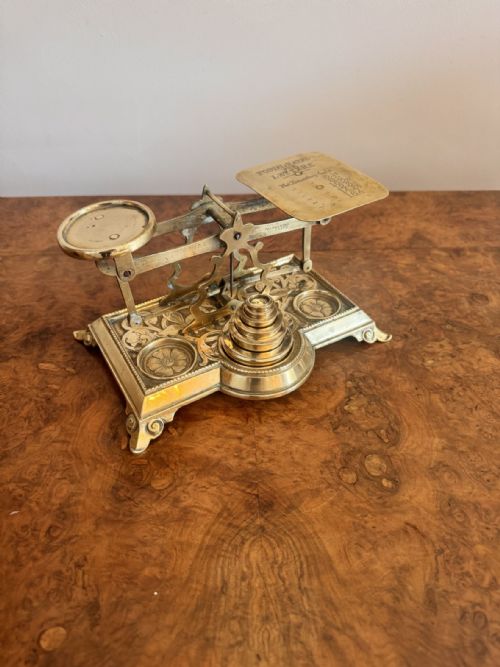
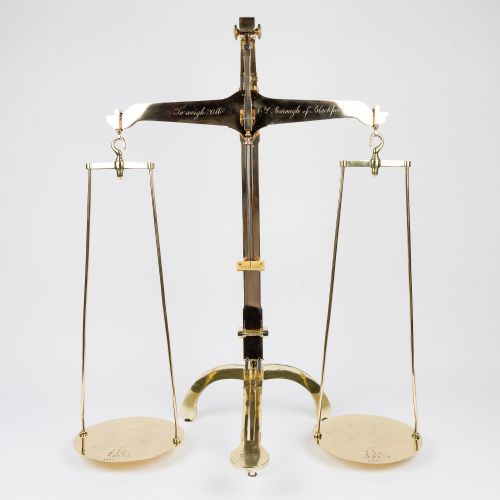
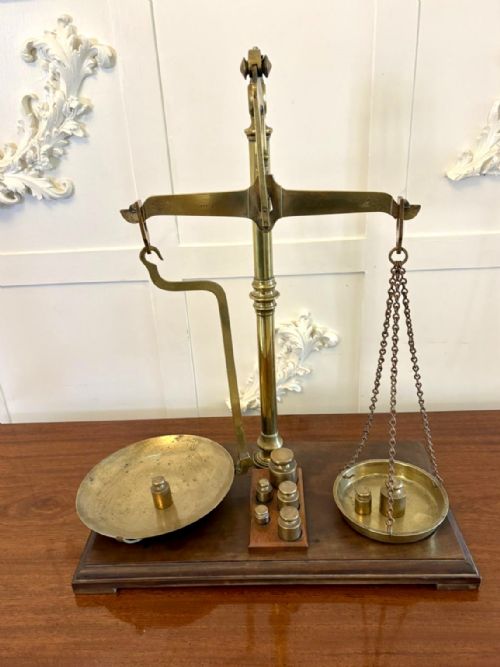
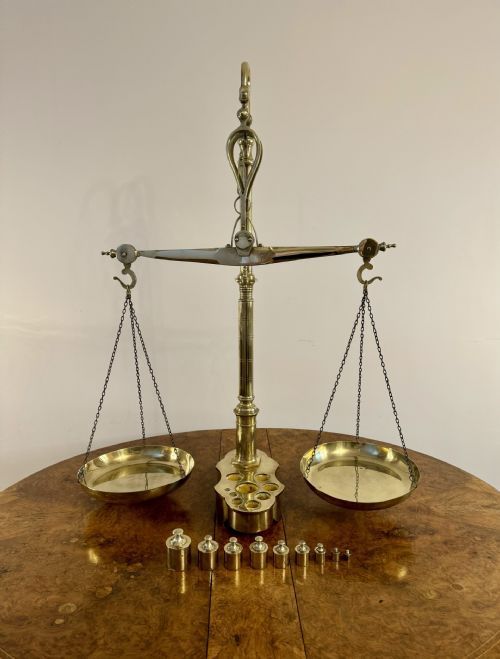
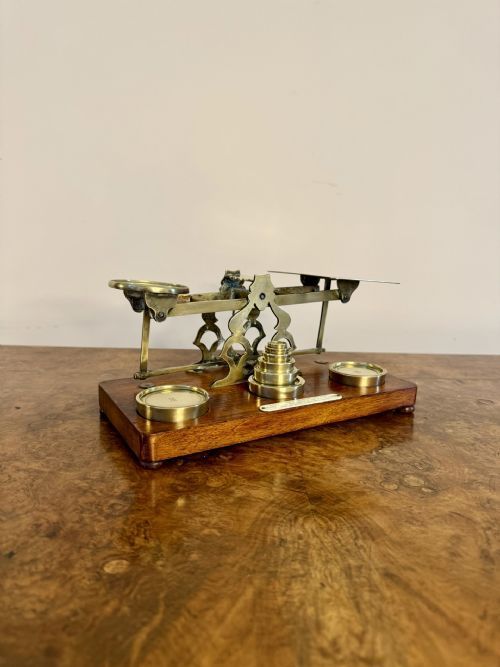
Brass scale and weights encompass postal, apothecary, grocers, and balance scales originating from the nineteenth and early twentieth centuries. You will frequently encounter domestic postal scales mounted on wooden bases alongside larger commercial or scientific beam scales.
The objects served exact municipal, commercial, and household functions across Victorian and Edwardian Britain and Europe. They survive from everyday office desks, post offices, shops, and laboratories, often retaining their matched sets of weights.
How they were made
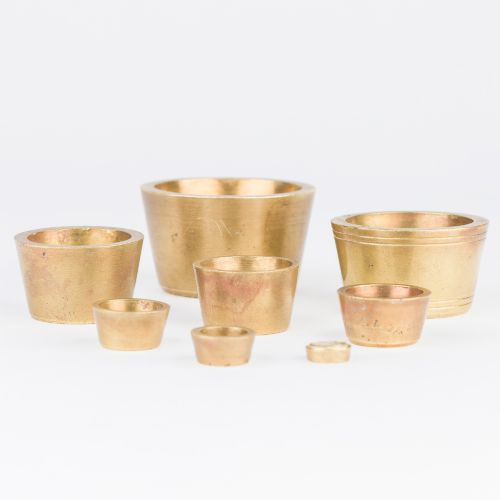
Makers cast the brass beams and pans before hand-finishing and engraving them with maker details, capacity stamps, or verification marks. Individual weights were cast and adjusted to meet exact imperial standards such as avoirdupois or troy ounces.
Certain grocers and butchers utilised advertising balances shaped to resemble sausages to promote their meat products.
What varies in quality
Quality rests in the crispness of the brass casting, the integrity of the wooden housing, and the completeness of the associated weights. Superior examples retain matching serial numbers or verification stamps across both the scale and the weight set.
The refinement of the mechanical movement and the retention of original maker signatures separate ordinary utility instruments from workshop masterpieces. Fine pieces demonstrate precise balance, uncompromised materials, and clear municipal or maker inscriptions.
De Grave Short & Co·Robert Brettell Bate·W&T Avery·Day & Millward·S.Mordan·Young & Son
The Brass Scale and Weights Glossary
- Avoirdupois
- The system of weights commonly used for everyday goods and postal items in Britain. This standard underpins many of the standard weights found with postal and shop scales.
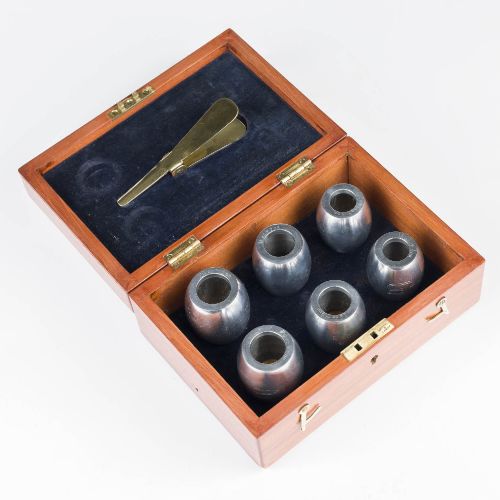
- Chondrometer
- A specialised instrument used to measure the weight of a specific volume of grain to determine quality. These portable brass and mahogany devices are of particular scientific interest.
- Bushel
- A dry measure of capacity used in agricultural and Dutch trade scales. Bushel balances often include deep brass pans and robust wooden frameworks.
- Troy
- A system of units of weight used for precious metals and apothecaries. Troy ounce weights frequently appear in dedicated fitted block stands.
- Beam
- The horizontal bar of a balance scale that pivots on a central fulcrum. The finish and stamping upon the beam often indicate the maker and period of manufacture.
Brass Scale and Weights: Frequently Asked Questions
How do postal scales work?
Postal scales utilise a weighted lever or platform connected to a graduated quadrant or spring mechanism. Placing a letter on the brass pan deflects the pointer across a calibrated scale showing postal rates.
Most domestic letter scales from the Victorian era rely on balance beams with sliding weights or stepped platforms. The simplicity of the brass linkage allows them to remain accurate after generations of desk use.
Were weights always kept with the scale?
Original sets typically remained together because commercial and postal transactions required verified precision. Many brass scales featured fitted wooden bases designed specifically to house their corresponding weight sets.
When weights are missing, it often indicates they were separated during active service or later dispersion. Finding a complete, matched set of stamped weights considerably elevates the historical integrity of the piece.
What are bell weights?
Bell weights are cast brass counterweights shaped like handbells with a looped handle at the top. They were standard equipment for large kitchen, grocers, and commercial balance scales.
The distinctive shape allowed inspectors to easily lift and stamp the weights during regular verification checks. Their presence alongside an iron and brass balance completes a traditional merchant setup.
How can I tell Victorian from Edwardian scales?
Victorian scales frequently feature heavier cast iron bases, ornate brass filigree work, and deep mahogany or walnut mountings. The maker inscriptions and verification stamps often reference nineteenth-century acts or reigns.
Edwardian designs tend toward cleaner lines in solid oak or lighter mahogany, reflecting changing aesthetic preferences in offices and shops. Stamped verification ciphers on the brass components provide the most reliable chronological markers.