
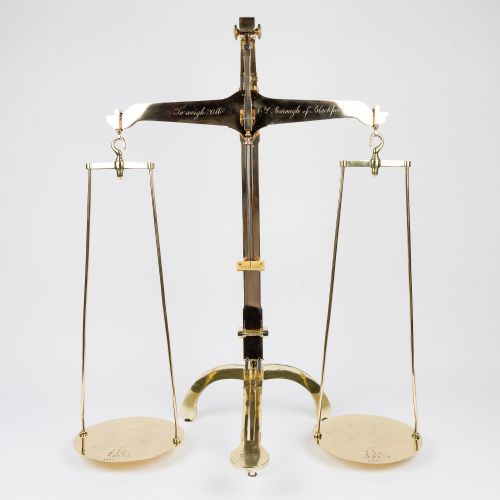
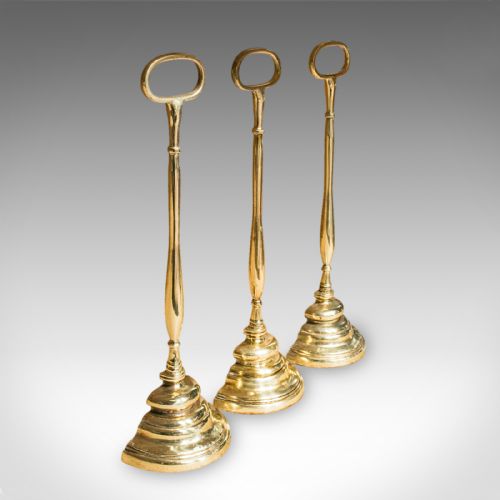


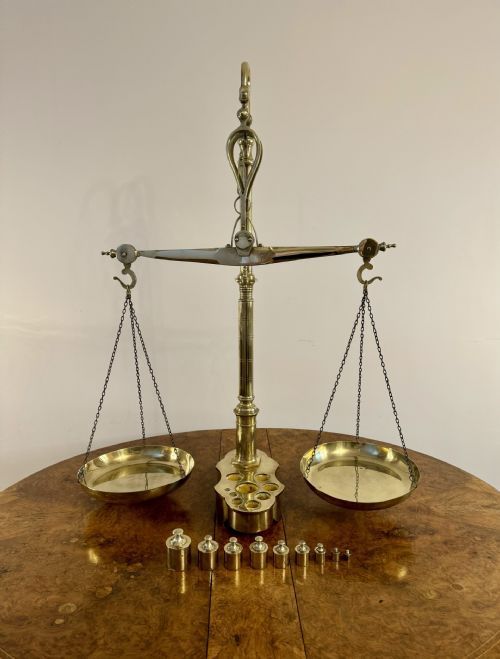


Polished Brass Weights
Polished brass weights are functional items of metrology and heavy door furniture that bring gleaming industrial character to a traditional interior.
Polished Brass Weights
Polished brass weights encompass heavy standardised measurement sets and substantial cast items utilised to hold doors open in domestic and municipal settings. When exploring polished brass weights, buyers encounter sturdy pieces originating from the Victorian and Edwardian eras, spanning from the late nineteenth century into the early twentieth century.
The selection ranges from complete sets bearing civic inscriptions for cities and counties to decorative doorstops shaped as animals or figures. These objects bridge the gap between utilitarian trade tools and decorative home accessories.
Municipal sets often include marked standards for authorities such as Liverpool or Northamptonshire, while domestic examples favour figural forms like dogs or cherubs. Each piece reflects the robust manufacturing standards of the period.
How they were made
Makers utilised durable base metals, predominantly employing cast brass for bright reflective surfaces and pairing it with cast iron for added heft in domestic door stops. Molten metal was poured into sand moulds to create solid forms, which were then finished by hand to achieve a smooth texture.
Surface finishing involved thorough polishing to highlight the warm golden tone of the metal, often combined with engraved or stamped lettering for official municipal markings. The integration of cast iron components provided structural weight necessary for utilitarian service.
What varies in quality
Quality in these pieces depends on the crispness of the casting and the completeness of original sets rather than mere shine. Superior examples display sharply defined figural details or precise official stampings from notable makers.
The presence of complete multi-piece sets marked for specific regional authorities elevates the historical significance above loose, unmarked items. Heavier gauge metal and careful attention to the original surface finish distinguish finer pieces.
W and T Avery·De Grave
The Polished Brass Weights Glossary
- Avoir
- Avoirdupois, the system of weights based on a pound of sixteen ounces. This standard governed everyday commercial transactions across Britain.
- Standard
- An official weight sanctioned by government authority to verify trade accuracy. These pieces bear specific regional inscriptions.
- Beam scales
- A weighing apparatus consisting of a horizontal lever suspended from a central pivot. They required calibrated sets to measure mass accurately.
- Door porter
- A heavy movable object placed against a door to keep it open. These frequently take the form of animals or figural groups cast in metal.
Polished Brass Weights: Frequently Asked Questions
What are polished brass weights used for?
These items served a dual purpose in historical contexts, functioning either as official standards for commercial measurement or as heavy domestic doorstops.
Today, collectors utilise complete sets as display objects and deploy figural door stops for their original practical function in keeping heavy interior doors open.
How do I date a brass weight?
Dating relies heavily on stamped civic inscriptions, maker marks, and stylistic clues inherent to Victorian and Edwardian manufacturing methods.
Official sets often bear municipal stamps or dates indicating the specific decade of their verification and deployment by local authorities.
Are complete sets hard to find?
Complete multi-piece collections surviving with their original stamped counts are scarcer than individual loose items encountered in the marketplace.
Municipal sets bearing full regional provenance for counties or cities represent particularly substantial survivals from the early twentieth century.
How do I care for polished brass?
Maintenance involves gentle cleaning with a soft cloth to preserve the bright metallic finish without abrading the historic surface.
Avoiding harsh chemical polishes ensures that engraved lettering and official stamps remain crisp and legible over time.