


Antique Tin Glazed Faience
Antique tin glazed faience brings together centuries of earthenware ceramics decorated with white tin opacified glaze and painted in blue, manganese, yellow and polychrome pigments.
Antique Tin Glazed Faience
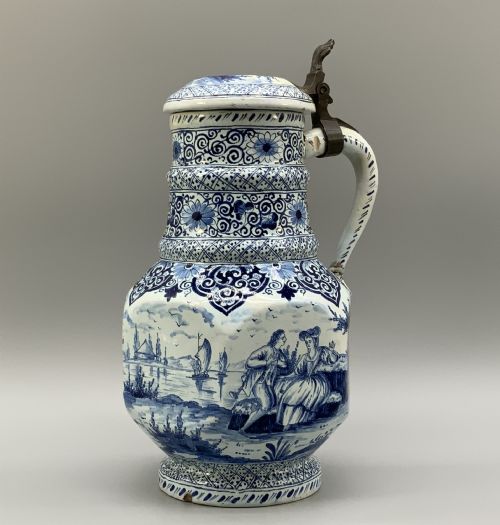
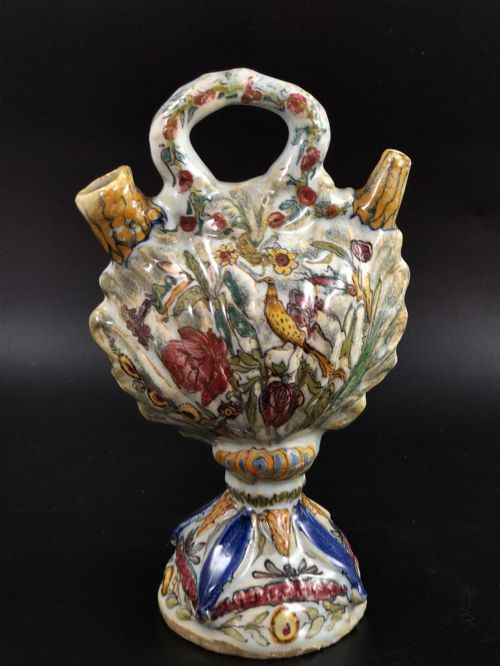
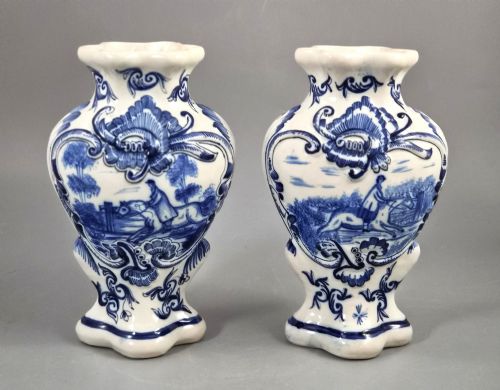
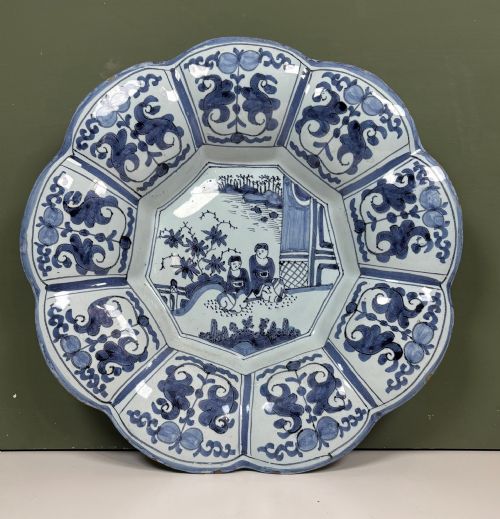
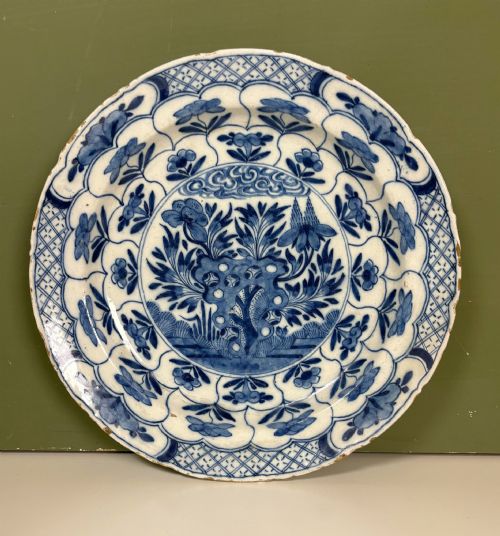
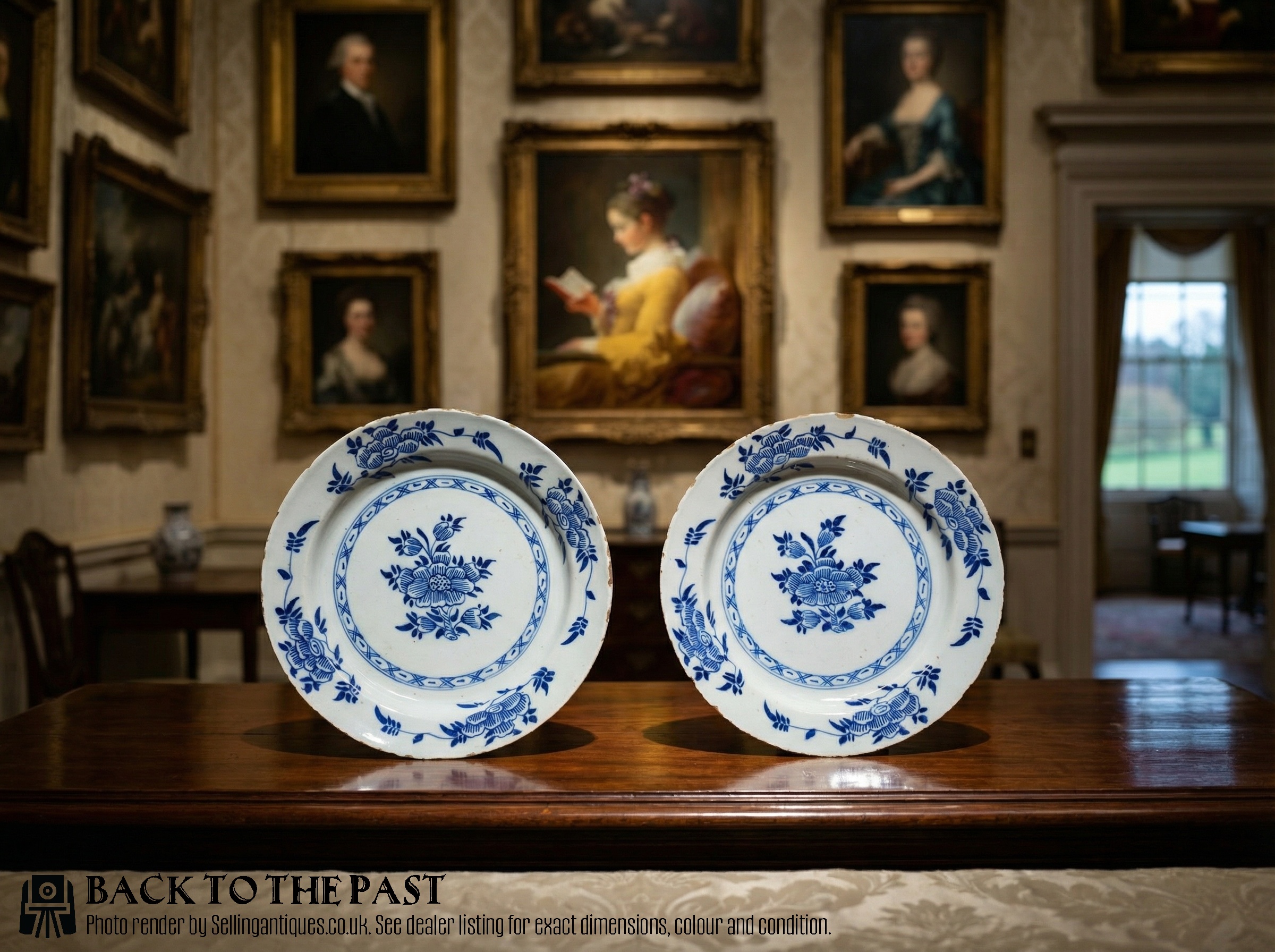
When searching for antique tin glazed faience, collectors encounter a diverse group of earthenware vessels and display objects including chargers, apothecary jars, vases, figures and wall plaques. The selection spans the seventeenth, eighteenth and nineteenth centuries, originating from English, Dutch, French, Italian and Spanish workshops.
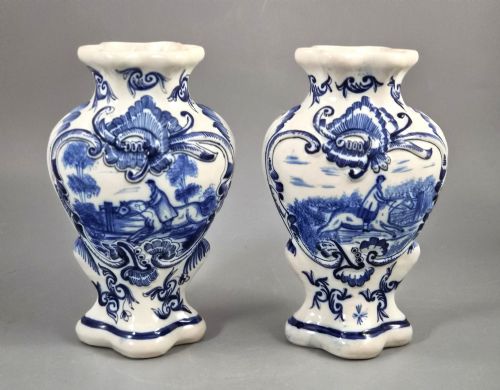
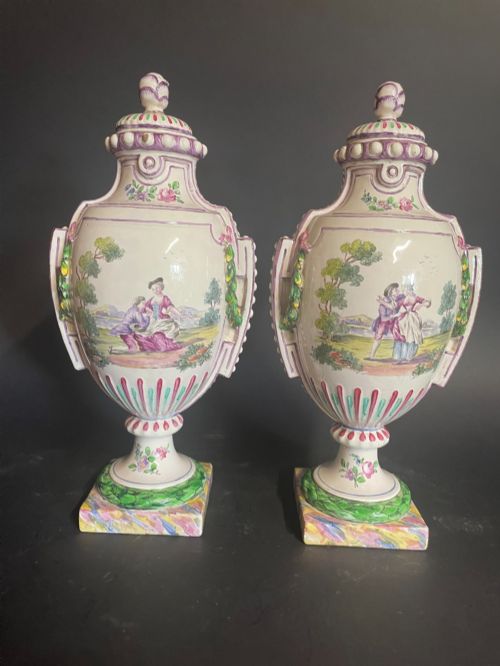
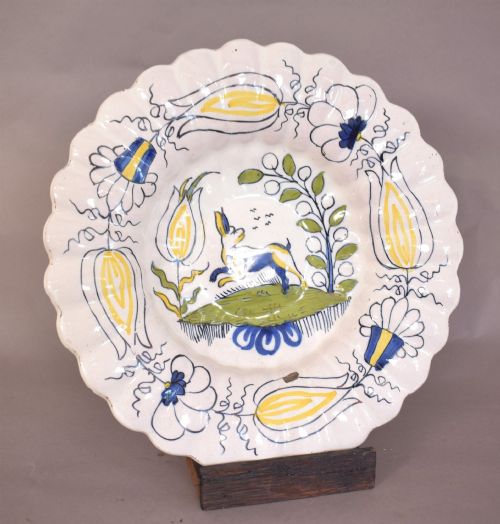
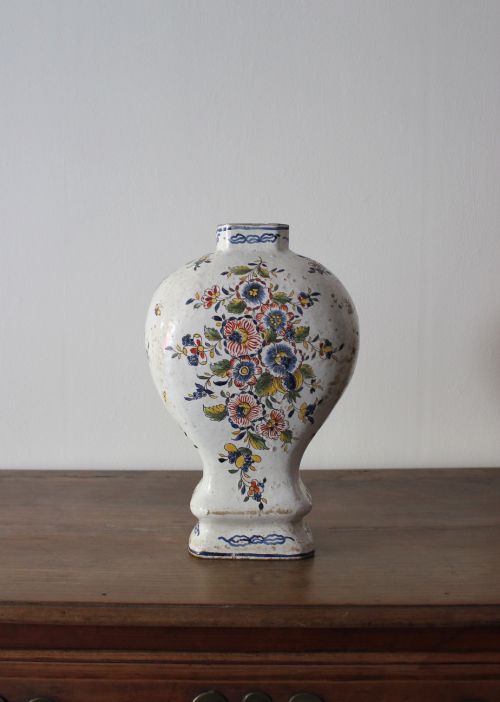
The most common forms on this page are eighteenth-century chargers and dishes alongside nineteenth-century revival vases and decorative figures. These pieces reflect regional traditions such as Dutch Delftware, French faience from Desvres and Quimper, and Italian majolica.
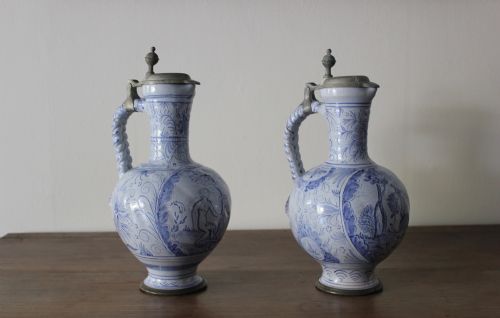
Domestic and decorative items range from large garden urns and pewter-lidded jugs to smaller pharmacy vessels and devotional plaques. Each piece demonstrates the porous earthenware body and opaque white glaze characteristic of the tradition.
How they were made
The foundation of antique tin glazed faience is an earthenware body shaped on a wheel or in a mould, which is then fired to create a porous biscuit base. Potters coat this biscuit in a liquid glaze containing tin oxide, which dries into a chalky white surface ready for decoration.
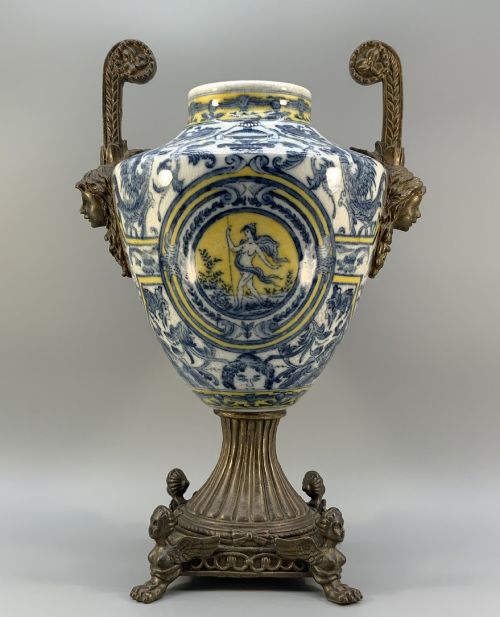
Painters apply cobalt blue, manganese, yellow and other mineral pigments directly onto the unfired porous glaze, absorbing the colour permanently before a final gloss firing. Bronze mounts appear on specific nineteenth-century revival pieces, adding structural or decorative metal elements to the ceramic body.
A pair of nineteenth-century pottery cows stands ready to graze on your mantelpiece in full Dutch Delft blue and white.
What varies in quality
Quality in antique tin glazed faience rests upon the crispness of the painted brushwork and the control of the pigment during the firing process. Finer pieces display confident, detailed brush execution in subjects like Chinoiserie or figurative scenes, whereas simpler domestic wares exhibit looser, more rapid strokes.
The purity and consistency of the white tin glaze also distinguish finer examples from standard production. Smooth, even glaze application without excessive pitting or crawling elevates the visual presence of both early eighteenth-century chargers and later revival vases.
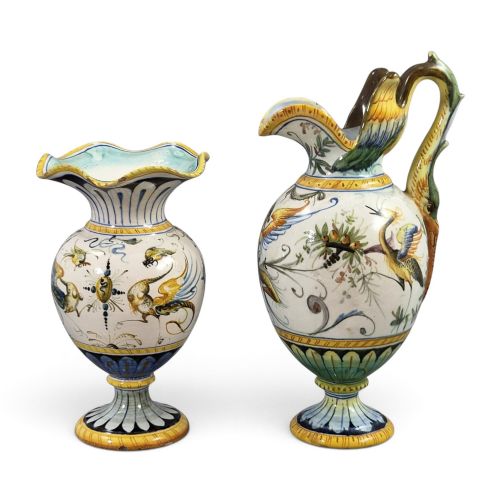
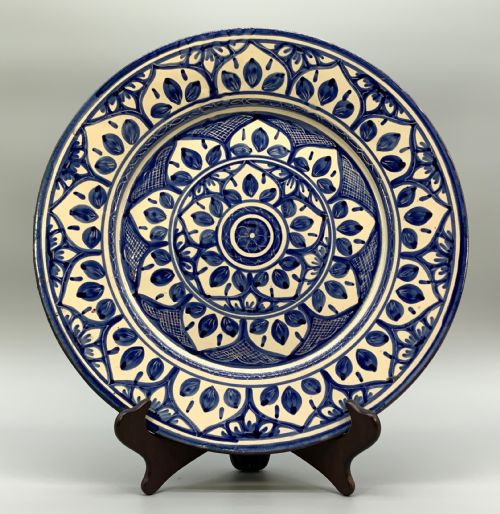
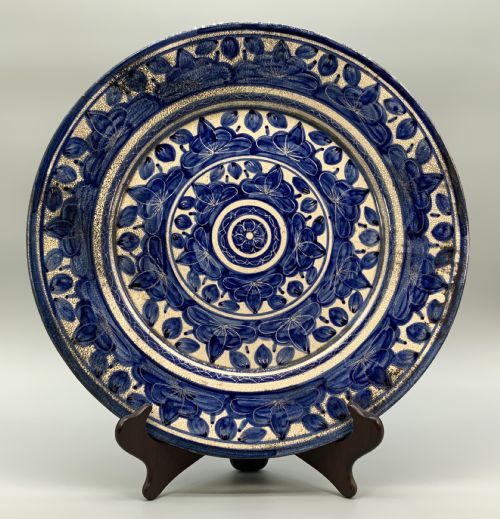
Fourmaintraux-Courquin·Cantagalli Florence
The Antique Tin Glazed Faience Glossary
- Charger
- A large decorative or serving plate designed to be displayed on a wall or dresser. These circular dishes often feature pictorial tin-glazed scenes.
- Majolica
- A type of tin-glazed earthenware originating in Italy and associated with colourful polychrome painting. The term also describes later revival pieces produced in the nineteenth century.
- Delftware
- Tin-glazed earthenware traditionally made in the Netherlands, renowned for its blue and white or polychrome decoration. It encompasses plates, jars, tiles and vases.
- Faience
- European tin-glazed pottery, particularly that produced in France and other continental centres outside Italy and the Netherlands. It covers a wide range of domestic and ornamental forms.
- Polychrome
- Decoration employing multiple colours rather than a single pigment like cobalt blue. Manganese purple, yellow and green frequently appear alongside blue on these wares.
Antique Tin Glazed Faience: Frequently Asked Questions
What is antique tin glazed faience?
Antique tin glazed faience refers to pottery made from an earthenware body covered in an opaque white glaze containing tin oxide. Artisans painted directly onto this surface using mineral pigments before firing the piece.
This broad category includes Dutch Delft, French faience, English delftware and Italian majolica produced across several centuries. The technique creates a smooth white background suitable for intricate blue and white or polychrome designs.
How were these pieces used historically?
Historically, these ceramics served both practical and decorative functions in domestic, apothecary and religious settings. Large chargers and dishes adorned walls or served food, while apothecary jars and pharmacy jugs stored dry or liquid medicines.
Other forms included posset pots for celebratory drinks, sauceboats for dining tables, and devotional plaques placed in homes. Garden urns and decorative vases were made to ornament grand interiors and courtyards.
How do I care for antique faience?
Antique tin glazed faience requires gentle handling because the earthenware body is porous and the glaze can chip or craze over time. Clean pieces with a soft, dry cloth and avoid submerging them in water, which can penetrate through hairline cracks in the glaze.
Display them away from areas of high humidity and direct sunlight to protect the pigments and ceramic structure. Proper stable placement prevents accidental knocks against the edges of chargers and vases.
How can I tell earlier pieces from later revivals?
Distinguishing seventeenth and eighteenth-century pieces from nineteenth-century revivals involves examining the clay body, glaze characteristics and painting style. Earlier pottery often shows characteristic weight, wear patterns and pigment behaviour specific to historic kiln technology.
Revival pieces, such as those from the Renaissance Revival period, often feature brighter palette control, specific nineteenth-century factory marks, or added bronze mounts. Comparing the stylistic motifs helps determine whether a piece is an original early period item or a later homage.