





Italian Ceramic Pharmacy Jar
An italian ceramic pharmacy jar brings centuries of apothecary history into a room through hand-painted pigment and tin-glazed earthenware.
Italian Ceramic Pharmacy Jar
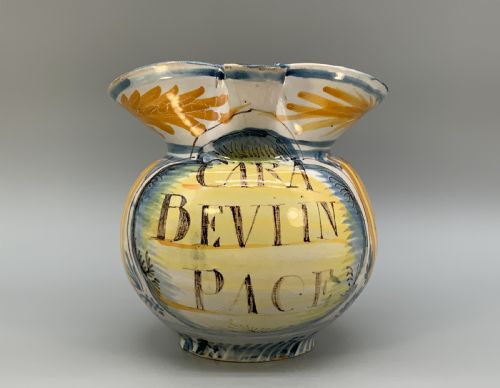
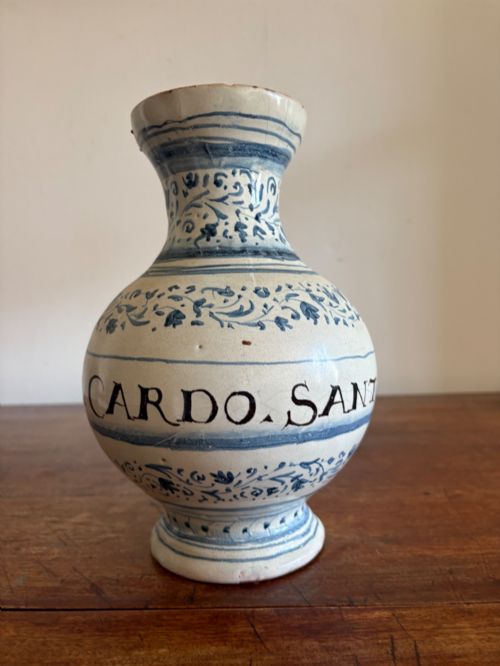
An italian ceramic pharmacy jar spans utilitarian apothecary vessels made for storing medical ingredients in dispensaries. These pieces appear in forms such as the cylindrical albarello and wet drug jugs equipped with spouts and handles.
The periods represented stretch from the seventeenth century through to the early twentieth century, showing a continuous tradition of workshop production. Buyers encounter regional variations originating from centres like Savona, Naples, and Nove.
Styles range from strict blue and white palettes to rich polychrome schemes involving manganese and yellow. Each vessel carries the heritage of Italian majolica and faience traditions used in historical apothecaries.
Materials and construction
Makers shaped earthenware bodies on the potter's wheel before applying an opaque tin glaze that provided a smooth white surface for painting. This tin-glazed earthenware technique formed the foundation for both wet drug jugs and dry albarello vessels.
Artists decorated the unfired glaze surface using mineral pigments including cobalt blue, manganese, and yellow. Subsequent firing fused these pigments into the glaze, creating durable finishes designed to withstand daily dispensary use.
Italian Ceramic Pharmacy Jar Retail Price Guide 2026
Typical asking prices for italian ceramic pharmacy jar among the pieces listed under this phrase on Sellingantiques today, from the lower quarter to the upper quarter. They describe what is for sale here now, not the wider market.
Some vessels still bear abbreviated Latin names for ancient remedies like syrup of marshmallow, hinting at forgotten medical recipes.
Design and execution
Quality rests upon the crispness of the hand-painted decoration and the balance of the vessel's proportions. Finer examples display confident brushwork in the blue and white or polychrome motifs rather than stiff execution.
The survival of original painted inscriptions naming specific medicinal contents adds historical depth to individual pieces. Glaze consistency and the preservation of the pigment over centuries distinguish the best surviving examples.
The Italian Ceramic Pharmacy Jar Glossary
- Albarello
- A cylindrical ceramic jar designed to hold dry pharmaceutical drugs and ointments. This form developed in the Middle East and became a staple of Italian apothecary workshops.
- Majolica
- Italian tin-glazed earthenware decorated with colourful pigments on an opaque white glaze. Potters used this technique to produce highly decorative vessels for pharmacy displays.
- Faience
- Tin-glazed earthenware produced in European traditions outside of Spain and Italy. The term frequently aligns with continental European pottery methods.
- Wet drug jug
- An apothecary vessel featuring a spout and handle designed for liquid medicines and syrups. These jugs often display painted labels indicating their specific contents.
- Polychrome
- Decoration employing multiple distinct colours applied to the ceramic surface. In these pieces, cobalt blue, manganese, and yellow pigments dominate the palette.
Italian Ceramic Pharmacy Jar: Frequently Asked Questions
What was an italian ceramic pharmacy jar used for?
These vessels held dried herbs, ointments, syrups, and chemical preparations in historical apothecaries and dispensaries.
Pharmacists relied on them to keep active ingredients organised and protected from moisture before the advent of modern packaging.
How do I tell an albarello from a wet drug jug?
An albarello is a straight-sided, waist-shaped jar built for holding dry powders and preserves.
A wet drug jug includes a spout and handle specifically designed for pouring liquid medicines and syrups.
What colours appear on these apothecary jars?
Traditional palettes feature cobalt blue and white designs derived from Renaissance majolica techniques.
Other examples introduce polychrome schemes incorporating manganese purple and yellow pigments.
How should I display an antique pharmacy jar?
Place these vessels on sturdy shelving or within enclosed cabinets where their painted surfaces remain visible.
Keep them away from direct sunlight and areas subject to sudden temperature shifts to protect the historic glaze.