

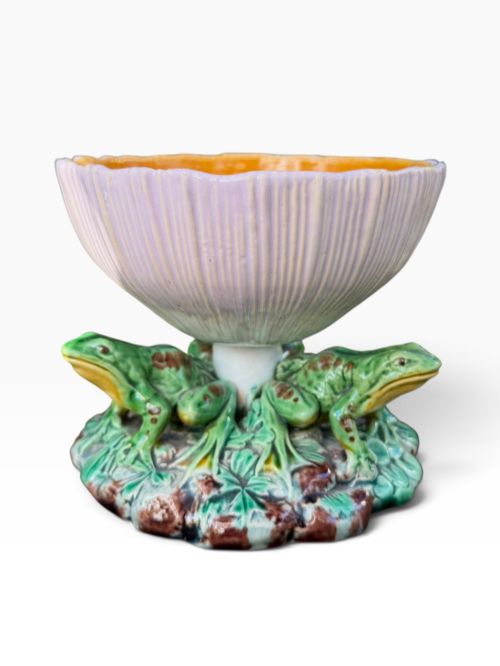
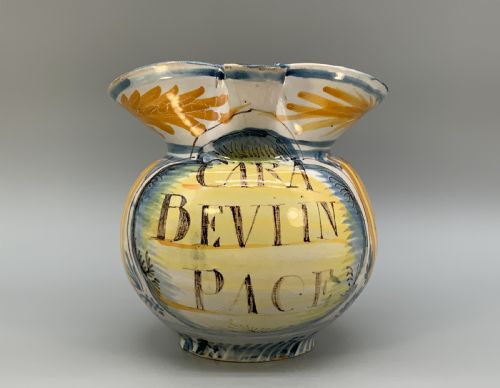


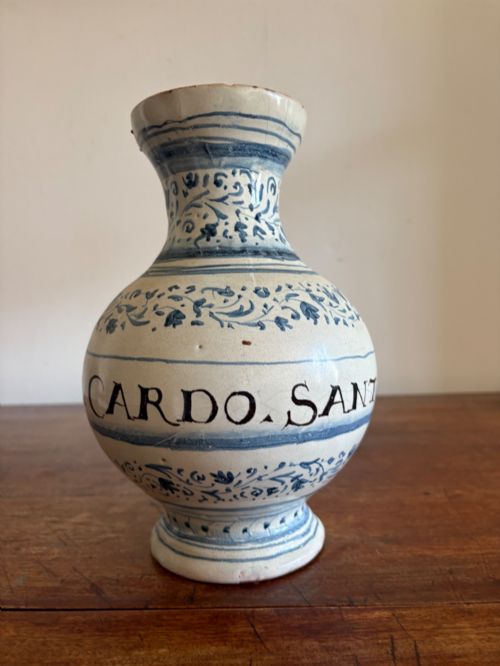

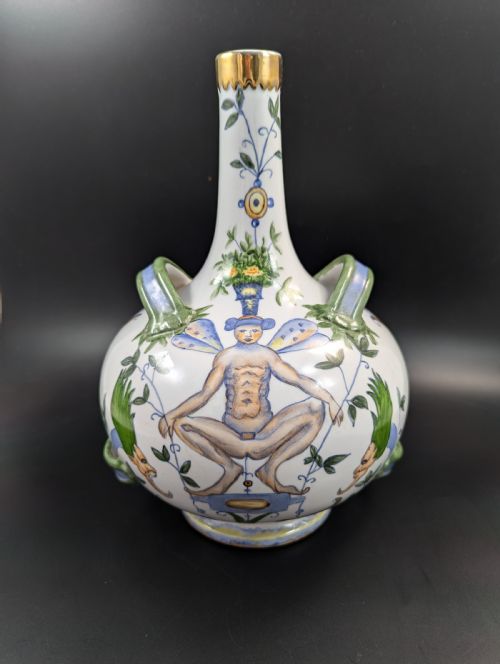


19th Century Majolica Vessel
A 19th century majolica vessel brings bold tin-glazed colour and historic form into a room.
19th Century Majolica Vessel
A 19th century majolica vessel encompasses diverse forms ranging from pharmacy jars and albarelli to large covered vases and umbrella stands. These objects draw heavily on earlier Italian traditions, Victorian naturalism, and revivalist styles.
The pieces on this page span the 19th century alongside transitional late 18th-century examples, reflecting both utilitarian pharmacy wares and purely decorative continental display items.
Materials and construction
Makers shaped these pieces from earthenware, ceramic, and terracotta before applying tin glaze or general glaze surfaces. Decoration relied on polychrome pigments, mangonese, yellow, and blue and white mineral colours, sometimes enhanced with gold leaf.
Firing techniques fused these opaque white or coloured glazes to the clay body, creating the distinctive glossy finish characteristic of majolica, faience, and delftware production.
19th Century Majolica Vessel Retail Price Guide 2026
Typical asking prices for 19th century majolica vessel among the pieces listed under this phrase on Sellingantiques today, from the lower quarter to the upper quarter. They describe what is for sale here now, not the wider market.
Listings feature earthenware, terracotta, and tin-glazed ceramic forms spanning the nineteenth century alongside late eighteenth-century survivals.
Judging quality
Quality rests upon the crispness of the painted detail and the complexity of the palette, where layered polychrome work or precise blue and white execution elevates a piece beyond standard commercial output. The ambition of the form, whether a grand Alhambra-style vase or a simple pharmacy wet drug jar, dictates the skill required in the kiln.
Condition of the tin glaze and the stability of the earthenware body anchor the visual success of any vessel, distinguishing robust display items from heavily restored or fatigued examples.
Sarreguemines
The 19th Century Majolica Vessel Glossary
- Majolica
- Opaque tin-glazed earthenware decorated with coloured metal oxides on a white background. This term covers both Italian Renaissance revivals and later continental decorative wares.
- Albarello
- A cylindrical earthenware jar used by apothecaries to store dry drugs, herbs, and ointments. Its pinched waist allowed handlers to grip the vessel securely on busy shelves.
- Tin Glaze
- A lead glaze rendered opaque by the addition of tin oxide. This surface provided a smooth white ground for painters to apply detailed pigments before firing.
- Polychrome
- Decoration employing multiple distinct colours across the design. In these ceramics, manganese, yellow, and blue pigments frequently dominate the palette.
19th Century Majolica Vessel: Frequently Asked Questions
What were pharmacy jars used for?
Apothecaries used these vessels to store dry drugs, herbal remedies, and wet medicines in apothecary shops and monastic infirmaries. Their distinct shapes kept contents identifiable and protected from moisture.
Over time, these utilitarian containers transitioned from working pharmacy shelves into decorative cabinet pieces valued for their historic painted designs.
How do I clean a majolica vessel?
Dust these glazed earthenware surfaces gently with a dry, soft cloth to prevent particulate accumulation. Avoid submerging older ceramics in water, as moisture can infiltrate historic hairline cracks in the glaze.
Harsh chemical cleaners strip the original tin-glazed surface and delicate pigments, so simple dry maintenance remains the safest approach for antique pottery.
Are these vases waterproof?
Many historical vessels featuring tin glazes and porous earthenware bodies are not reliably waterproof today. Micro-fissures in the glaze can allow moisture to reach the underlying clay, causing damage.
Display these pieces dry or utilise a hidden interior glass liner if you intend to use them for fresh flowers.
How can I tell the period?
Dating relies on stylistic clues, such as Victorian revival motifs, Chinoiserie details, or Renaissance revival forms. The weight of the earthenware and the characteristics of the glaze provide further physical indicators.
Comparing the painted palette and potting technique against documented factory output helps narrow down the decade of production.