




Yellow Ceramic Jug
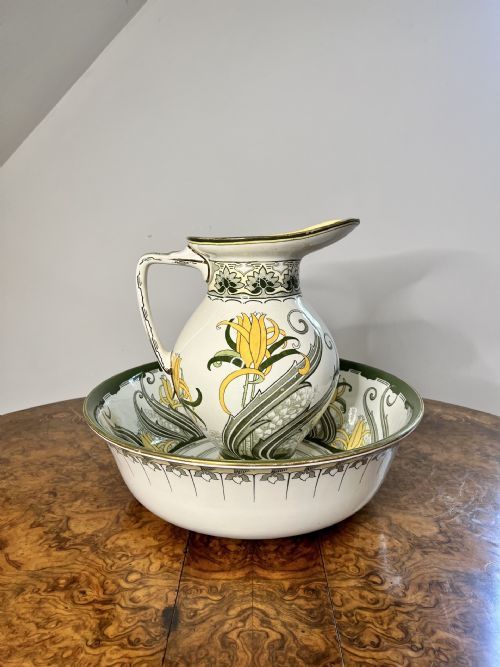
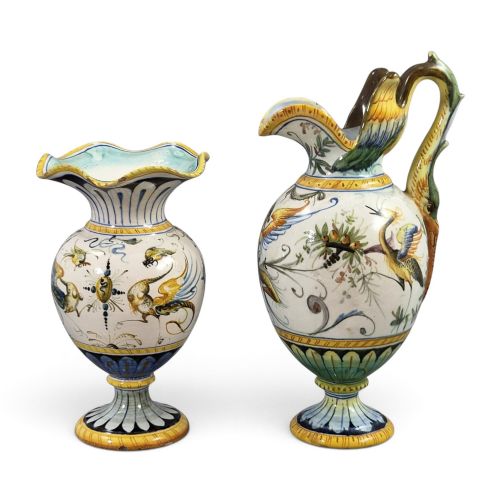
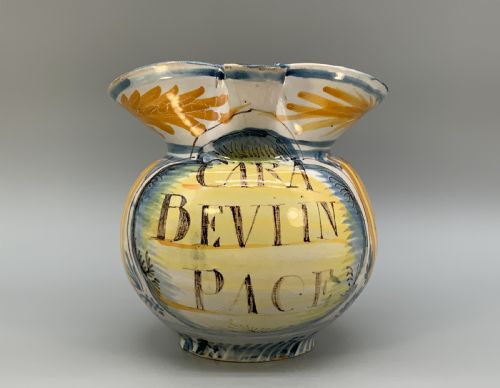
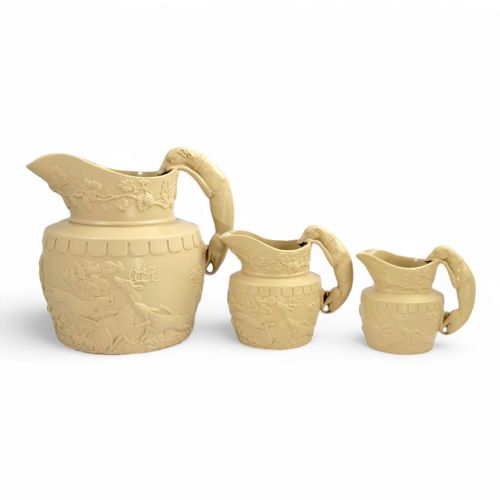
These yellow ceramic jug pieces bring together functional earthenware and decorative pottery spanning centuries of design.
Yellow Ceramic Jug
A yellow ceramic jug covers an array of utilitarian and decorative vessels, ranging from Georgian ironstone and Regency pitchers to Victorian earthenware and Art Deco pottery. Buyers exploring this phrase encounter diverse forms such as tavern jugs, apothecary vessels, and wash sets.
The pieces appearing on this page stretch from the Georgian era through the nineteenth century and into the mid-twentieth century. Utility vessels sit alongside decorative majolica ewers and Toby jugs, demonstrating how workshops utilised vibrant glazes across different decades.
Materials and construction methods
Potters shaped these objects from earthenware, ironstone, and porcelain, applying tin glaze, enamel, and oil paint to finish the surfaces. Many examples utilise traditional throwing and moulding techniques before receiving polychrome decoration or metallic leaf accents.
Makers achieved the distinct yellow ground colours through specific glazing formulas fired in kilns. Artisans then added hand-painted details, ranging from floral motifs to armorial crests and landscape scenes.
Materials recorded across the selection include earthenware, ironstone, porcelain, tin glaze, enamel, and oil paint.
Assessing quality in ceramic vessels
Quality rests upon the crispness of moulding, the control of the glaze application, and the fineness of the hand-painted details. Finer pieces display smooth surfaces, balanced handle attachments, and well-preserved polychrome or enamel pigments without distracting firing flaws.
The distinction between standard utility ware and master workshop output lies in the artistic execution of the painted or moulded decoration. Pieces from notable potteries often retain clearer factory marks and more complex decorative schemes.
Doulon Burslem·Cantagalli Florence·Chamberlain Worcester·Masons Patent Ironstone·Phillips And Bagster·Wedgwood By Keith Murray
The Yellow Ceramic Jug Glossary
- Earthenware
- Porous pottery fired at lower temperatures than stoneware or porcelain. It requires a glaze to become waterproof and serves as the body for many traditional jugs.
- Majolica
- Opaque tin-glazed earthenware decorated with brightly coloured metal oxides. This technique produces vibrant polychrome surfaces found on nineteenth-century Italian and English pieces.
- Ironstone
- A durable type of heavy earthenware patented in the nineteenth century. It resists chipping and forms the sturdy base for many utilitarian jugs and teapots.
- Toby Jug
- A pottery jug shaped as a seated person, usually a stout figure holding a mug and beer mug. These character vessels appeared frequently in nineteenth-century Staffordshire production.
Yellow Ceramic Jug: Frequently Asked Questions
How do I date a yellow ceramic jug?
Dating relies upon examining the ceramic body, the style of the handle, and any visible maker marks or registration numbers stamped underneath. Georgian and Regency pieces typically feature heavier earthenware or ironstone bodies with hand-painted motifs, while later examples show shifts toward industrial manufacturing.
Comparing the glaze characteristics and the wear patterns on the base helps narrow down whether a vessel originates from the nineteenth century or the mid-century period. Consulting recorded factory marks provides the most precise chronological placement.
Are these jugs safe for daily use?
Most antique and vintage jugs function primarily as decorative objects or display pieces rather than everyday tableware. Older glazes, particularly those on nineteenth-century earthenware and majolica, can be susceptible to acids and may contain materials unsuited for modern food service.
Displaying them on shelves or using them exclusively for dried florals preserves the integrity of the glaze and prevents interior staining. Careful handling ensures the painted surfaces and applied handles remain undamaged.
What is the difference between ironstone and earthenware?
Ironstone is a dense, vitrified type of earthenware engineered to resist chipping and cracking during heavy daily use. It provides a tougher, heavier base for nineteenth-century pitchers and tableware compared to standard porous clays.
Standard earthenware requires a complete glaze layer to seal the porous body underneath. Ironstone achieves a harder finish that mimics porcelain while retaining the thicker walls typical of utilitarian pottery.