



Antique Timber Wardrobe
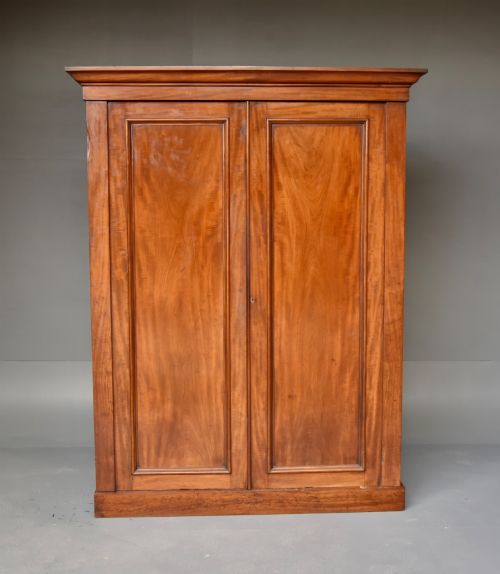
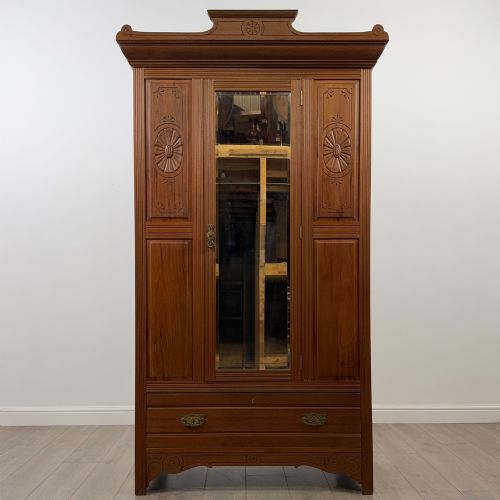
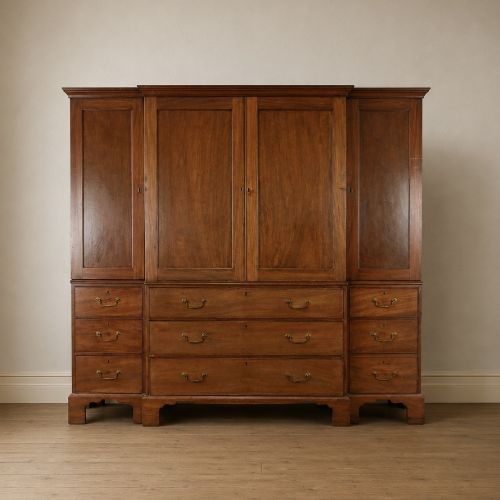
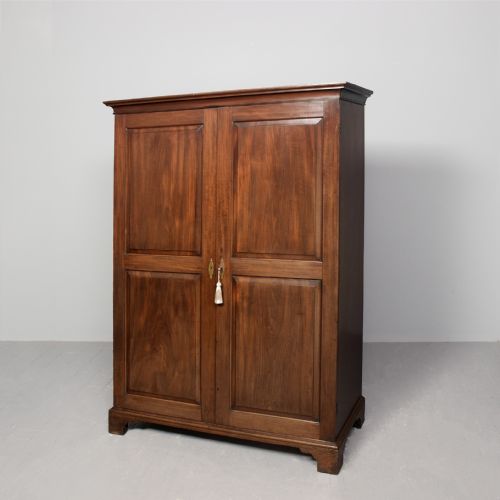
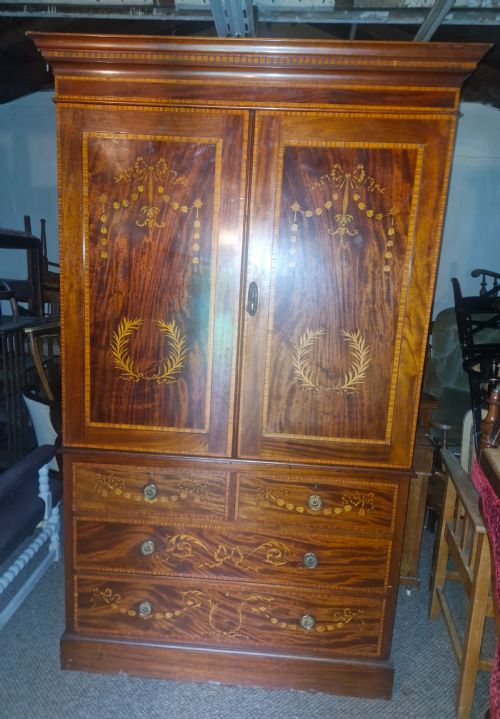
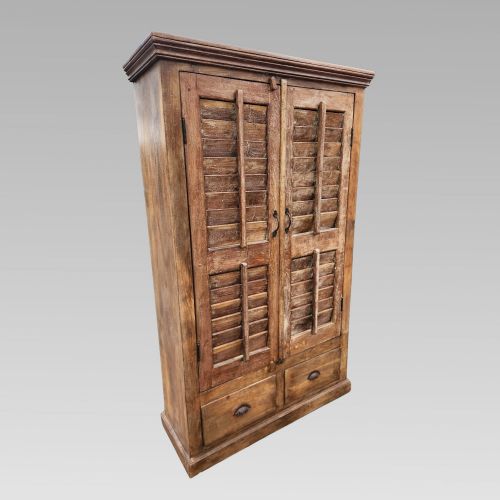
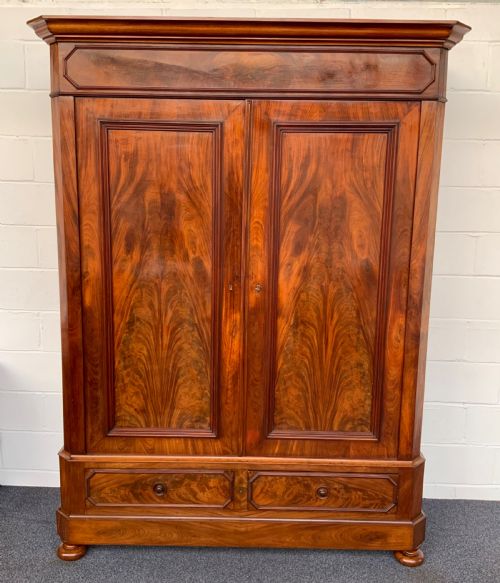
An antique timber wardrobe provides substantial bedroom storage, taking the form of large mahogany breakfront presses, Edwardian inlaid cabinets and French armoires.
Antique Timber Wardrobe
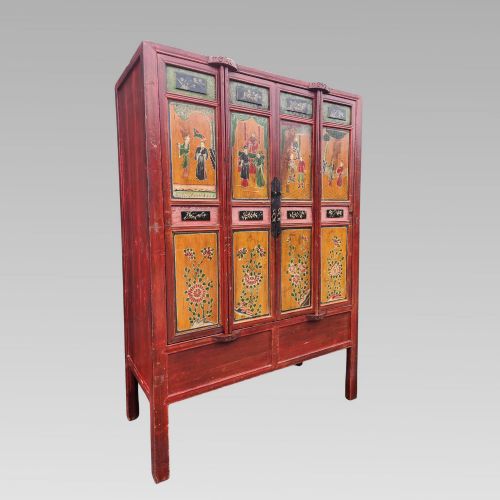
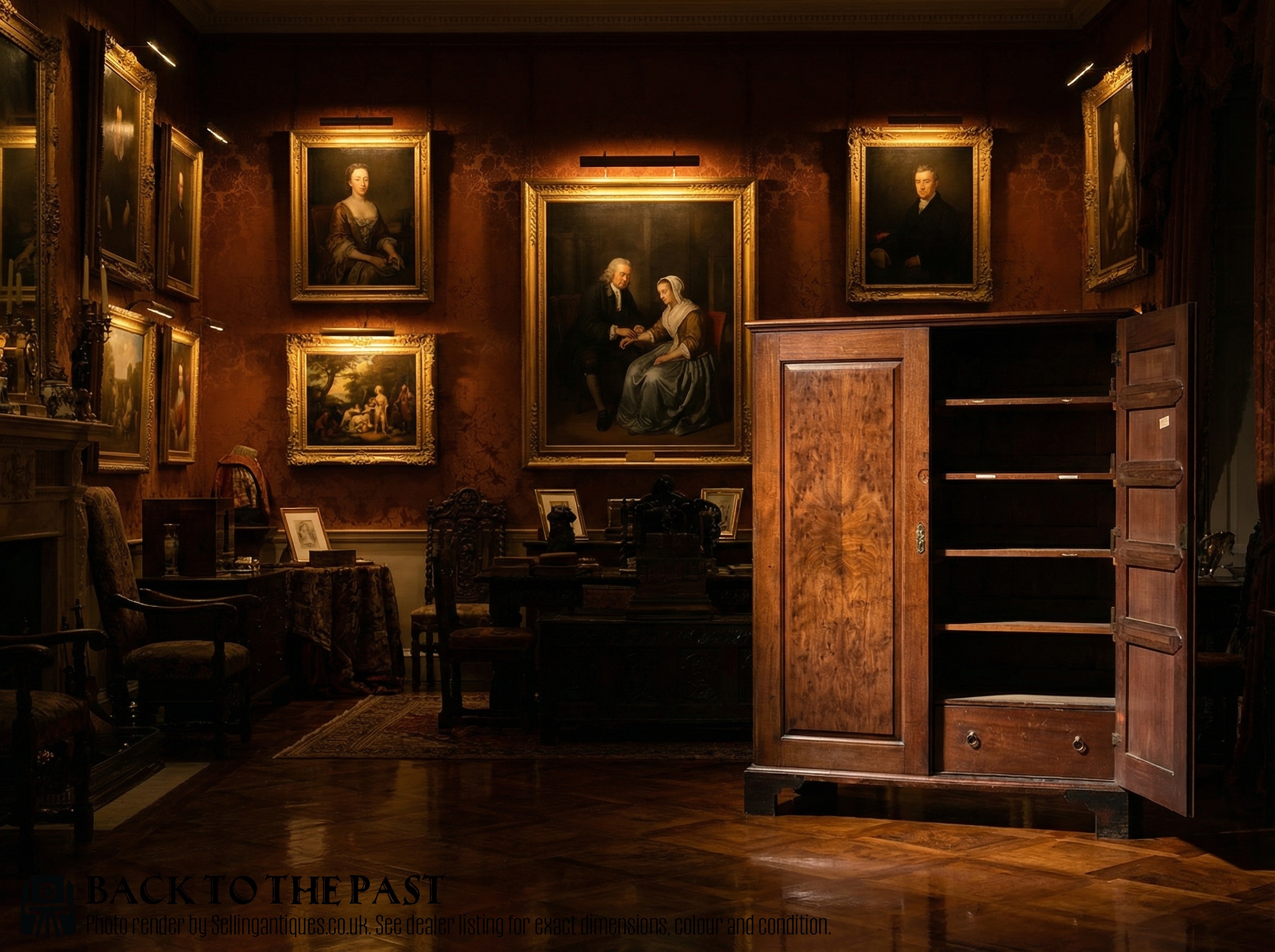
An antique timber wardrobe encompasses large storage pieces designed to house clothing, appearing as Victorian double and triple door cupboards, Georgian linen presses, and tall armoires. Buyers searching for an antique timber wardrobe frequently encounter pieces originating from British, French, Italian, and Chinese workshops spanning the eighteenth, nineteenth, and early twentieth centuries.
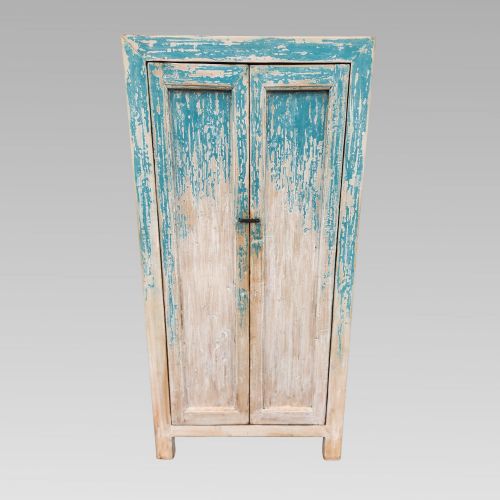
The selection ranges from architectural breakfront presses in figured mahogany and satinwood to painted provincial storage cupboards and carved hardwood cabinets. Smaller single door examples and low combination wardrobes sit alongside grand three-section bedroom suites.
Regional variations introduce distinct construction methods, such as Chinese compound cabinets in zitan, Indian storage cupboards in teak and rosewood, and rustic European armoires in bleached oak or walnut.
Materials and Construction
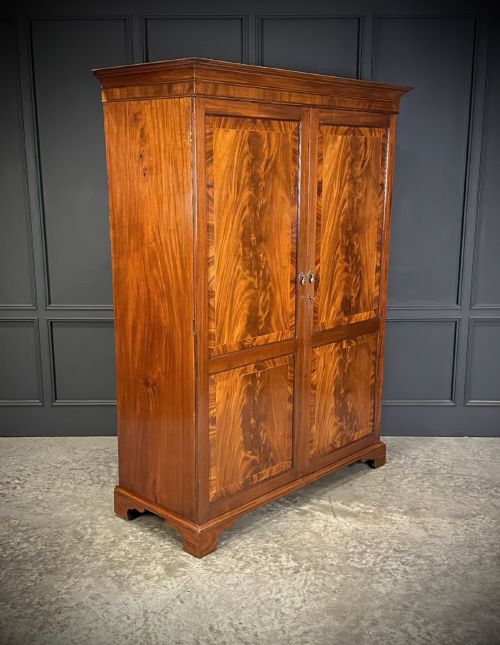
Cabinet makers utilised dense hardwoods including mahogany, walnut, oak, and rosewood for structural integrity, often applying flame mahogany veneers, satinwood banding, and parquetry patterns to visible surfaces. Secondary timbers such as pine and cedar frequently form interior shelving and drawer carcases.
Joinery techniques relied on traditional hand-cut dovetails for drawers and mortice and tenon joints for frames, supplemented by brass hanging rails, iron hinges, and hand-forged hardware. Decorative elements incorporate carved details, inlaid stringing, and polychrome or scumbled painted finishes.
Some nineteenth-century housekeepers possessed wardrobes so heavy they required specialised architectural design just to survive a standard spring clean.
Assessing Quality
The standard of a piece rests upon the selection of timber veneers, where symmetrical flame mahogany or intricate parquetry denote superior craftsmanship. Architectural proportion and the crispness of carved details further separate standard utility pieces from high-status commissions.
Internal configuration and original hardware contribute significantly to overall integrity, with well-preserved linen slides, tidy drawer construction, and original brass fittings commanding greater interest from collectors.
Druce & Co.·Mercier
The Antique Timber Wardrobe Glossary
- Breakfront
- A cabinet design where the central section projects forward from the flanking wings, frequently seen on large eighteenth-century mahogany presses.
- Linen Press
- A tall storage piece featuring sliding trays or shelves in the upper section for folded textiles, situated above a bank of lower drawers.
- Armoire
- A large freestanding cupboard or wardrobe of continental European origin, typically fitted with large panelled doors enclosing hanging space or shelves.
- Parquetry
- A geometric mosaic of wood pieces used for decorative veneer on cabinet surfaces, creating patterned surfaces across doors and panels.
- Scumbled
- A decorative paint technique applied to imitate the grain of finer woods like oak, often utilised on vernacular furniture and architectural doors.
Antique Timber Wardrobe: Frequently Asked Questions
How do I fit hanging space inside an antique wardrobe?
Many early wardrobes were built with sliding shelves or linen presses rather than hanging rails, reflecting a time when garments were folded rather than hung. Modern buyers often insert concealed wooden poles or brass rails within the main compartment while retaining the original internal depth.
Depth dimensions vary considerably across periods, so verifying internal clearances ensures modern coat hangers and broader garments fit comfortably behind the doors without catching on the locks.
Will a large antique wardrobe dismantle for moving?
Grand wardrobes from the Victorian and Edwardian eras, particularly triple sections and breakfront presses, were frequently constructed to dismantle into modular carcases, cornices, and base plinths. This modular design allowed large pieces to pass through domestic doorways during delivery.
Checking for original knock-down bolts and pegged joints helps determine whether a heavy hardwood wardrobe separates easily for transport into upper-floor bedrooms.
How do I distinguish a Georgian press from a Victorian wardrobe?
Georgian presses tend to feature architectural cornices, cockbeaded drawer fronts, and fielded panels, constructed predominantly from dense solid mahogany or oak with bracket feet. Victorian examples often introduce plainer plinths, mirrored doors, figured birch or ash veneers, and expansive internal hanging space.
Examining the backboards, drawer linings, and secondary timbers underneath provides further clues regarding the primary manufacturing decade.
What is the difference between an armoire and a wardrobe?
Armoire is a traditional continental European term for a large freestanding cupboard, whereas wardrobe specifically denotes British and American clothing storage furniture. French and Italian armoires frequently display more pronounced provincial carvings, distinct cornices, and removable panel doors.
Both serve the same primary function in a bedroom, though continental armoires often offer shallower depths and varied internal shelving configurations.