


Antique Tier Trolley
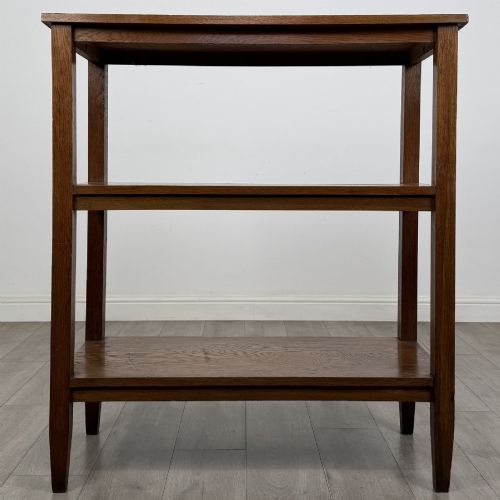
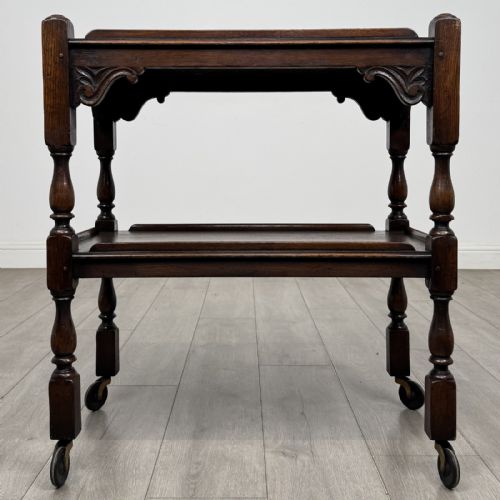
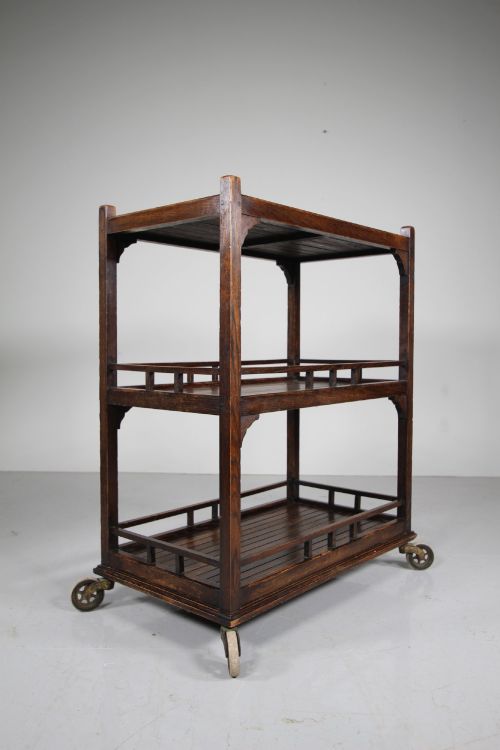
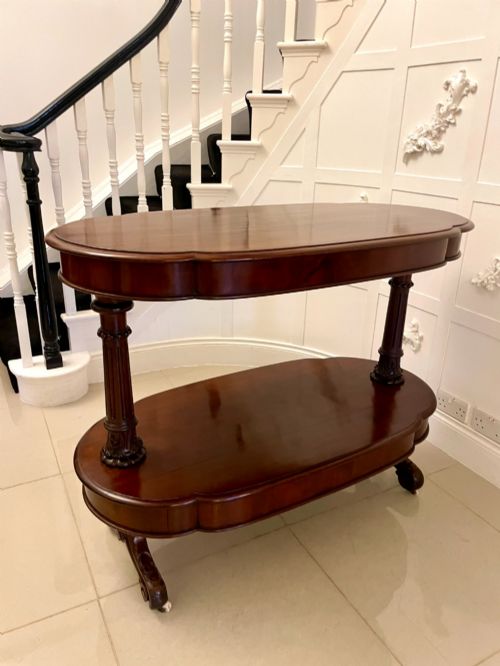
An antique tier trolley brings portable tiered shelving into a room, offering both mobility and layered display space for tea, drinks, or books.
Antique Tier Trolley
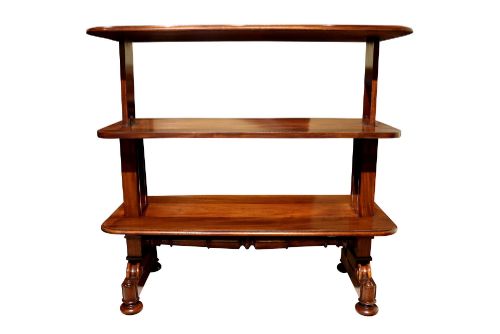
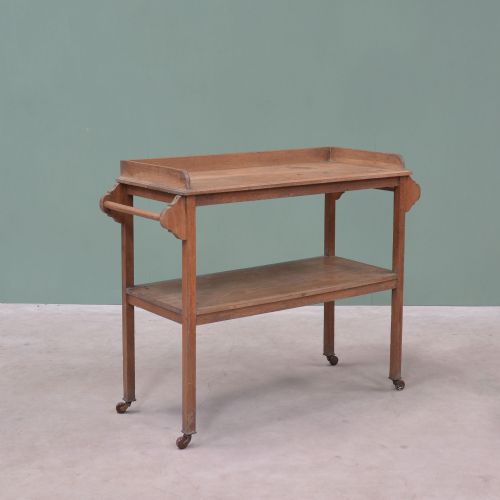
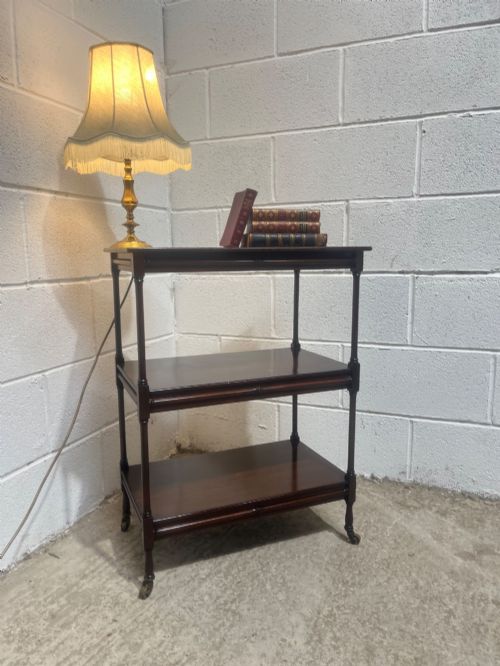
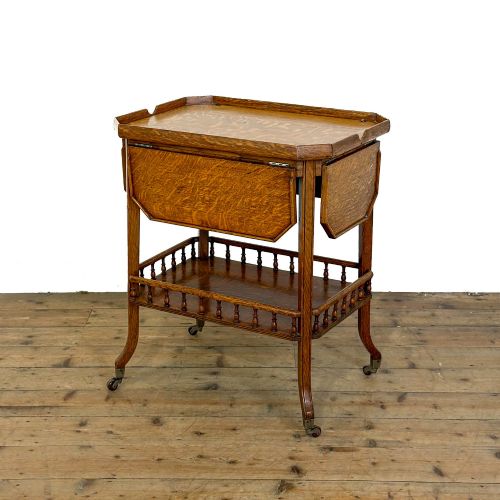
The antique tier trolley search phrase covers mobile and stationary tiered furniture designed for serving, display, and storage across several centuries. You are most likely to meet Edwardian and 1930s examples in oak, walnut, or mahogany, often fitted with two or three levels.
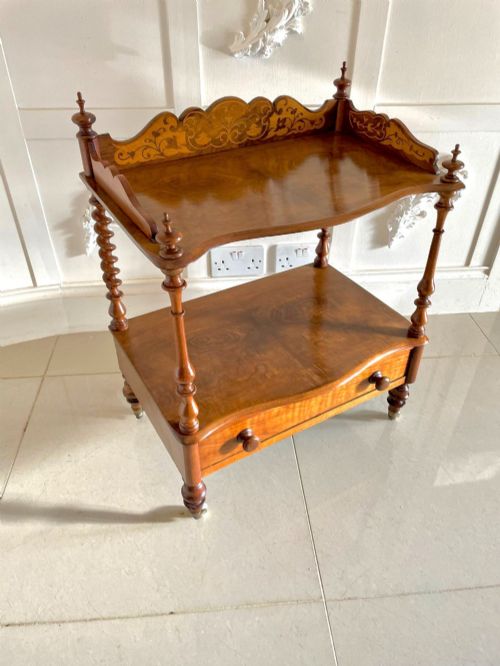
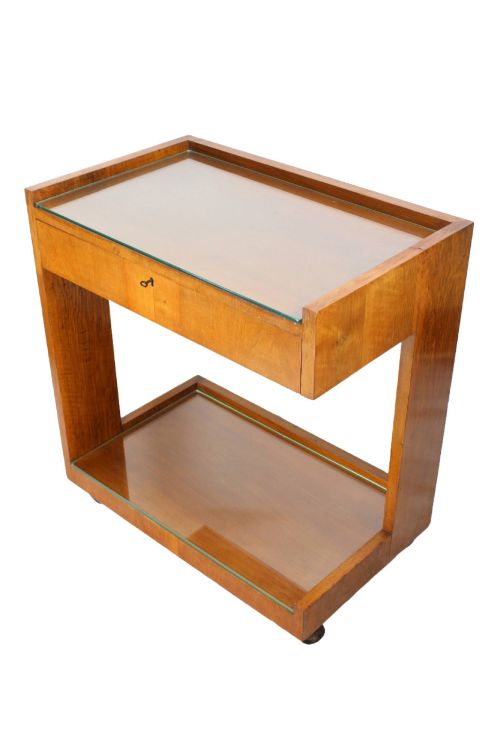
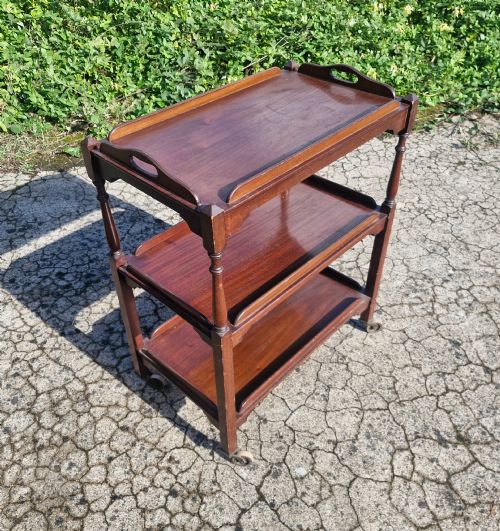
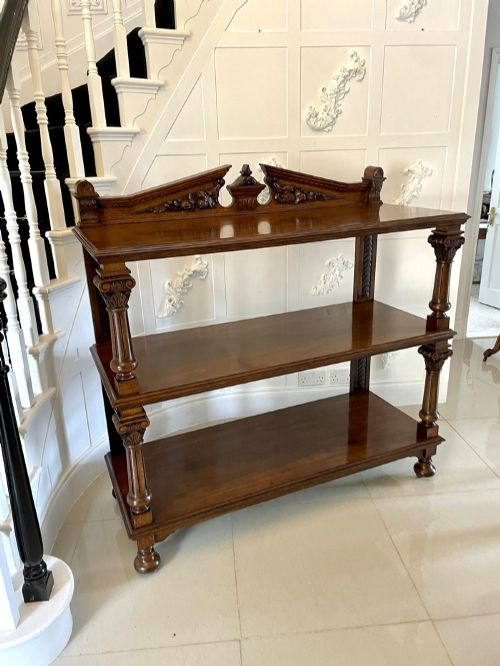
Forms range from tea and drinks trolleys on castors to fixed dumb waiters, etageres, and whatnots. These pieces span periods from the Regency and William IV eras through the Victorian age and into Art Deco designs.
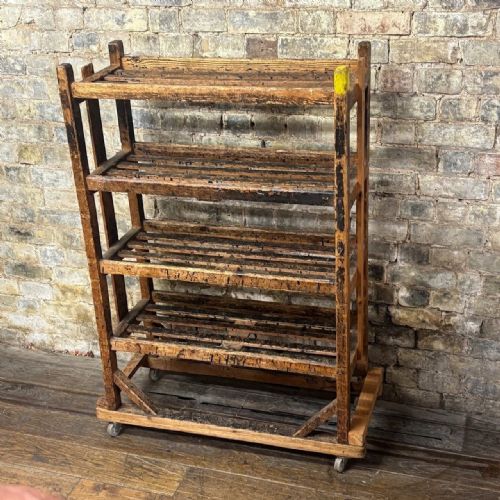
Origins include English workshops and French influences, encompassing domestic serving pieces and industrial items like wooden shoe trolleys. The primary function remains the vertical organisation of objects across multiple tiers.
Materials and Construction
Makers utilised timber solids and veneers such as mahogany, oak, walnut, amboyna, rosewood, and teak for the tiers and uprights. Grain selection and matching define the visual weight of these wooden surfaces.
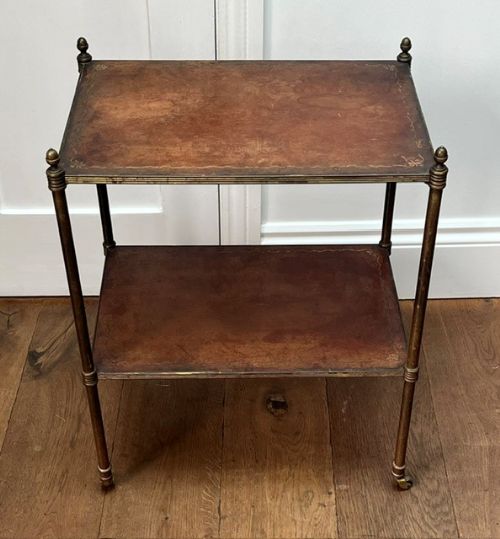
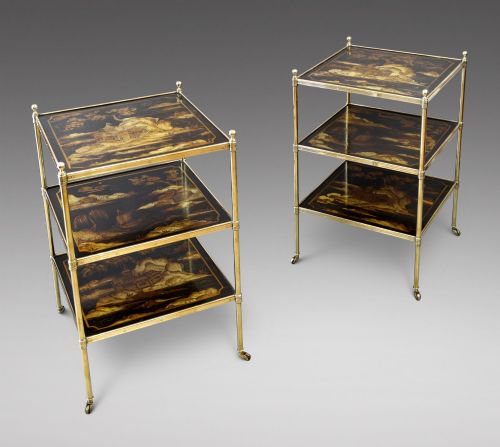
Metal elements including brass, iron, and lacquered finishes appear in framing, galleries, and castors to provide structural support and mobility. Leather inserts and glass shelves frequently add contrasting textures to the tiered levels.
Antique Tier Trolley Retail Price Guide 2026
Typical asking prices for tier trolley among the pieces listed under this phrase on Sellingantiques today, from the lower quarter to the upper quarter. They describe what is for sale here now, not the wider market.
Listings feature woods like mahogany, oak, walnut, rosewood, and teak across Victorian, Edwardian, and Art Deco periods.
Judging Quality
The refinement of the timber and the crispness of carved details, such as barley twist supports or edge moulding, separate standard examples from finer ones. The integrity of the tiered joinery and the original hardware dictate the piece's structural coherence.
Mechanical elements like rise-and-fall mechanisms, telescopic shafts, or metamorphic folding actions reveal the precision of the maker's original engineering. Original castors and harmonious proportions elevate the piece above utilitarian alternatives.
Mallett of London·Maison Bagues·Hughes Bolckow·Heals
The Antique Tier Trolley Glossary
- Dumb Waiter
- A tiered serving piece designed to hold food or drink without the need for a servant. These items often feature rotating or graduated shelves.
- Etagere
- A piece of furniture consisting of a set of open shelves for displaying small objects. They are frequently made of brass, rosewood, or mahogany.
- Metamorphic
- Furniture that transforms from one form into another, such as a serving trolley that expands. These pieces rely on concealed hinges and folding tiers.
- Barley Twist
- A turning technique resembling a twisted rope used on the vertical supports of tables and trolleys. This decorative spindle style is common in oak pieces from the Edwardian period.
Antique Tier Trolley: Frequently Asked Questions
What is an antique tier trolley used for?
These pieces served historical domestic roles ranging from afternoon tea service to holding drinks and books. Their multiple levels allowed servants or hosts to transport and present items efficiently.
In modern interiors, they function well as mobile side tables, bedside surfaces, or dedicated home bar carts. The tiered structure keeps objects organised while occupying minimal floor space.
How do I date an antique tier trolley?
Dating relies on identifying the prevailing timber choices, hardware, and decorative styles of specific eras. For instance, heavy mahogany and rosewood often point to Victorian or earlier periods, while clean lines and walnut suggest Art Deco.
Construction methods also provide clues, as hand-cut joinery gives way to early twentieth-century manufacturing techniques. Castor styles and secondary woods further narrow down the decade of production.
Are tier trolleys sturdy enough for daily use?
Most pieces were built from robust hardwoods like oak and mahogany to support heavy items such as silver tea services or decanters. Their original construction is generally durable.
However, the mobility of pieces on castors means joints can loosen over time with heavy movement. Checking the stability of the tier supports ensures safe everyday application.
What is the difference between a dumb waiter and a tea trolley?
Dumb waiters are traditionally stationary or heavy tiered stands used in dining rooms for holding dishes and serving ware. They often feature fixed circular or graduated shelves.
Tea trolleys are specifically lighter, mobile units fitted with castors and handles for rolling across carpets and floors. They emerged strongly in the Edwardian and Art Deco periods for serving refreshments.