
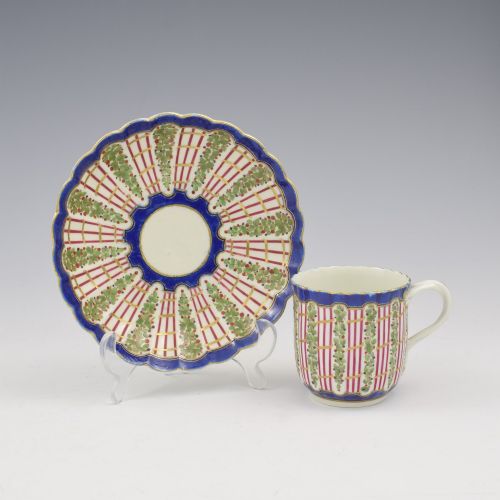
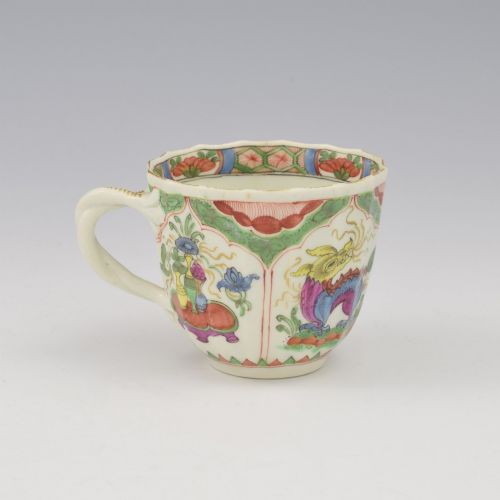
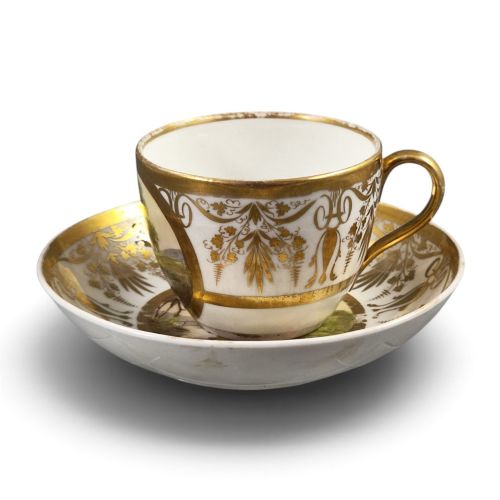
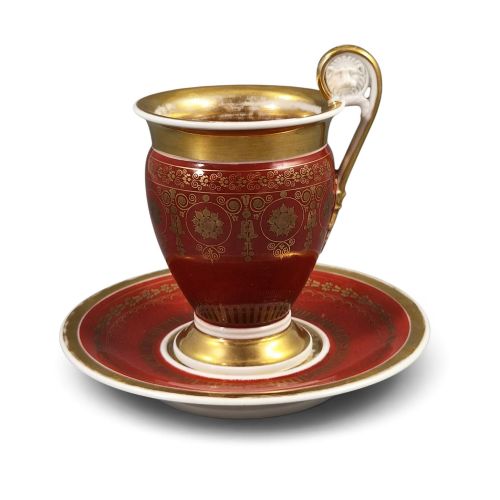
Antique Teacup Coffee Cup
When seeking an antique teacup coffee cup, you are looking at centuries of fine porcelain artistry designed for the table and cabinet.
Antique Teacup Coffee Cup
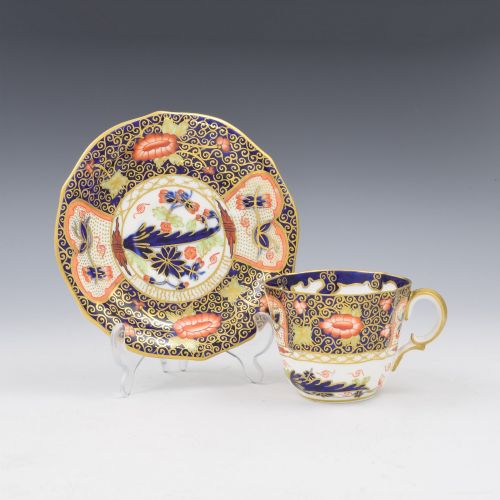
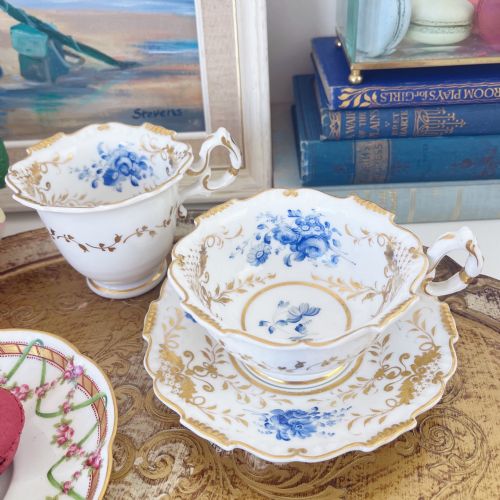
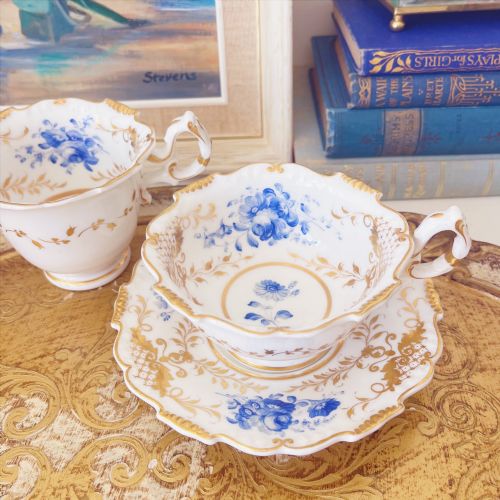
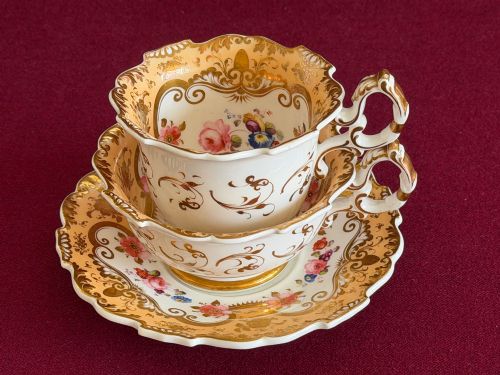
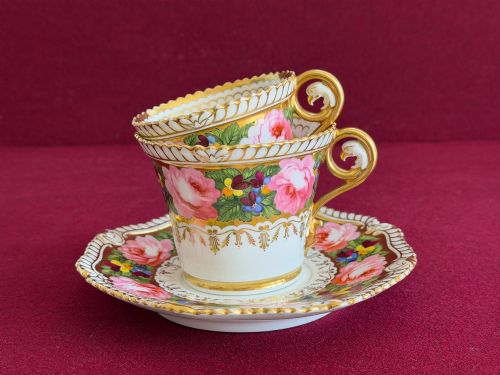
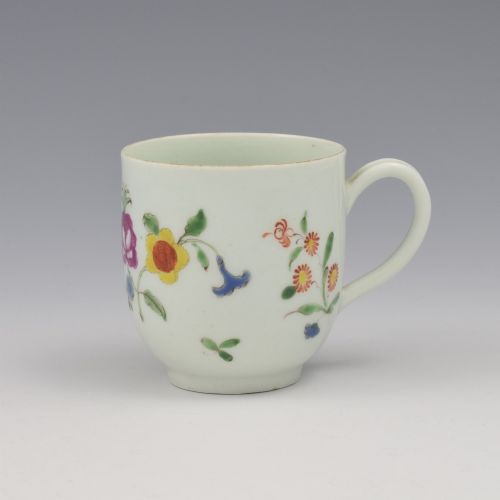
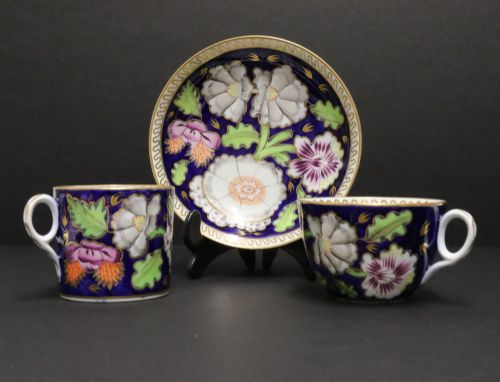
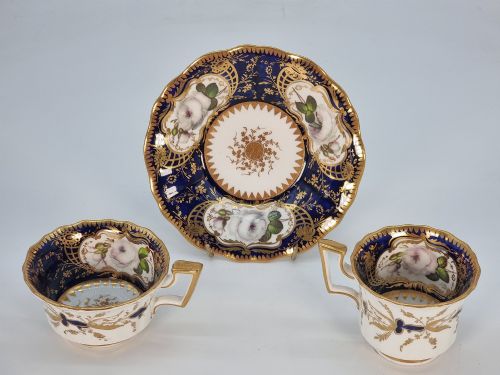
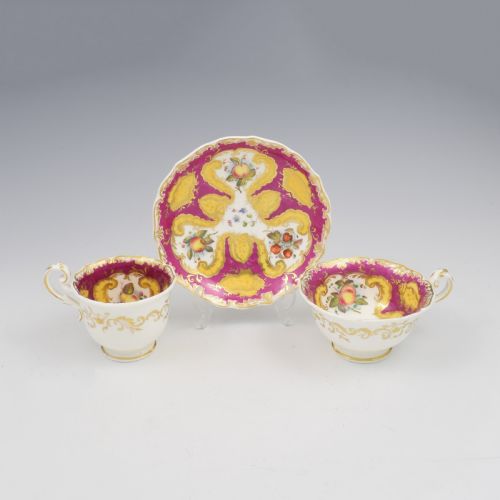
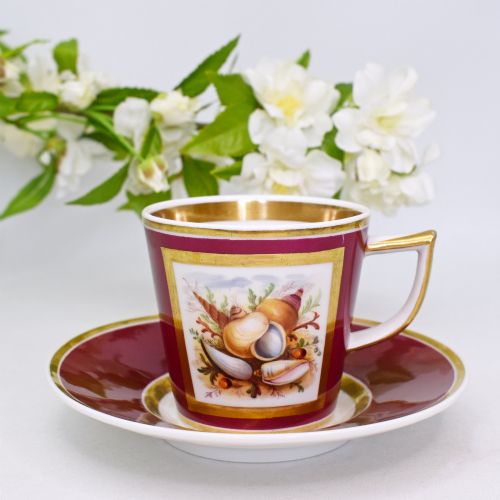
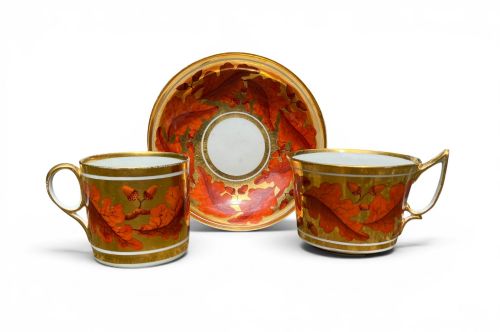
An antique teacup coffee cup typically spans the eighteenth and nineteenth centuries, taking the form of individual pieces, trios, or cabinet cups. You will frequently encounter forms originating from Georgian, Regency, and Edwardian periods, including delicate coffee cans alongside wider teacups.
The objects listed on this page range from early English porcelain factories to continental makers, encompassing teawares and specialised demitasse items. These pieces reflect the evolving social habits of tea and coffee drinking across successive generations.
Materials and Manufacture
Makers utilised hard-paste and soft-paste porcelain alongside bone china to form the body of each vessel. Hand-painting and gilding with gold leaf or gold gilt provided surface decoration.
Techniques such as enamel application and detailed hand-painting defined the decoration of these pieces during the eighteenth and nineteenth centuries. Kiln firing fixed these pigments and precious metals onto the porcelain body.
Listings feature porcelain, bone china, enamel, and gold leaf across eighteenth, nineteenth, and early twentieth-century periods.
Judging the Standard
The refinement of the porcelain body and the precision of the painted details distinguish standard examples from finer cabinet pieces. Superior items display meticulous hand-painted scenes and carefully applied gilding.
Makers known for exceptional technical skill achieve greater definition in moulded handles and painted motifs. The balance of the cup and saucer combination also indicates the underlying standard of manufacture.
Royal Crown Derby·H & R Daniel·Chamberlain Worcester·Richard Chaffers·Coalport John Rose·KPM Berlin·Vieux Paris·Rockingham·Yates Leeds·Derby·New Hall·Sevres·Royal Worcester·Meissen·Davenport·Minton·Spode·Hutschenreuther
The Antique Teacup Coffee Cup Glossary
- Trio
- A matched set consisting of a teacup, a coffee cup, and a saucer. This grouping reflects nineteenth-century dining habits.
- Coffee Can
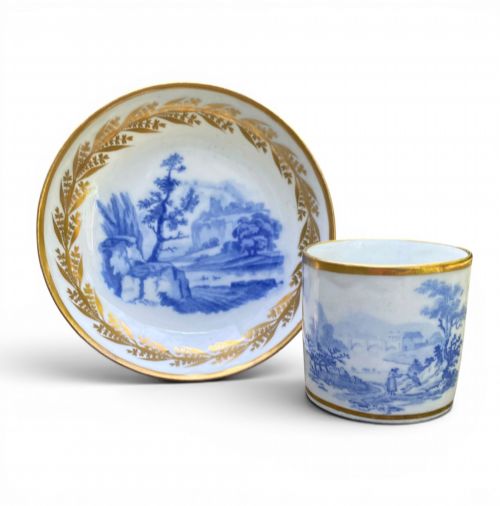
- A straight-sided cylindrical cup designed specifically for drinking coffee in the late eighteenth and early nineteenth centuries. They often lack the curved handle of a standard teacup.
- Hard-paste Porcelain
- A dense, durable ceramic material fired at very high temperatures, composed of kaolin and petuntse. It resists scratching and possesses a clear, ringing tone when struck.
- Soft-paste Porcelain
- An early European artificial ceramic mixture fired at lower temperatures than hard-paste porcelain. It has a warmer, slightly softer appearance beneath the glaze.
- Gilding
- The application of gold leaf or gold paint to the rims, handles, and borders of ceramics. This decorative technique elevates the visual status of the vessel.
Antique Teacup Coffee Cup: Frequently Asked Questions
What is the difference between a teacup and a coffee cup?
Teacups are traditionally wider and shallower to allow the hot tea to cool more rapidly during drinking.
Coffee cups, particularly from the Regency period, often take the form of taller, straight-sided cans that retain heat for stronger brews.
What is a true trio in antique ceramics?
A true trio consists of a teacup, a coffee cup, and a matching saucer manufactured together as a unified set.
This format allowed a household to serve both tea and coffee using the exact same decorative pattern.
How can I tell an eighteenth-century cup from a nineteenth-century one?
Eighteenth-century pieces often utilise soft-paste porcelain bodies with hand-painted underglaze blue or enamel designs specific to early factories.
Nineteenth-century examples frequently feature refined bone china, brighter gilding techniques, and distinct Regency or Victorian styling.