


Antique Porcelain Tea Trio
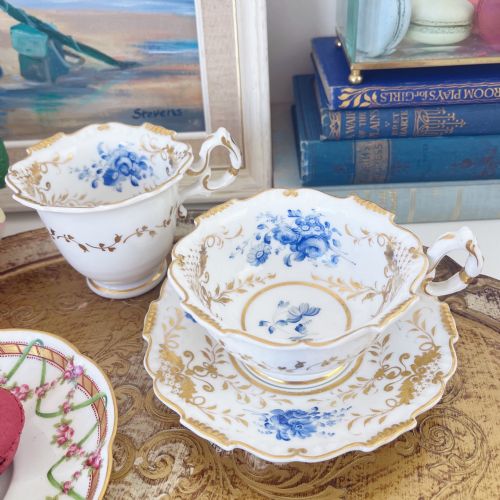
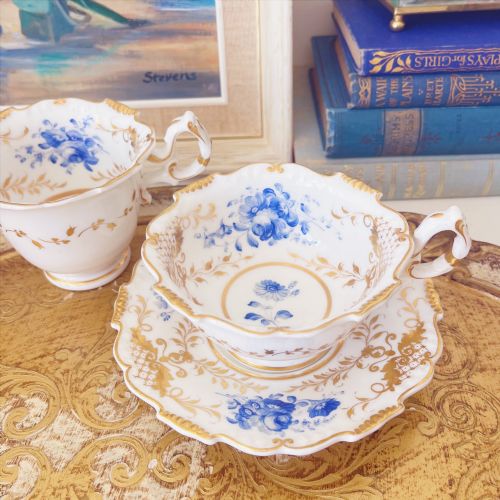
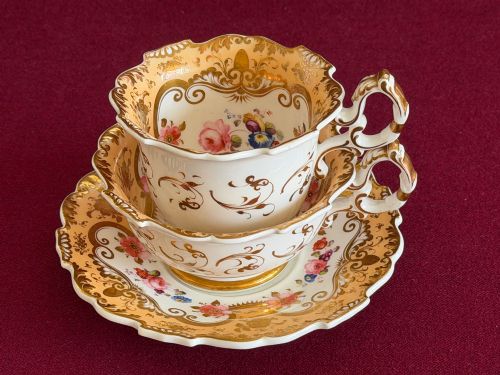
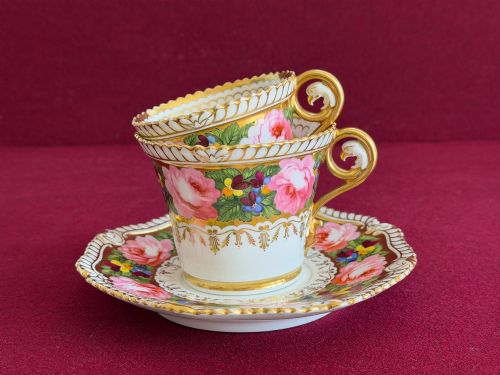
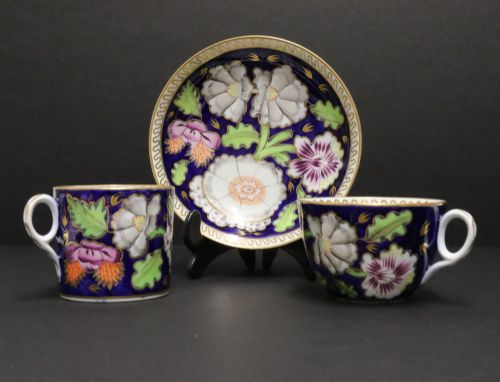
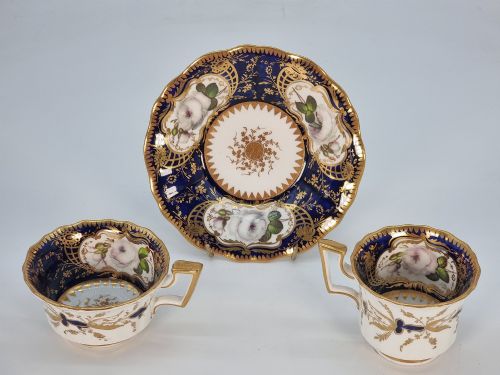
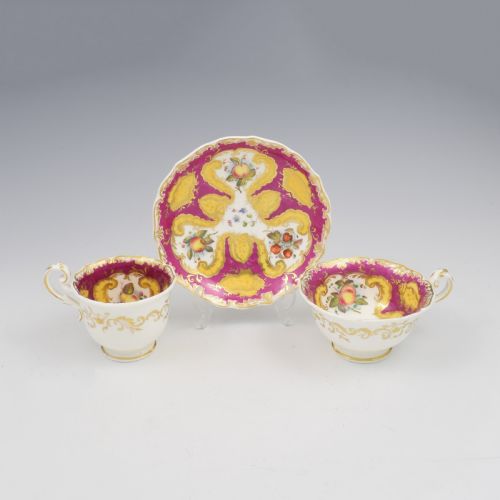
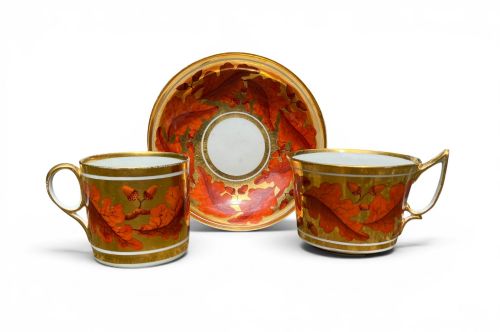
An antique porcelain tea trio brings together a cup, coffee cup and saucer from earlier centuries to complete the set.
Antique Porcelain Tea Trio
When you search for an antique porcelain tea trio, you are looking at matched sets of three drinking vessels designed for social gatherings in Georgian, Regency, Victorian and Edwardian drawing rooms. These sets typically consist of a teacup, a coffee cup and a matching saucer, allowing a host to serve both hot beverages from a single coordinated service.
The versions you are most likely to meet on this page span from the late eighteenth century through to the early twentieth century, taking the form of cabinet trios and tea services produced by notable English factories. Forms range from the refined shapes of the Regency period to the floral patterns of the Edwardian era, reflecting the changing tastes of domestic tea drinking over generations.
Materials and manufacture
Potters of this era utilised fine porcelain and bone china as the primary body for these drinking vessels, shaping them by hand or moulding them before firing. Enamel glazes provided a smooth surface for handpainted decoration, while gold leaf and intricate gilding were applied by hand to accentuate rims, handles and panels.
Makers employed skilled painters to apply detailed floral, fruit and exotic patterns directly onto the porcelain body before a final kiln firing fixed the colours and the metallic lustre. The combination of delicate ceramic paste, vibrant enamel pigments and applied gold leaf defined the standard manufacturing process across English porcelain works.
Some nineteenth-century makers decorated their porcelain tea trios with whimsical pattern names such as Crazy Cow and Bengal Tiger.
Distinctions in quality
The standard of painting and the precision of the gilding set the finest examples apart from standard factory production, as handpainted botanical or figurative scenes required exceptional artisan skill. Superior pieces display crisp, finely brushed details and well-preserved gold leaf that remain vibrant after centuries of handling.
The purity of the porcelain paste and the elegance of the moulding also dictate the grade of a trio, with thinner, more translucent bodies and well-balanced handle designs representing the highest tier of ceramic craftsmanship. Factory attribution plays a significant role, as pieces carrying documented patterns from prestigious makers demonstrate superior design execution.
H and R Daniel·Chamberlain Worcester·Newhall·Coalport·Derby·Worcester·Davenport·Minton·Spode·Wileman Foley Shelley·Gladstone potteries
The Antique Porcelain Tea Trio Glossary
- Cabinet trio
- A matched set of three pieces comprising a teacup, coffee cup and saucer, usually intended for display rather than everyday use.
- Bone china
- A type of soft-paste porcelain containing bone ash, developed in England to create a durable and translucent ceramic body.
- Gilding
- The application of gold leaf or gold paint to the ceramic surface, often used to highlight rims, handles and decorative borders.
- Enamel glaze
- A coloured, glassy coating fused to the porcelain body during firing to provide a smooth, glossy decorative finish.
- Flight period
- The era of Worcester porcelain production under the management of Thomas Flight, noted for fine neoclassical and floral designs.
Antique Porcelain Tea Trio: Frequently Asked Questions
What is included in an antique porcelain tea trio?
An antique porcelain tea trio consists of three matching ceramic pieces for a table setting: a teacup, a coffee cup and a saucer.
During the Georgian and Regency periods, tea and coffee were served from separate vessels, requiring distinct cup shapes within the same decorative pattern.
How do I date an antique tea trio?
Dating relies on identifying factory marks on the base of the porcelain, the style of the handle, and the painting techniques used.
Earlier eighteenth-century and Regency pieces often feature unmarked or hand-written pattern numbers, while later Victorian and Edwardian sets more commonly display printed factory stamps.
Can I use an antique tea trio for daily tea?
While these pieces were originally made for functional use, most collectors treat cabinet trios as decorative items to preserve the handpainted enamel and gold leaf.
Handwashing in warm, soapy water is necessary if you choose to use them, as modern dishwashers will damage the delicate gilding and ceramic body.
Why does a trio have two different cups?
The inclusion of both a teacup and a taller coffee cup reflects historical dining habits when tea and coffee were distinct beverages served at the same gathering.
Both cups shared the same saucer and decorative pattern scheme, allowing the host to offer a choice of hot drink while maintaining a uniform table presentation.