



English Porcelain Teacup Trio
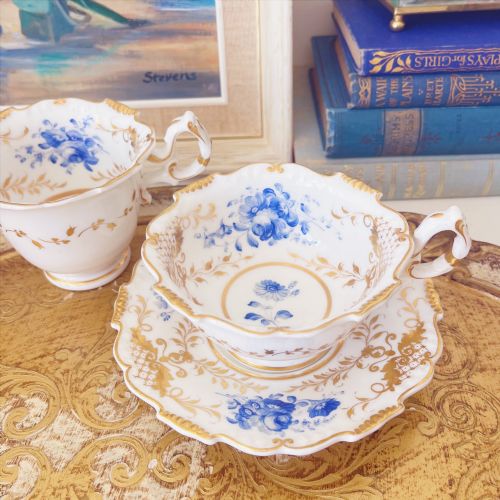
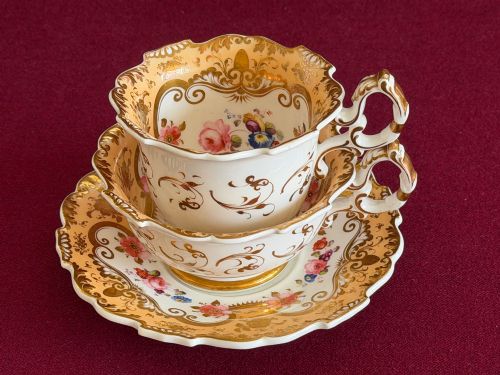
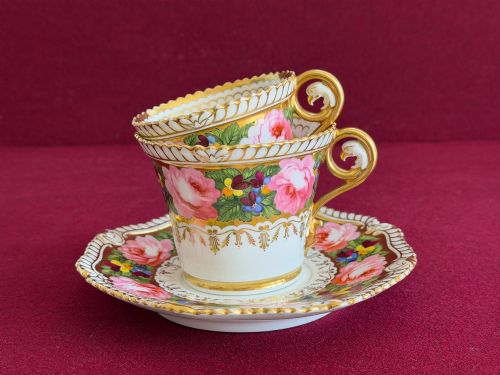
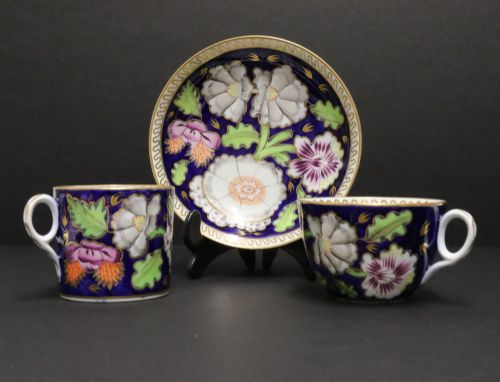
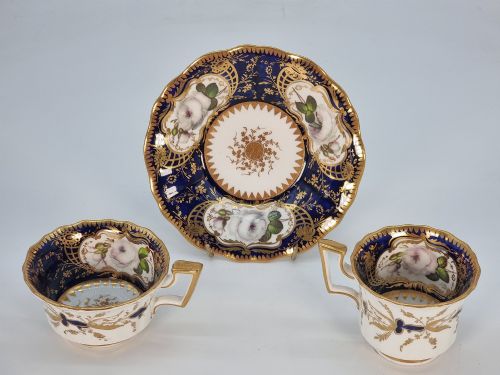
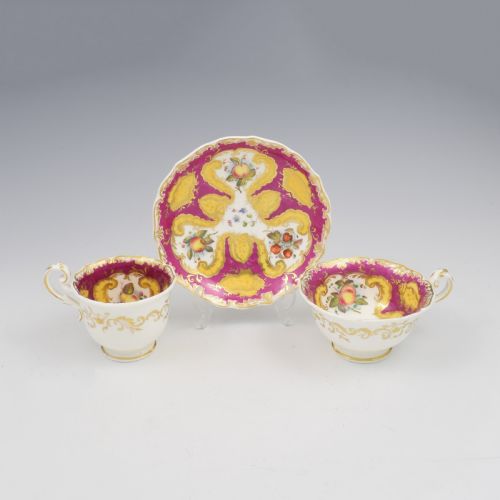
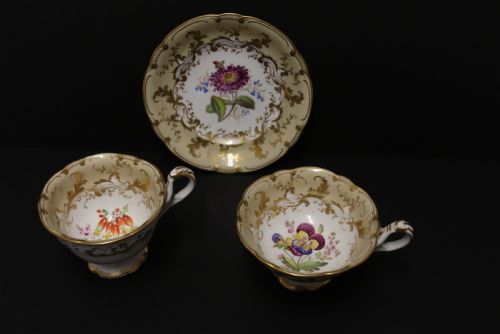
An English porcelain teacup trio brings a matched cup, coffee cup, and saucer to the table in fine ceramic.
English Porcelain Teacup Trio
An English porcelain teacup trio gathers a teacup, coffee cup, and saucer together as a matching set. These ceramics emerge from periods spanning the eighteenth century through the early twentieth century, including Regency, Georgian, Edwardian, and Art Deco styles.
Most examples found here date to the nineteenth century, reflecting the Regency and Georgian eras of British ceramic production. The forms encompass cabinet trios and tea services designed for formal hospitality.
Distinctions in quality
The precision of the handpainted decoration separates standard production from finer cabinet pieces. Delicate brushwork and intricate patterns indicate skilled factory hands.
The application of gold leaf and gilding contributes to the refinement of a set. Well-preserved metallic highlights and smooth enamel glazes mark the better examples.
Some early nineteenth-century Minton sets carry curious pattern names like "Crazy Cow" or "Bengal Tiger" painted onto the porcelain.
H & R Daniel·Chamberlain Worcester·Newhall·Coalport John Rose·Derby·Royal Worcester·Minton·Spode·Davenport·Gladstone potteries
The English Porcelain Teacup Trio Glossary
- Trio
- A matched set comprising a teacup, a coffee cup, and a saucer. This grouping allowed a drinker to choose between tea and coffee during social gatherings.
- Bone China
- A type of porcelain incorporating bone ash into the ceramic paste. This material allowed makers to produce thinner, more translucent walls while retaining strength.
- Cabinet Trio
- A decorative set intended primarily for display in a cabinet rather than daily use. These pieces often feature elaborate handpainted designs and rich gilding.
- Gilding
- The application of gold or gold leaf to ceramic surfaces. It highlights rims, handles, and painted motifs.
- Enamel Glaze
- A vitreous coating fused to the porcelain body through firing. It provides a glossy, protective surface for painted decoration.
English Porcelain Teacup Trio: Frequently Asked Questions
What is in a trio set?
A trio set contains three matching pieces designed for hot beverages. These include a teacup, a coffee cup, and a saucer.
Historically, the inclusion of both a teacup and a coffee cup gave the user a choice of drink during formal gatherings.
How old are these trios?
The pieces span from the eighteenth century through the early twentieth century. Many examples date from the Regency and Georgian periods.
Production methods and styles shifted across these eras, moving from eighteenth-century Worcester work to later nineteenth-century factory output.
Can I use them for tea?
While these ceramics were originally functional tableware, many surviving examples are delicate cabinet pieces. Using them requires care due to their age and handpainted surfaces.
Hand washing preserves the fragile gold leaf and enamel glazes against modern detergent wear.
What is bone china?
Bone china is a ceramic body created by mixing bone ash with traditional porcelain ingredients. This formula produces a lighter, more translucent vessel.
British potteries adopted this material to achieve thinner walls without sacrificing durability.
How do I spot handpainting?
Handpainted decoration shows slight variations in brushstrokes and pigment density under close inspection. Artisans applied these designs individually before firing.
Printed transfers lack the subtle overlapping lines and texture found in genuine painted work.