
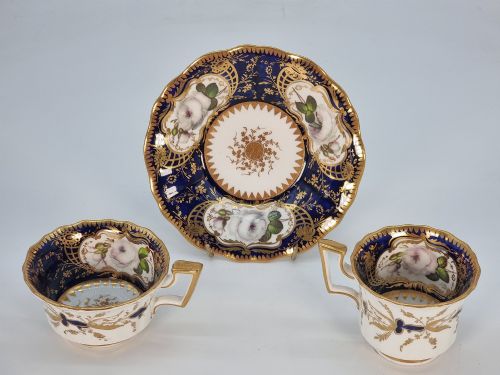


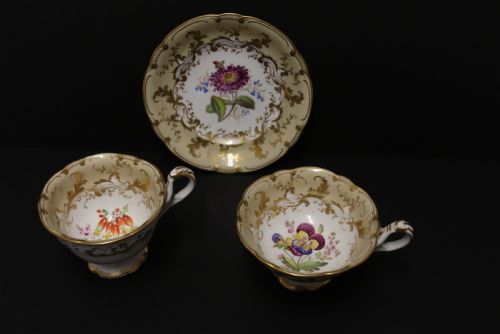


Antique Bone China Trio
An antique bone china trio brings three matching pieces together for tea, offering a complete glimpse into nineteenth century porcelain craftsmanship.
What an antique bone china trio is
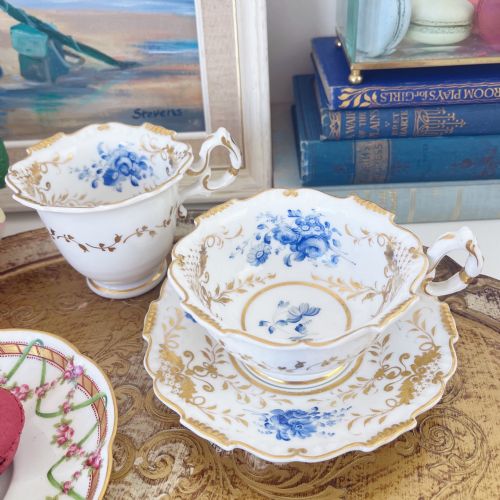
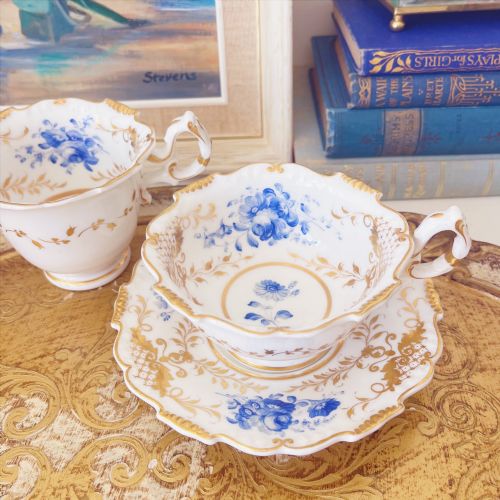
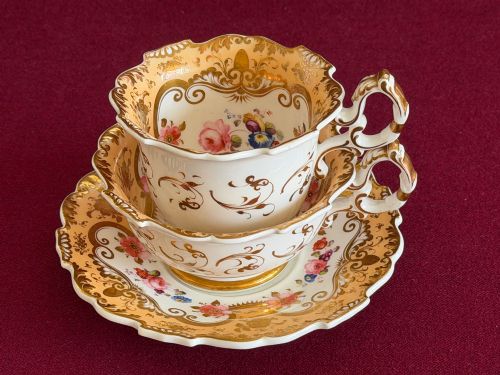
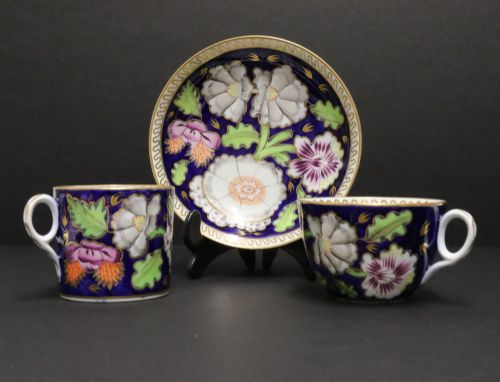
An antique bone china trio typically consists of a matching teacup, coffee cup, and saucer, providing the core components for a traditional table setting. These early sets date primarily from the nineteenth century and the Regency period, showcasing classic forms designed for tea and coffee service.
Most examples found on this page originate from English factories and workshops operating during the Regency and nineteenth century eras. These sets function both as functional ceramic ware and decorative cabinet pieces for collectors.
Materials and construction
The pieces are constructed from bone china and porcelain, incorporating enamel and gold leaf or gold gilding for surface decoration. Artisans applied these metallic finishes by hand to enhance the rims, handles, and painted motifs.
Makers utilised handpainting techniques directly onto the ceramic body, often combining polychrome enamels with extensive gilding. This meticulous studio work defines the decorative surface of each cup and saucer set.
Retail Price Guide 2026
Typical UK retail prices for bone china trio, calculated from the Sellingantiques database of over a million retail prices indexed since 2003. This retail price guide relies exclusively on Sellingantiques data; no external sources or auction records are used, so the figures do not describe the wider market.
Listings feature items from the 19th Century and Regency periods, constructed from porcelain, bone china, enamel, and gold leaf.
Assessing quality
Quality in these trios rests upon the precision of the handpainting and the richness of the gilding applied to the porcelain surface. Finer examples display intricate, detailed brushwork that remains sharp and well-preserved across all three components.
The sophistication of the ceramic body and the balance of the Regency forms also distinguish superior sets from simpler production. Workshops that achieved thinner, more translucent bone china produced pieces of higher refinement.
H & R Daniel·Newhall·Coalport John Rose·Spode·Aynsley
The Antique Bone China Trio Glossary
- Trio
- A matched set comprising a teacup, a coffee cup, and a saucer. This grouping allows for a complete historical tea and coffee service display.
- Bone china
- A type of soft-paste porcelain incorporating bone ash to achieve a durable, white, and translucent body. It forms the primary material for these nineteenth century sets.
- Gilding
- The application of gold leaf or gold paint to ceramic surfaces. This decorative technique highlights handles, rims, and painted panels.
- Cabinet trio
- A high-quality set intended primarily for display in a glass-fronted cabinet rather than daily use. These pieces often feature superior handpainted details.
Frequently Asked Questions
What is included in an antique bone china trio?
A standard trio includes three matching components designed for hot beverages. These consist of a teacup, a coffee cup, and a coordinating saucer.
Such sets were produced during the nineteenth century to accommodate different serving preferences at the table. Each piece shares the same decorative pattern and material.
How do I date an early nineteenth century trio?
Dating relies on stylistic clues such as the shape of the handles, the foot rim, and the specific Regency forms used by the factory. Handpainted motifs and the character of the gilding also help establish the era.
Comparing the porcelain body and decorative style to documented works from factories helps narrow down the production period. Marks on the base, when present, provide further chronological evidence.
Were these trios used for everyday tea drinking?
Many examples classed as cabinet trios were created with delicate porcelain and fine handpainting meant for display. Their intricate gold leaf and enamel work made them susceptible to wear from regular use.
Over time, surviving sets often remained protected in cabinets rather than participating in daily household routines. This preservation keeps the enamel and gilding intact for modern collectors.
What distinguishes bone china from standard porcelain?
Bone china incorporates calcined bone ash into the ceramic paste alongside traditional ingredients. This specific recipe creates a whiter, stronger, and more translucent body than ordinary porcelain.
English manufacturers adopted this composition to produce thinner walls without sacrificing structural integrity. It allows light to pass through the cup when held up to a light source.