


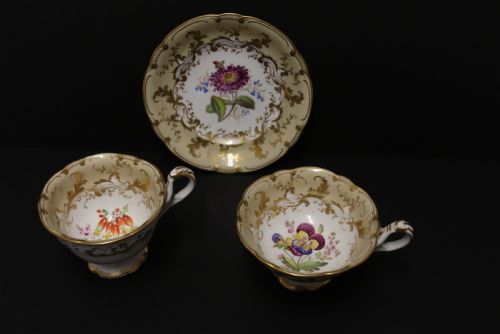
Hand Painted Tea Trio
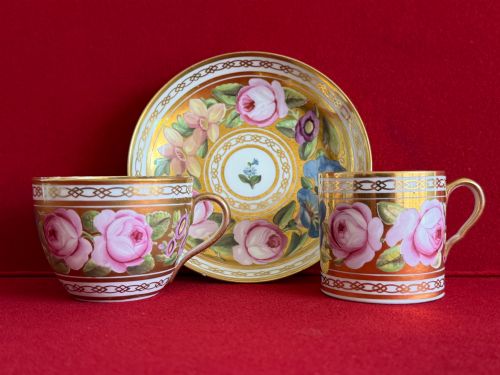
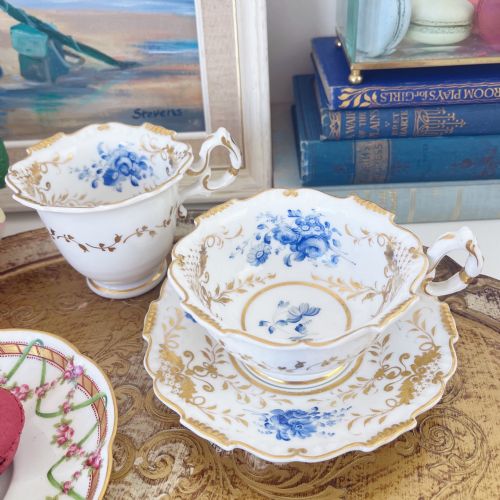
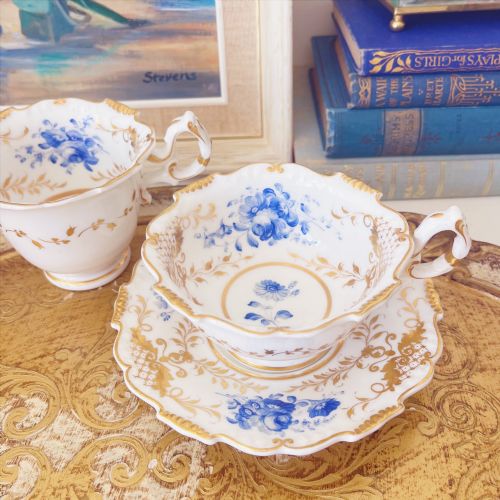
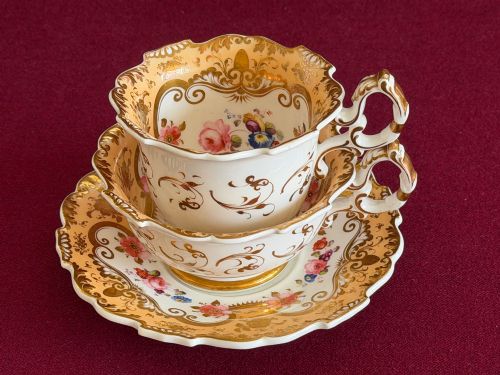
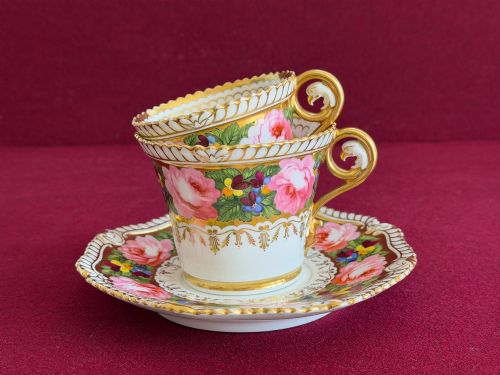
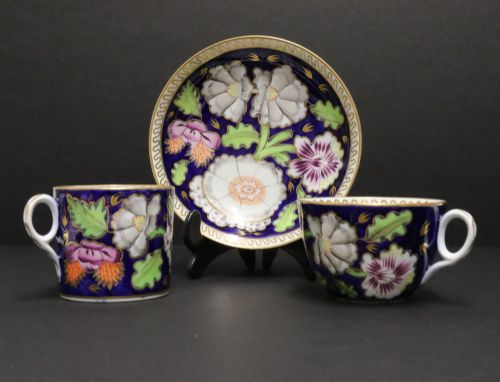
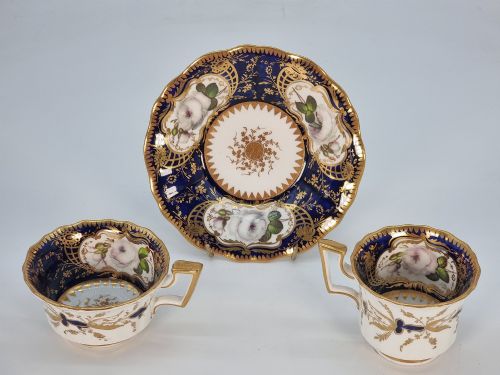
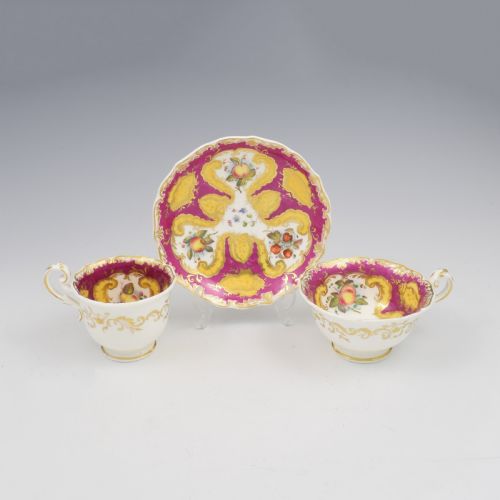
These hand painted tea trio sets bring together a teacup, coffee cup, and saucer, offering a complete morning table service from earlier centuries.
Hand Painted Tea Trio
A hand painted tea trio brings together a matching teacup, coffee cup, and saucer, designed for the formal breakfast and social tables of past centuries. When you search for this phrase, you find porcelain sets originating from the eighteenth and nineteenth centuries, spanning Georgian, Regency, and Victorian periods.
The pieces you meet most often on this page date from the Regency era and the early nineteenth century. Makers combined refined ceramic bodies with hand-applied decoration, creating matched sets intended for both tea and coffee drinking.
How they were made
Potters shaped these vessels using porcelain and bone china, applying a smooth porcelain glaze before decoration. Artisans then painted floral and fruit motifs by hand using enamel pigments.
Workers finished the rims and handles with gold leaf, gilding, and gold gilding to accentuate the porcelain forms. These decorative layers were fixed through kiln firing to bond the enamel and metal to the ceramic surface.
Listings feature porcelain, bone china, enamel, and gold leaf across the Georgian, Regency, and Victorian periods.
What varies in quality
The standard of the hand painting creates the primary distinction between ordinary wares and finer cabinet pieces. Detailed floral and fruit patterns executed with precision separate the superior sets from simpler productions.
The application and preservation of the gilding also mark the grade of a piece. Thick, burnished gold leaf that remains largely intact denotes a higher tier of manufacture.
H & R Daniel·Chamberlain Worcester·Newhall·Derby·Davenport·Spode
The Hand Painted Tea Trio Glossary
- Trio
- A matched set consisting of a teacup, a coffee cup, and a saucer. This grouping allowed a drinker to switch between tea and coffee during a single service.
- Cabinet trio
- A decorative set intended for display in a cabinet rather than everyday use. These pieces often feature finer hand painting and heavier gilding.
- Flight Period
- A specific era of Worcester porcelain production associated with the Flight family management. Pieces from this time carry characteristic factory marks.
- Shrewsbury Shape
- A specific ceramic form produced by the H & R Daniel factory. It defines the moulded contours of the cup and saucer bodies.
- Second Gadroon Shape
- A moulded border design featuring curved, fluted ridges. This edge styling appears on specific Daniel factory tea wares.
Hand Painted Tea Trio: Frequently Asked Questions
What is a true tea trio?
A true tea trio contains three matching pieces designed together: a teacup, a coffee cup, and a saucer. This arrangement provided the proper vessels for serving both tea and coffee at the same table.
In earlier centuries, households utilised separate cups for tea and coffee alongside a shared saucer. Finding all three pieces together from the same workshop remains a notable feature for collectors.
Can I use antique trios for drinking tea?
While these pieces were originally created for functional use, their age and delicate porcelain glaze make them fragile. Many collectors choose to display them in cabinets rather than risk daily wear.
Hand-painted enamels and gold leaf gilding can fade or wear down with frequent washing. Gentle handling preserves the painted surfaces for display.
Why does a trio include two cups?
Early nineteenth-century dining habits involved serving both tea and coffee during social gatherings. The inclusion of two distinct cup shapes allowed the drinker to partake in both beverages using a single matching saucer.
Teacups were typically wider and shallower, while coffee cups were taller and straighter. This distinction accommodated the different ways people consumed hot drinks.