
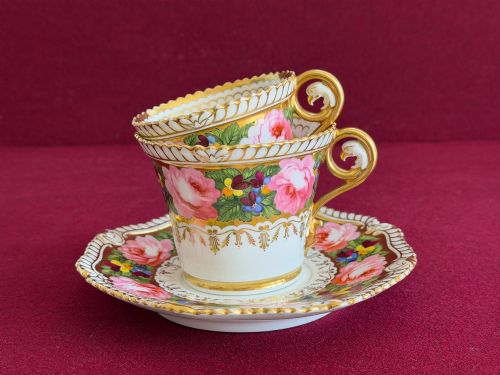
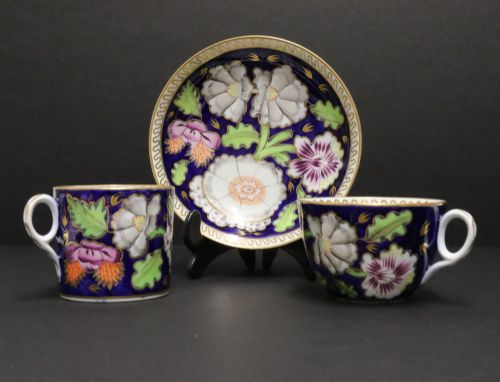
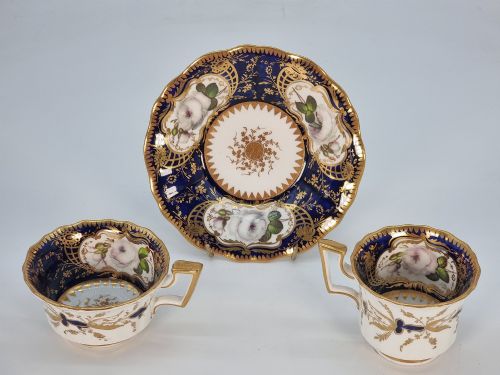
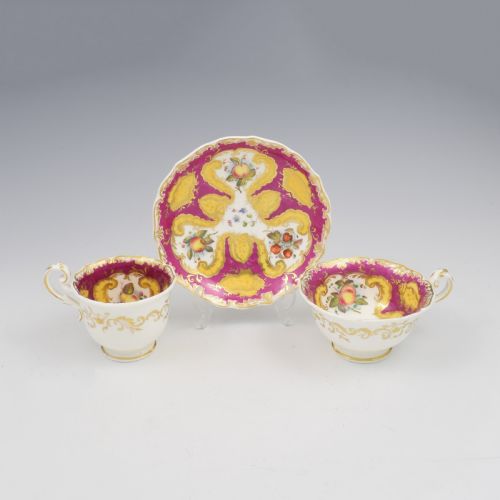


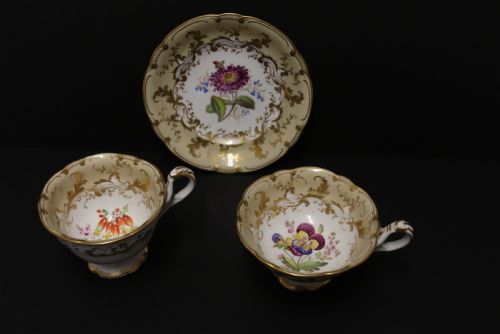
Regency Porcelain Tea Trio
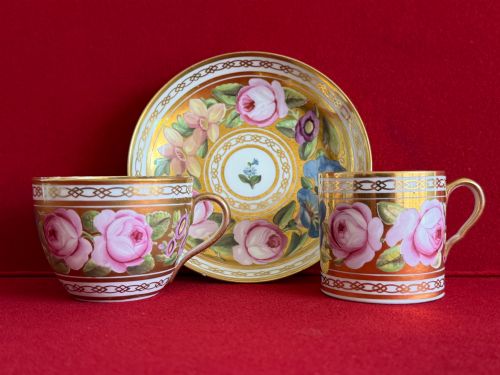
A regency porcelain tea trio brings together a teacup, a coffee cup and a saucer from the early nineteenth century in porcelain or bone china.
Regency Porcelain Tea Trio
When you search for a regency porcelain tea trio, you encounter early nineteenth century teaware comprising a teacup, a coffee cup and a saucer. These sets date predominantly from the Regency period and the wider nineteenth century, spanning roughly from 1800 to 1850.
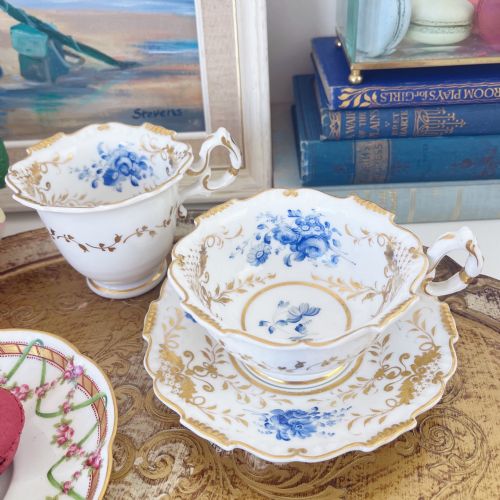
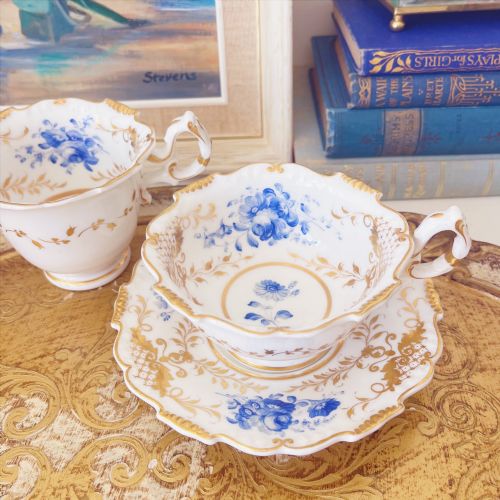
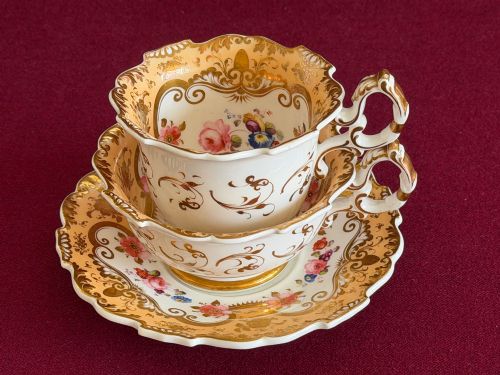
The forms appear as teacups and saucers, teacups and saucer sets, and complete tea and coffee services. Most examples on this page are cabinet trios designed for display as much as for use.
The origin is strictly English, taking shape through factories working in bone china and porcelain during the early decades of the nineteenth century.
How they were made
The production relies on porcelain and bone china, shaped into delicate cups and saucers before receiving enamel glaze. Handpainted details bring colour and pattern to the surfaces.
Decoration is heightened through gold leaf, gold gilding, gilding, and gilt highlights applied across the porcelain body. These metallic additions require careful firing to adhere to the enamel glaze.
Listings feature porcelain, bone china, gold leaf and enamel glaze across the Regency period and nineteenth century.
What varies in quality
Quality rests upon the precision of the handpainted decoration and the crispness of the porcelain form. Handpainted patterns demand steady brushwork that distinguishes finer cabinet trios from simpler wares.
The application of gold gilding and gold leaf shows variation in depth and preservation. Intact gilding and rich enamel glaze elevate the presence of a set.
H & R Daniel Shrewsbury·Chamberlain Worcester·Newhall·Coalport John Rose·Derby·Minton·Spode·Davenport
The Regency Porcelain Tea Trio Glossary
- Trio
- A set of three matching pieces consisting of a teacup, a coffee cup and a saucer. This combination allowed the drinker to enjoy both tea and coffee from matching vessels.
- Cabinet trio
- A display set reserved for a cabinet rather than daily service. These pieces typically display higher quality handpainting and gilding.
- Bone china
- A type of porcelain incorporating bone ash for strength and translucency. English factories utilised this material extensively during the Regency period.
- Enamel glaze
- A fused glassy coating applied to the porcelain body to provide a smooth surface. It serves as the base for handpainted designs and gilding.
Regency Porcelain Tea Trio: Frequently Asked Questions
What is in a tea trio?
A tea trio consists of a teacup, a coffee cup and a matching saucer. This grouping provided the nineteenth century user with vessels for both tea and coffee.
The pieces were potted together to ensure uniform pattern and form across the set.
How are these sets dated?
Dating relies on stylistic markers, paste composition and factory patterns recorded from the early nineteenth century. Surviving examples often align with the Regency period or specific manufacturer operating dates.
Shape names and known pattern numbers help narrow the decade of production.
Can I use them for tea?
These pieces function as historical porcelain objects, and many collectors prefer to keep them in display cabinets. Handpainted surfaces and delicate gold gilding can wear with regular use.
Gentle handling is necessary if you choose to serve tea from nineteenth century porcelain.
Why do they have two cups?
The inclusion of both a teacup and a coffee cup reflects nineteenth century social habits where different vessels served different hot beverages. Tea and coffee required distinct cup shapes.
The saucer accommodated whichever cup was in use at the table.