


Antique Tea Tables Set
These antique tea tables set pieces are versatile nests and suites designed for entertaining, offering classic craftsmanship to anchor a traditional room.
Antique Tea Tables Set
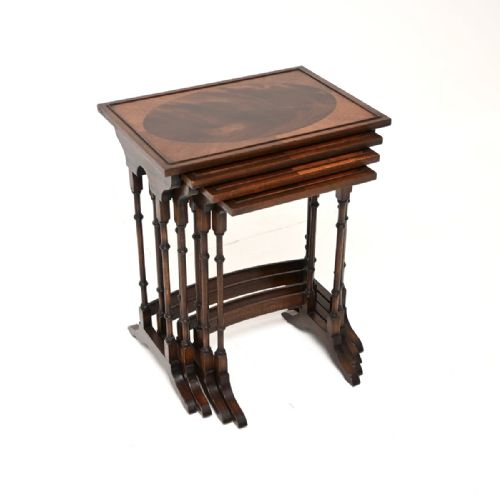
An antique tea tables set primarily comprises nests of tables, from Edwardian circular nests of five to Georgian style quartetto tables of four, alongside occasional arrangements like Regency card and sofa tables. These pieces originate across periods such as Victorian, Edwardian, and the nineteenth century, reflecting flexible social habits.
Materials and construction
Makers utilised dense timbers such as mahogany, teak, rosewood, and satinwood, frequently applying veneer over secondary woods to achieve smooth surfaces. Structural integrity relied on precise joinery to ensure smaller tables slid smoothly into larger frames.
Surface ornamentation involved intricate details like inlaid motifs, brass fittings, carved feet, and Chinoiserie lacquer work. These techniques combined structural utility with decorative flair suited to formal reception rooms.
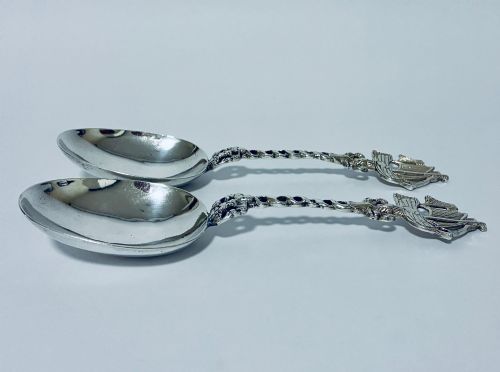
Tea was serious business: some sets included specialised silver spoons alongside sugar and creamer vessels to ensure proper hospitality.
Judging the standard
Quality rests in the precision of the timber selection and the crispness of any carving or inlay, distinguishing standard production from finer workshop output. Grain matching across nested surfaces and the stability of joints determine how well a set survives years of sliding and use.
The sophistication of the finish dictates the tier of the piece, where hand-applied lacquer or carefully polished mahogany shows greater depth than plain varnishes. Original brass hardware and intact structural components elevate the overall standard significantly.
Mappin And Webb
The Antique Tea Tables Set Glossary
- Quartetto
- A matched set of four nesting tables designed to stack inside one another when not in use. They became popular in the nineteenth and early twentieth centuries for serving refreshments.
- Teapoy
- A small stand or box on legs intended to hold tea canisters, often fitted with internal compartments. They frequently sit on carved feet or pedestals.
- Chinoiserie
- European imitation of Chinese artistic styles, typically featuring painted or lacquered scenes on dark backgrounds. It appears on decorative furniture from the nineteenth century.
- Veneer
- A thin layer of fine wood applied over a base timber to provide an ornamental surface. This technique allowed makers to display dramatic grain patterns economically.
- Card table
- A folding table designed for gaming, featuring a hinged top that opens to reveal a baize-lined playing surface. Regency examples often appear alongside matching sofa tables.
Antique Tea Tables Set: Frequently Asked Questions
What is an antique tea tables set?
An antique tea tables set typically refers to nests of tables used for serving tea and refreshments, though it can also describe matched suites of entertaining furniture from the nineteenth and early twentieth centuries.
These collections range from sets of four mahogany tables to exotic hardwood nests and silver accessories designed for the drawing room.
How were nesting tables used historically?
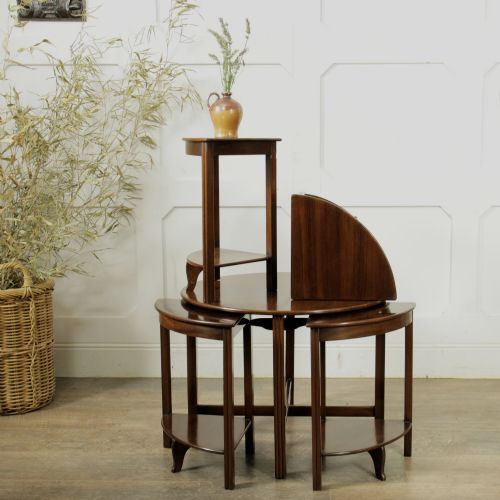
Nesting tables provided a practical surface for afternoon tea, card games, or reading without cluttering the room permanently. Servants could easily separate the stack to place refreshments beside seated guests.
Once tea concluded, the smaller tables slid neatly beneath the largest one to save floor space.
How do I identify Victorian nesting tables?
Victorian examples often feature solid mahogany or walnut construction, sometimes incorporating decorative inlay or turned supports. They date from the nineteenth century and reflect the period's taste for multi-functional hospitality furniture.
Checking the underside and joint construction helps confirm the era of manufacture.
Can I use these tables daily?
Most antique tea tables and nests remain structurally sound for everyday use, provided they receive careful handling. Using coasters and avoiding excessive moisture protects the historic polished finishes.
Their original purpose was practical entertaining, so they adapt well to modern living spaces.