
Antique Tapestry Chair
An antique tapestry chair brings historical textile artistry and solid timber framing together, offering a functional seat with rich decorative character for the home.

Antique Tapestry Chair
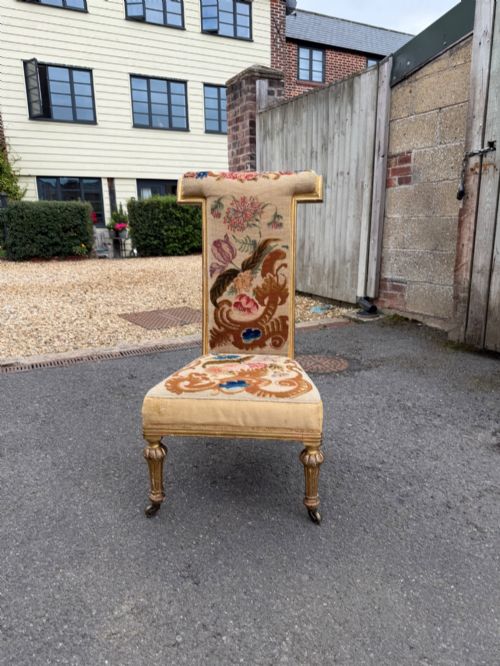
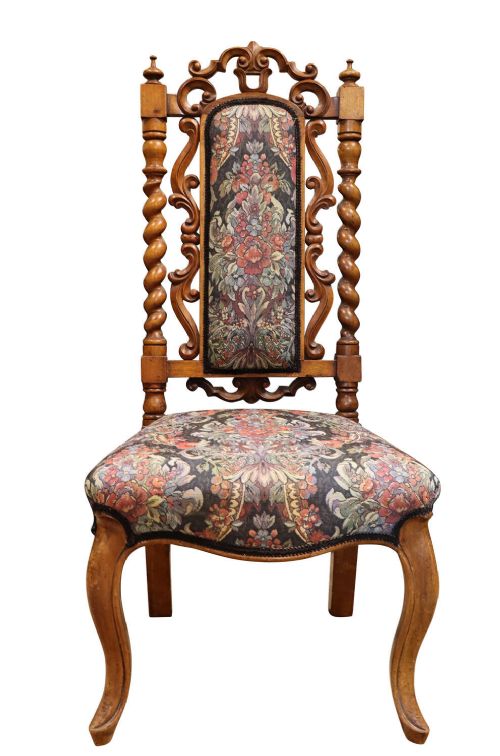
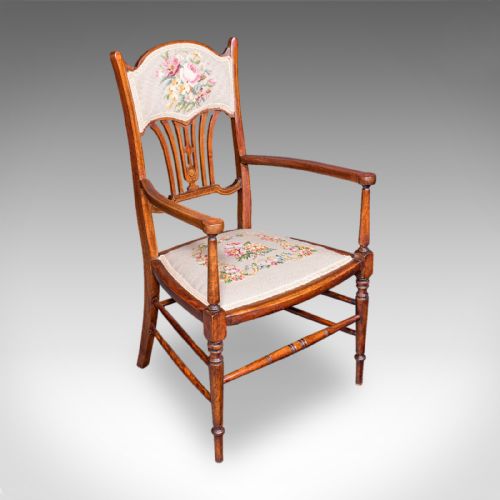
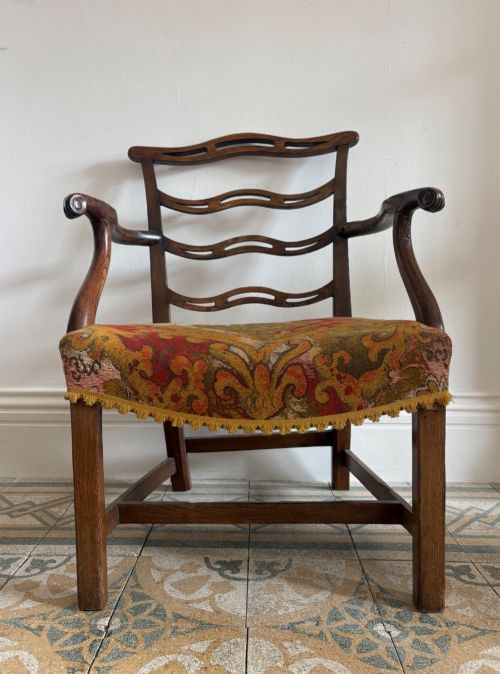
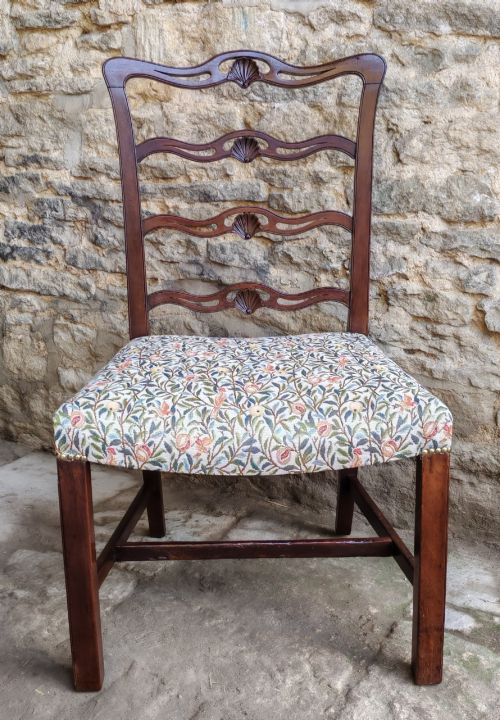
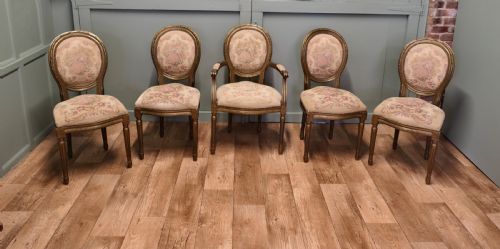
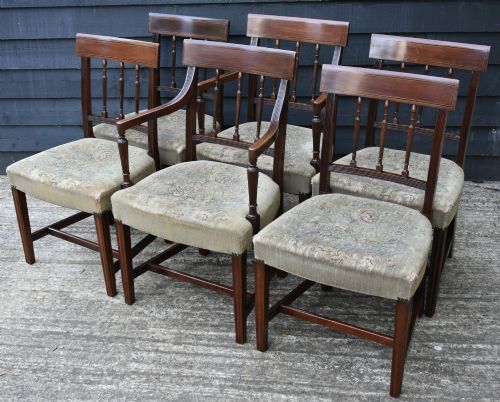
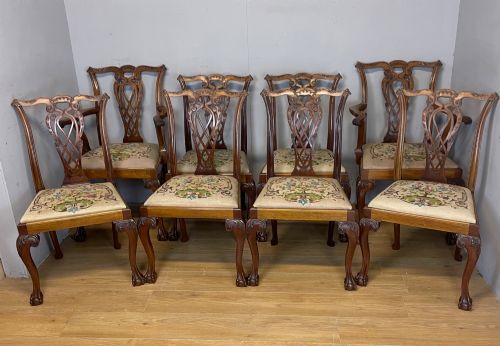
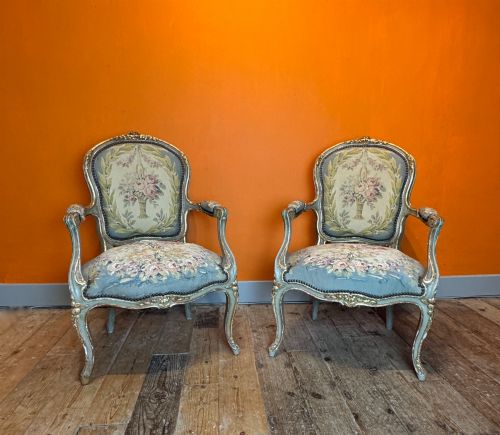
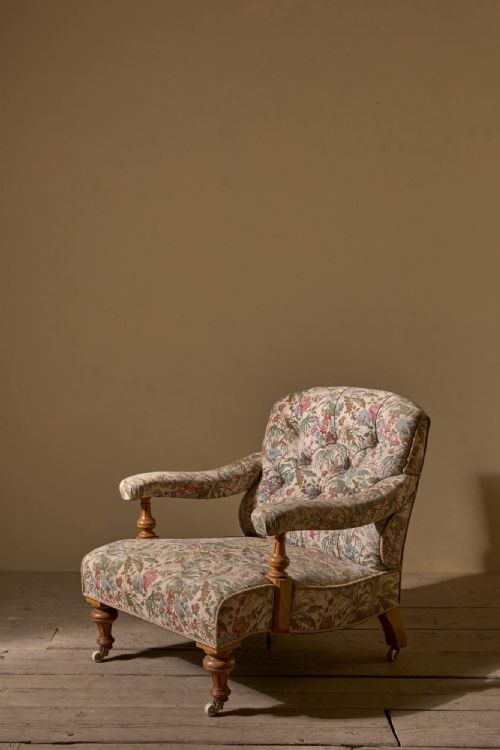
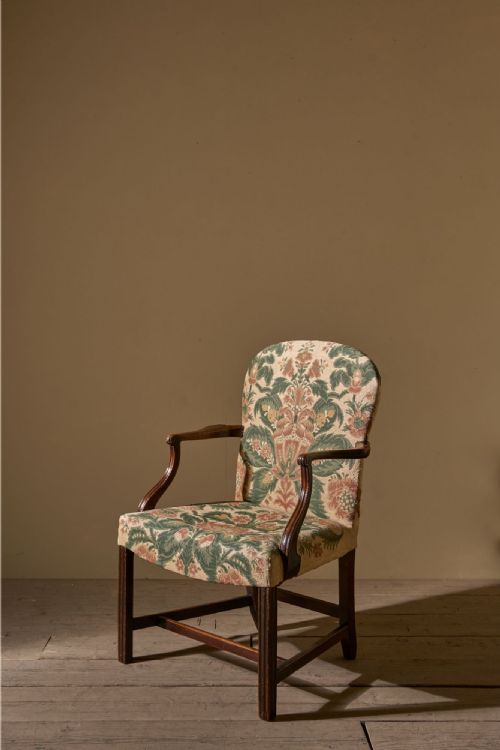
An antique tapestry chair combines period seating timber frames with woven textile covers, ranging from robust dining seats to grand open armchairs. Buyers exploring this category encounter pieces originating from English country houses and French salons, spanning eras from the seventeenth century through the Victorian period and into the twentieth century.
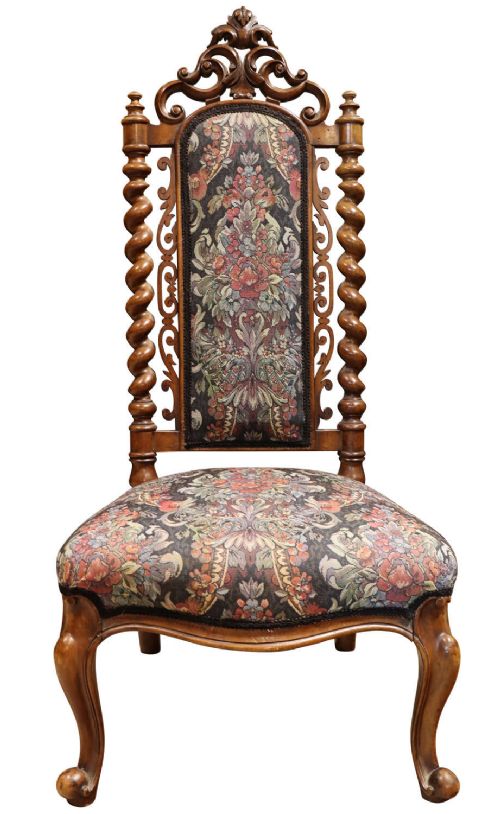
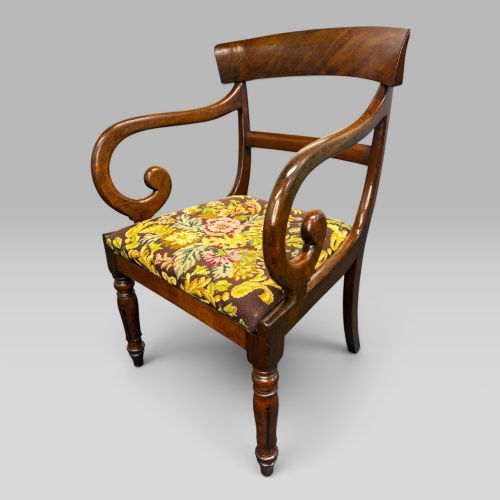
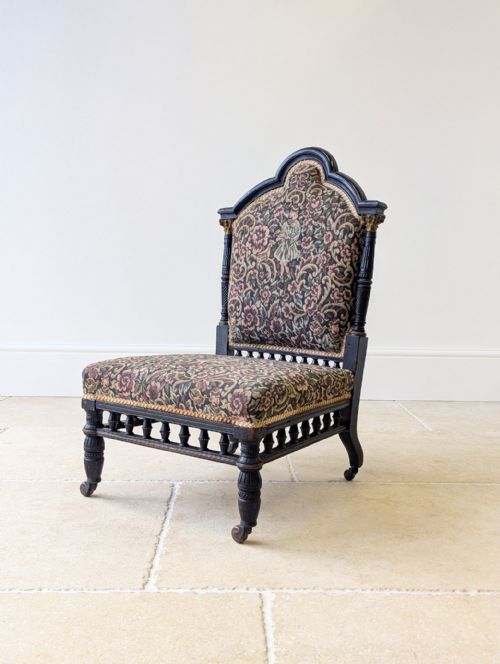
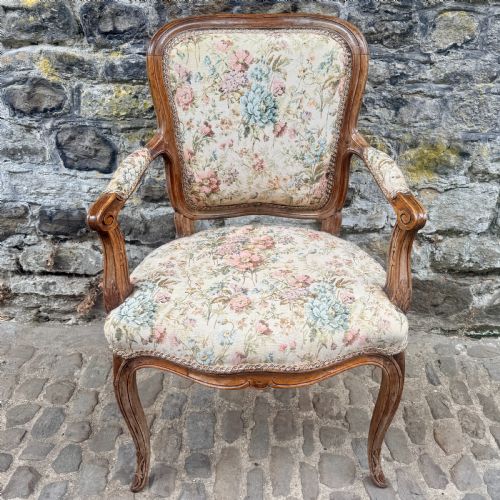
The form varies widely between low salon chairs, library armchairs, nursing chairs, and sets of dining seats. Frames appear in diverse timbers like walnut, mahogany, oak, and beech, often shaped into revival styles such as Chippendale, Louis XV, or Queen Anne.
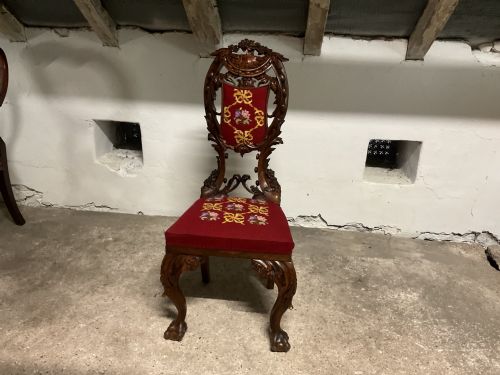
French examples frequently feature carved giltwood or painted finishes paired with Aubusson or needlepoint covers, whereas English versions lean toward solid mahogany or walnut structures with floral or pastoral textile upholstery.
How They Were Made
Cabinetmakers and joiners constructed the structural frames using dense hardwoods like mahogany, walnut, oak, beech, and elm, employing traditional joints such as mortise and tenon to ensure long-term stability. Carved ornamentation, whether crisp ribbon-backs, cabriole legs, or parcel-gilt detailing, was hand-executed directly into the solid timber.
Upholstery techniques involved layering natural stuffing materials over webbing or springs before securing the hand-woven tapestry, needlepoint, or petit point textile panels with decorative brass tacks.
Antique Tapestry Chair Retail Price Guide 2026
Typical asking prices for tapestry chair among the pieces listed under this phrase on Sellingantiques today, from the lower quarter to the upper quarter. They describe what is for sale here now, not the wider market.
What Varies in Quality
The standard of carving on the timber frame establishes the initial tier of distinction, moving from utilitarian workshop output to deeply undercut, hand-sculpted rococo or revival motifs. Originality plays a defining role, particularly when frames retain their initial painted, gilt, or polished surfaces without modern intervention.
The integrity and fineness of the textile cover dictate the upper echelon of examples, where tightly worked needlepoint or pictorial Aubusson weaving remains intact and harmonises with the proportions of the chair.
Warings
The Antique Tapestry Chair Glossary
- Aubusson
- A hand-woven tapestry traditionally produced in the French town of Aubusson, known for pictorial scenes and floral motifs. These textiles frequently adorn the backs and seats of high-status French armchairs.
- Needlepoint
- A type of canvas work embroidery executed with a yarn threaded through a stiff open-weave mesh. It forms the durable, textured floral patterns seen on many Victorian and Georgian seat covers.
- Prie Dieu
- A devotional chair featuring a low seat and a tall, narrow top rail designed for kneeling and prayer. These pieces are frequently encountered in nineteenth-century walnut or beech.
- Cabriole leg
- A furniture leg that curves out in a convex arc and tapers inward in a concave arc, emulating the shape of an animal's leg. It is a defining feature of eighteenth-century and revival seating.
Antique Tapestry Chair: Frequently Asked Questions
How do I clean an antique tapestry chair?
Gently vacuum the textile upholstery using a low-suction attachment protected by a mesh screen to remove surface dust without pulling fragile threads. Avoid liquid cleaners or chemical detergents, which can damage aged wool and silk fibres.
For stubborn marks, consult a professional textile conservator who specialises in historic woven fabrics. Keeping the timber frame nourished with appropriate furniture wax protects the surrounding woodwork from drying out.
Can I use an antique tapestry chair daily?
Most sturdy mahogany, walnut, or oak framed chairs withstand regular daily sitting provided the internal webbing and joints remain solid. Lighter salon chairs and antique nursing seats may suit decorative placement or light reading use rather than heavy lounging.
Assessing the structural rigidity of the legs and arm joints helps determine whether a piece is suitable for everyday seating. Heavier library armchairs and dining sets are typically built for robust practical employment.
How do I identify the period of the chair?
Examine the timber species, joinery methods, and stylistic cues such as cabriole legs, balloon backs, or carved strapwork. Georgian pieces often display substantial mahogany frames with classical proportions, whereas Victorian examples frequently utilise walnut with buttoning or needlepoint.
French pieces from the eighteenth and nineteenth centuries exhibit distinct regional carving styles, including Louis XV and Regence motifs. Comparing the turned or carved details against documented furniture histories clarifies the likely era of manufacture.
Are tapestry covers original to the chair?
Many chairs retain their period needlepoint or Aubusson covers, though others have received later nineteenth-century or twentieth-century reupholstery using antique textiles. Close inspection of the tack holes, backing canvas, and wear patterns helps determine the age of the fabric relative to the wooden frame.
Both period-correct replacements and original covers hold distinct appeal for collectors depending on their condition and historical accuracy. Professional upholstery experts can often date the stitching techniques used in the textile.