
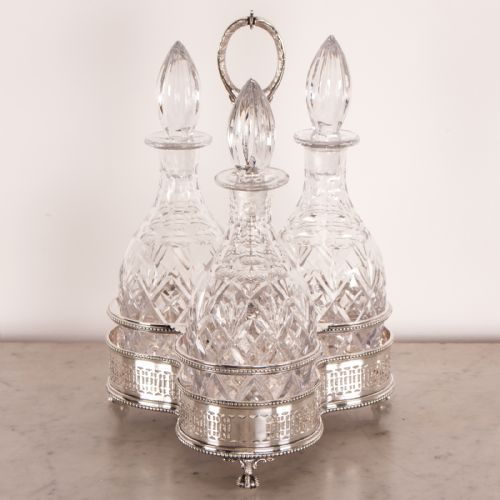
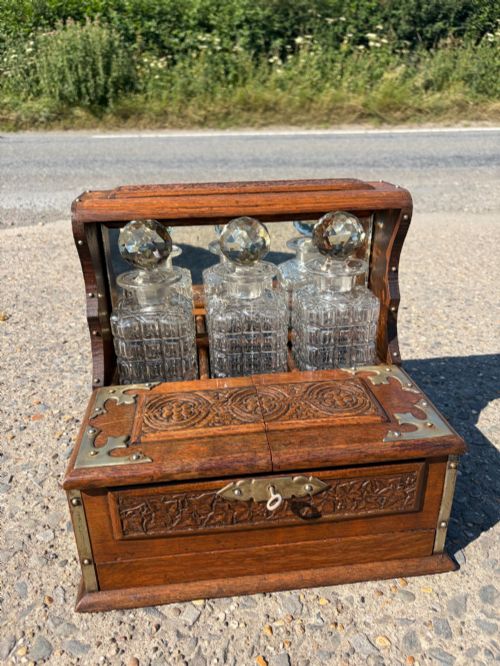
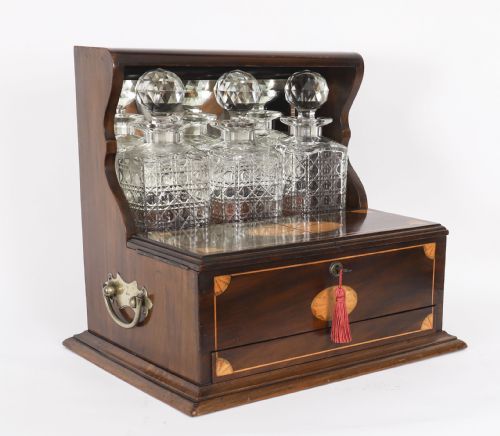
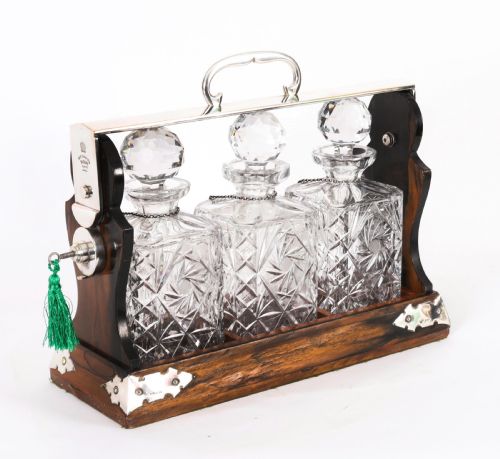
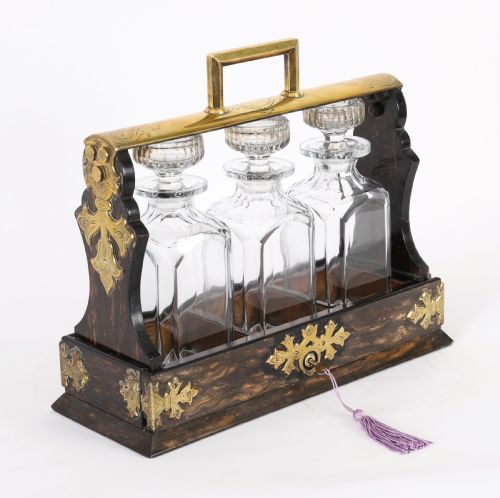

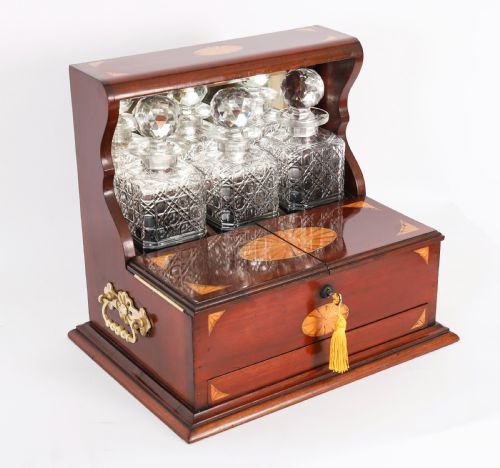


Antique Tantalus Decanter Set
An antique tantalus decanter set locks away spirits behind a clever metal bar to deter unauthorized pouring while displaying fine crystal.
Antique Tantalus Decanter Set
An antique tantalus decanter set combines secure locking framework with matched bottles designed for after dinner entertaining in domestic parlours.
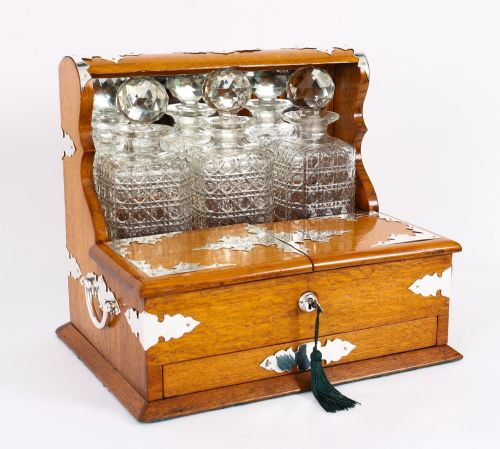
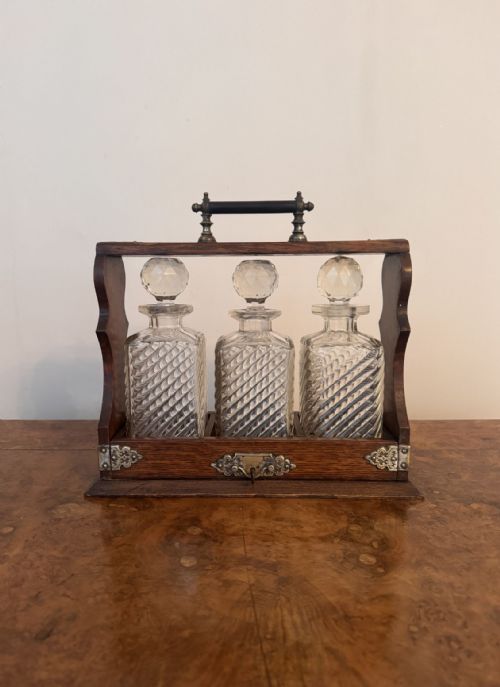
The versions met most frequently on this page date from the Victorian and Edwardian periods, constructed primarily as oak or mahogany cases fitted with multiple cut crystal bottles.
Many examples incorporate games compendiums alongside the decanters, serving as multi-purpose dry bars for hosting guests.
Materials and Construction
Cabinet makers utilised dense hardwoods including oak, mahogany, walnut, and coromandel, frequently enhancing the wooden frames with brass mounts, marquetry stringing, or satinwood inlay.
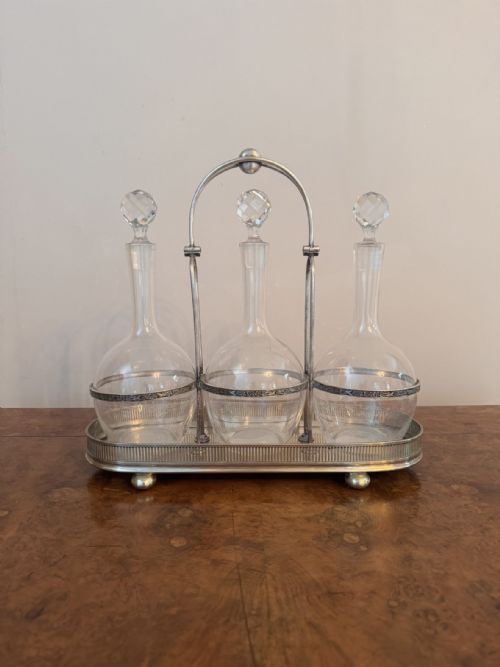
Metalwork components relied on silver plate or Old Sheffield plate to form the locking mechanisms, handles, and bottle collars.
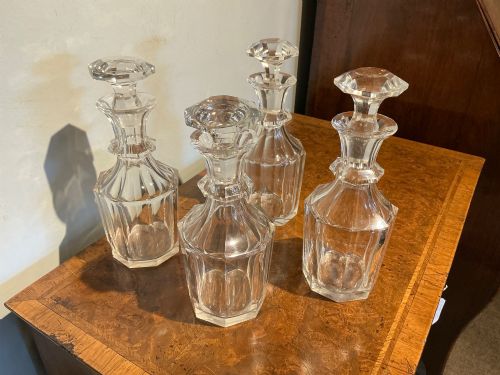
Drinking vessels were produced from cut crystal, cut glass, or frosted glass, occasionally featuring baccarat crystal or ormolu mounts in French pieces.
Victorian hosts locked their whiskey away not from thieves, but to prevent the household staff from sampling the cellar.
Assessing Quality
The distinction between standard production and superior craftsmanship rests in the precision of the joinery and the weight of the timber and metal hardware.
Top-tier examples feature fully integrated games compendiums, original working locks with keys bearing maker details, and heavy, deeply cut crystal decanters that match perfectly.
Walker & Hall·Betjemann’s·Baccarat·Elkington
The Antique Tantalus Decanter Set Glossary
- Tantalus
- A locking drink cabinet featuring a metal bar that holds decanter stoppers firmly in place so the bottles cannot be removed without a key. The name originates from the mythological figure punished by eternal thirst within sight of water.
- Cave a Liqueur
- A French boxed liquor set, usually housing matched crystal decanters and liqueur glasses within an ornate hinged wooden or ormolu-mounted case. These units often lack the locking metal bar characteristic of English tantaluses.
- Silver Plate
- A manufacturing process where a thin layer of silver is fused onto a base metal such as copper or brass. It provided households with the bright appearance of solid silver at a lower cost.
- Games Compendium
- A fitted box containing equipment for various parlour pastimes such as cards, dominoes, and board games. They frequently share housing with decanter sets in larger tantalus units.
- Cut Crystal
- Glass containing lead oxide that is faceted by grinding and polishing to refract light intensely. This heavy material creates a distinctive ringing sound when struck gently.
Antique Tantalus Decanter Set: Frequently Asked Questions
How do you open a tantalus without a key?
Most antique tantalus mechanisms rely on a pivoting metal bar secured by a barrel lock on the side or top of the wooden base. Without the original key, forcing the mechanism risks damaging the surrounding wood and cracking the fitted crystal decanters.
Professional locksmiths experienced with antique furniture can sometimes pick these older lever locks without harming the surrounding silver-plated hardware or the timber case.
What periods do these decanter sets come from?
The vast majority of these locking decanter stands originate from the Victorian and Edwardian eras, spanning roughly from the mid-nineteenth century up to the early twentieth century. Earlier Georgian examples tend to take the form of simple decanter boxes rather than locking bar tantaluses.
Design styles shifted over these decades from heavy, brass-mounted dark oak in the late Victorian period to more refined blonde oak and inlaid satinwood variations by the Edwardian age.
Were these sets used only for whisky?
While nineteenth-century hosts commonly stored scotch or brandy in the main bottles, multi-bottle sets accommodated a variety of after-dinner spirits and cordials. Three-bottle configurations allowed households to offer guests distinct choices such as port, sherry, and whisky.
Some specialised versions included smaller tot pails or liqueur glasses alongside the primary decanters to facilitate complete after-dinner service in the drawing room.
How should I clean antique crystal decanters?
Antique crystal requires gentle hand washing in lukewarm water with mild detergent to preserve the clarity and surface polish of the hand-cut facets. Avoid sudden temperature changes, which can cause historical glass to fracture.
Harsh chemical cleaners and modern dishwashers will ruin silver-plated collars and etch the surface of nineteenth-century glass permanently.