

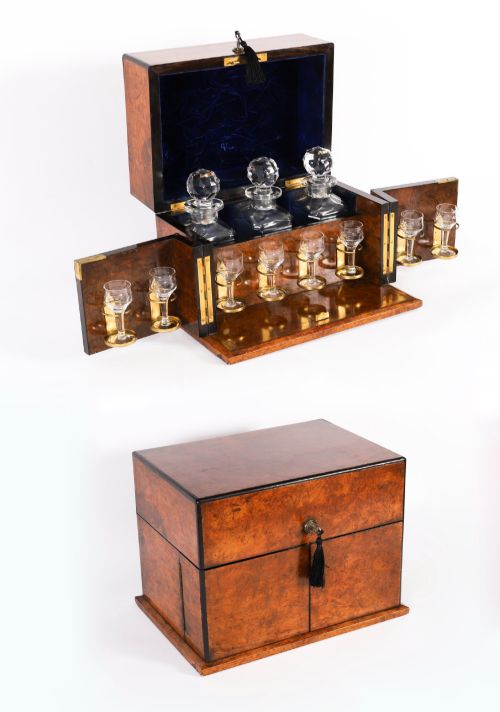



3 Decanter Tantalus Box
A 3 decanter tantalus box provides secure housing for spirits while keeping the bottles locked away from unauthorised hands.
3 Decanter Tantalus Box
A 3 decanter tantalus box combines a locking mechanism with fitted compartments designed to hold three bottles alongside barware or games compendiums. These drinking cabinets appear frequently in Victorian, Edwardian, and nineteenth-century forms, often taking the shape of elaborate architectural cases or portable caskets.
The most common versions met on this page are oak, mahogany, or coromandel cases fitted with silver-plated hardware and holding three cut crystal or cut glass decanters. Many incorporate folding desk surfaces, humidors, or internal trays for cards and gaming pieces beneath or beside the spirit bottles.
Origins range across English workshops and French cabinetmakers producing cave a liqueur sets, alongside Georgian and eighteenth-century campaign examples. Buyers find variations spanning plain oak dry bars to marquetry-strung boxes and ornate Black Forest carvings.
How they were made
Cabinetmakers utilised durable hardwoods such as oak, mahogany, walnut, and coromandel, often enhancing the timber with satinwood inlay, marquetry stringing, or brass mounts. These structural enclosures required precise joinery to house heavy glass decanters and intricate locking bars securely.
The internal fittings paired heavy brass lock mechanisms with fitted wooden partitions, mirror glass panels, and ormolu accents. Glassmakers supplied heavy cut crystal or cut glass decanters, sometimes accompanied by matching glassware or gilded decoration.
3 Decanter Tantalus Box Retail Price Guide 2026
Typical asking prices for 3 decanter tantalus box among the pieces listed under this phrase on Sellingantiques today, from the lower quarter to the upper quarter. They describe what is for sale here now, not the wider market.
Some boxes hide games behind the gin.
What varies in quality
The standard of timber selection and cabinetwork dictates much of the distinction, separating plain utility boxes from elaborate pieces featuring intricate marquetry, pollard oak veneers, or fine ormolu mounts. Heavier gauge brass hardware and robust, integrated locking bars reflect superior original manufacture.
The completeness and quality of the internal contents matter greatly, particularly where original cut crystal decanters remain intact alongside functional games compendiums or uncompromised mirror glass backs.
Philip Ashberry
The 3 Decanter Tantalus Box Glossary
- Tantalus
- A locking device designed to secure spirit decanters by holding their stoppers fast until a key releases the retaining bar. The name playfully references the mythological figure kept just out of reach.
- Cave a liqueur
- A French fitted box or cased cabinet holding liqueur decanters and small glasses. These containers often feature ormolu mounts and mirrored interiors.
- Games compendium
- A multi-purpose box containing equipment for various table games such as cards, chess, or dominoes. They frequently share cabinet space within combined drinks boxes.
- Campaign set
- Portable furniture and equipment designed for travel, typically featuring robust brass corners and recessed handles. Eighteenth-century examples often house spirit bottles for officers.
- Coromandel
- A dense, heavily grained cabinet wood imported from Asia, highly prized for nineteenth-century luxury boxes. It displays dark brown tones with dramatic figuring.
3 Decanter Tantalus Box: Frequently Asked Questions
How does a tantalus lock work?
A metal retaining bar passes across the necks of the decanters, preventing the glass stoppers from being lifted out while the bar remains locked in place. Turning a key releases the mechanism so the bottles can slide free.
This clever design allowed hosts to display their fine spirits while safely restricting access to household staff or guests.
What is a cave a liqueur?
A cave a liqueur is the French equivalent of a decanter box, usually housing several matching cordials or liqueur bottles within a velvet or satin-lined interior. Many examples feature ornate ormolu mounts and exotic wood veneers.
These portable cellars were designed for elegant entertaining in drawing rooms rather than rugged travel.
How do I date an oak tantalus?
Cabinet styles, hardware choices, and timber treatments help establish the period, with Victorian and Edwardian examples showing distinct shifts from heavy brass mounts to refined marquetry inlay. Late nineteenth-century pieces often combine the drinks cabinet with integrated games compendiums.
Examining the construction of the interior lining and the style of the cut crystal decanters provides further chronological clues.
Were these boxes used for travel?
While campaign sets and certain fitted boxes were built for journeys with recessed brass handles and sturdy locks, most domestic tantalus boxes and dry bars remained stationary in dining rooms or studies. Their heavy glass decanters and delicate mirror glass panels meant they were primarily intended for tabletop display.
They served as portable entertaining hubs within the home rather than luggage.